
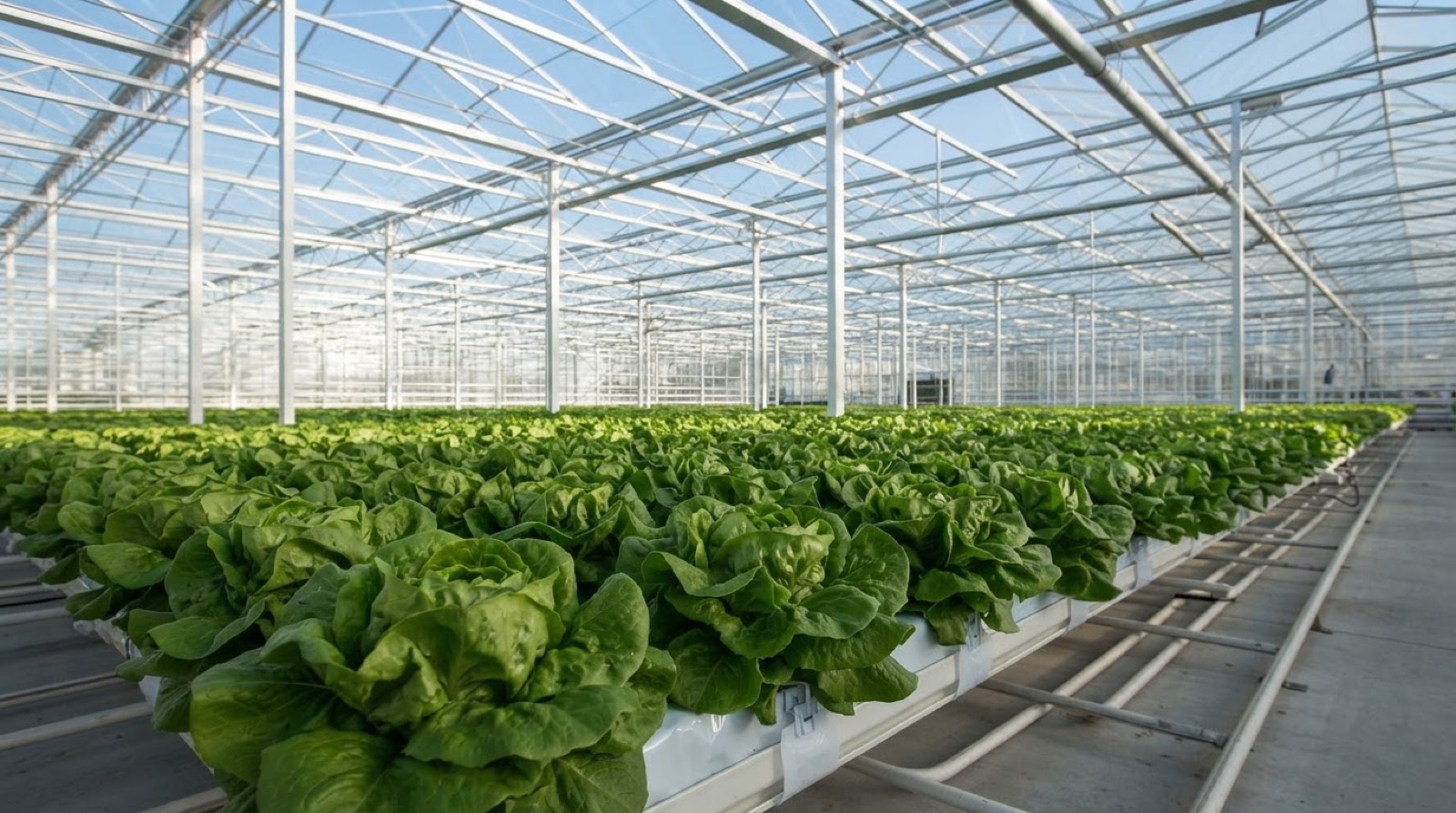
Lettuce
Green Crispy Lettuce.
Une pomme dense et croquante qui convient à la vente en pomme entière comme à la haute densité.
Assez dense pour voyager, meilleure quand elle ne le fait pas
La pomme croquante est la plus dense de la famille et la plus neutre à manger : de l’eau, un peu de fibres, du potassium et de la vitamine C, pris crus. La structure enveloppée protège la feuille intérieure, ce qui explique que le type garde sa texture après découpe et que les transformateurs l’achètent à la palette.
Cette résistance en fait une culture d’expédition. Une pomme dense survit à une chaîne longue : elle est donc régulièrement produite loin de là où elle est mangée et arrive intacte. Intacte et fraîche se séparent quelque part en chemin. La feuille continue de respirer dans la caisse, le cœur brunit, et le croquant pour lequel la pomme est achetée s’amollit discrètement sous le film.
Produire près du marché évite à la pomme de dépenser sa durée de conservation sur la route. Une chaîne courte laisse ces journées à l’acheteur plutôt qu’au trajet, et là où l’alternative est de la salade importée pendant les mois froids, elle couvre aussi une saison que le champ local ne peut pas assurer.
Valeurs nutritionnelles
Laitue croquante, crue
Pour 100 g
- Énergie
- 14 kcal
- Matières grasses
- 0.14 g
- Glucides
- 2.97 g
- dont sucres
- 1.97 g
- Fibres
- 1.2 g
- Protéines
- 0.9 g
- Sodium
- 10 mg
- Potassium
- 141 mg
- Vitamine C
- 2.8 mg
Source : USDA FoodData Central, FDC 169248
La croquante verte est le type à feuille dense et croquante, vendu en pomme entière comme vers la transformation, où la feuille garde sa texture après découpe. La gamme de cultivars est inhabituellement large pour un seul type de laitue, parce que les sélectionneurs ont travaillé séparément pour la vente en pomme entière et pour la production à haute densité.
Ce que la culture demande
La culture est à cycle court et hydroponique. Une pomme dense est le produit et aussi le risque : plus la pomme se ferme serré, plus il est difficile à la feuille intérieure de transpirer, et plus le climat de fin de cycle décide si la culture se termine saine. L’espacement se décide cultivar par cultivar et débouché par débouché, plutôt que par une règle fixe.
Ce que la serre doit faire
La croquante verte se cultive de deux façons — en pomme entière vendue à la pièce, et à haute densité pour la transformation — et la serre se dimensionne différemment dans chaque cas. La densité fixe le nombre de plantes au mètre carré, et cela fixe à son tour le système d’eau, le besoin en lumière et la méthode de récolte, ensemble. La décision revient avant le bâtiment, pas après.
Une pomme dense demande aussi de la lumière. Des pommes qui se remplissent inégalement sur la surface arrivent au même jour de récolte à des poids différents, et un lot récolté d’un seul tenant est classé sur ses plus mauvaises pommes. Une transmission homogène et un mouvement d’air homogène sont ce qui tient un lot ensemble : c’est pourquoi la stratégie d’écrans et la ventilation se spécifient avec la densité plutôt qu’autour d’elle.
DutchGreenhouses® conçoit la structure, le climat, les écrans et l’irrigation autour du type de laitue, de son système et du climat local, pour que les cycles s’enchaînent à la qualité de pomme sur laquelle le marché classe. Contactez-nous pour planifier une serre à laitues.
La laitue croquante verte, questions et réponses
Faut-il viser le poids de la pomme ou le nombre de pommes ?
La laitue se vend à la pomme : c’est le nombre de pommes atteignant la catégorie commerciale sur une année qui détermine le chiffre d’affaires. Une pomme plus lourde produite plus lentement peut rapporter moins qu’une pomme plus légère sur un cycle plus court.
Le cultivar compte-t-il plus que le type ?
Pour la masse de la pomme, la tolérance à la densité et le risque de nécrose marginale, oui. Ce sont des propriétés du cultivar, et c’est pourquoi un projet laitue se planifie autour d’un cultivar nommé plutôt qu’autour du seul type.
Quelle est la cause de la nécrose marginale ?
Le calcium n’atteint pas les marges foliaires à croissance la plus rapide, sous l’effet de la transpiration et de la pression racinaire plutôt que de l’apport. La gestion du climat y répond ; l’ajout de calcium à la solution nutritive, généralement pas.
Other lettuce
varieties.
Des récoltes répétées. Une qualité et une taille de pomme régulières. La catégorie que vous vendez détermine la charge de plante, le rythme de récolte et la serre.
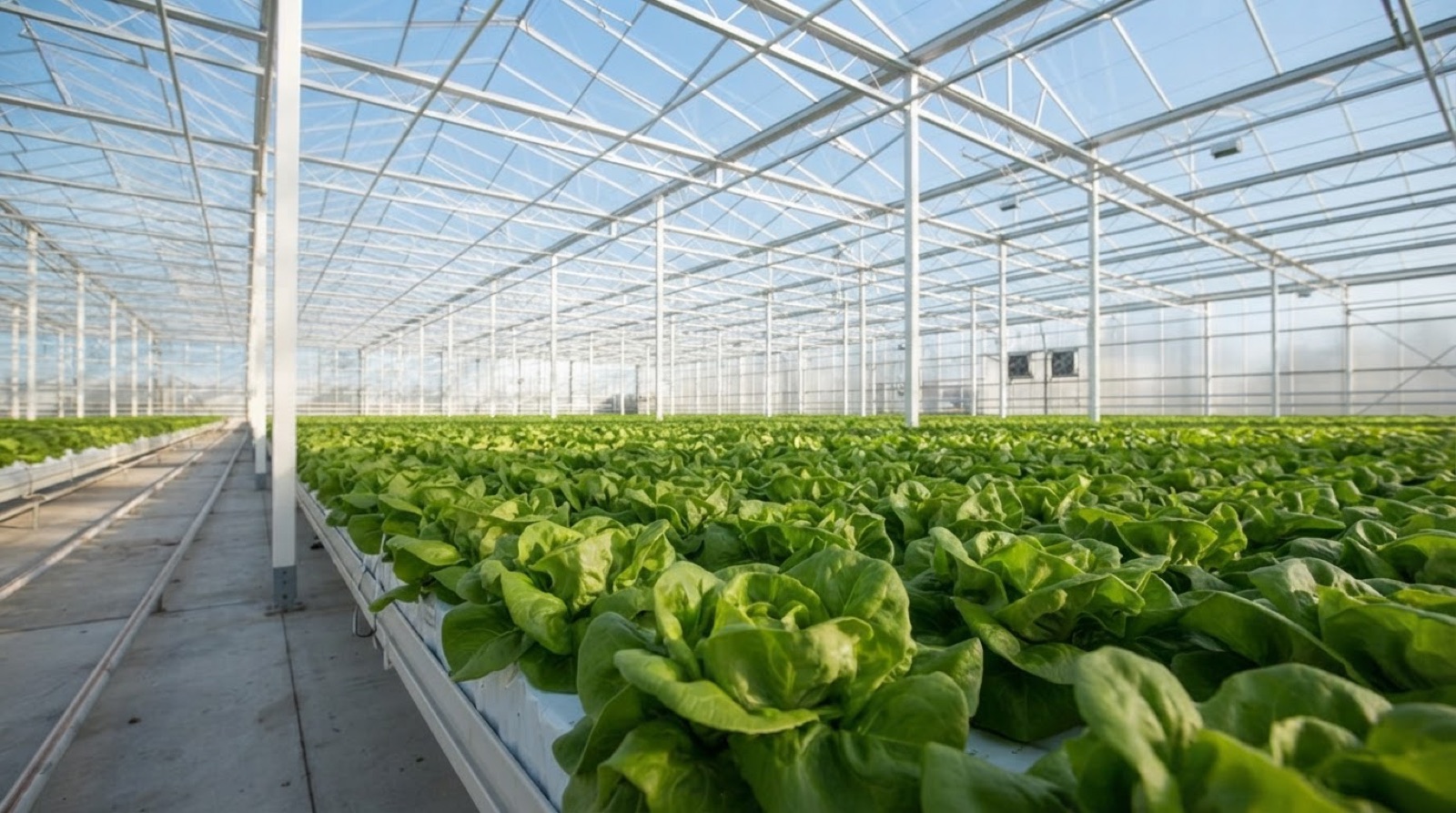
Butterhead Lettuce
Butterhead is the soft-leaved wholehead lettuce sold with its outer leaves intact, and the type most European buyers picture when they specify lettuce.
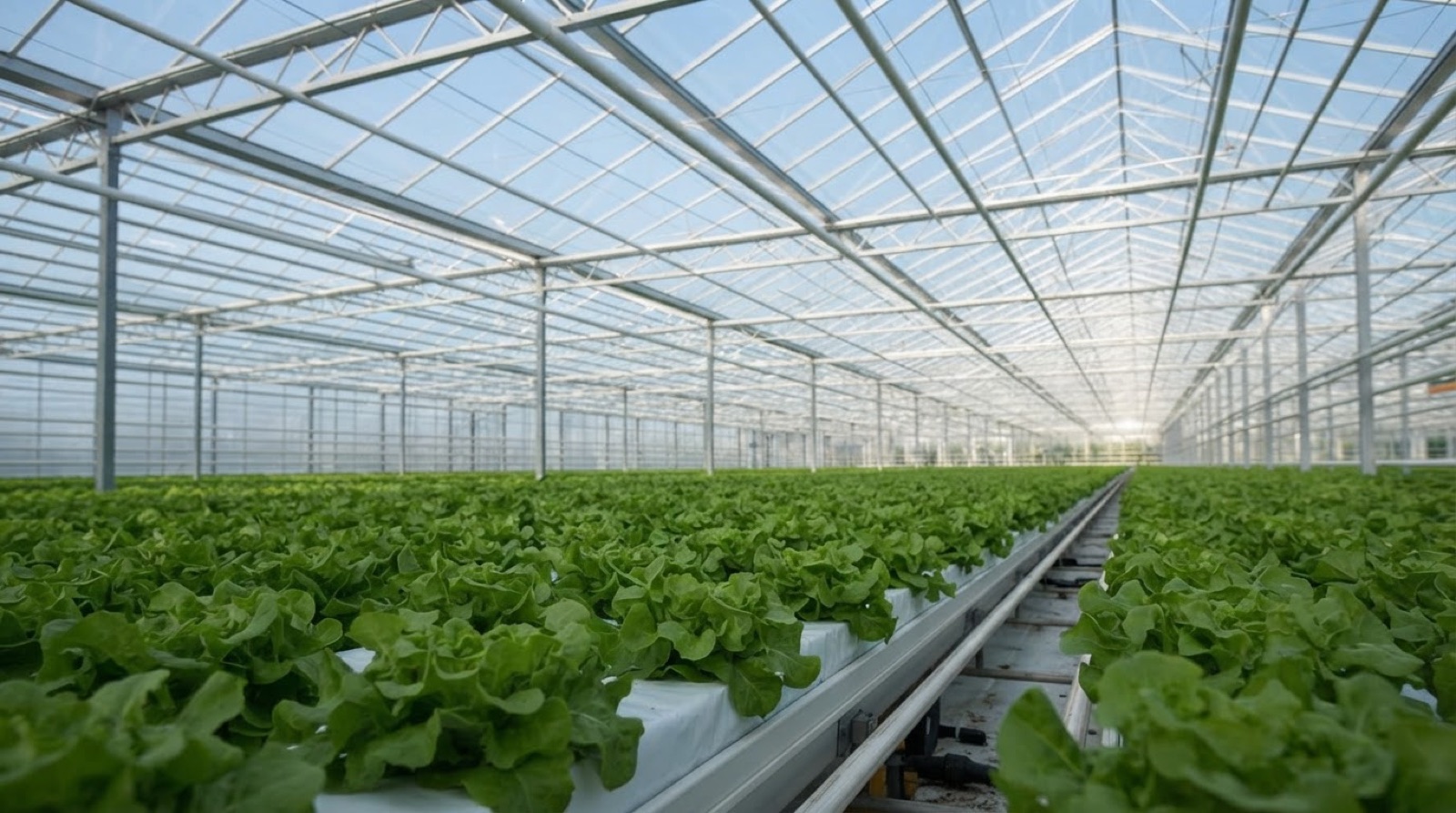
Green Oakleaf Lettuce
Green oakleaf lettuce is a lobed, soft-leaved head grown for leaf shape rather than for weight.
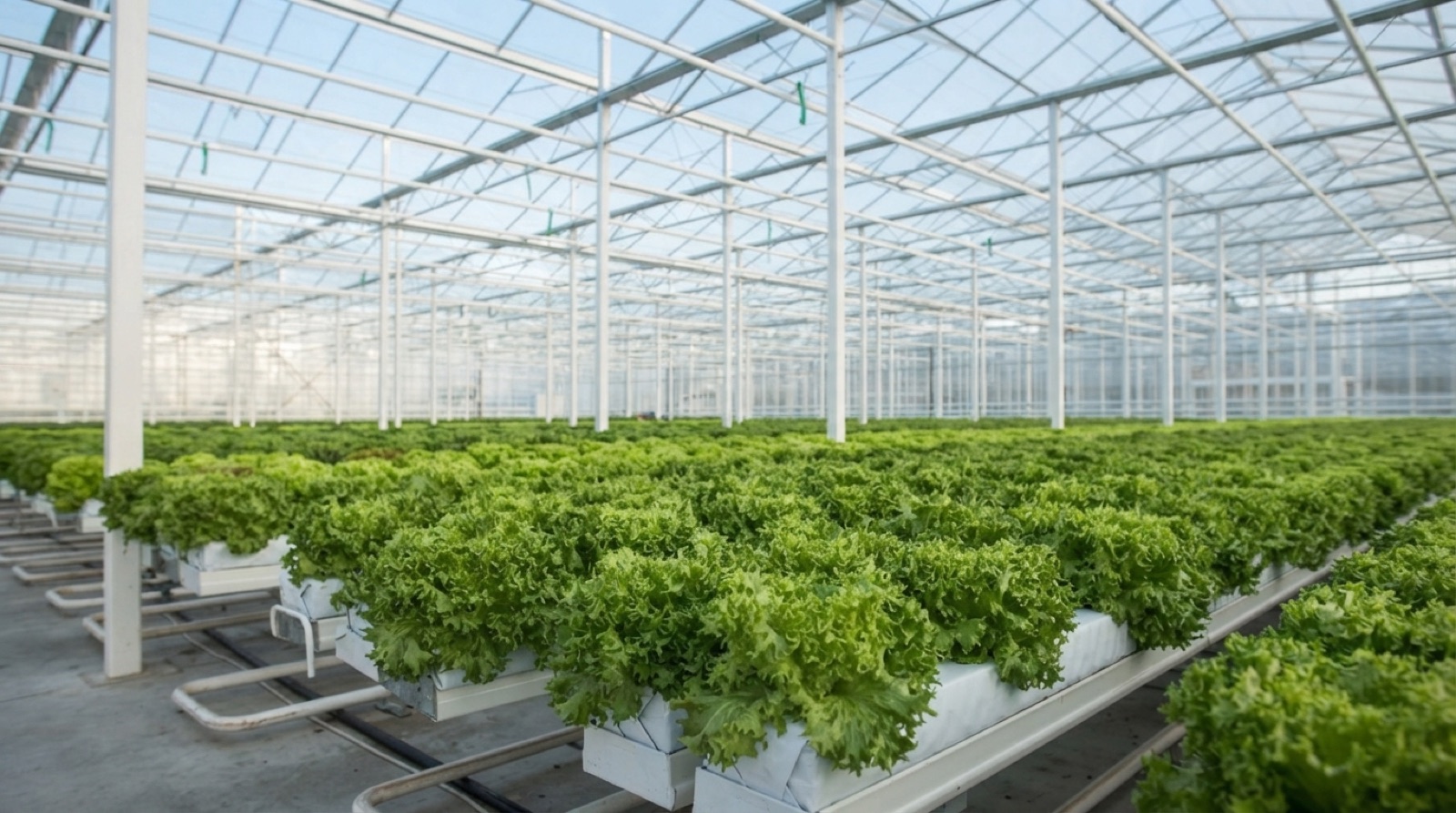
Lollo Bionda Lettuce
Lollo Bionda is the green Lolla lettuce, with a tightly curled leaf margin and bought for appearance rather than for weight.
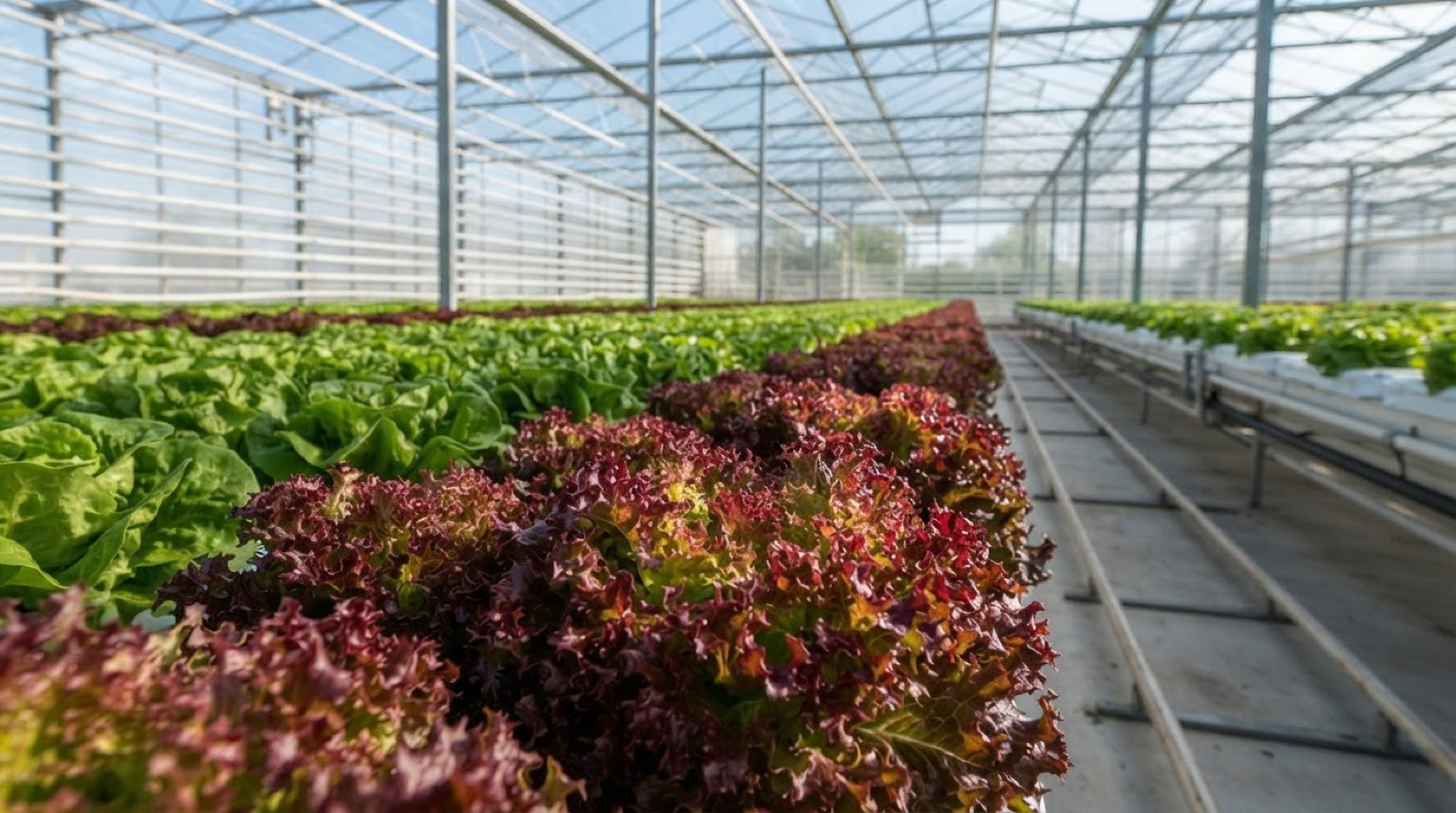
Lollo Rosso Lettuce
Lollo Rosso is the red Lolla lettuce, where the tightly curled leaf margin and the red pigmentation are both the product.
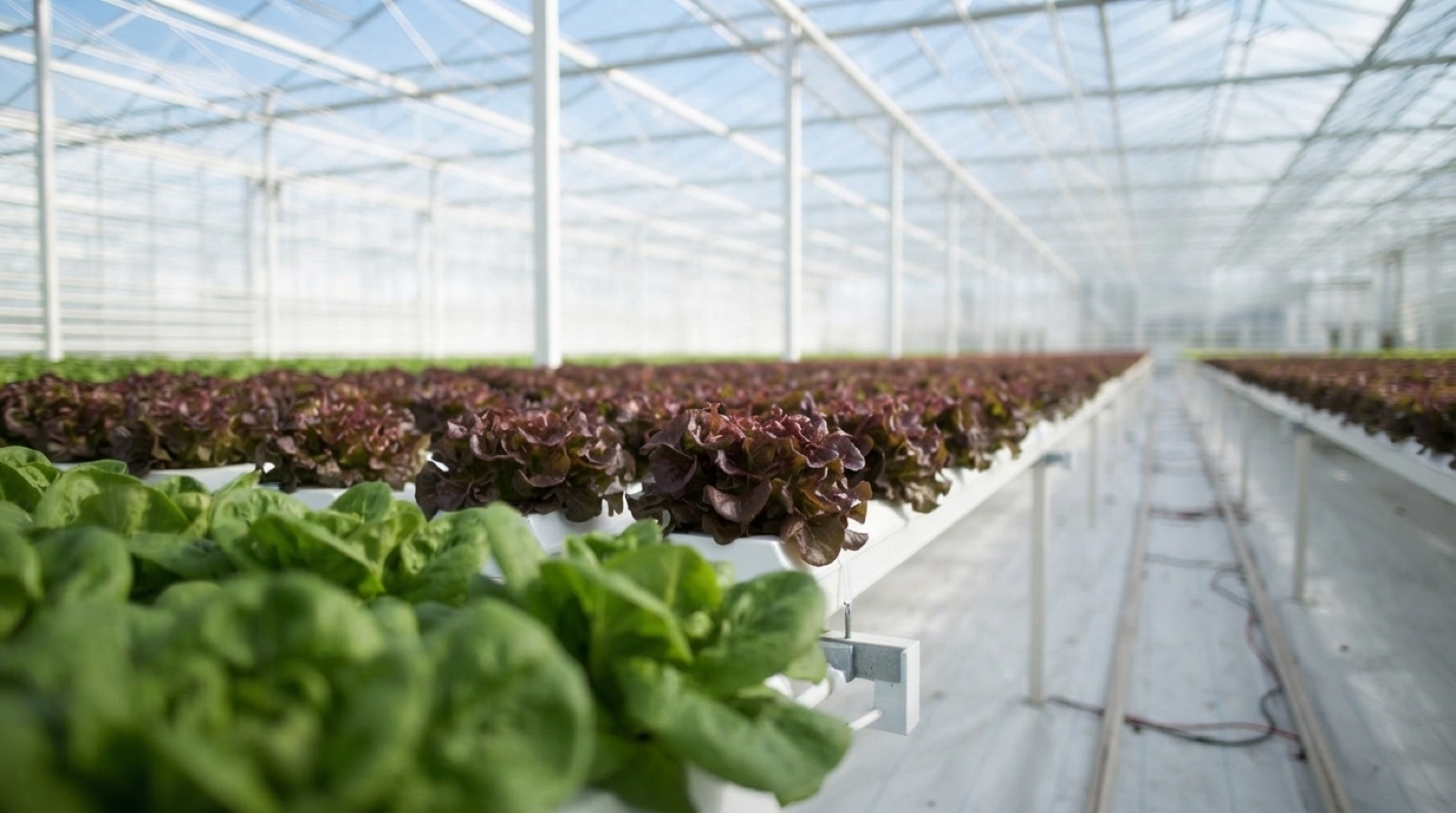
Red Crispy Lettuce
Red crispy is the red-pigmented counterpart of the green crispy head, sold wholehead and into mixed-leaf packs where colour intensity is part of the specification.
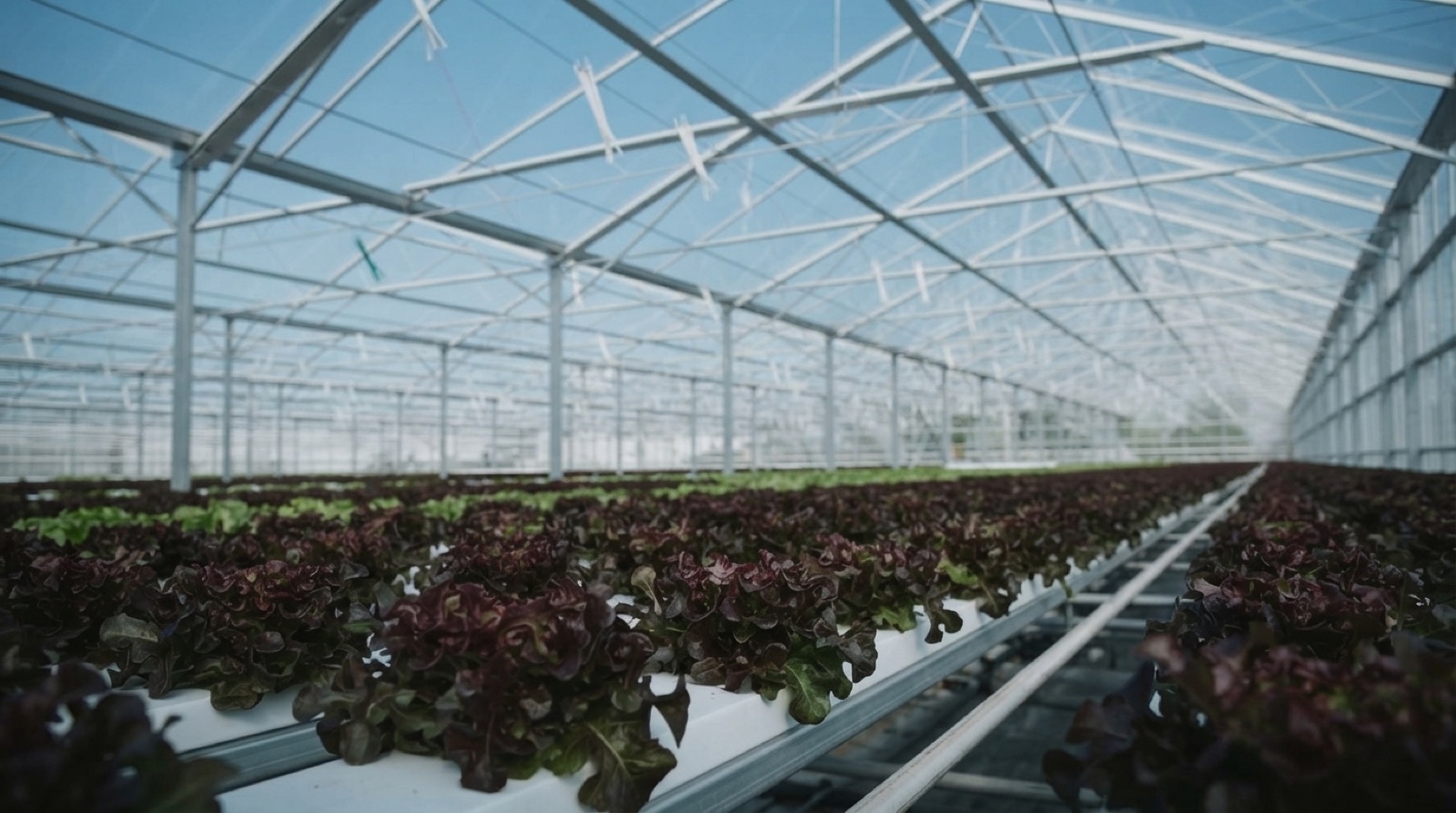
Red Oakleaf Lettuce
Red oakleaf lettuce carries the lobed leaf of the oakleaf types with red pigmentation, and most often reaches the consumer inside a multi-type pack.
La serre derrière laitue
Laitue, sous verre.
Systèmes de tables avec flotteurs, systèmes de gouttières mobiles (MGS) ou Deep Water avec NFT ou flux et.
Partez de la taille de la pomme, du cycle de culture et de la manutention à la récolte pour définir le système de culture, l’espacement et le climat.
Des récoltes répétées. Une qualité et une taille de pomme régulières.
Systèmes de tables avec flotteurs, systèmes de gouttières mobiles (MGS) ou Deep Water avec NFT ou flux et.
Planifiez les pommes vendues par cycle, les calibres, le conditionnement et les commandes récurrentes.
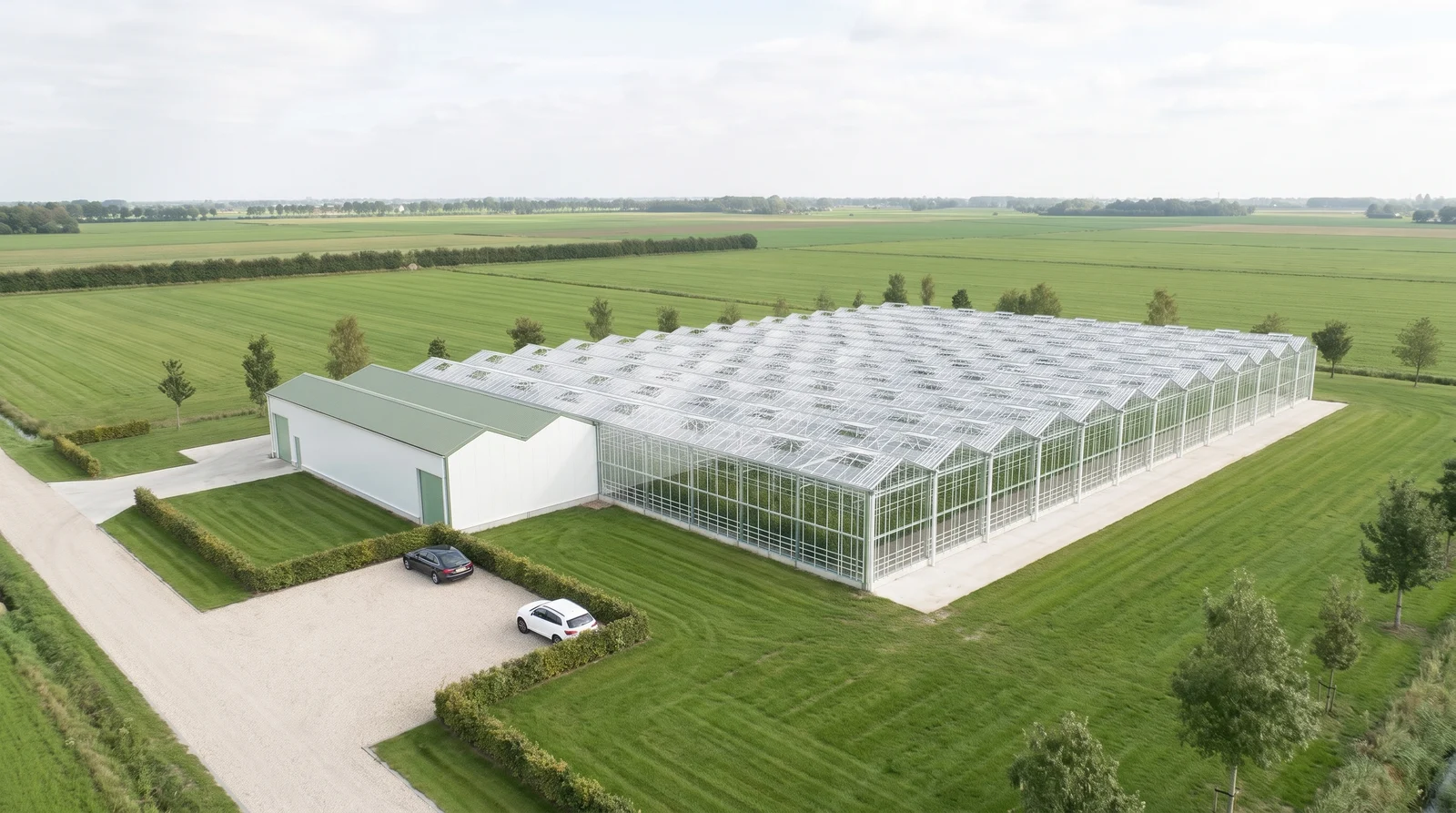
Basic Organic Greenhouse Series
Des serres Venlo en verre pour les cultures en sol. Fixez la culture, les planches, les accès et le calendrier de production avant de spécifier les systèmes.
¼ acre½ acre1 acreExplorer Basic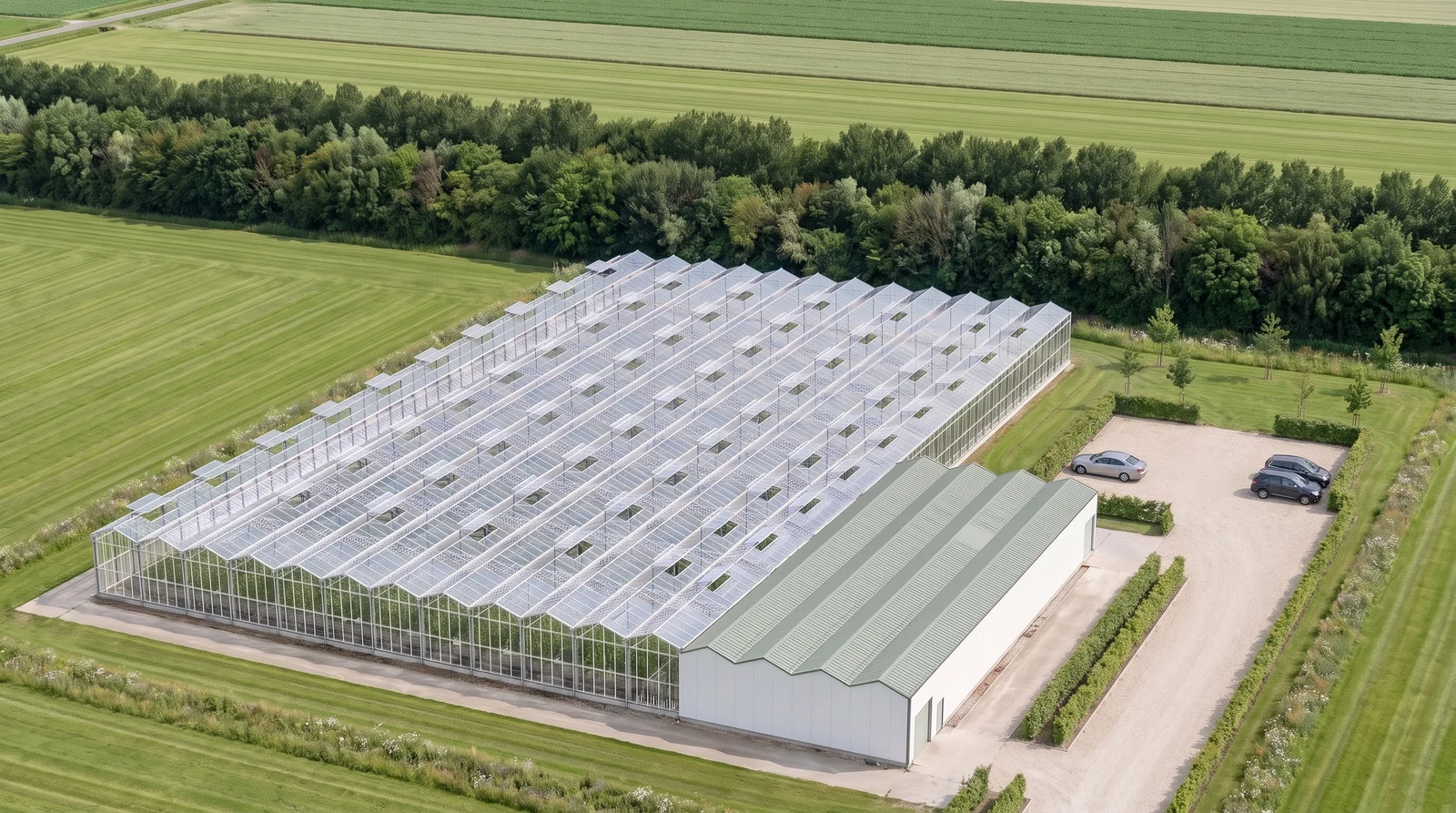
Expert Hydroponic Greenhouse Series
Une structure définie pour l’hydroponie de production. La culture détermine le système de culture, la stratégie climatique et l’organisation de la récolte.
½ acre1 acre2 acresExplorer Expert3,840 m²41,333 sq ft de surface de culture, c’est là qu’un plan laitue commence généralement (GrowPro Basic 1 acre). Comparer les neuf modèles
Mettez votre prochaine récolte
sous verre.
Votre culture, votre site et le volume que vous voulez vendre. Trouvons la serre et les systèmes qui correspondent.
Besoin d’une serre sur mesure ?GrowPro Basic
Nous pouvons aussi planifier une autre culture ou un programme de cultures mixtes.
Parler de votre projet Continuez vers notre formulaire de contact. Sans engagement.Des lectures qui pourraient vous intéresser

Grow Like a Pro: Starting Smart, Growing Strong
How Grow Like a Pro combines smart farming, CEA technology and local partnerships for eco-friendly, profitable, pesticide-free greenhouse pr
Lire l’article
Maryland Cannabis Greenhouse: Year One
One year on: how the Maryland cannabis greenhouse, paired with an adjacent indoor facility, cut the energy bill and lifted both yields and q
Lire l’article
The Case for a College Greenhouse
Why a college greenhouse belongs in the curriculum: teaching science, craftsmanship, business logic and sustainability, and preparing studen
Lire l’article
The Case for a High School Greenhouse
Why every high school greenhouse matters: how it makes STEM tangible, builds responsibility and teamwork, and helps students discover their
Lire l’article
Greenhouses in Education: The Case for Schools
Greenhouses in education reconnect students to reality — the full case for why every school, high school, college and trade program should h
Lire l’article
The Origins of Greenhouse Horticulture: My Backyard
A tour through greenhouse horticulture history: from 19th-century Westland fruit walls to the “City of Glass” and today’s international high
Lire l’article