
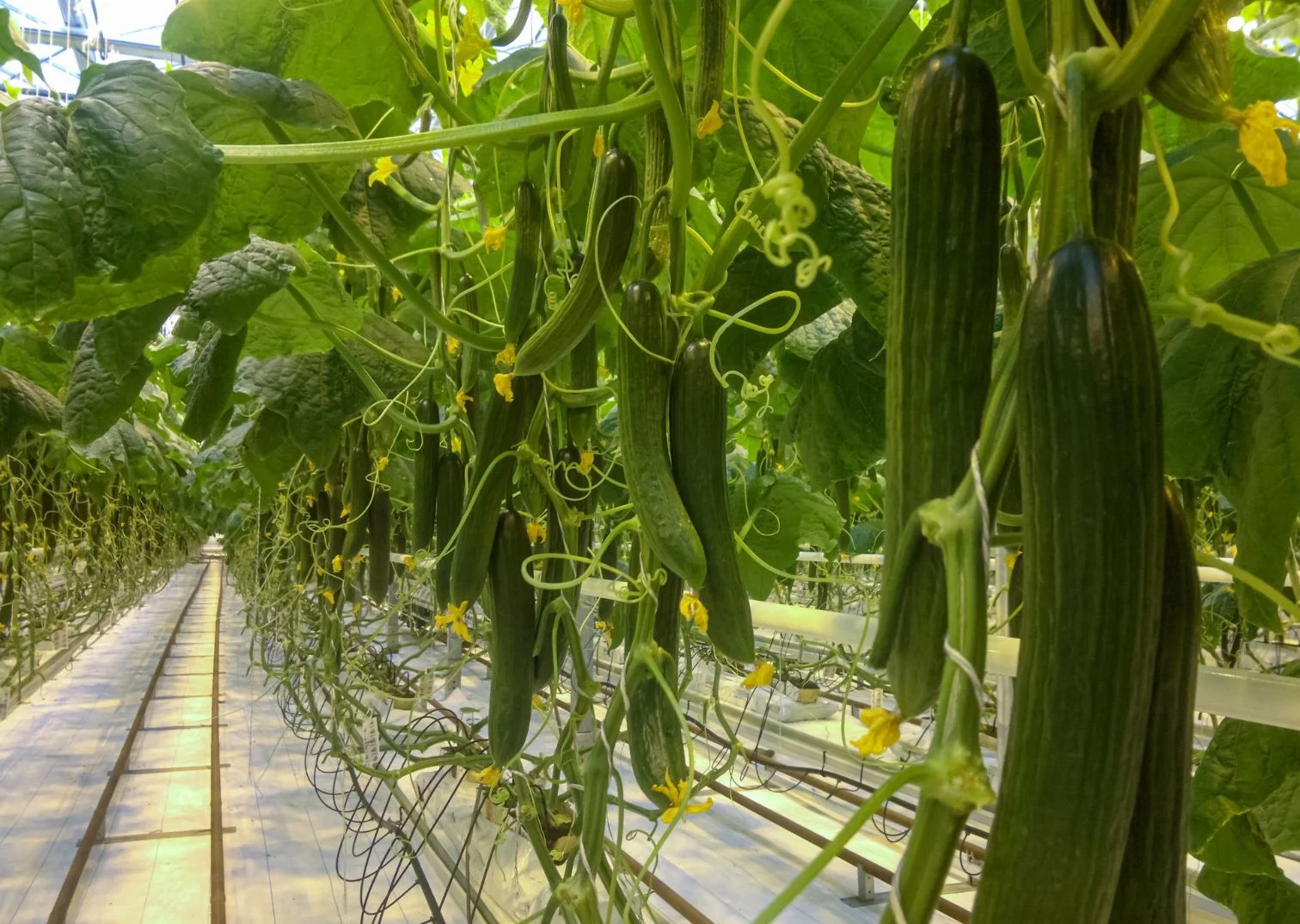
Crops · Fruiting vegetable
Cucumber.
Rapide, gourmand, et sans indulgence pour un climat lent.
Start with the end product
A crop with a market.
Greenhouse cucumber cultivation combines a selected fruit type with a trained vine, managed root zone and repeated harvesting. Product grade, available light and the crop-replacement strategy shape the operation.
The fruit the buyer wants
Agree length, weight band, shape, colour and the acceptable grade. Long, midi, mini and snack are commercial categories; their specifications can overlap between buyers.
The unit you sell
A whole fruit, counted pack and pack sold by weight place different demands on grading. Smaller fruit does not automatically mean a shorter crop cycle or more revenue per greenhouse.
The delivery programme
Define the weeks and volume the customer needs. Include establishment and crop-change gaps before turning one crop’s performance into a supply promise.
Climate and season
Start with the growing conditions.
Choose the intended harvest period and location before deciding on heating, screens, ventilation or lighting.
Light and fruit load
The canopy must support both new growth and developing fruit. Match fruit retention, stem density and pruning to season and crop vigour. A small fruit type is not permission to overload the plant.
Temperature and humidity
Temperature influences crop development; moisture and condensation affect plant health. Ventilation, heating, screens and air movement need a coordinated strategy, including during crop establishment.
Water and the root zone
Drip irrigation follows the crop, weather and substrate response. Measure supply and drainage, monitor nutrient concentration and acidity, and design collection and treatment before reusing drain water.
A greenhouse changes the growing environment; it does not remove seasonal limits.
From layout to cultivation
Put the crop into a programme.
Use the selected layout to organise the next decisions. Dates and expected harvest need a crop adviser and a location-specific plan.
Specify the plants
Agree planting material, delivery stage and the nursery programme. Reserve any on-site space before setting the production layout.
Build the canopy
Check roots, irrigation and supports; train the crop for the selected system. A planting date is not the start of saleable harvest.
Pick and renew
Register growth, fruit load and grade. Plan harvest rounds and crop work alongside the next planting and its supply gap.
Prepare the next crop
Include crop removal, cleaning, system checks and replanting. Agree separate compartment programmes where supply needs continuity.
How to cultivate
Support the canopy.
Manage the roots.
The training system and root-zone system are separate choices. Match both to the crop and the people who will work with it.
High-wire training
The main stem is supported on a string and progressively lowered as it grows. Side-shoot, leaf and fruit management keep the working canopy accessible. This creates a recurring task, with crop height, support loads and safe access to resolve in the greenhouse design.
Traditional / umbrella training
In a traditional system the plant reaches the crop wire and selected laterals develop from the top. It has a different canopy and labour pattern from high-wire lowering. Select the training route for the cultivar, season and available workforce; neither route is an automatic yield or labour winner.
Drip-fed substrate on gutters
Roots grow in a substrate such as stone wool or coir. Drippers supply nutrient solution; a gutter supports the root-zone system and collects drainage. The roots do not float in the gutter. Substrate choice, slab or container volume and irrigation must be designed together.
Soil cultivation and organic production
Soil-grown crops need their own bed, drainage, soil-health and rotation plan. Trellising is still needed. Organic is a production and certification route, not a synonym for growing in soil; local requirements and permitted inputs need checking.
Fruit set, hygiene and crop changes
Commercial seedless greenhouse types are commonly parthenocarpic: they can set fruit without fertilisation. Do not copy a tomato pollination plan into this crop. Confirm the selected cultivar’s requirements, use clean planting material, scout the crop and plan cleaning between plantings.
The people and the systems
Make the daily work possible.
Match crop care, harvest and packing capacity to the growing programme.
Train and inspect
Plan regular clipping or twisting, pruning, fruit-load management and, for high wire, lowering. Access and staff skill matter as much as the support hardware.
Pick to specification
Inspect frequently and pick to the agreed size and grade. Gentle handling, grading and packing preserve quality; growing every fruit larger is not the objective.
Replace and restart
Allow time to remove the crop, clean and prepare the system, receive plants and establish the next crop. Separate compartments can support staggered programmes, with their own hygiene and climate arrangements.
Quel type de cucumber ?
Les catégories commerciales.
Récolte fréquente. Calibre régulier des fruits. La catégorie que vous vendez détermine la charge de plante, le rythme de récolte et la serre.
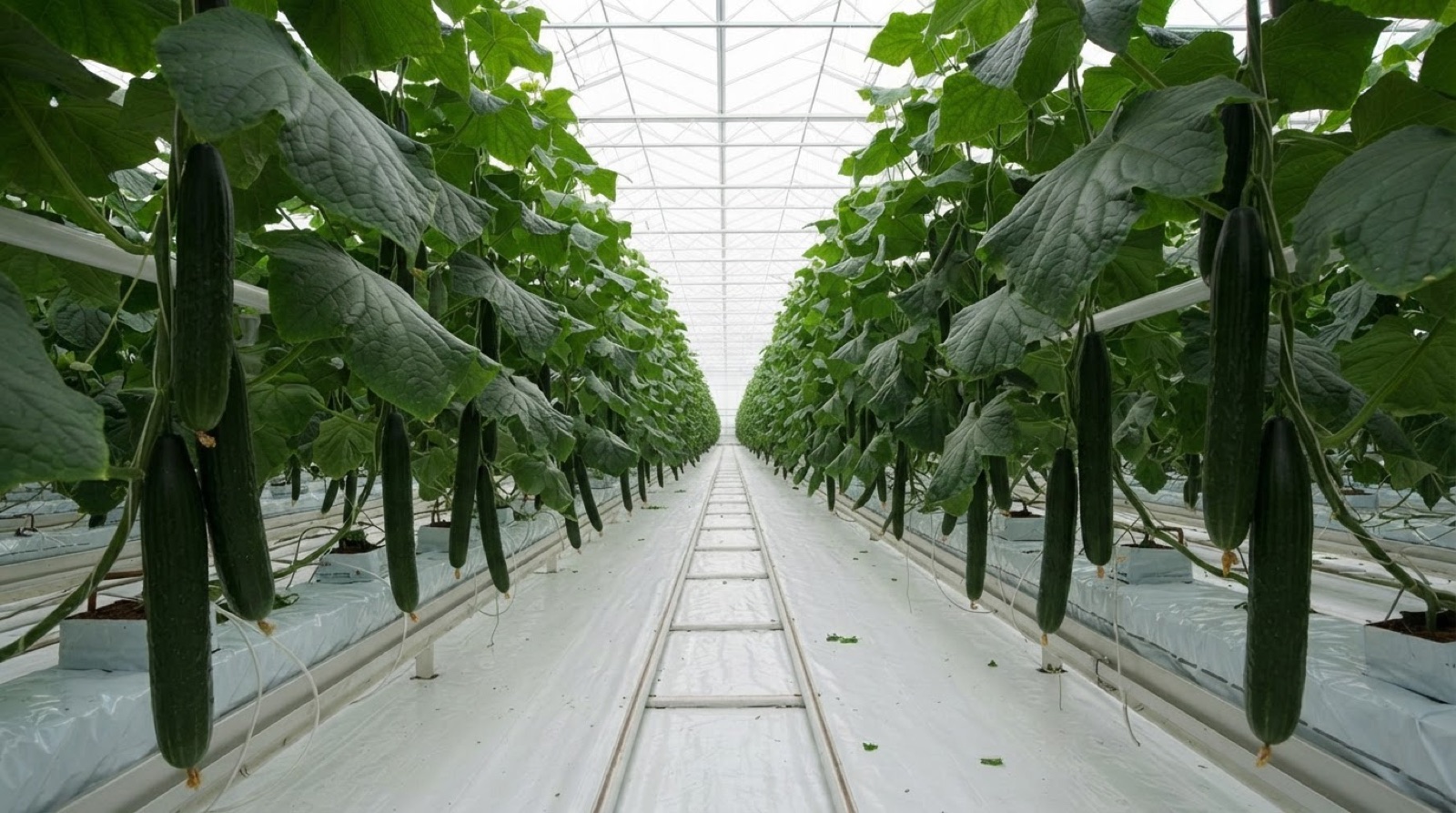
Long Cucumbers
Long cucumber is the classic Dutch glasshouse cucumber, sold by the piece to a tight length and straightness grade.
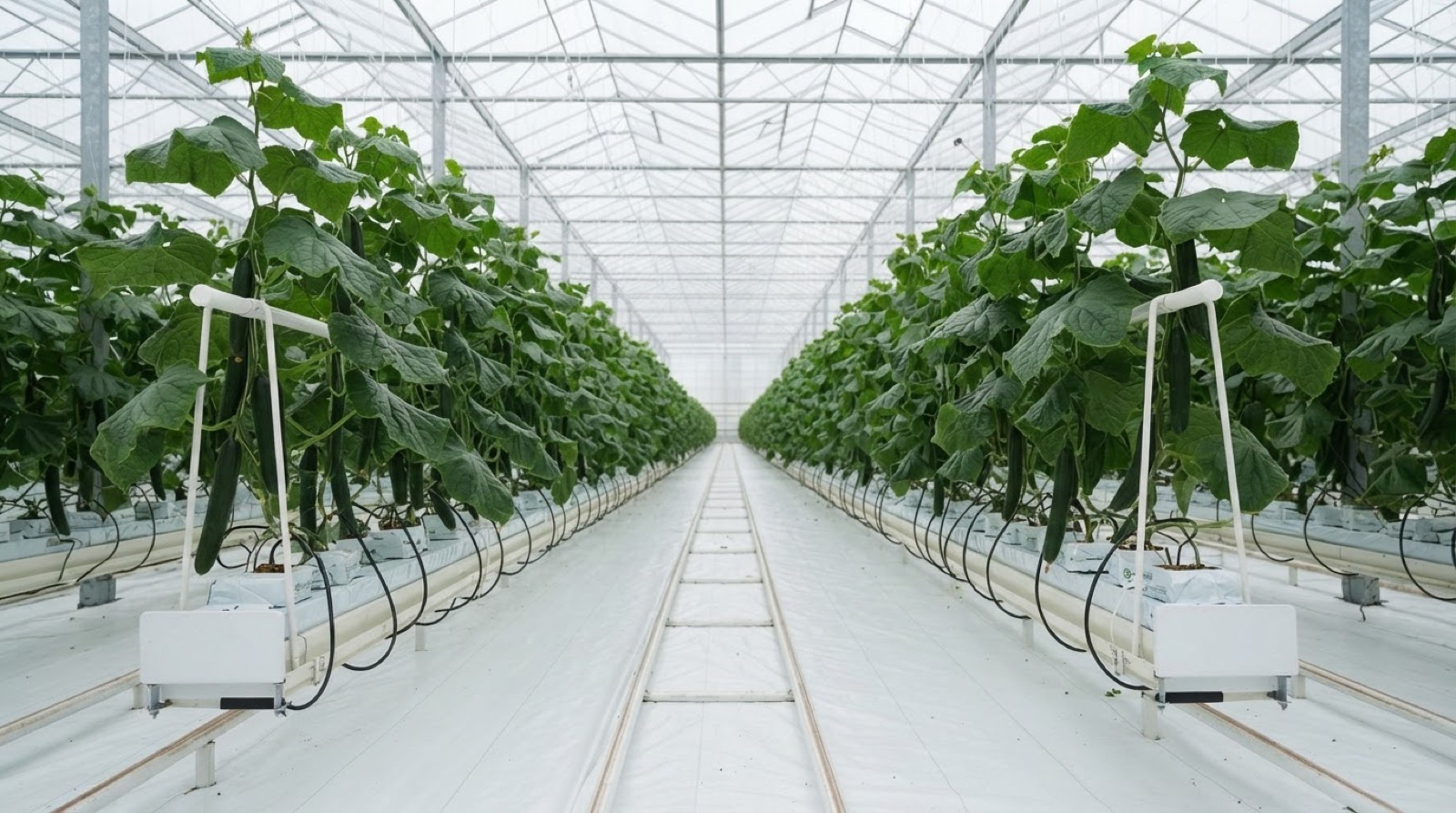
Midi Cucumbers
Midi cucumber is a separate pack format with its own cultivars, fruit count and picking labour.
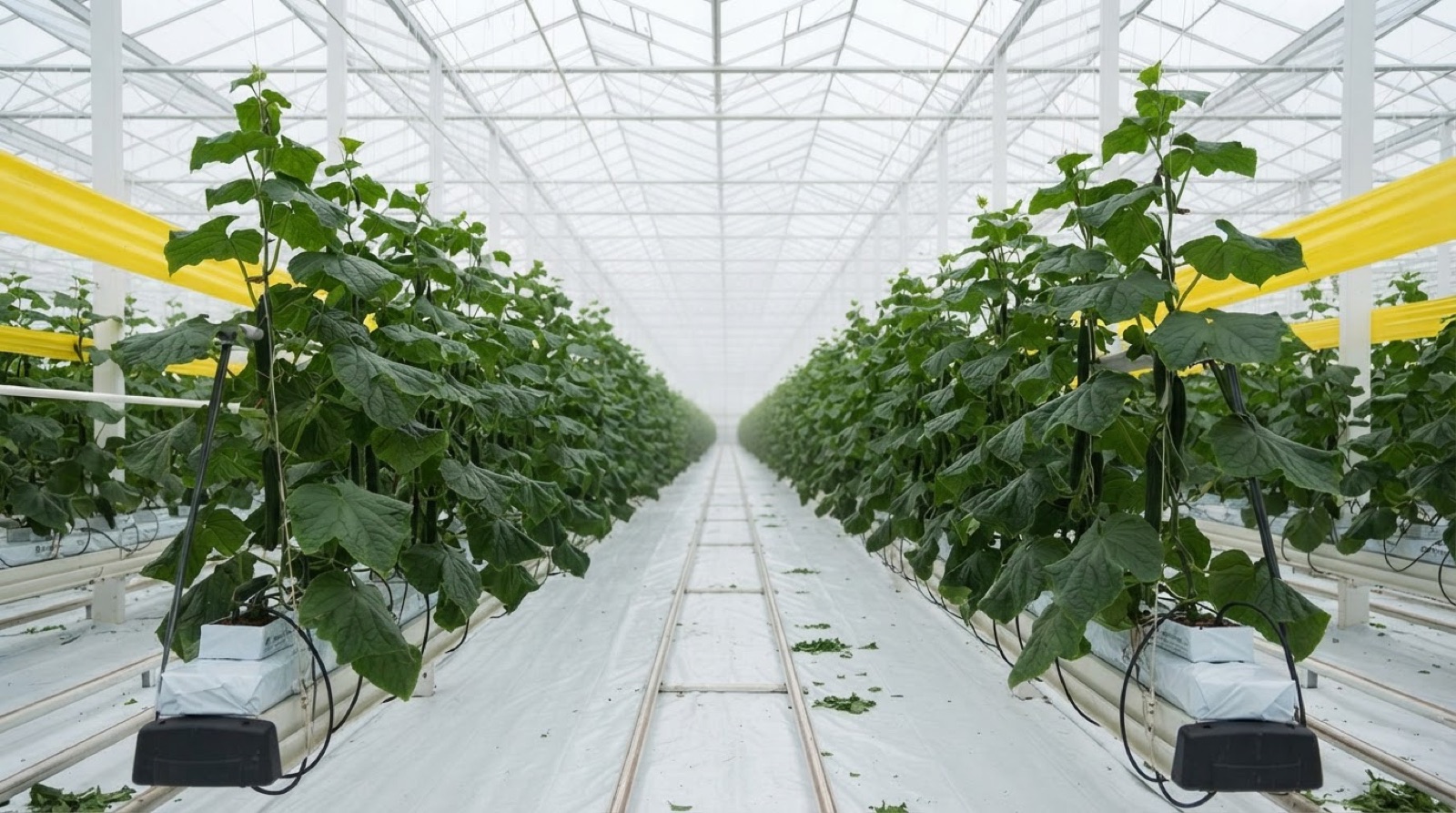
Mini Cucumbers
Mini cucumber is picked often, and pick frequency shapes the layout of the house.
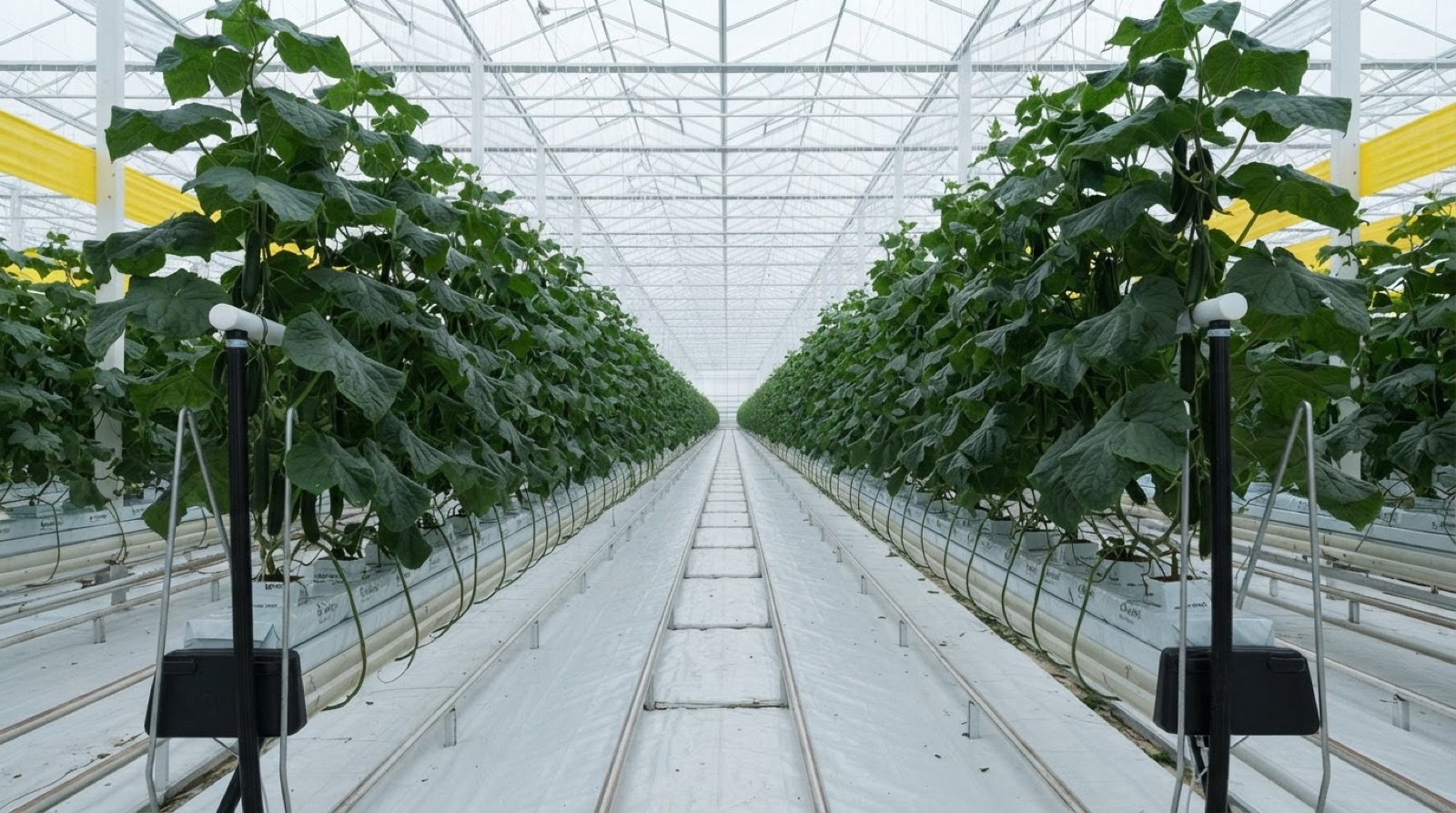
Snack Cucumbers
Snack cucumber runs a short cycle, which makes scheduling the design question.
Le concombre pousse plus vite que tout autre légume-fruit sous verre, et cette vitesse est l’argument commercial de la culture. Le fruit noue et se remplit en jours plutôt qu’en semaines, de sorte qu’une serre peut enchaîner plusieurs cultures dans l’année et suivre un marché au lieu de s’engager sur un seul cycle long. Cette même vitesse est le risque : la culture traduit une erreur de climat presque aussitôt, et il reste peu de temps pour redresser une plante bloquée ou surchargée avant que cela n’apparaisse au classement.
Ce que la culture demande
La plante est cultivée sur substrat et conduite sur fil haut, comme la tomate, mais son profil d’exigences est plus marqué. La transpiration est élevée, le fruit est essentiellement composé d’eau, et la plante avorte les charges qu’elle ne peut pas porter. La gestion de l’hygrométrie et la capacité d’irrigation pèsent donc davantage que sur une culture plus lente, et le système climatique est dimensionné pour les pointes plutôt que pour les moyennes.
Ce qui sépare les variétés
Les types commerciaux se distinguent par la longueur et la masse du fruit — long, midi, mini et snack — et ces catégories ont glissé au fil du temps, à mesure que la sélection a évolué. Une appellation seule ne suffit plus à identifier un produit, et c’est pourquoi un projet se spécifie sur un cultivar nommé plutôt que sur une catégorie. Le type détermine le format d’emballage, la main-d’œuvre de récolte et le prix, et chacun de ces éléments se planifie pour la culture réellement conduite.
DutchGreenhouses® conçoit la structure, le climat, les écrans et l’irrigation autour du type de concombre, de son cycle et du climat local, afin que la serre puisse absorber la demande de pointe de la culture et non sa moyenne. Contactez-nous pour planifier une serre à concombres.
La serre derrière concombres
Concombres, sous verre.
Culture sur substrat sur fil haut.
Coordonnez l’irrigation, la gestion de l’hygrométrie et l’accès à la récolte avec une culture à croissance rapide.
Récolte fréquente. Calibre régulier des fruits.
Culture sur substrat sur fil haut.
Construisez le plan de vente autour du calibre, du nombre de fruits et de la fréquence de récolte.
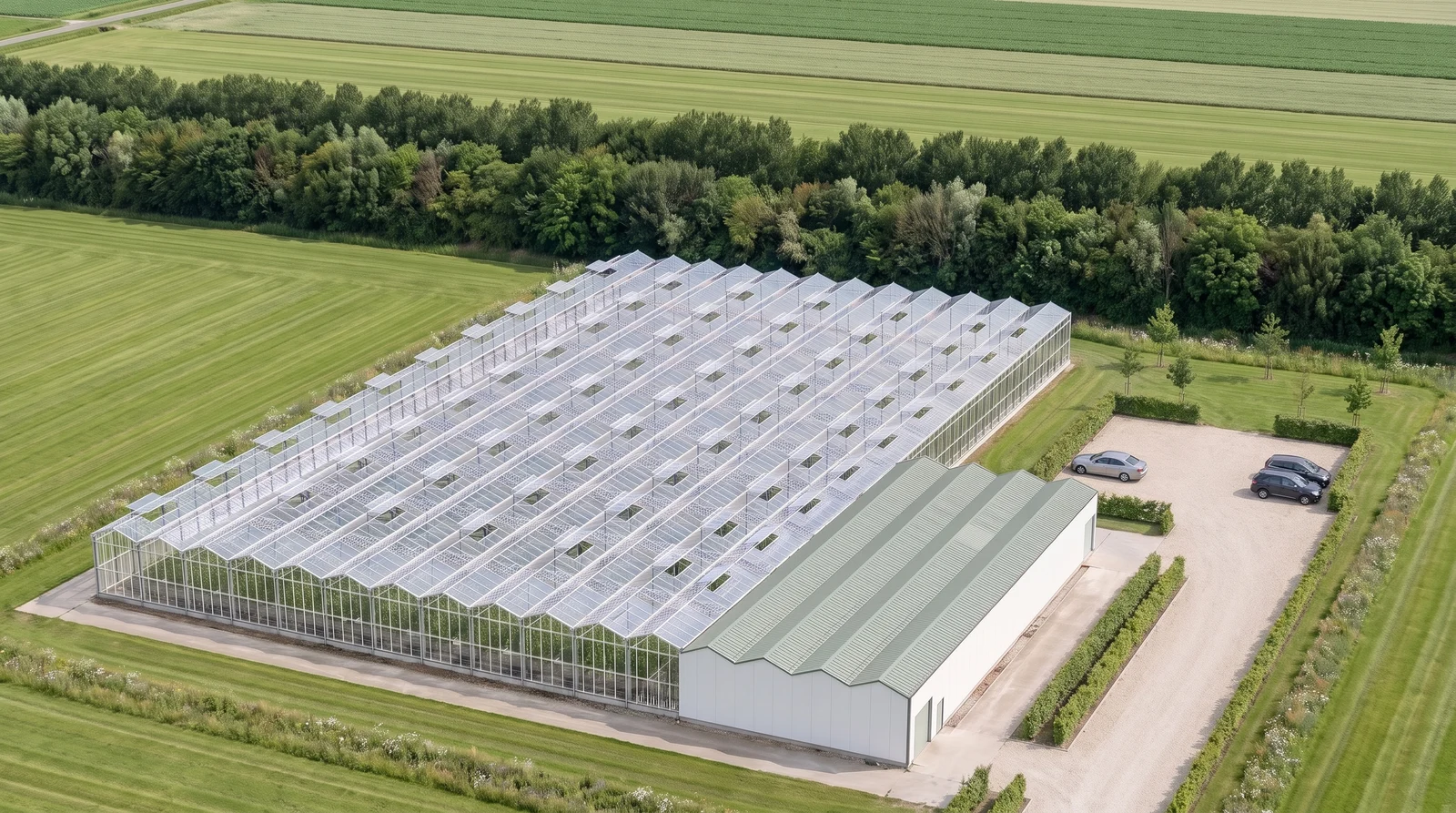
Expert Hydroponic Greenhouse Series
Une structure définie pour l’hydroponie de production. La culture détermine le système de culture, la stratégie climatique et l’organisation de la récolte.
½ acre1 acre2 acresExplorer Expert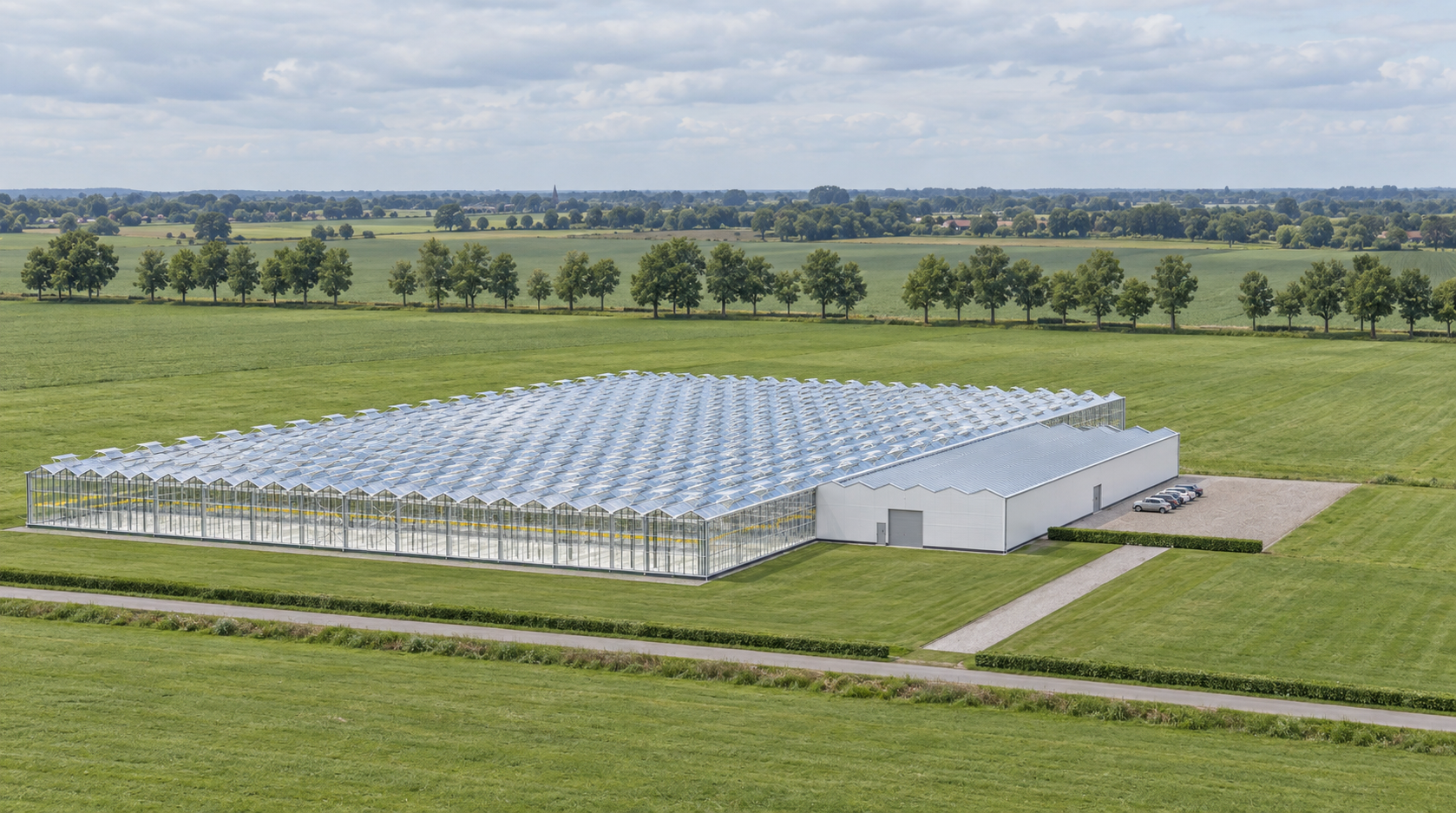
Plus Hydroponic Greenhouse Series
Notre plus grande gamme standard. Adaptez la surface de culture plus importante à la demande de la culture, à la main-d’œuvre, aux réseaux et au marché que vous comptez approvisionner.
2 acres4 acres8 acresExplorer Plus4,032 m²43,400 sq ft de surface de culture, c’est là qu’un plan concombres commence généralement (GrowPro Expert 1 acre). Comparer les neuf modèles
Mettez votre prochaine récolte
sous verre.
Votre culture, votre site et le volume que vous voulez vendre. Trouvons la serre et les systèmes qui correspondent.
Besoin d’une serre sur mesure ?GrowPro Expert
Nous pouvons aussi planifier une autre culture ou un programme de cultures mixtes.
Parler de votre projet Continuez vers notre formulaire de contact. Sans engagement.Des lectures qui pourraient vous intéresser

Grow Like a Pro: Starting Smart, Growing Strong
How Grow Like a Pro combines smart farming, CEA technology and local partnerships for eco-friendly, profitable, pesticide-free greenhouse pr
Lire l’article
Maryland Cannabis Greenhouse: Year One
One year on: how the Maryland cannabis greenhouse, paired with an adjacent indoor facility, cut the energy bill and lifted both yields and q
Lire l’article
The Case for a College Greenhouse
Why a college greenhouse belongs in the curriculum: teaching science, craftsmanship, business logic and sustainability, and preparing studen
Lire l’article
The Case for a High School Greenhouse
Why every high school greenhouse matters: how it makes STEM tangible, builds responsibility and teamwork, and helps students discover their
Lire l’article
Greenhouses in Education: The Case for Schools
Greenhouses in education reconnect students to reality — the full case for why every school, high school, college and trade program should h
Lire l’article
The Origins of Greenhouse Horticulture: My Backyard
A tour through greenhouse horticulture history: from 19th-century Westland fruit walls to the “City of Glass” and today’s international high
Lire l’article