
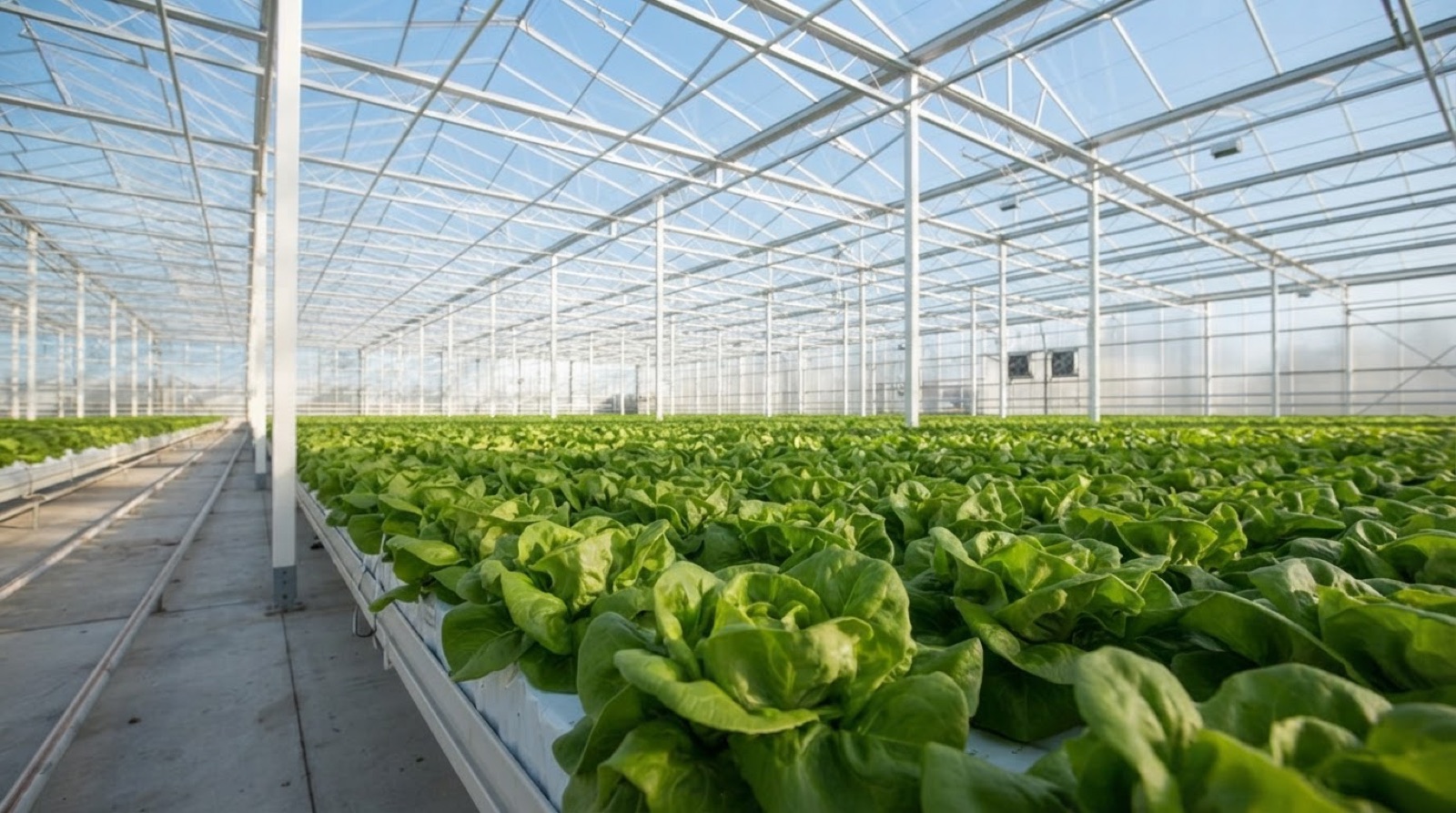
Lettuce
Butterhead Lettuce.
Des feuilles souples et lâchement enroulées, et le type le moins tolérant à la manipulation.
Feuilles souples, trajets courts
La beurre est surtout de l’eau, et le petit reste est la raison de sa présence dans l’assiette : vitamine C, potassium et folates, mangés crus et dont rien n’est perdu à la cuisson. Une feuille souple est une feuille pleine d’eau, ce qui rend le type à la fois agréable à manger et difficile à déplacer.
La souplesse fixe le rythme. La pomme se meurtrit là où on la manipule et se flétrit là où elle attend : chaque transfert, chaque caisse et chaque journée de chambre froide supplémentaires se voient sur les feuilles extérieures, celles que l’acheteur regarde en premier. Ce qui se perd est l’état, non le contenu, mais c’est sur l’état qu’une pomme entière est classée.
La distance décide de la part qui en est dépensée avant l’arrivée. Une serre proche de son marché conduit la culture de la coupe au rayon en une seule chaîne courte, avec moins de transferts et moins de temps en caisse. Sur un type souple, les feuilles extérieures parées sont le poste de perte, et c’est une chaîne courte qui les maintient sur la pomme.
Valeurs nutritionnelles
Laitue beurre, crue
Pour 100 g
- Énergie
- 13 kcal
- Matières grasses
- 0.22 g
- Glucides
- 2.23 g
- dont sucres
- 0.94 g
- Fibres
- 1.1 g
- Protéines
- 1.35 g
- Sodium
- 5 mg
- Potassium
- 238 mg
- Vitamine C
- 3.7 mg
Source : USDA FoodData Central, FDC 168429
La beurre est la laitue à feuilles souples vendue en pomme entière, ses feuilles extérieures intactes, et c’est le type que la plupart des acheteurs européens ont en tête lorsqu’ils demandent de la laitue. La feuille est tendre et se meurtrit facilement : la manipulation, de la récolte au conditionnement, décide autant de la catégorie commerciale que la conduite de culture.
Ce que la culture demande
La culture est à cycle court et hydroponique, plantée puis entièrement récoltée de nombreuses fois par an. La pomme doit se fermer régulièrement sans devenir si dense que les feuilles intérieures ne puissent plus transpirer, condition dans laquelle se développe la nécrose marginale. L’espacement, la durée du cycle et le climat en fin de cycle sont les leviers, et l’agencement du système décide du nombre de cycles que le bâtiment assure réellement.
Ce que la serre doit faire
La beurre est souple, et la souplesse est fragile. La pomme se meurtrit à la manipulation et perd son état rapidement une fois coupée : la distance entre le rang le plus éloigné et la chaîne du froid relève donc de l’agencement, et non d’un problème logistique à résoudre après la construction.
Le reste découle du cycle. Une culture à cycle court tourne de nombreuses fois par an : la serre est une machine à débit, où la densité de plantation, le système d’eau en recirculation et le circuit de récolte décident de la production annuelle plus que n’importe quelle consigne isolée. Le mouvement d’air mérite sa propre ligne, car la nécrose marginale suit la transpiration à la marge de la feuille, et un air homogène à travers le couvert en est le moyen de contrôle.
DutchGreenhouses® conçoit la structure, le climat, les écrans et l’irrigation autour du type de laitue, de son système et du climat local, pour que les cycles s’enchaînent à la qualité de pomme sur laquelle le marché classe. Contactez-nous pour planifier une serre à laitues.
La laitue beurre, questions et réponses
Faut-il viser le poids de la pomme ou le nombre de pommes ?
La laitue se vend à la pomme : c’est le nombre de pommes atteignant la catégorie commerciale sur une année qui détermine le chiffre d’affaires. Une pomme plus lourde produite plus lentement peut rapporter moins qu’une pomme plus légère sur un cycle plus court.
Le cultivar compte-t-il plus que le type ?
Pour la masse de la pomme, la tolérance à la densité et le risque de nécrose marginale, oui. Ce sont des propriétés du cultivar, et c’est pourquoi un projet laitue se planifie autour d’un cultivar nommé plutôt qu’autour du seul type.
Quelle est la cause de la nécrose marginale ?
Le calcium n’atteint pas les marges foliaires à croissance la plus rapide, sous l’effet de la transpiration et de la pression racinaire plutôt que de l’apport. La gestion du climat y répond ; l’ajout de calcium à la solution nutritive, généralement pas.
Other lettuce
varieties.
Des récoltes répétées. Une qualité et une taille de pomme régulières. La catégorie que vous vendez détermine la charge de plante, le rythme de récolte et la serre.
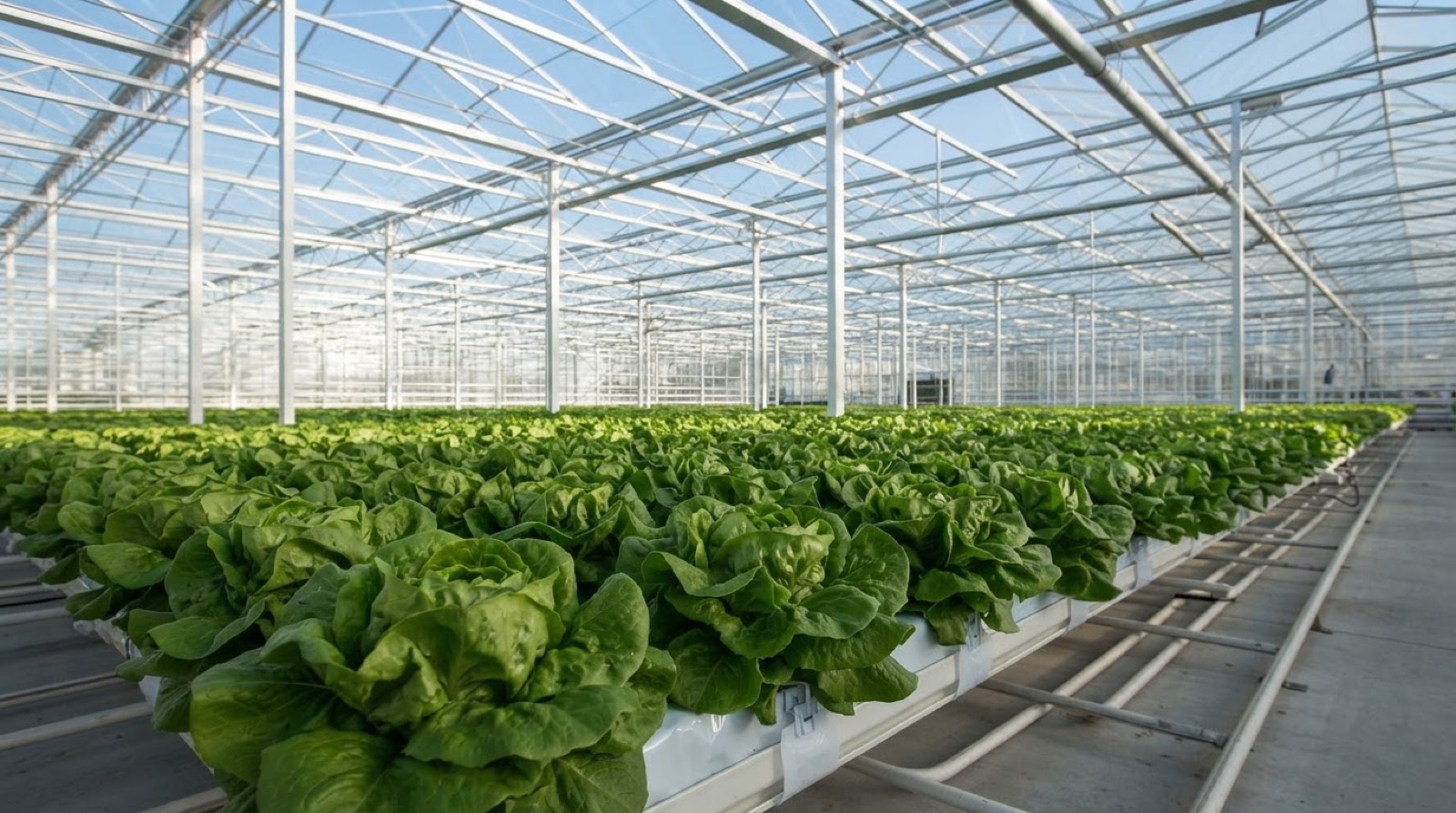
Green Crispy Lettuce
Green crispy is the dense, crunchy-leaved lettuce sold both as a wholehead and into processing, where the leaf holds its texture after cutting.
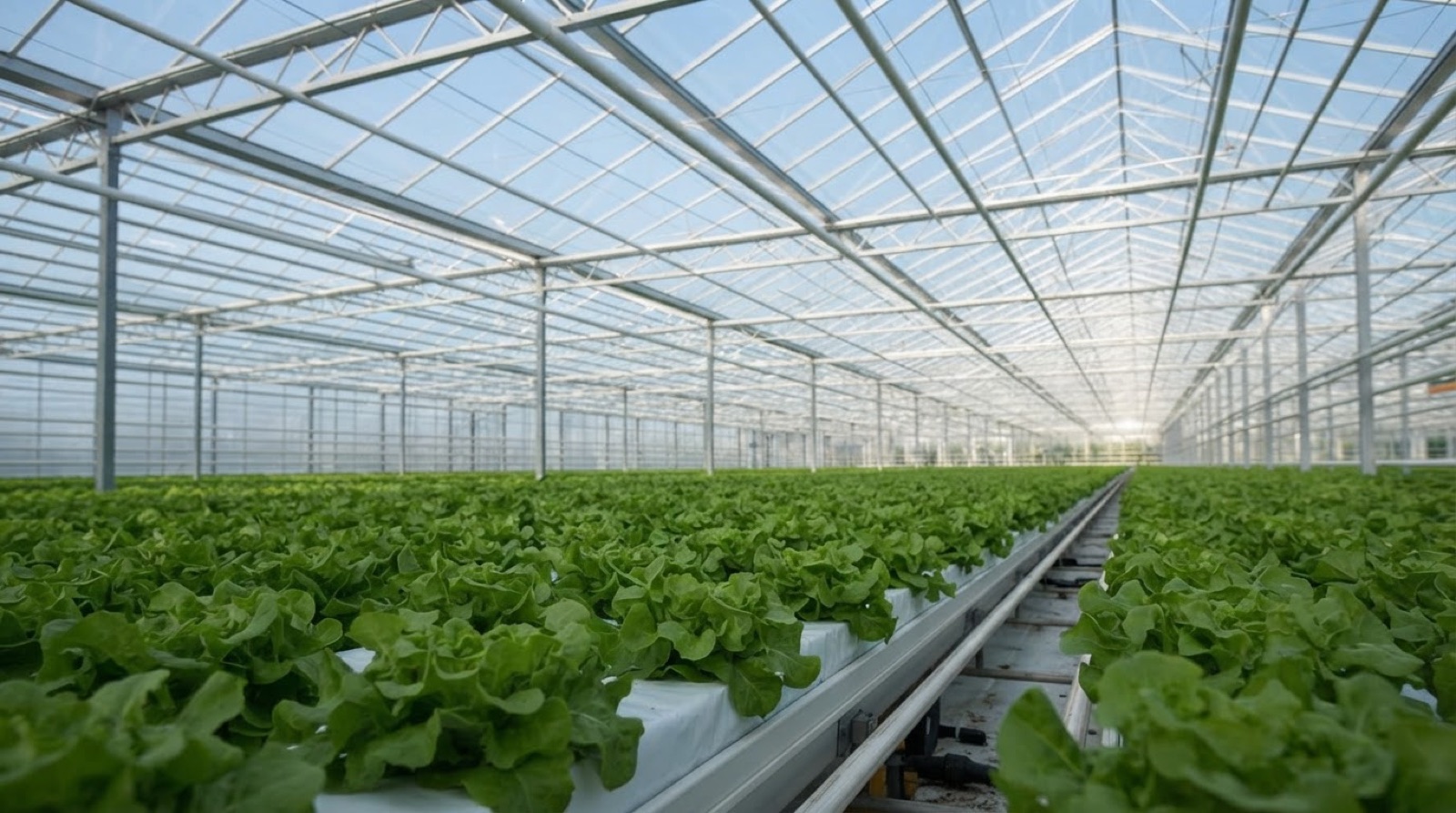
Green Oakleaf Lettuce
Green oakleaf lettuce is a lobed, soft-leaved head grown for leaf shape rather than for weight.
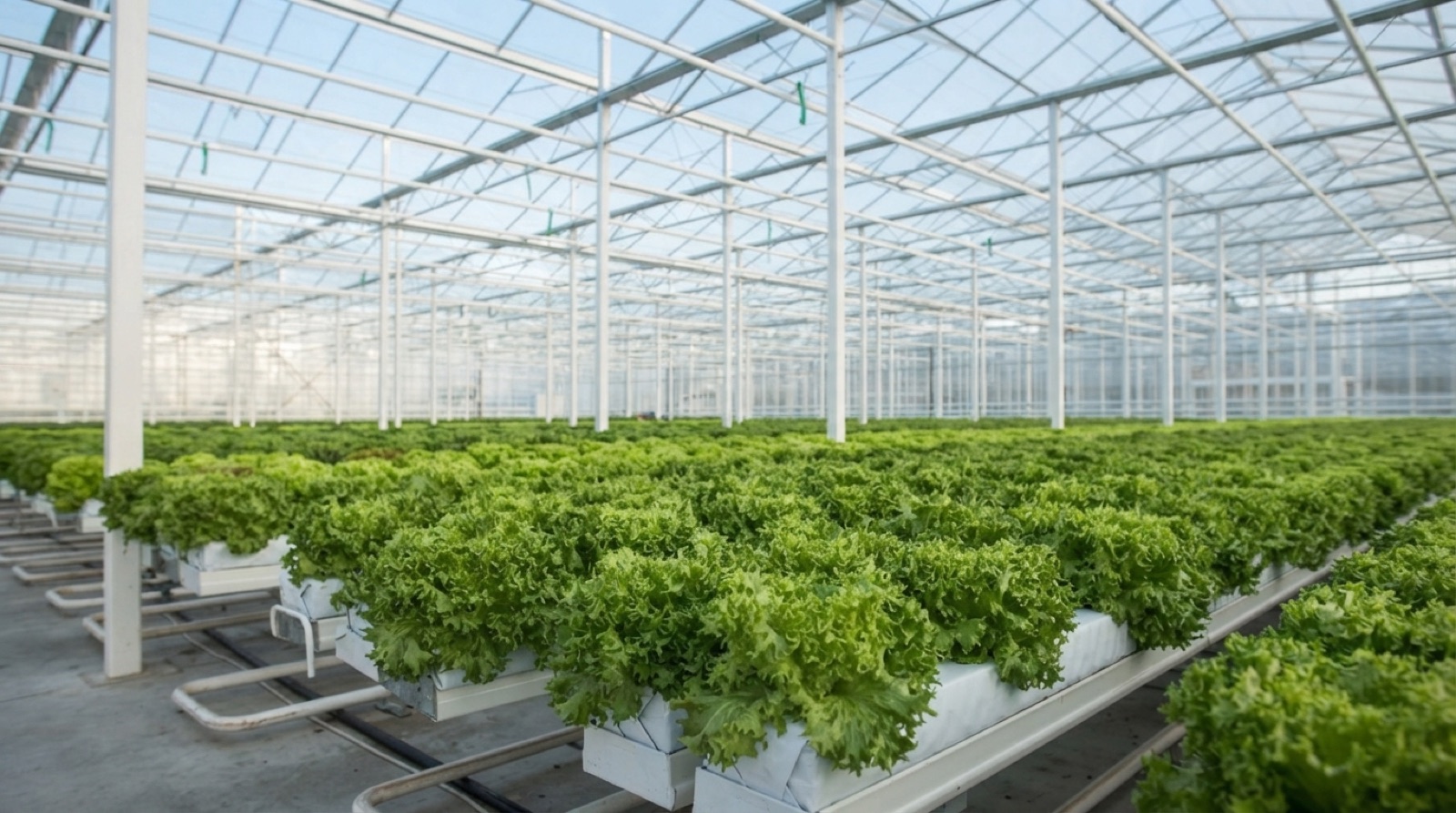
Lollo Bionda Lettuce
Lollo Bionda is the green Lolla lettuce, with a tightly curled leaf margin and bought for appearance rather than for weight.
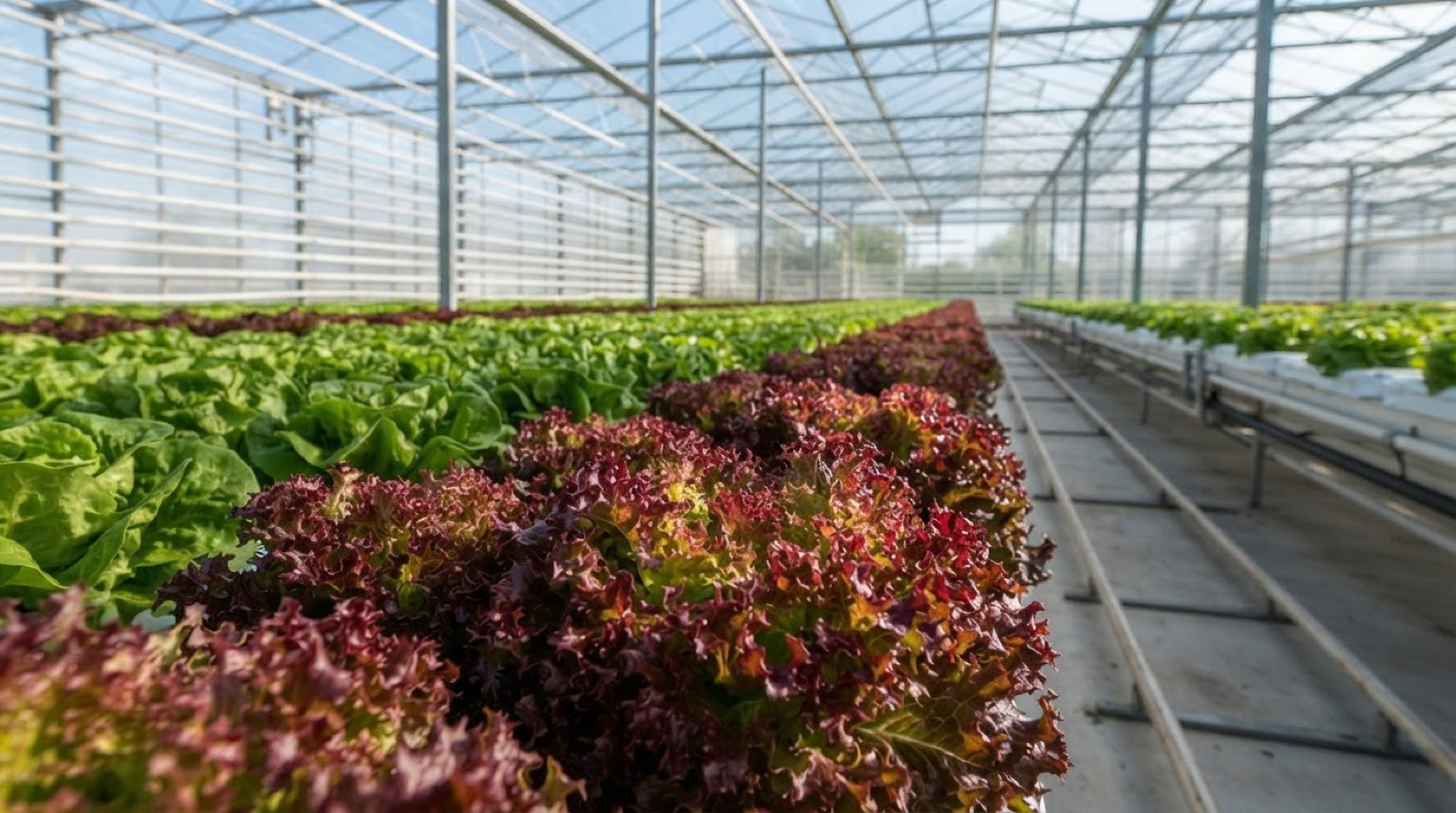
Lollo Rosso Lettuce
Lollo Rosso is the red Lolla lettuce, where the tightly curled leaf margin and the red pigmentation are both the product.
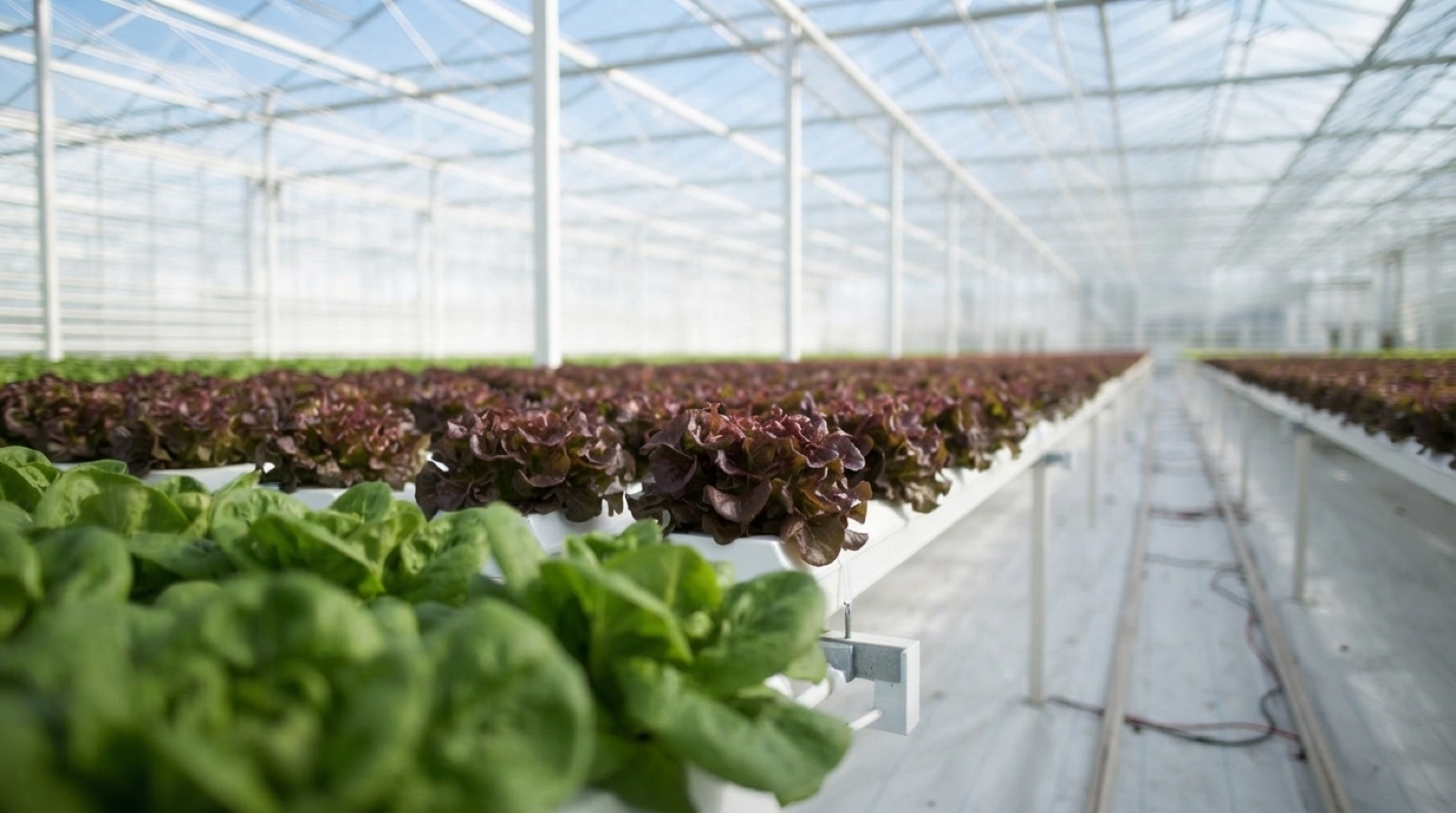
Red Crispy Lettuce
Red crispy is the red-pigmented counterpart of the green crispy head, sold wholehead and into mixed-leaf packs where colour intensity is part of the specification.
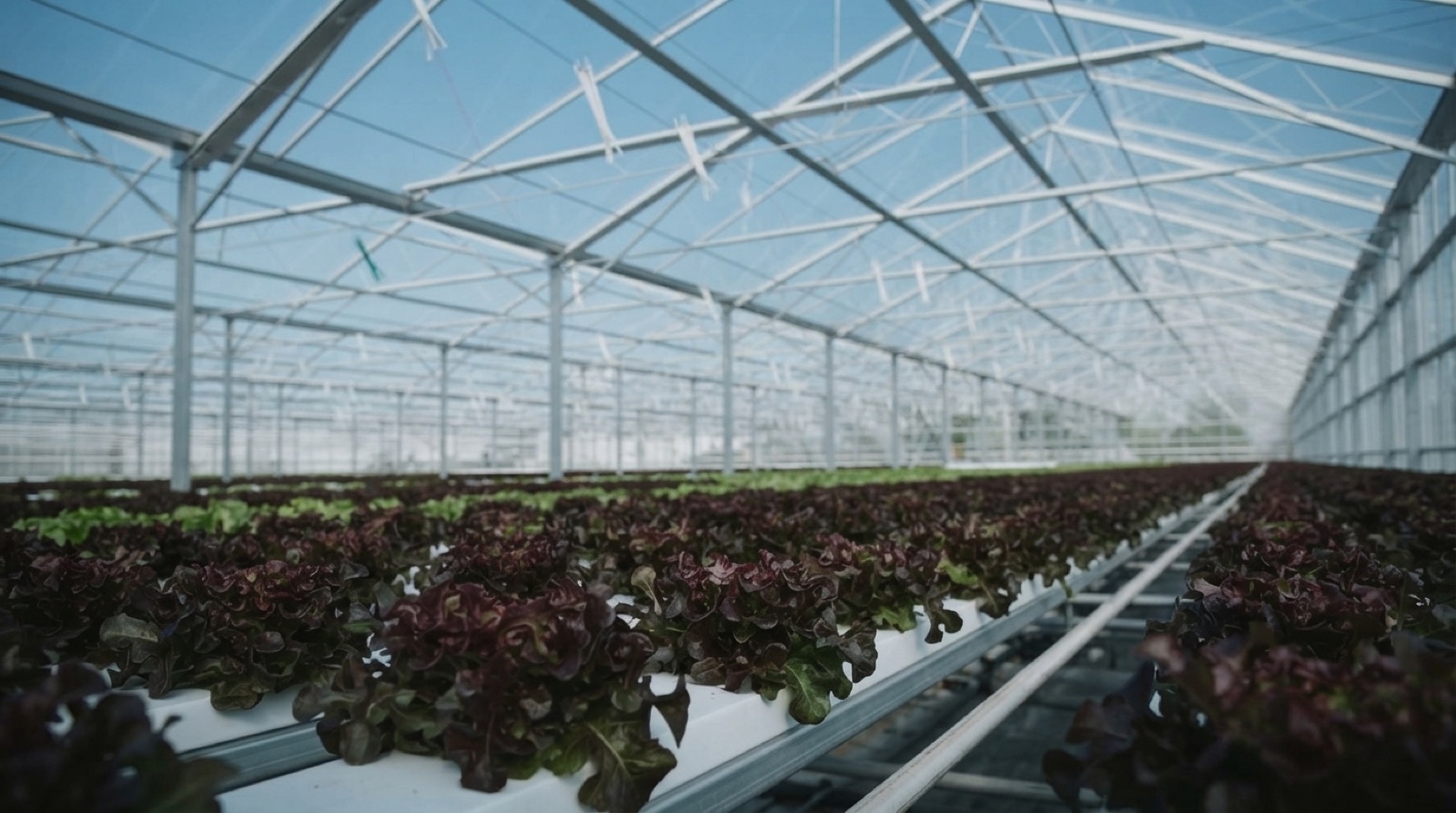
Red Oakleaf Lettuce
Red oakleaf lettuce carries the lobed leaf of the oakleaf types with red pigmentation, and most often reaches the consumer inside a multi-type pack.
La serre derrière laitue
Laitue, sous verre.
Systèmes de tables avec flotteurs, systèmes de gouttières mobiles (MGS) ou Deep Water avec NFT ou flux et.
Partez de la taille de la pomme, du cycle de culture et de la manutention à la récolte pour définir le système de culture, l’espacement et le climat.
Des récoltes répétées. Une qualité et une taille de pomme régulières.
Systèmes de tables avec flotteurs, systèmes de gouttières mobiles (MGS) ou Deep Water avec NFT ou flux et.
Planifiez les pommes vendues par cycle, les calibres, le conditionnement et les commandes récurrentes.
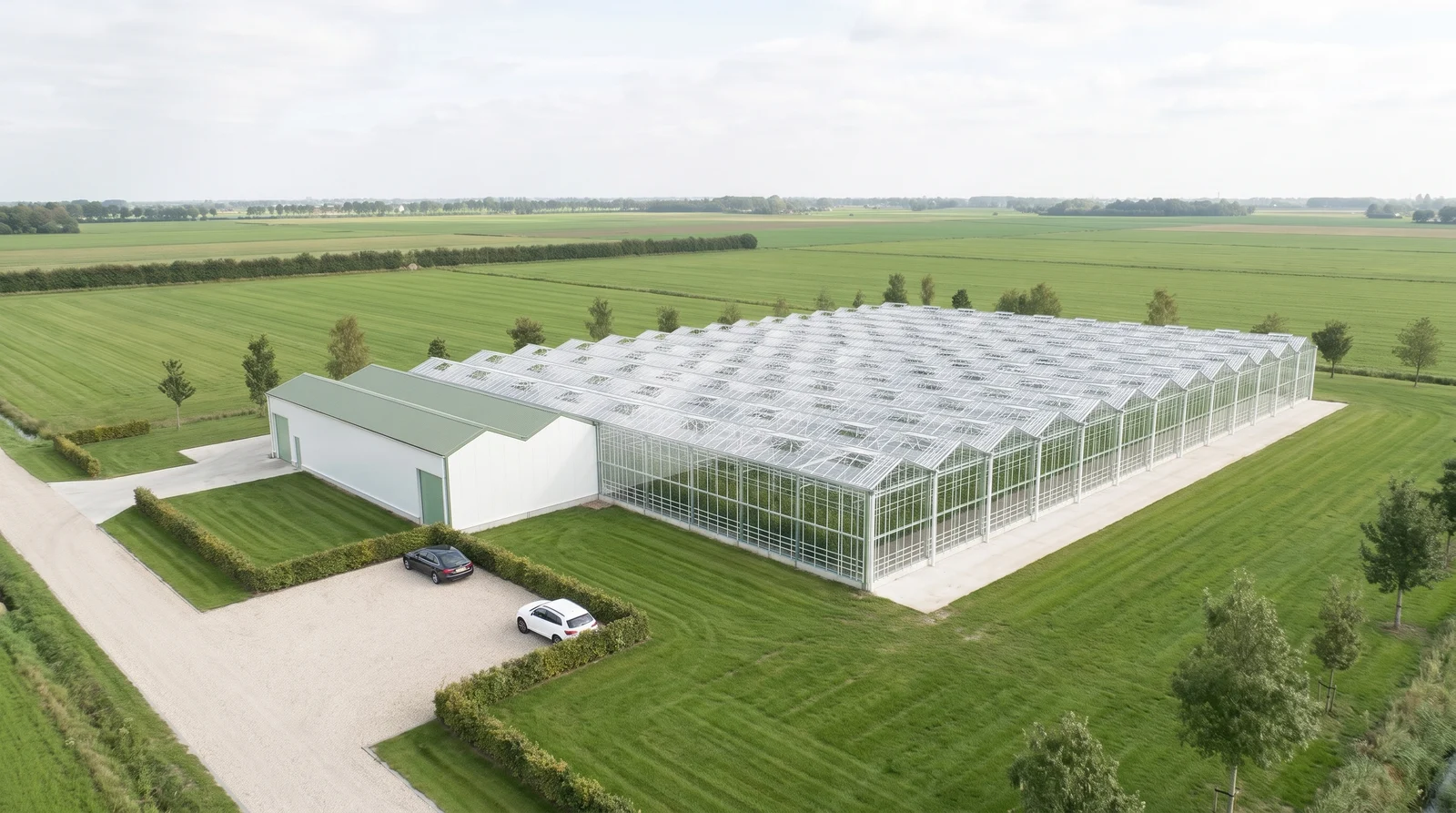
Basic Organic Greenhouse Series
Des serres Venlo en verre pour les cultures en sol. Fixez la culture, les planches, les accès et le calendrier de production avant de spécifier les systèmes.
¼ acre½ acre1 acreExplorer Basic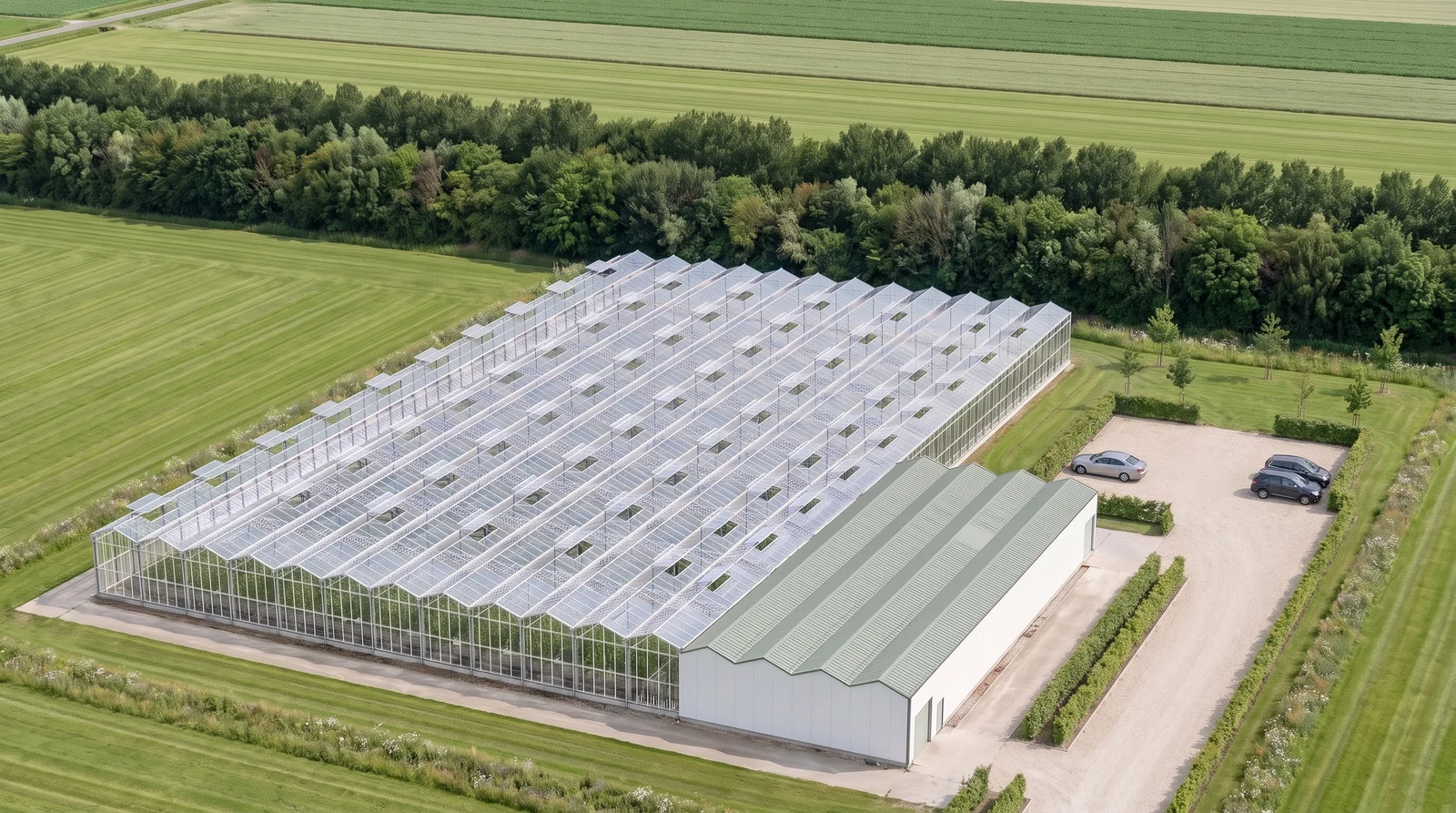
Expert Hydroponic Greenhouse Series
Une structure définie pour l’hydroponie de production. La culture détermine le système de culture, la stratégie climatique et l’organisation de la récolte.
½ acre1 acre2 acresExplorer Expert3,840 m²41,333 sq ft de surface de culture, c’est là qu’un plan laitue commence généralement (GrowPro Basic 1 acre). Comparer les neuf modèles
Mettez votre prochaine récolte
sous verre.
Votre culture, votre site et le volume que vous voulez vendre. Trouvons la serre et les systèmes qui correspondent.
Besoin d’une serre sur mesure ?GrowPro Basic
Nous pouvons aussi planifier une autre culture ou un programme de cultures mixtes.
Parler de votre projet Continuez vers notre formulaire de contact. Sans engagement.Des lectures qui pourraient vous intéresser

Grow Like a Pro: Starting Smart, Growing Strong
How Grow Like a Pro combines smart farming, CEA technology and local partnerships for eco-friendly, profitable, pesticide-free greenhouse pr
Lire l’article
Maryland Cannabis Greenhouse: Year One
One year on: how the Maryland cannabis greenhouse, paired with an adjacent indoor facility, cut the energy bill and lifted both yields and q
Lire l’article
The Case for a College Greenhouse
Why a college greenhouse belongs in the curriculum: teaching science, craftsmanship, business logic and sustainability, and preparing studen
Lire l’article
The Case for a High School Greenhouse
Why every high school greenhouse matters: how it makes STEM tangible, builds responsibility and teamwork, and helps students discover their
Lire l’article
Greenhouses in Education: The Case for Schools
Greenhouses in education reconnect students to reality — the full case for why every school, high school, college and trade program should h
Lire l’article
The Origins of Greenhouse Horticulture: My Backyard
A tour through greenhouse horticulture history: from 19th-century Westland fruit walls to the “City of Glass” and today’s international high
Lire l’article