
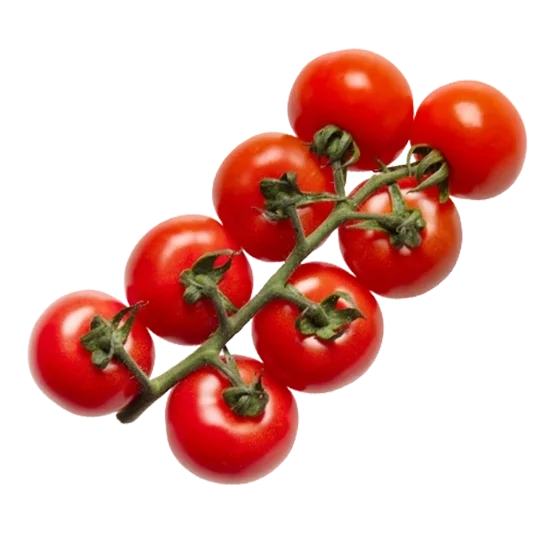
Tomato
Cocktail Tomatoes.
Entre la cerise et la grappe, et un type à part entière.
Un fruit acheté pour les deux usages
La tomate cocktail est achetée pour deux usages à la fois : mangée entière comme un petit fruit, et coupée dans un plat comme un gros. Aucun des deux usages ne la dissimule. Elle est jugée crue et elle est jugée à la poêle, et le même fruit doit répondre aux deux.
Cela double ce que la maturité doit porter. Crue, la tomate est jugée sur le sucre et l’acide, qui se déposent sur la plante. Cuite, elle est jugée sur la chair et sur l’eau qu’elle rend, ce qui dépend du temps écoulé depuis qu’elle a quitté la plante. Un fruit coupé tôt pour un trajet cède du terrain sur les deux en même temps.
Une serre proche de son marché peut cueillir à la couleur et expédier dans la semaine. La vitamine C et le potassium restent proches de ce que la plante y a mis, et l’emballage est classé directement à la sortie de la culture plutôt que trié une seconde fois après que le fruit a déjà dépensé son état en chemin.
Valeurs nutritionnelles
Tomate, rouge, mûre, crue — moyenne annuelle
Pour 100 g
- Énergie
- 18 kcal
- Matières grasses
- 0.2 g
- Glucides
- 3.89 g
- dont sucres
- 2.63 g
- Fibres
- 1.2 g
- Protéines
- 0.88 g
- Sodium
- 5 mg
- Potassium
- 237 mg
- Vitamine C
- 13.7 mg
Source : USDA FoodData Central, FDC 170457
La tomate cocktail se situe entre la cerise et la grappe par le calibre du fruit et se vend aussi bien sur grappe qu’en vrac. C’est un type de marché distinct plutôt qu’une variante de calibre, avec ses propres cultivars, sa propre position de prix et ses propres acheteurs. Les producteurs la choisissent pour atteindre un segment qui trouve la cerise trop petite pour cuisiner et la grappe trop grosse pour être mangée entière.
Ce que la culture demande
La culture est à cycle long, sur substrat et fil haut. Ses exigences se situent entre celles des deux types voisins : plus de fruits par plante que la grappe et moins que la cerise, avec un rythme de récolte intermédiaire en conséquence. La régularité du calibre au sein de la grappe ou de l’emballage est la qualité qui porte le prix, et elle se tient par un climat stable et une charge de plante maîtrisée plutôt que par un tri après récolte.
Ce que la serre doit assurer
La cocktail se situe entre deux cultures par ce qu’elle demande à une serre, et c’est la forme de vente qui décide du sens dans lequel penche la spécification. Sur grappe, la grappe doit atteindre le classement comme une unité : c’est alors l’homogénéité sur toute la surface qui commande. Vendue en vrac, ce sont le tri et la capacité de conditionnement qui commandent. Les deux reposent sur la même structure à cycle long sur fil haut, et les deux demandent un climat assez stable pour que le calibre ne dérive pas au fil de la saison.
C’est la lumière qui déplace le plus la réponse. La cocktail est cultivée commercialement aussi bien sous installations entièrement à diodes électroluminescentes que sous verre seul, et ce choix modifie ensemble la charge de chauffage, le raccordement électrique et la stratégie d’écrans. C’est une décision structurelle prise avec la serre, non un équipement choisi une fois la serre debout.
DutchGreenhouses® spécifie la structure, le climat, les écrans et l’irrigation autour de la culture de tomate cocktail, de son cultivar et du climat local, afin que le calibre tienne au sein de l’emballage. Contactez-nous pour planifier une serre à tomates adaptée à votre marché.
La tomate cocktail, questions et réponses
En quoi la tomate cocktail diffère-t-elle de la cerise ?
C’est un fruit plus gros vendu sur un autre segment, avec ses propres cultivars et sa propre position de prix. C’est un type de marché à part, non le résultat d’un tri dans une culture de cerises.
La tomate cocktail exige-t-elle du tout-LED ?
Pas nécessairement, mais la décision relève de la serre. Des installations entièrement à diodes électroluminescentes sont en usage commercial pour ce type, et en choisir une modifie en même temps la charge de chauffage, le raccordement électrique et la stratégie d’écrans.
Sur grappe ou en vrac ?
Une décision de marché qui change la culture. Elle influe sur la main-d’œuvre de récolte, le format d’emballage et la manière dont le rendement commercialisable est compté : elle relève donc du cahier des charges avant la conception de la serre.
Other tomato
varieties.
La culture de référence sous serre. La catégorie que vous vendez détermine la charge de plante, le rythme de récolte et la serre.

Beef Tomatoes
Beef tomato is the large-fruited slicing class, sold as single fruit rather than as a cluster.
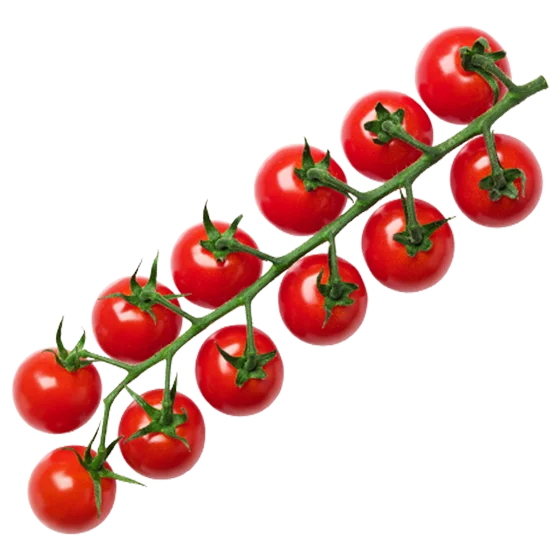
Cherry Tomatoes
Cherry tomato is a separate market class from truss, priced on flavour and appearance rather than weight.
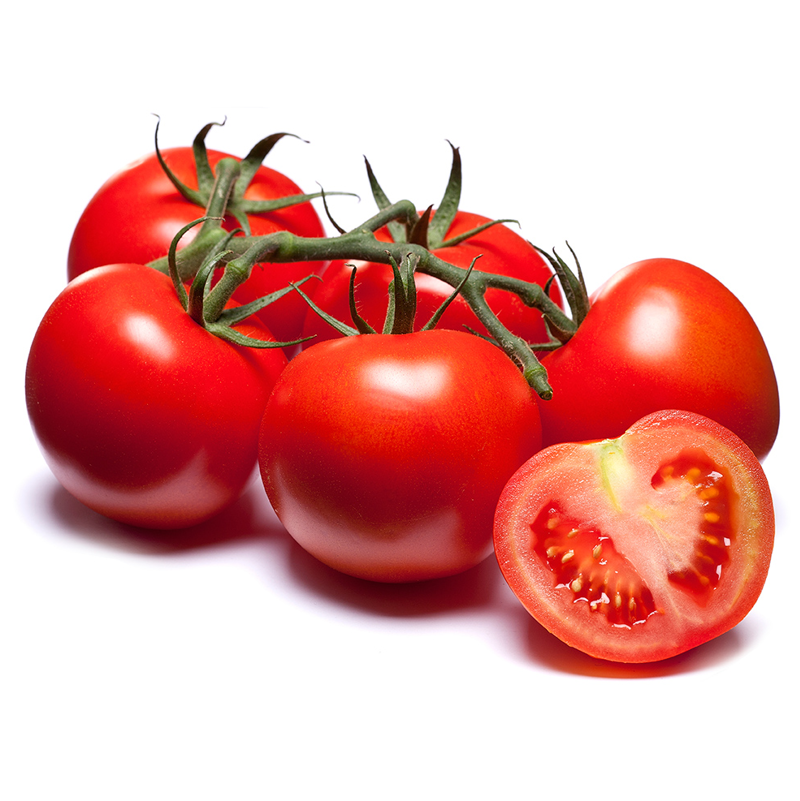
TOV / Truss Tomatoes
Truss tomato is harvested as a whole cluster with the vine attached, and graded on evenness across the truss.
La serre derrière tomates
Tomates, sous verre.
Hydroponie sur fil haut sur gouttières suspendues.
Le palissage, la hauteur de travail, la lumière et le climat suivent votre type de tomate et votre calendrier de production.
La culture de référence sous serre.
Hydroponie sur fil haut sur gouttières suspendues.
Faites correspondre le type de fruit, le calibre de qualité et les indicateurs de récolte à votre acheteur.
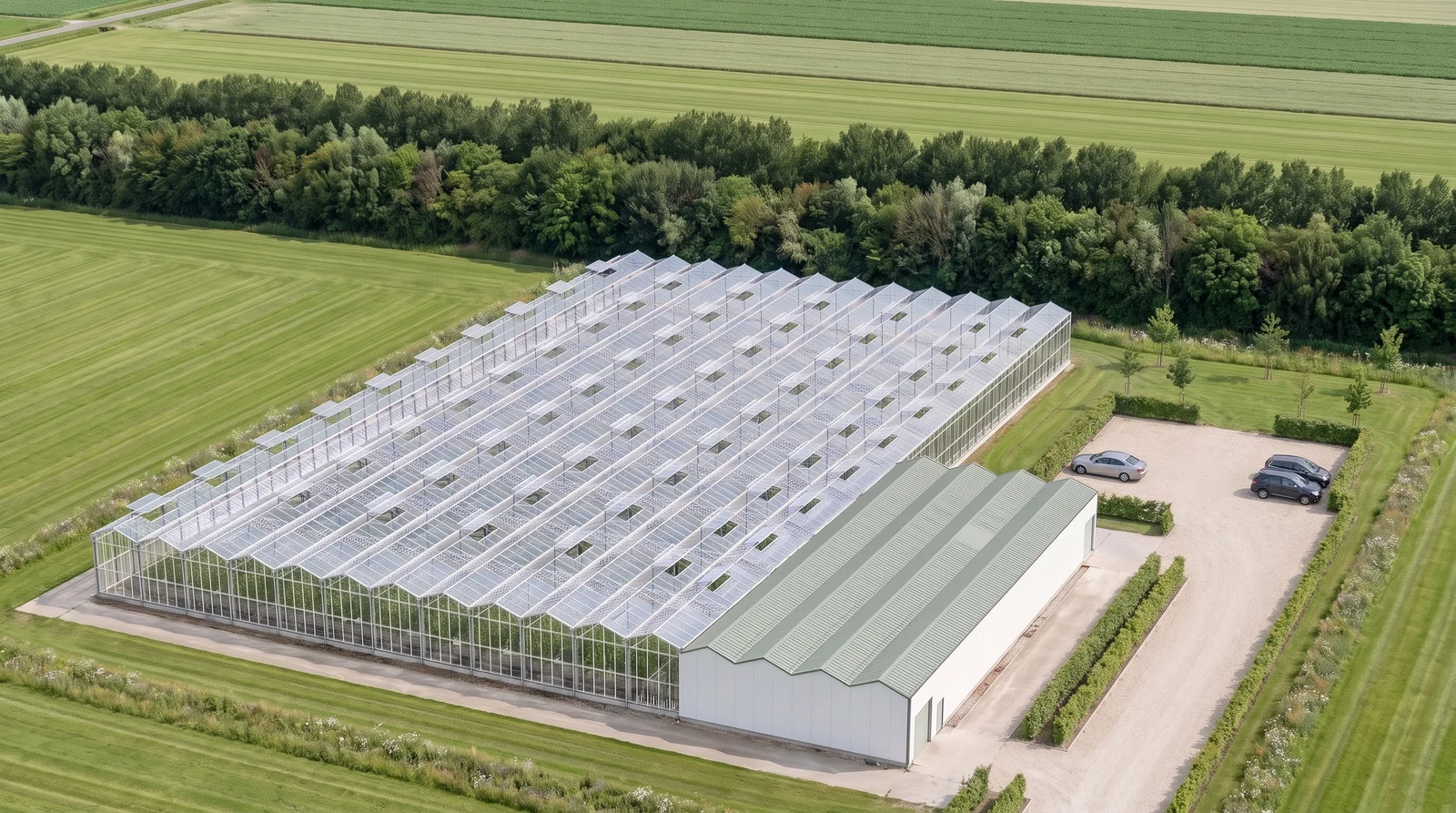
Expert Hydroponic Greenhouse Series
Une structure définie pour l’hydroponie de production. La culture détermine le système de culture, la stratégie climatique et l’organisation de la récolte.
½ acre1 acre2 acresExplorer Expert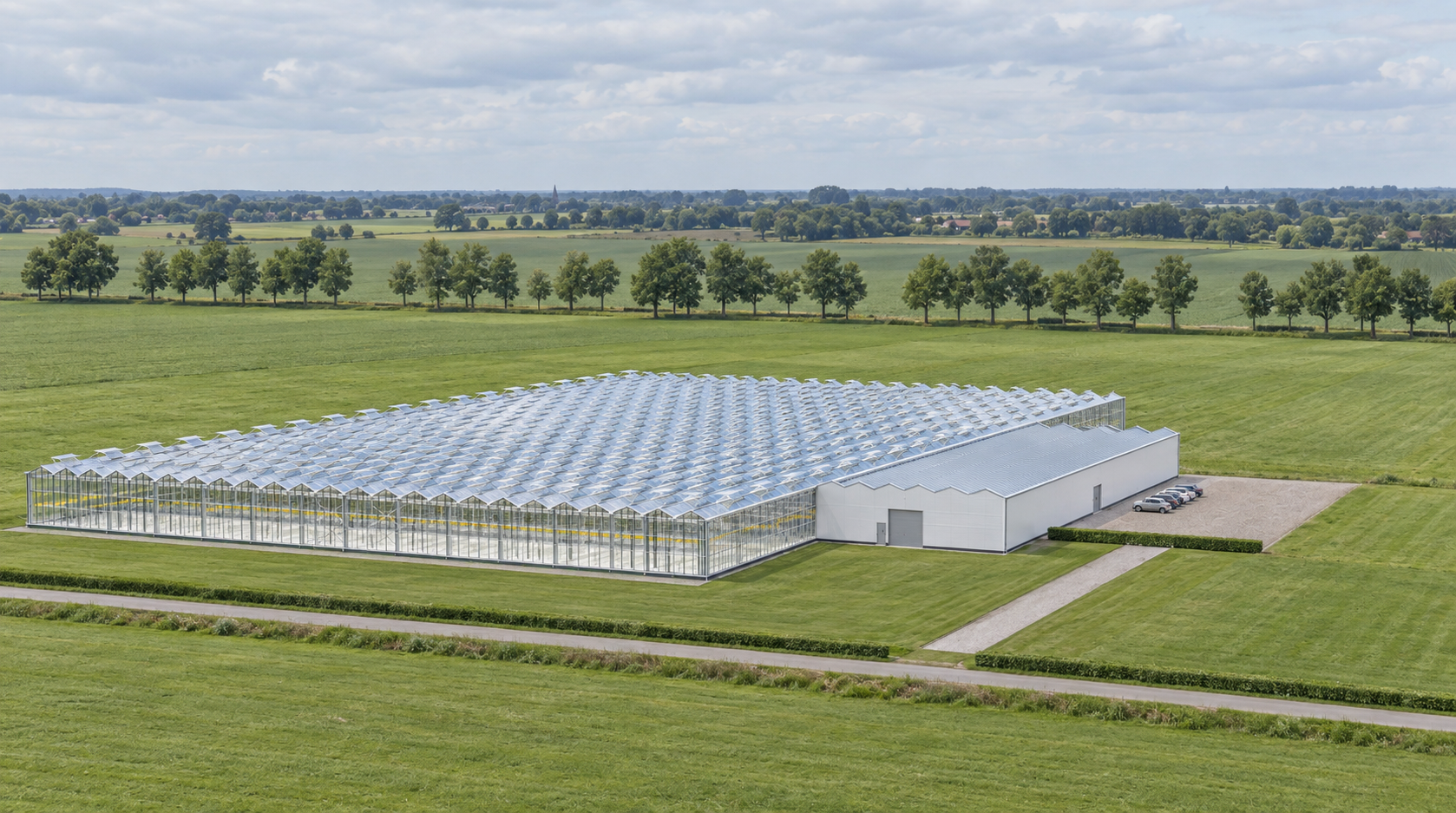
Plus Hydroponic Greenhouse Series
Notre plus grande gamme standard. Adaptez la surface de culture plus importante à la demande de la culture, à la main-d’œuvre, aux réseaux et au marché que vous comptez approvisionner.
2 acres4 acres8 acresExplorer Plus4,032 m²43,400 sq ft de surface de culture, c’est là qu’un plan tomates commence généralement (GrowPro Expert 1 acre). Comparer les neuf modèles
Mettez votre prochaine récolte
sous verre.
Votre culture, votre site et le volume que vous voulez vendre. Trouvons la serre et les systèmes qui correspondent.
Besoin d’une serre sur mesure ?GrowPro Expert
Nous pouvons aussi planifier une autre culture ou un programme de cultures mixtes.
Parler de votre projet Continuez vers notre formulaire de contact. Sans engagement.Des lectures qui pourraient vous intéresser

Grow Like a Pro: Starting Smart, Growing Strong
How Grow Like a Pro combines smart farming, CEA technology and local partnerships for eco-friendly, profitable, pesticide-free greenhouse pr
Lire l’article
Maryland Cannabis Greenhouse: Year One
One year on: how the Maryland cannabis greenhouse, paired with an adjacent indoor facility, cut the energy bill and lifted both yields and q
Lire l’article
The Case for a College Greenhouse
Why a college greenhouse belongs in the curriculum: teaching science, craftsmanship, business logic and sustainability, and preparing studen
Lire l’article
The Case for a High School Greenhouse
Why every high school greenhouse matters: how it makes STEM tangible, builds responsibility and teamwork, and helps students discover their
Lire l’article
Greenhouses in Education: The Case for Schools
Greenhouses in education reconnect students to reality — the full case for why every school, high school, college and trade program should h
Lire l’article
The Origins of Greenhouse Horticulture: My Backyard
A tour through greenhouse horticulture history: from 19th-century Westland fruit walls to the “City of Glass” and today’s international high
Lire l’article