
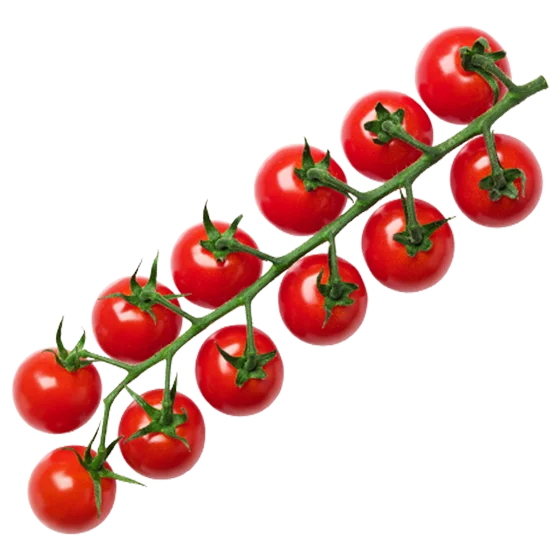
Tomato
Cherry Tomatoes.
Petit fruit, nombre élevé, et la main-d’œuvre comme coût décisif.
Mangée crue, valorisée sur le goût
La tomate cerise se mange crue et entière, le plus souvent à la main plutôt que sortie d’une poêle. Rien n’en est pelé et rien n’en est perdu à la cuisson : ce que le fruit porte au moment où il est détaché de la plante est ce qui parvient à la personne qui le mange.
C’est d’abord dans le goût que cela se voit. Le sucre et l’acide se construisent dans le fruit tant qu’il est encore attaché, et cessent de se construire dès qu’il est cueilli. Un fruit récolté assez tôt pour supporter un trajet se colore en chemin et garde le goût du jour de son départ. Ce type est valorisé sur le goût, ce qui fait de la date de récolte une composante du prix.
Une chaîne courte garde aussi une plus grande part de la récolte vendable. La cerise se vend en barquette, et un seul fruit ramolli entraîne la barquette avec lui : chaque jour passé en transit est un jour où la barquette peut être perdue. Cueillir à la couleur et livrer dans la semaine protège à la fois la qualité gustative et la barquette.
Valeurs nutritionnelles
Tomate, rouge, mûre, crue — moyenne annuelle
Pour 100 g
- Énergie
- 18 kcal
- Matières grasses
- 0.2 g
- Glucides
- 3.89 g
- dont sucres
- 2.63 g
- Fibres
- 1.2 g
- Protéines
- 0.88 g
- Sodium
- 5 mg
- Potassium
- 237 mg
- Vitamine C
- 13.7 mg
Source : USDA FoodData Central, FDC 170457
La tomate cerise est un type de marché distinct de la grappe, vendue aussi bien sur grappe qu’en vrac, et valorisée sur le goût et l’aspect plutôt que sur le seul poids. Le fruit est petit : pour un tonnage donné, une serre en produit un très grand nombre, et la récolte et le conditionnement deviennent le principal coût variable. C’est la tension commerciale centrale de cette culture : la prime est réelle, et la main-d’œuvre nécessaire pour la capter l’est aussi.
Ce que la culture demande
La plante est à cycle long, sur substrat et fil haut, comme la tomate en grappe, mais elle porte un nombre bien plus élevé de fruits plus petits. La gestion de la charge de plante est donc le métier quotidien, et l’équilibre entre croissance végétative et générative doit être tenu de près pour maintenir des taux de sucre et un calibre constants sur une longue saison. La stratégie climatique et d’irrigation vise le goût et la durée de conservation autant que la masse totale.
Ce que la serre doit assurer
La tomate cerise demande à la serre de la régularité et du flux. La structure et l’enveloppe climatique sont les mêmes que pour la tomate en grappe ; ce qui change, c’est le nombre de fruits qui traverse le bâtiment chaque semaine. La largeur des allées, le transport interne et la taille de la zone de conditionnement font partie de la conception de la serre plutôt que d’un aménagement ajouté une fois la culture en place.
Le climat est piloté sur la qualité. Les écrans et le chauffage tiennent le rythme jour-nuit qui garde les sucres et le calibre réguliers sur une longue saison, et l’apport goutte-à-goutte avec recirculation du drainage empêche la zone racinaire de partir d’un extrême à l’autre. Lorsque la fenêtre de marché s’étend aux mois peu lumineux, l’éclairage d’appoint et le raccordement électrique qui le porte relèvent du cahier des charges dès le départ, parce que l’un comme l’autre modifient au passage la conception du chauffage.
DutchGreenhouses® spécifie la structure, le climat, les écrans et l’irrigation autour de la culture de tomate cerise, de sa forme de vente et du climat local, afin que le goût et le nombre de fruits tiennent sur toute la saison. Contactez-nous pour planifier une serre à tomates adaptée à votre marché.
La tomate cerise, questions et réponses
La tomate cerise est-elle plus rentable que la tomate en grappe ?
Elle porte un prix au kilogramme plus élevé et un coût de main-d’œuvre au kilogramme plus élevé. Ce qui l’emporte dépend des taux de salaire locaux, du degré d’automatisation de la récolte et du conditionnement, et de la prime que le marché paie réellement.
Qu’est-ce qui change dans la serre quand la culture est cerise plutôt qu’en grappe ?
Surtout la manutention. La structure et l’enveloppe climatique sont les mêmes ; la différence tient au nombre de fruits qui traverse la serre chaque semaine, ce qui fixe la largeur des allées, le transport interne et la taille de la zone de conditionnement.
Qu’est-ce qui détermine le goût de la tomate cerise ?
Le cultivar fixe le plafond ; le climat, la stratégie d’irrigation et la charge de plante décident à quel point une culture s’en approche. Le goût se pilote avant la récolte, pas après.
Other tomato
varieties.
La culture de référence sous serre. La catégorie que vous vendez détermine la charge de plante, le rythme de récolte et la serre.

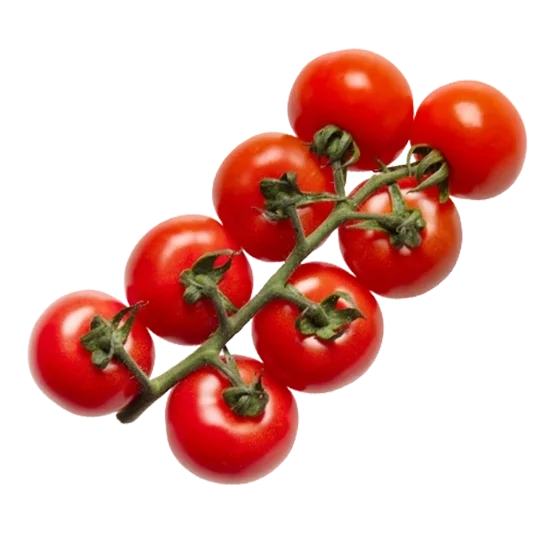
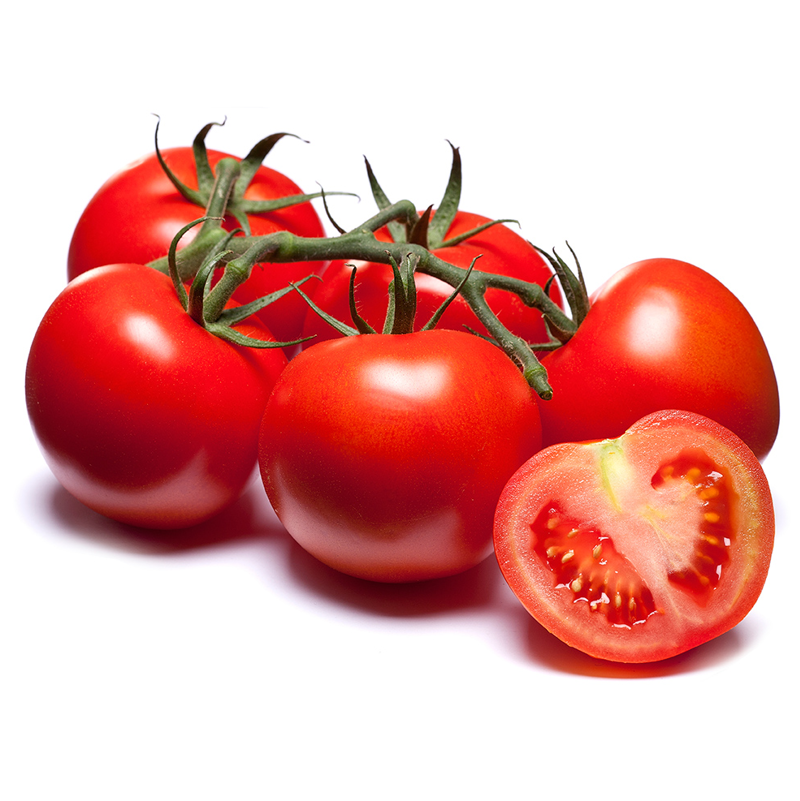
La serre derrière tomates
Tomates, sous verre.
Hydroponie sur fil haut sur gouttières suspendues.
Le palissage, la hauteur de travail, la lumière et le climat suivent votre type de tomate et votre calendrier de production.
La culture de référence sous serre.
Hydroponie sur fil haut sur gouttières suspendues.
Faites correspondre le type de fruit, le calibre de qualité et les indicateurs de récolte à votre acheteur.
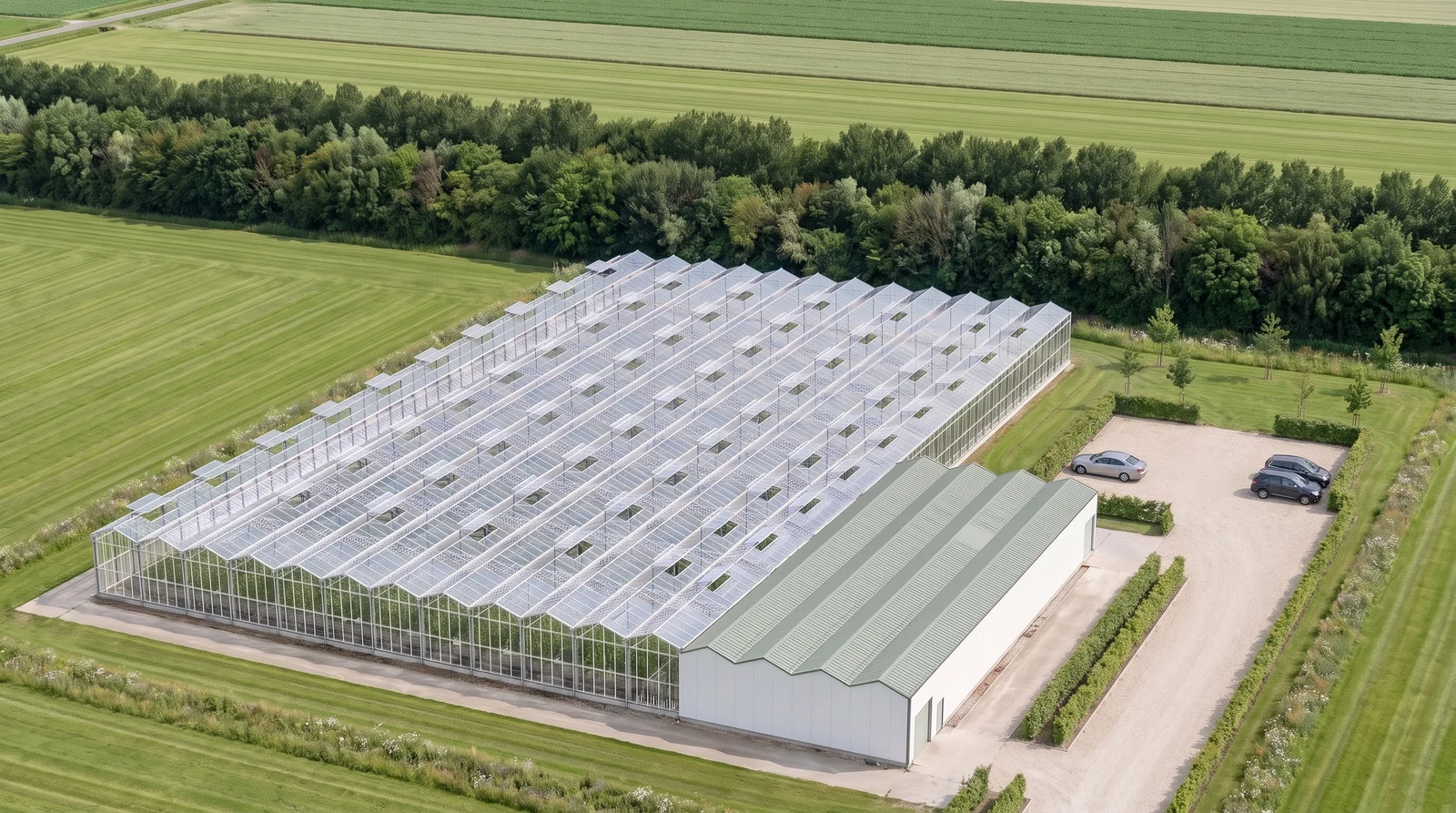
Expert Hydroponic Greenhouse Series
Une structure définie pour l’hydroponie de production. La culture détermine le système de culture, la stratégie climatique et l’organisation de la récolte.
½ acre1 acre2 acresExplorer Expert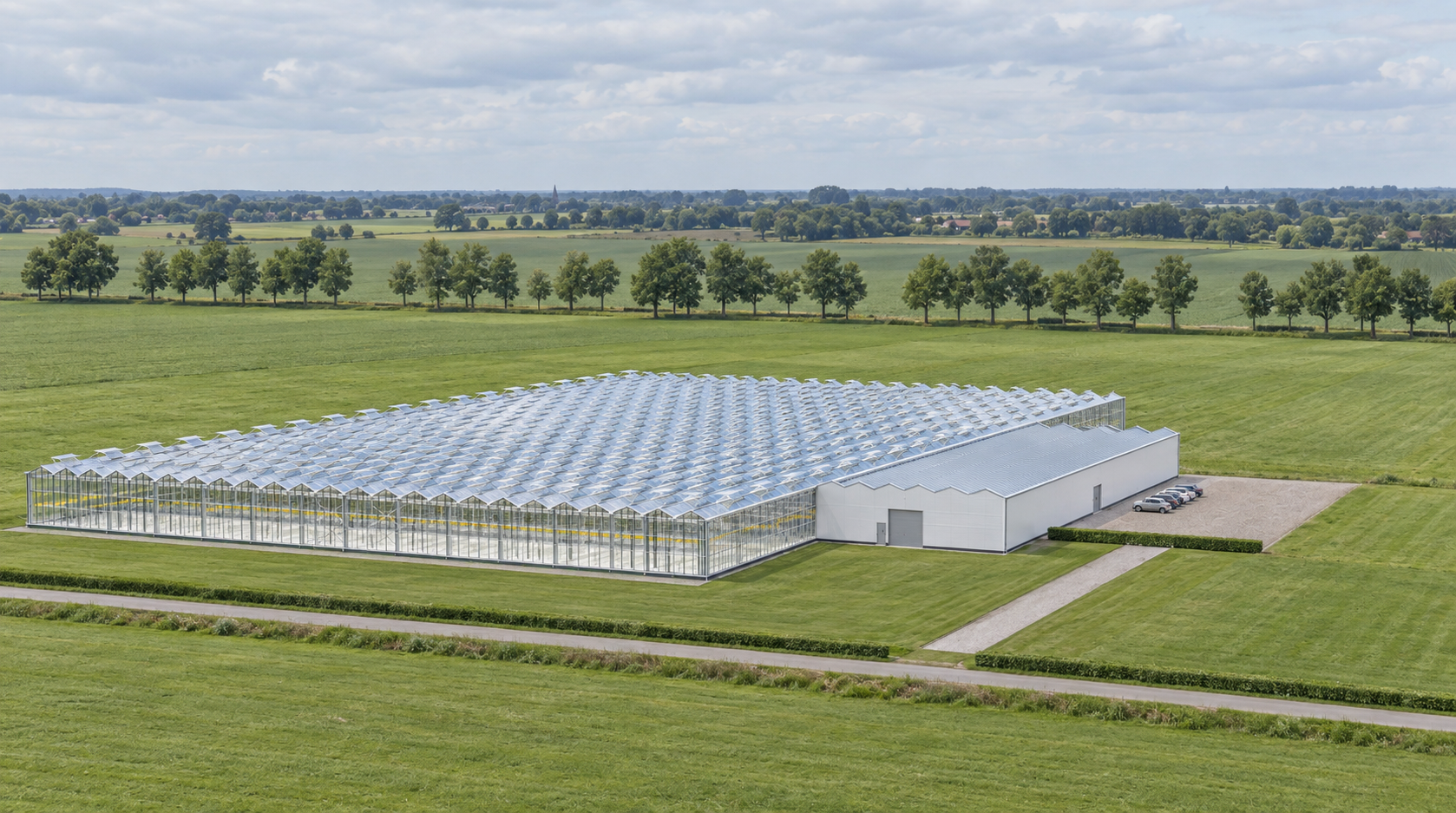
Plus Hydroponic Greenhouse Series
Notre plus grande gamme standard. Adaptez la surface de culture plus importante à la demande de la culture, à la main-d’œuvre, aux réseaux et au marché que vous comptez approvisionner.
2 acres4 acres8 acresExplorer Plus4,032 m²43,400 sq ft de surface de culture, c’est là qu’un plan tomates commence généralement (GrowPro Expert 1 acre). Comparer les neuf modèles
Mettez votre prochaine récolte
sous verre.
Votre culture, votre site et le volume que vous voulez vendre. Trouvons la serre et les systèmes qui correspondent.
Besoin d’une serre sur mesure ?GrowPro Expert
Nous pouvons aussi planifier une autre culture ou un programme de cultures mixtes.
Parler de votre projet Continuez vers notre formulaire de contact. Sans engagement.Des lectures qui pourraient vous intéresser

Grow Like a Pro: Starting Smart, Growing Strong
How Grow Like a Pro combines smart farming, CEA technology and local partnerships for eco-friendly, profitable, pesticide-free greenhouse pr
Lire l’article
Maryland Cannabis Greenhouse: Year One
One year on: how the Maryland cannabis greenhouse, paired with an adjacent indoor facility, cut the energy bill and lifted both yields and q
Lire l’article
The Case for a College Greenhouse
Why a college greenhouse belongs in the curriculum: teaching science, craftsmanship, business logic and sustainability, and preparing studen
Lire l’article
The Case for a High School Greenhouse
Why every high school greenhouse matters: how it makes STEM tangible, builds responsibility and teamwork, and helps students discover their
Lire l’article
Greenhouses in Education: The Case for Schools
Greenhouses in education reconnect students to reality — the full case for why every school, high school, college and trade program should h
Lire l’article
The Origins of Greenhouse Horticulture: My Backyard
A tour through greenhouse horticulture history: from 19th-century Westland fruit walls to the “City of Glass” and today’s international high
Lire l’article