
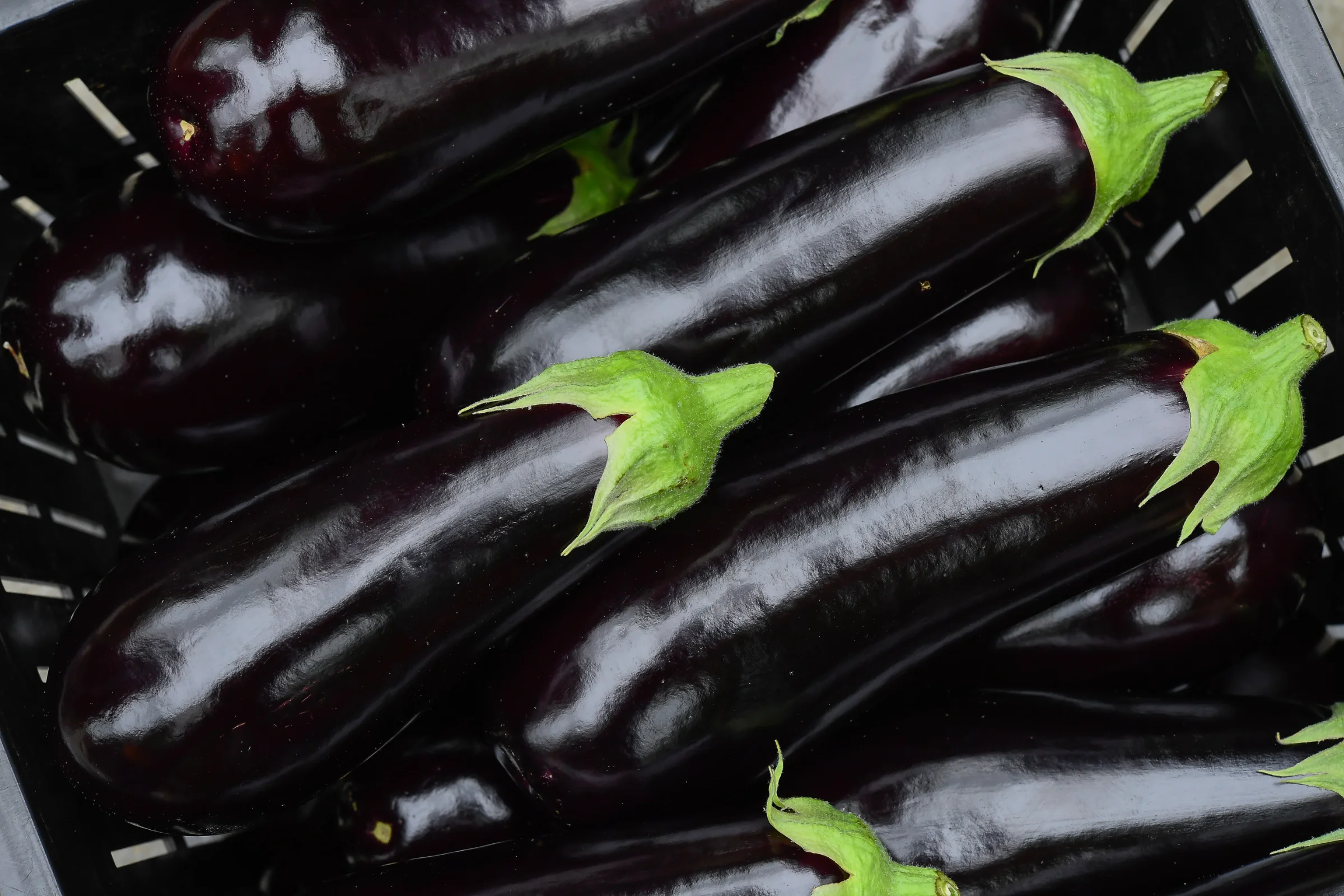
Eggplant
Greenhouse Eggplant.
Un fruit lourd sur un système racinaire grossier, greffé en pratique courante.
L’épiderme décide, et l’épiderme voyage mal
L’aubergine de serre se vend sur son épiderme. Une surface sombre, sans marque et brillante, voilà le classement, et les valeurs nutritionnelles du tableau ne sont pas ce entre quoi un acheteur choisit. Tout, dans le trajet, joue contre l’épiderme : il se meurtrit contre la structure, contre les caisses et contre les autres fruits, et une marque qui apparaît quelques jours après le conditionnement s’est faite à un instant que personne n’a noté.
La distance multiplie les manipulations. Chaque transfert supplémentaire, chaque journée de vibrations et chaque heure de chaleur ajoute une occasion de plus pour la surface de se ternir ou pour la chair de se ramollir en dessous. Le fruit n’est pas gâté. Il descend simplement d’un classement, et la perte retombe sur celui qui le détient en bout de chaîne.
Cultiver près du marché supprime l’essentiel de ces manipulations au lieu de les gérer. Moins de transferts, moins de jours et une livraison dans la même semaine maintiennent le fruit dans l’état où il a quitté la plante. Une culture à cycle long sous verre approvisionne à ce niveau en continu, et c’est bien ce qu’achète un acheteur qui spécifie l’aubergine : le même fruit, dans le même état, chaque semaine de l’année.
Valeurs nutritionnelles
Aubergine, crue
Pour 100 g
- Énergie
- 25 kcal
- Matières grasses
- 0.18 g
- Glucides
- 5.88 g
- dont sucres
- 3.53 g
- Fibres
- 3 g
- Protéines
- 0.98 g
- Sodium
- 2 mg
- Potassium
- 229 mg
- Vitamine C
- 2.2 mg
Source : USDA FoodData Central, FDC 169228
L’aubergine de serre est un légume-fruit à cycle long, cultivé pour un fruit unitaire lourd à l’épiderme brillant, où les défauts de surface décident du classement. Elle occupe moins de surface sous verre néerlandaise que la tomate ou le poivron, ce qui la rend intéressante pour les producteurs en quête d’une culture à la concurrence moins encombrée, et elle s’intègre à une serre déjà équipée pour la production sur fil haut.
Ce que la culture demande
La culture est conduite sur laine de roche, avec irrigation goutte-à-goutte et recirculation du drainage. Son système racinaire est grossier au regard de la charge de fruits qu’il porte : la disponibilité en eau assure une plus grande part du maintien de la qualité que sur tomate, et une interruption pendant le grossissement du fruit se voit sur l’épiderme. Le greffage sur un porte-greffe vigoureux est la pratique courante pour exactement cette raison.
Ce que la serre doit assurer
L’aubergine porte un fruit lourd sur une plante greffée en pratique courante, et la serre est spécifiée autour des deux. Le fil de culture et la structure encaissent une charge réelle sur un cycle long, et le greffage existe parce que le système racinaire, seul, ne la porte pas de façon fiable — ce qui rend la maîtrise de la zone racinaire, et la capacité d’irrigation derrière elle, centrale plutôt que secondaire.
La qualité de l’épiderme est ce qui décide du classement, et l’épiderme se marque facilement. Le fruit se meurtrit contre la structure, contre les fils et à la manipulation, de sorte que l’implantation des rangs, la largeur des allées et le parcours de récolte sont dessinés pour un fruit qui montre chaque contact. Le travail sur le climat porte sur l’évitement des à-coups qui ternissent la surface, ce qui relève des écrans et de la ventilation plus que du chauffage.
DutchGreenhouses® spécifie la structure, le climat, les écrans et l’irrigation autour de la culture d’aubergine, de son porte-greffe et du climat local, afin qu’une charge de fruits lourde soit portée sans perte de qualité d’épiderme. Contactez-nous pour planifier une serre à aubergines.
L’aubergine de serre, questions et réponses
Pourquoi l’aubergine est-elle greffée ?
Pour la vigueur et la résistance racinaires. La culture porte une charge de fruits lourde sur un cycle long, et c’est le porte-greffe qui la soutient de façon fiable.
Qu’est-ce qui décide du classement de l’aubergine ?
L’épiderme. Le fruit se marque facilement contre la structure, contre les fils et à la manipulation, de sorte que l’implantation des rangs, la largeur des allées et le parcours de récolte comptent autant que le climat.
L’éclairage change-t-il la conception ?
Il modifie en même temps la charge de chauffage, le raccordement électrique et la stratégie d’écrans : il relève donc du cahier des charges plutôt que d’une amélioration ultérieure.
La serre derrière aubergines
Aubergines, sous verre.
Culture palissée sur substrat ou en sol.
Prévoyez la charge de la plante, l’espace du couvert végétal et les besoins de la zone racinaire sur un long cycle de production.
Des fruits homogènes. Une saison de récolte prolongée.
Culture palissée sur substrat ou en sol.
Reliez la taille des fruits, le calibre et la fréquence de récolte à la demande.
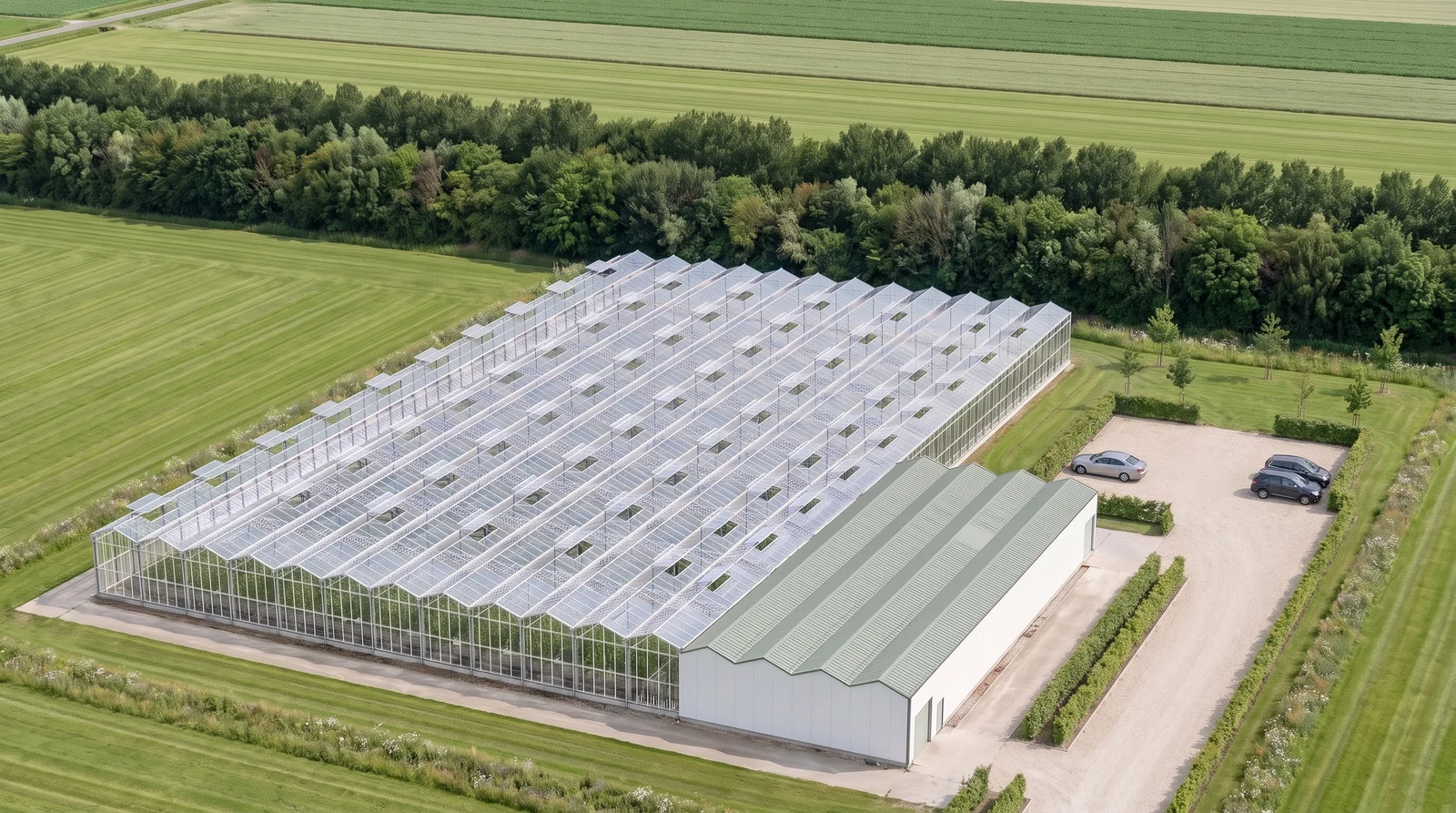
Expert Hydroponic Greenhouse Series
Une structure définie pour l’hydroponie de production. La culture détermine le système de culture, la stratégie climatique et l’organisation de la récolte.
½ acre1 acre2 acresExplorer Expert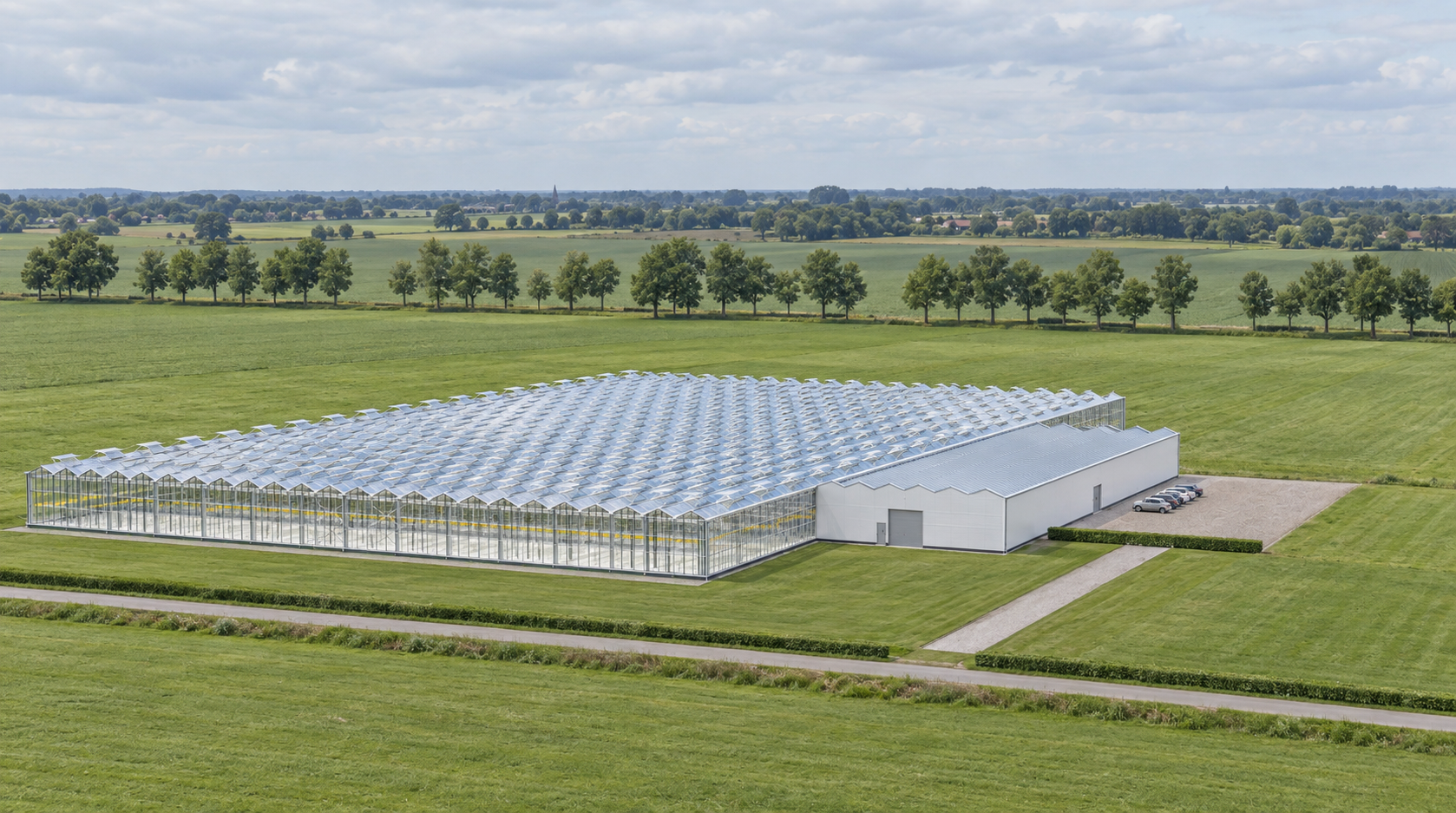
Plus Hydroponic Greenhouse Series
Notre plus grande gamme standard. Adaptez la surface de culture plus importante à la demande de la culture, à la main-d’œuvre, aux réseaux et au marché que vous comptez approvisionner.
2 acres4 acres8 acresExplorer Plus4,032 m²43,400 sq ft de surface de culture, c’est là qu’un plan aubergines commence généralement (GrowPro Expert 1 acre). Comparer les neuf modèles
Mettez votre prochaine récolte
sous verre.
Votre culture, votre site et le volume que vous voulez vendre. Trouvons la serre et les systèmes qui correspondent.
Besoin d’une serre sur mesure ?GrowPro Expert
Nous pouvons aussi planifier une autre culture ou un programme de cultures mixtes.
Parler de votre projet Continuez vers notre formulaire de contact. Sans engagement.Des lectures qui pourraient vous intéresser

Grow Like a Pro: Starting Smart, Growing Strong
How Grow Like a Pro combines smart farming, CEA technology and local partnerships for eco-friendly, profitable, pesticide-free greenhouse pr
Lire l’article
Maryland Cannabis Greenhouse: Year One
One year on: how the Maryland cannabis greenhouse, paired with an adjacent indoor facility, cut the energy bill and lifted both yields and q
Lire l’article
The Case for a College Greenhouse
Why a college greenhouse belongs in the curriculum: teaching science, craftsmanship, business logic and sustainability, and preparing studen
Lire l’article
The Case for a High School Greenhouse
Why every high school greenhouse matters: how it makes STEM tangible, builds responsibility and teamwork, and helps students discover their
Lire l’article
Greenhouses in Education: The Case for Schools
Greenhouses in education reconnect students to reality — the full case for why every school, high school, college and trade program should h
Lire l’article
The Origins of Greenhouse Horticulture: My Backyard
A tour through greenhouse horticulture history: from 19th-century Westland fruit walls to the “City of Glass” and today’s international high
Lire l’article