
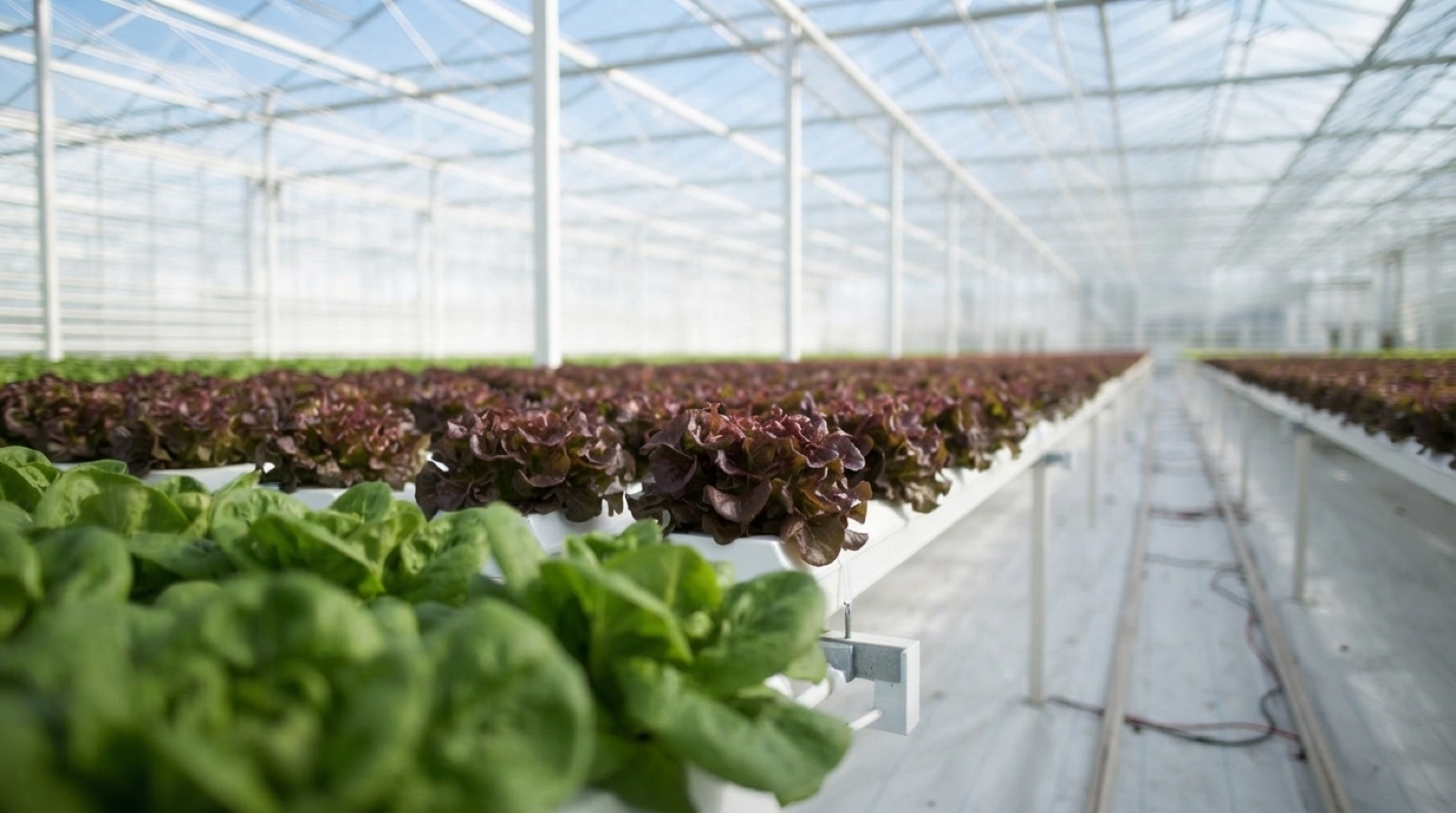
Lettuce
Red Crispy Lettuce.
El cogollo crujiente en rojo, donde el desarrollo del color forma parte de la categoría.
Un color que tiene que llegar
La hoja roja lleva el perfil en crudo de la familia con el pigmento antociánico encima. Tanto las vitaminas como el pigmento están en una hoja que se come sin cocinar, así que la preparación no les quita nada y nada se repone.
El color es la razón por la que se compra el cogollo, y el color es lo primero que pierde. Los bordes rojos se apagan y se pardean a medida que la hoja envejece, y un cogollo con unos días de más se lee como cansado mucho antes de leerse como estropeado. En un envase mixto se juzga por él a todo el envase.
Eso convierte el trayecto hasta la central de envasado en parte de la especificación. Un cultivo producido cerca de donde se compone y se come llega con el color con el que se cortó, y el envase conserva el contraste en torno al que se diseñó en vez de perderlo en algún punto del transporte.
Información nutricional
Lechuga, hoja roja, cruda
Por 100 g
- Energía
- 13 kcal
- Grasas
- 0.22 g
- Hidratos de carbono
- 2.26 g
- de los cuales azúcares
- 0.48 g
- Fibra
- 0.9 g
- Proteínas
- 1.33 g
- Sodio
- 25 mg
- Potasio
- 187 mg
- Vitamina C
- 3.7 mg
La crujiente roja es la contraparte pigmentada de rojo del cogollo crujiente verde, vendida en cogollo entero y en envases de hoja mixta, donde su color es la razón de que esté ahí. La intensidad del color forma parte de la especificación, no es un extra, y se desarrolla como respuesta a la luz y no a la nutrición.
Lo que el cultivo necesita
El cultivo es de ciclo corto e hidropónico. Arrastra las mismas consideraciones de densidad y quemadura de puntas que la crujiente verde, con el requisito añadido de que el cogollo coloree de forma uniforme. La luz que llega a la hoja exterior es lo que impulsa el pigmento, así que el espaciado y cualquier estrategia de sombreo afectan directamente a la categoría y no solo a la velocidad de crecimiento.
Lo que el invernadero tiene que hacer
Aquí el color forma parte de la categoría, y el color es una respuesta a la luz. Un cogollo de crujiente roja que termina pálido baja de categoría pese lo que pese, así que el plan de luz se especifica tanto para el desarrollo del pigmento como para el crecimiento, y la estrategia de pantallas tiene que dar al cultivo la luz que necesita sin la carga térmica que la acompaña.
Lo demás es lechuga de cogollo denso. El cultivo gira deprisa, así que la densidad, el sistema de agua recirculante y la ruta de cosecha deciden la producción anual. Como un lote se corta como una unidad, la desigualdad a lo largo de la superficie aparece como color dispar dentro de una misma cosecha, lo que hace que una transmisión uniforme valga más aquí que en un tipo verde.
DutchGreenhouses® diseña la estructura, el clima, las pantallas y el riego en torno al tipo de lechuga, su sistema y el clima local, para que los ciclos giren con la calidad de cogollo por la que el mercado clasifica. Póngase en contacto para planificar un invernadero de lechuga.
Lechuga crujiente roja, preguntas y respuestas
¿El objetivo correcto es el peso del cogollo o el número de cogollos?
La lechuga se vende por cogollo, así que el número que alcanza categoría en un año decide los ingresos. Un cogollo más pesado cultivado más despacio puede rendir menos que un cogollo más ligero en un ciclo más corto.
¿Importa más el cultivar que el tipo?
Para la masa del cogollo, la tolerancia a la densidad y el riesgo de quemadura de puntas, sí. Son propiedades del cultivar, y por eso un proyecto de lechuga se planifica en torno a un cultivar concreto y no solo en torno al tipo.
¿Qué causa la quemadura de puntas?
Que el calcio no llegue a los márgenes foliares de crecimiento más rápido, algo que depende de la transpiración y la presión radicular más que del aporte. El control climático lo aborda; añadir calcio a la solución por lo general no.
Other lettuce
varieties.
Cosechas repetidas. Calidad y tamaño de cogollo constantes. El tipo que vende decide la carga de planta, el ritmo de cosecha y el invernadero.
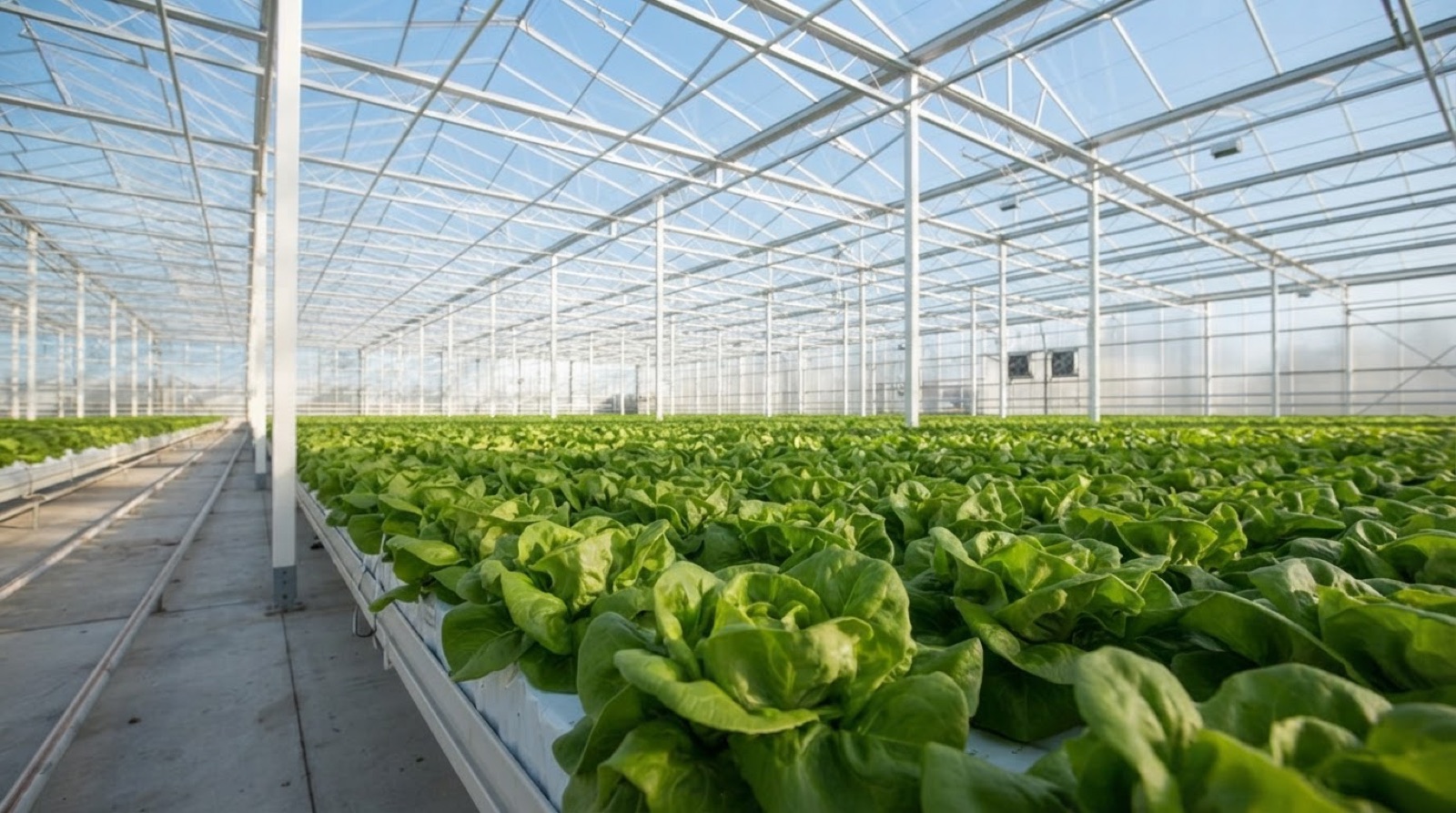
Butterhead Lettuce
Butterhead is the soft-leaved wholehead lettuce sold with its outer leaves intact, and the type most European buyers picture when they specify lettuce.
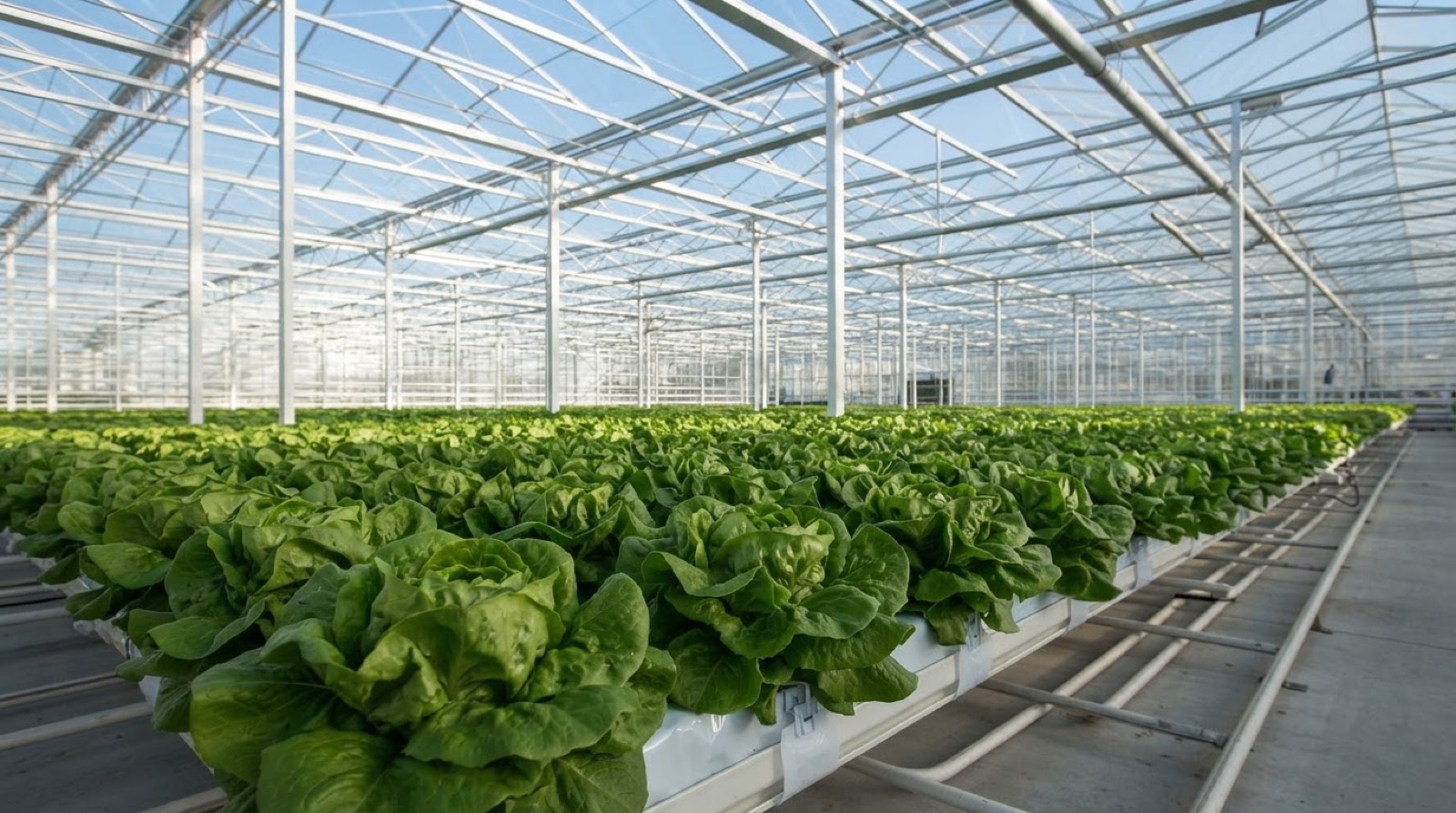
Green Crispy Lettuce
Green crispy is the dense, crunchy-leaved lettuce sold both as a wholehead and into processing, where the leaf holds its texture after cutting.
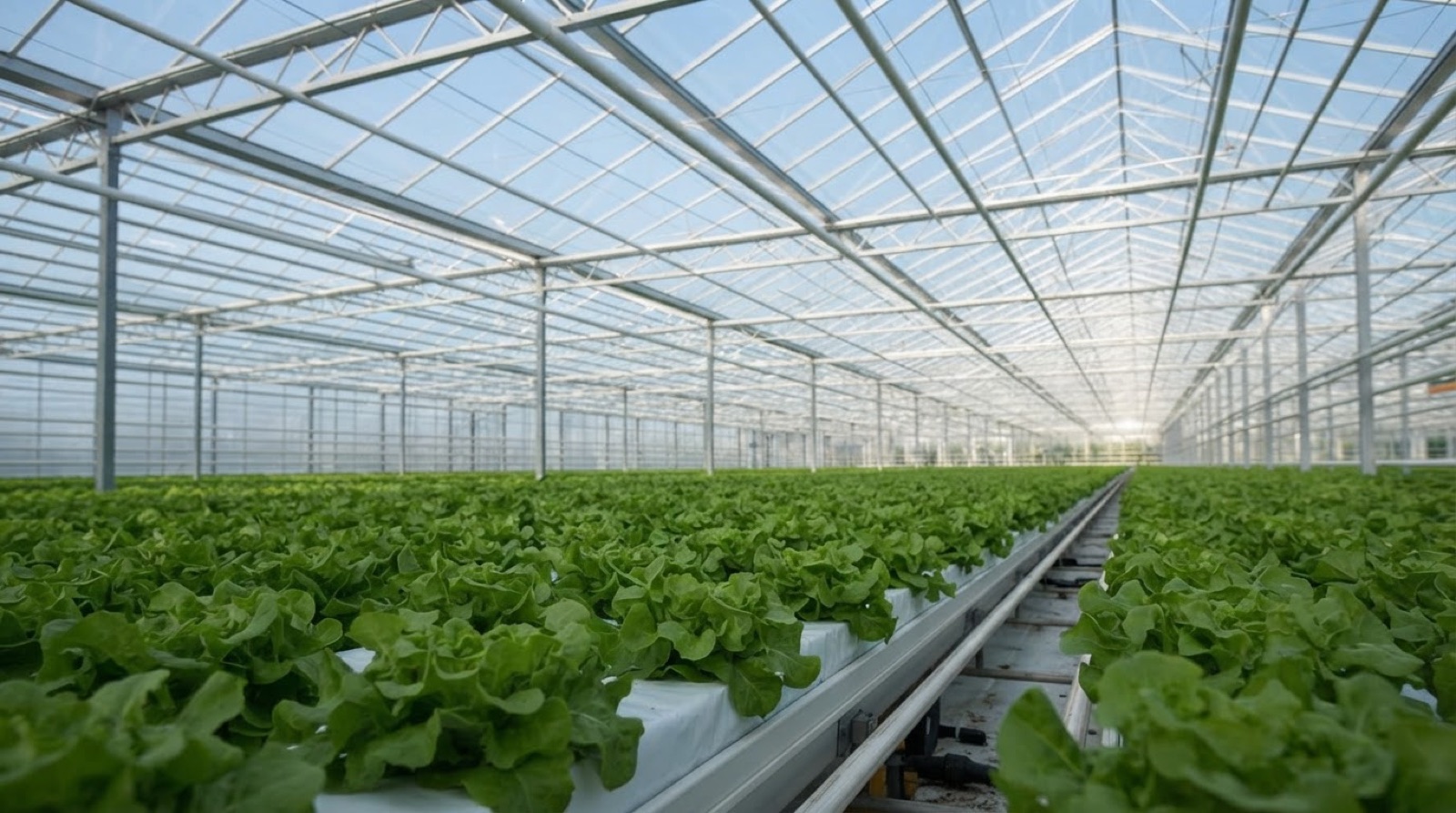
Green Oakleaf Lettuce
Green oakleaf lettuce is a lobed, soft-leaved head grown for leaf shape rather than for weight.
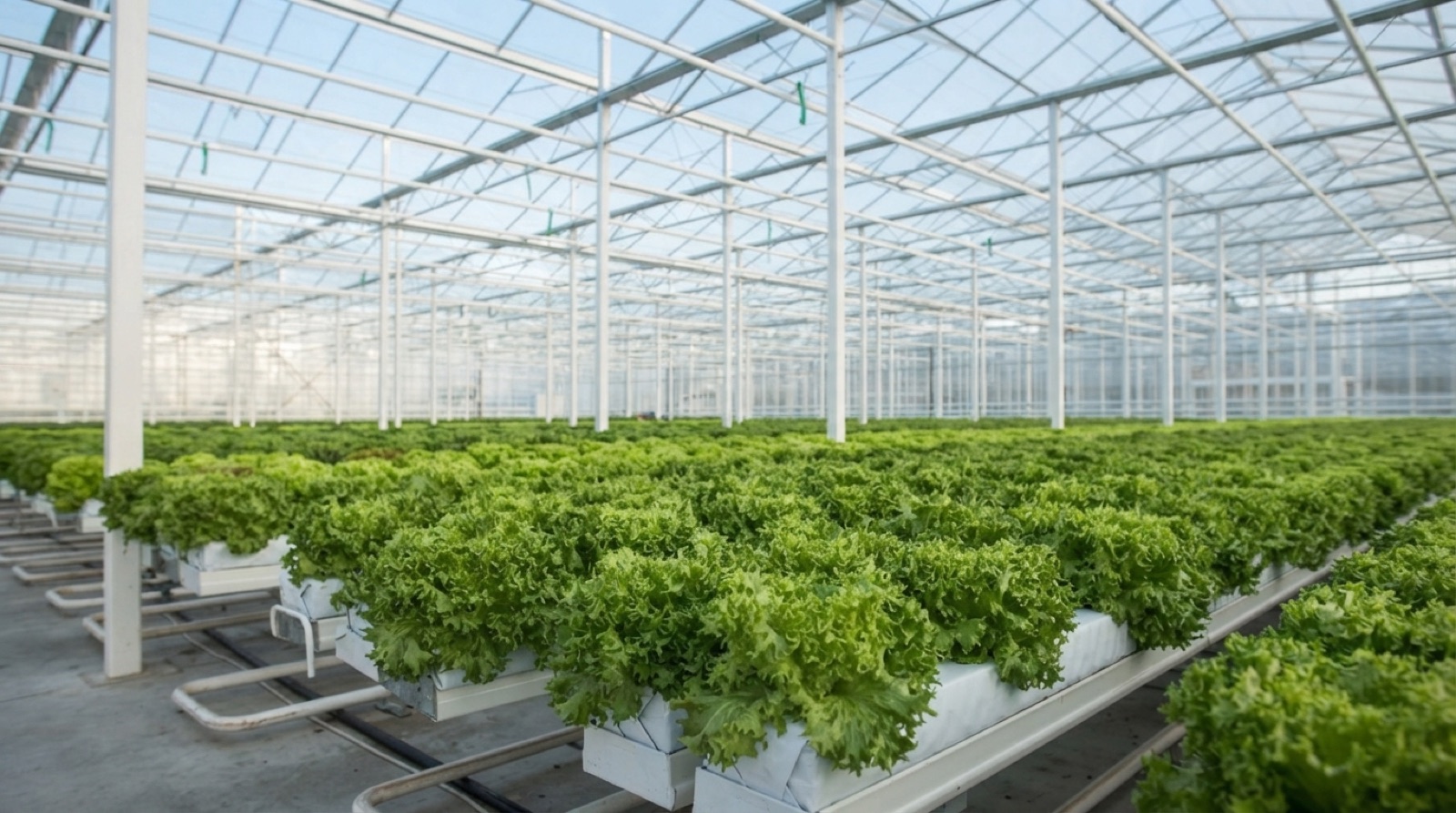
Lollo Bionda Lettuce
Lollo Bionda is the green Lolla lettuce, with a tightly curled leaf margin and bought for appearance rather than for weight.
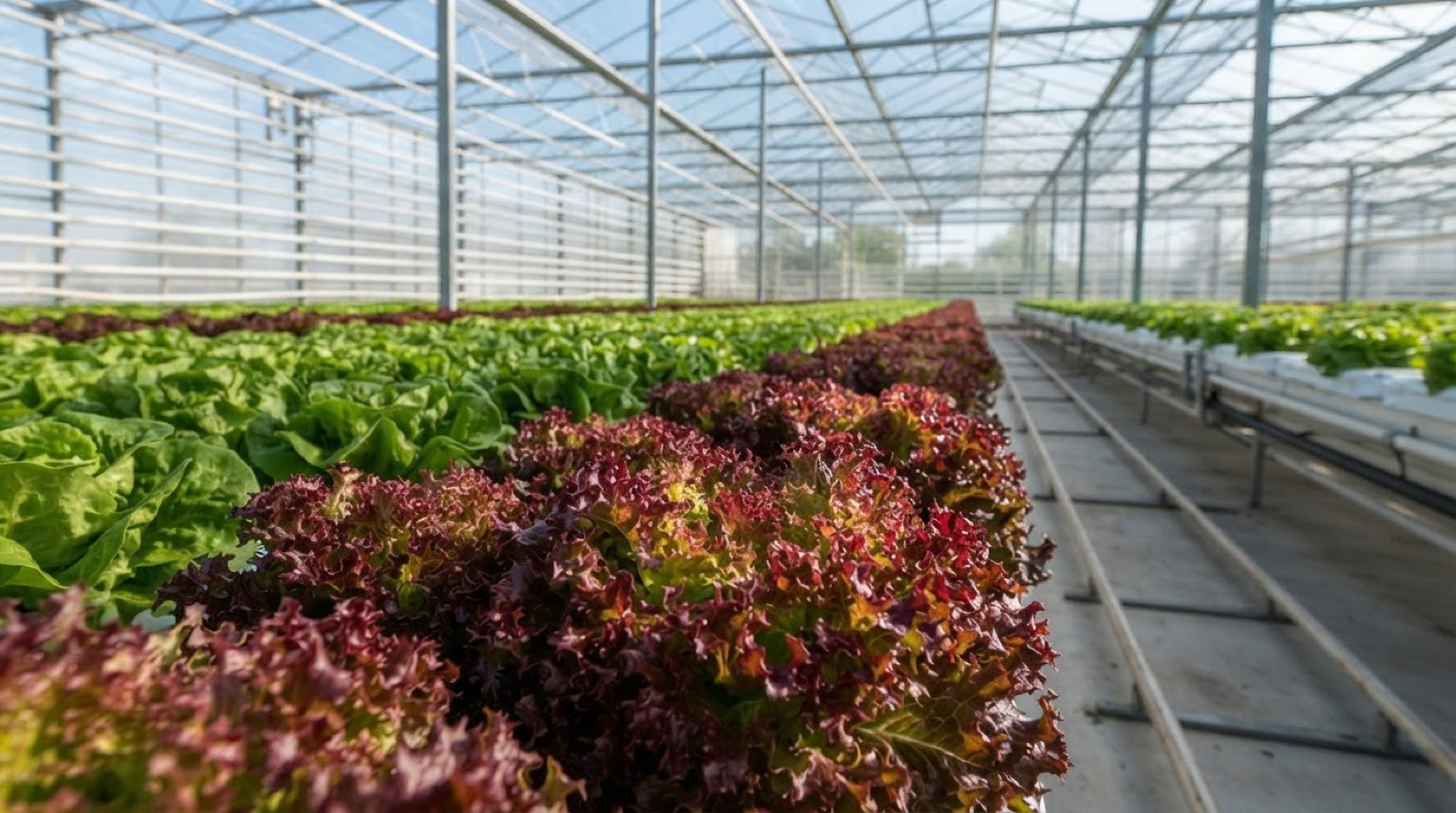
Lollo Rosso Lettuce
Lollo Rosso is the red Lolla lettuce, where the tightly curled leaf margin and the red pigmentation are both the product.
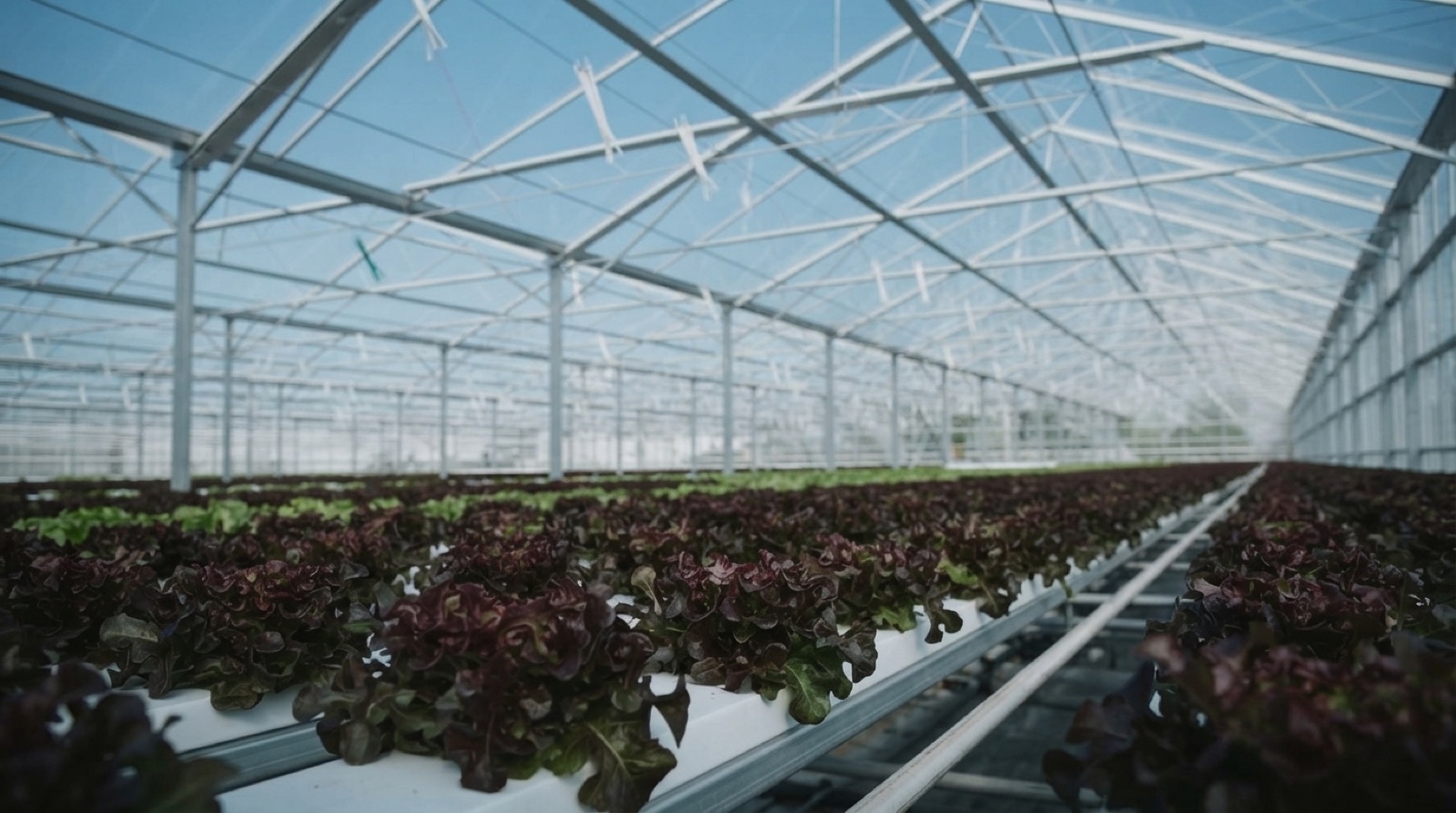
Red Oakleaf Lettuce
Red oakleaf lettuce carries the lobed leaf of the oakleaf types with red pigmentation, and most often reaches the consumer inside a multi-type pack.
El invernadero detrás de lechuga
Lechuga, bajo vidrio.
Sistemas de mesa con balsas flotantes, sistemas de canaletas móviles (MGS) o cultivo en agua profunda con NFT o flujo y.
Parta del tamaño del cogollo, el ciclo de cultivo y el manejo de la cosecha para definir el sistema de cultivo, el marco de plantación y el clima.
Cosechas repetidas. Calidad y tamaño de cogollo constantes.
Sistemas de mesa con balsas flotantes, sistemas de canaletas móviles (MGS) o cultivo en agua profunda con NFT o flujo y.
Planifique los cogollos vendidos por ciclo, los calibres, el envasado y los pedidos recurrentes.
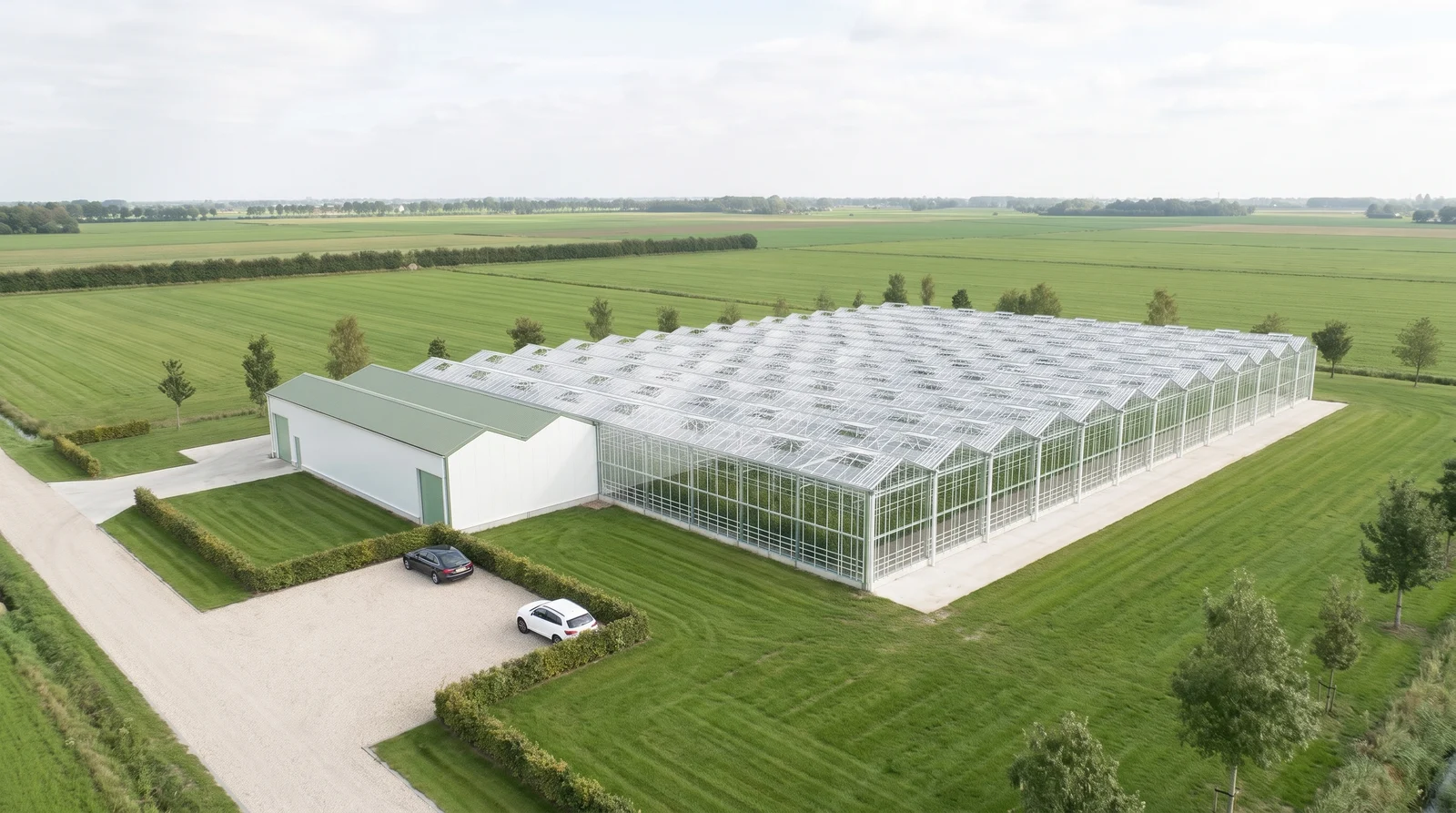
Basic Organic Greenhouse Series
Invernaderos de vidrio tipo Venlo para cultivos en suelo. Defina el cultivo, los bancales, los accesos y el calendario de producción antes de especificar los sistemas.
¼ acre½ acre1 acreExplorar Basic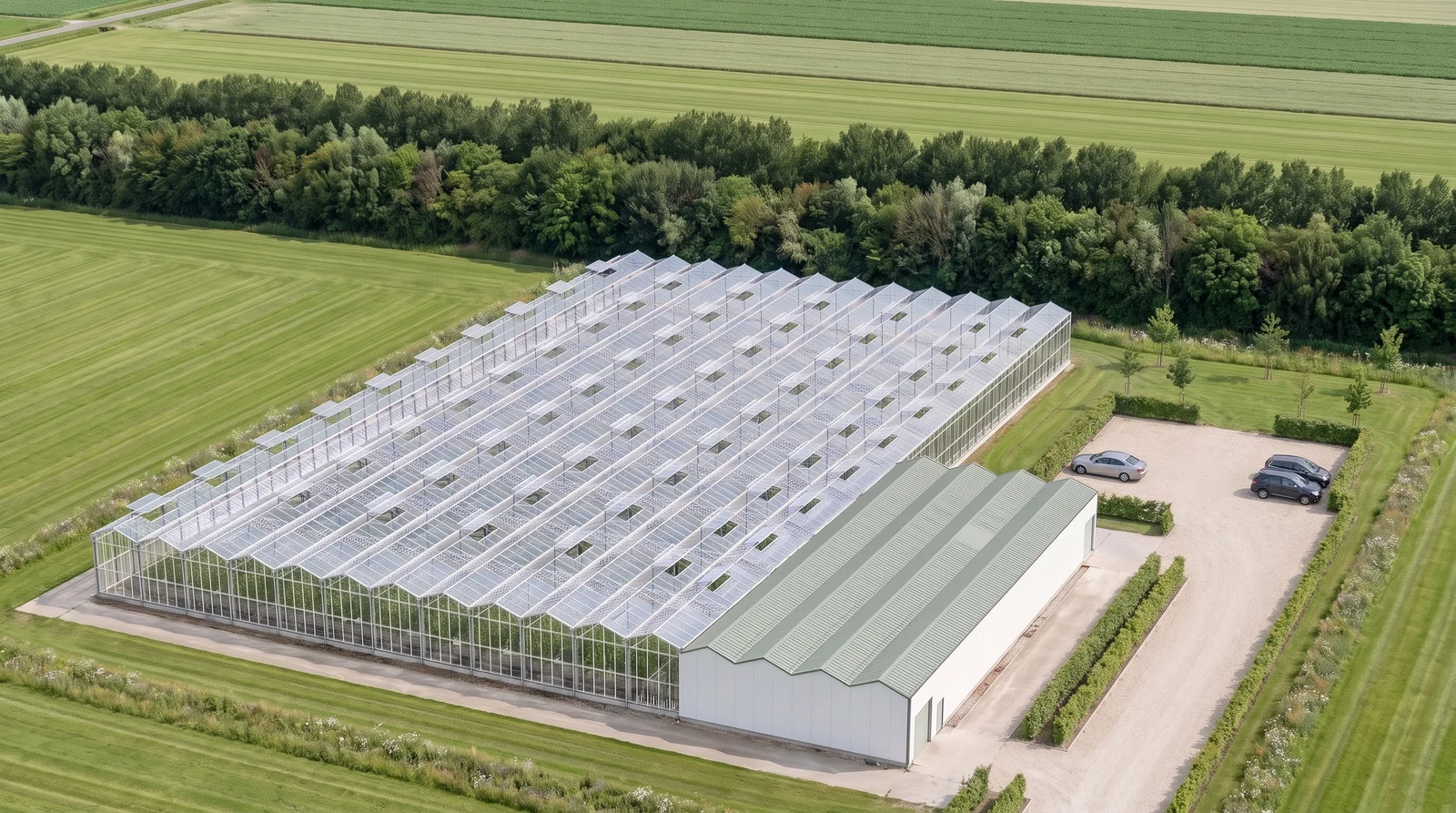
Expert Hydroponic Greenhouse Series
Una estructura definida para el cultivo hidropónico de producción. El cultivo determina el sistema de cultivo, la estrategia climática y la distribución de la cosecha.
½ acre1 acre2 acresExplorar Expert3,840 m²41,333 sq ft de espacio de cultivo es donde suele empezar un plan de lechuga (GrowPro Basic 1 acre). Comparar los nueve modelos
Ponga su próxima cosecha
bajo vidrio.
Su cultivo, su emplazamiento y el volumen que quiere vender. Encontremos el invernadero y los sistemas que encajan.
¿Necesita un invernadero a medida?GrowPro Basic
También podemos planificar otro cultivo o un programa de cultivo mixto.
Hablemos de su proyecto Continúe a nuestro formulario de contacto. Sin compromiso.Lecturas que podrían interesarle

Grow Like a Pro: Starting Smart, Growing Strong
How Grow Like a Pro combines smart farming, CEA technology and local partnerships for eco-friendly, profitable, pesticide-free greenhouse pr
Leer artículo
Maryland Cannabis Greenhouse: Year One
One year on: how the Maryland cannabis greenhouse, paired with an adjacent indoor facility, cut the energy bill and lifted both yields and q
Leer artículo
The Case for a College Greenhouse
Why a college greenhouse belongs in the curriculum: teaching science, craftsmanship, business logic and sustainability, and preparing studen
Leer artículo
The Case for a High School Greenhouse
Why every high school greenhouse matters: how it makes STEM tangible, builds responsibility and teamwork, and helps students discover their
Leer artículo
Greenhouses in Education: The Case for Schools
Greenhouses in education reconnect students to reality — the full case for why every school, high school, college and trade program should h
Leer artículo
The Origins of Greenhouse Horticulture: My Backyard
A tour through greenhouse horticulture history: from 19th-century Westland fruit walls to the “City of Glass” and today’s international high
Leer artículo