
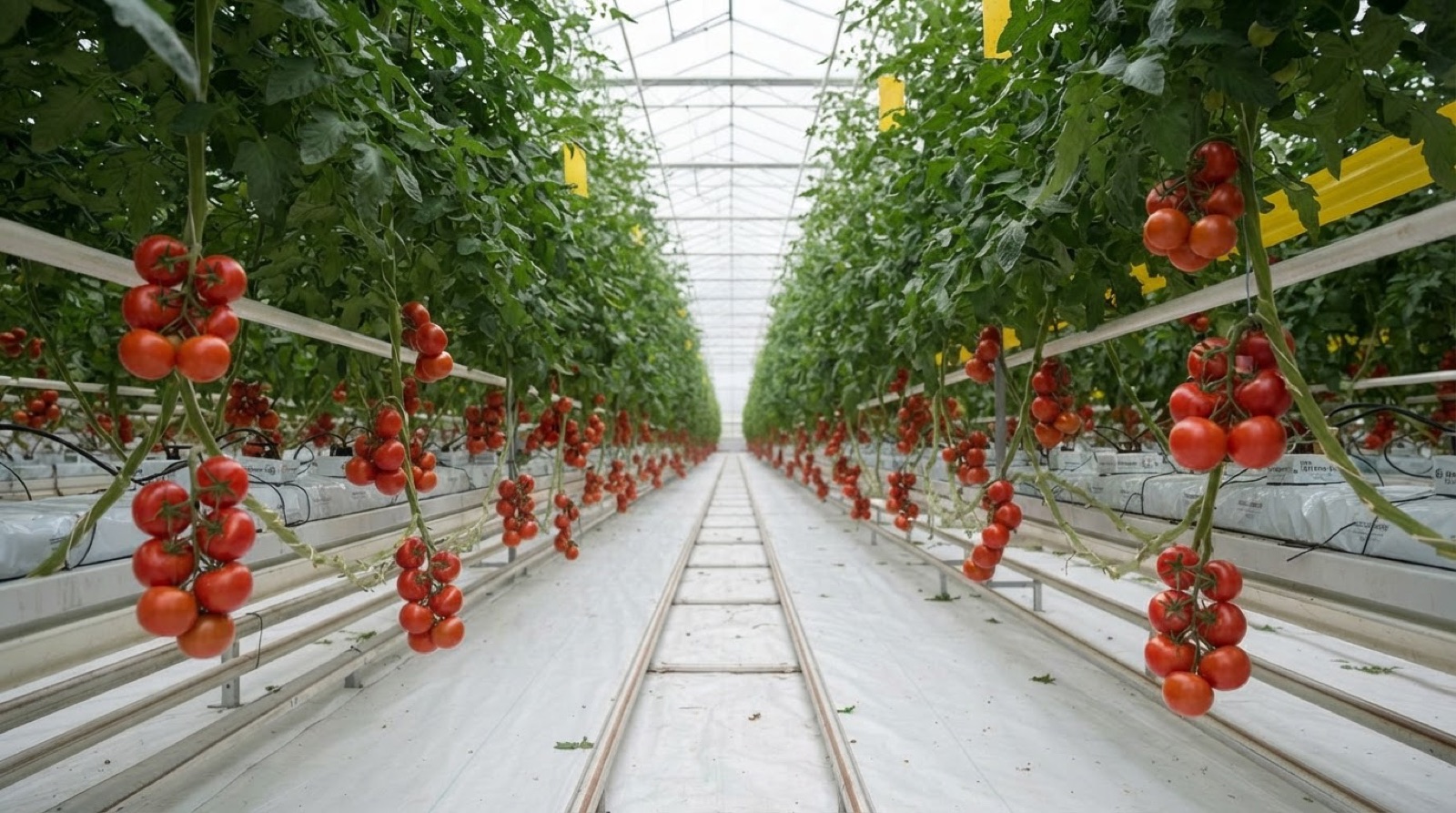
Tomato
TOV / Truss Tomatoes.
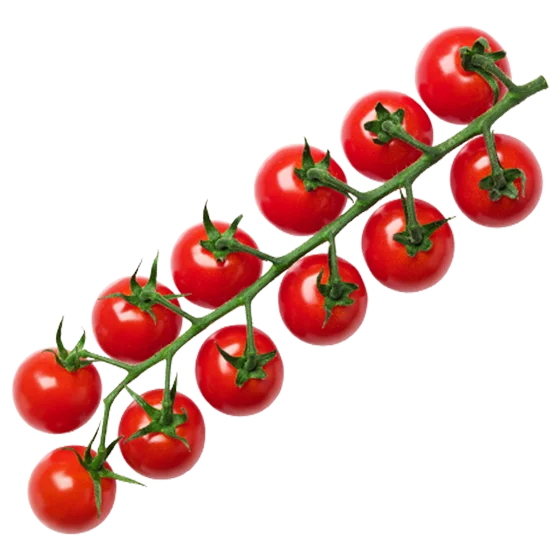
Der niederländische Exportstandard, an der Rispe verkauft.
Ein Schnitt für die ganze Traube
Eine Rispe wird in einem einzigen Schnitt geerntet, und jede Frucht daran verlässt die Pflanze im selben Moment. Der Erzeuger wählt einen Zeitpunkt für eine Traube, deren Früchte nacheinander gereift sind. Je näher dieser Schnitt an der vollen Ausfärbung liegt, desto mehr von Vitamin C, Kalium und Farbstoff steckt bereits in der Frucht und wird nicht noch gebildet.
Entfernung verlegt den Schnitt nach vorn. Eine Traube, die einen langen Transport überstehen muss, wird geerntet, solange die letzte Frucht daran noch grün ist, sodass die erste Frucht bei der Ankunft über ihren Punkt hinaus ist und die letzte nie fertig geworden ist. Die Rispe hält die Traube für die Reise zusammen. Sie hält die Frucht nicht auf dem Reifegrad, bei dem geschnitten wurde.
Ein Gewächshaus nahe an seinem Markt schneidet die Rispe, wenn die Traube stimmt, und liefert sie in derselben Woche. Das Ganze kommt dann so an, wie es losgefahren ist: Die Klasse, nach der die Kultur verkauft wird, und der Zustand, in dem die Frucht gegessen wird, sind derselbe Zustand.
Nährwerte
Tomate, rot, reif, roh — Jahresdurchschnitt
Pro 100 g
- Energie
- 18 kcal
- Fett
- 0.2 g
- Kohlenhydrate
- 3.89 g
- davon Zucker
- 2.63 g
- Ballaststoffe
- 1.2 g
- Protein
- 0.88 g
- Natrium
- 5 mg
- Kalium
- 237 mg
- Vitamin C
- 13.7 mg
Die Rispentomate wird als ganze Traube mit anhängender Rispe geerntet, und genau das ist das Produkt: Klassiert wird nach der Gleichmäßigkeit über die Rispe hinweg, nicht nach der einzelnen Frucht. Eine Traube mit einer blassen oder zu kleinen Frucht wird als Ganzes herabgestuft, deshalb zählt Gleichmäßigkeit hier mehr als Spitzengröße. Auf diesem Format haben niederländische Erzeuger den Exporthandel aufgebaut, und es bleibt die Referenzkultur für die Hochdrahtproduktion.
Was die Kultur braucht
Die Kultur ist langzyklig, wächst auf Substrat und wird am Hochdraht geführt, einmal gepflanzt und über den größten Teil des Jahres geerntet. Weil die Pflanze fortlaufend ansetzt und ausreift, muss das Klima ein stetiges Verhältnis zwischen Licht und Temperatur halten, statt einem Sollwert hinterherzulaufen; ein Ausschlag zeigt sich mehrere Rispen später als ungleichmäßiges Ausreifen. Die Steuerung der Wurzelzone über Tropfbewässerung und Drainwasser-Rezirkulation trägt die Fruchtlast, und Schirmung und Kohlendioxid-Dosierung gehören zur Standardausstattung und nicht zu den Ergänzungen.
Was das Gewächshaus leisten muss
Das Haus ist für eine Saison gebaut, die nie pausiert. Die Konstruktion trägt einen Kulturdraht und eine voll behängte Pflanze über den größten Teil des Jahres, und die Rinnenhöhe bestimmt das Luftvolumen, das das Klimasystem darunter stabil halten muss. Die Lichtdurchlässigkeit ist die erste Spezifikation: Licht, das in den dunklen Monaten die Kultur erreicht, ist Produktion, die nicht mit Wärme oder Lampen zurückgekauft werden muss.
Die Gleichmäßigkeit ist die zweite. Eine Traube wird als Ganzes klassiert, deshalb zeigt sich eine kalte Ecke, ein trockener Abschnitt oder ein verschattetes Schiff später als herabgestufte Rispe und nicht als örtliches Problem. Gleichmäßige Lichtdurchlässigkeit, gleichmäßige Luftbewegung und gleichmäßige Wasserabgabe über die gesamte Fläche entscheiden über die Klasse, und darum werden Konstruktion, Schirmung und Bewässerung als ein Paket ausgelegt und nicht als drei gekauft.
DutchGreenhouses® legt Konstruktion, Klima, Schirmung und Bewässerung gemeinsam auf die Rispentomatenkultur, ihre Sorte und das lokale Klima aus, damit die ganze Traube die Klasse erreicht. Nehmen Sie Kontakt auf, um ein Tomatengewächshaus für Ihren Markt zu planen.
Rispentomate, gefragt und beantwortet
Was unterscheidet die Rispentomate im Anbau von der losen Tomate?
Die Traube wird als eine Einheit klassiert, deshalb entscheidet die Gleichmäßigkeit über die Rispe hinweg über die Klasse. Das legt mehr Gewicht auf ein stetiges Klima und einen gleichmäßigen Fruchtansatz als auf das Erreichen maximaler Einzelfruchtgröße.
Was bestimmt die Größe eines Rispentomaten-Gewächshauses?
Das Marktfenster und der Ernterhythmus. Eine Kultur, die über den größten Teil des Jahres geerntet wird, ist auf durchgehenden Durchsatz ausgelegt, deshalb werden Anbaufläche, interner Transport und Packkapazität gemeinsam dimensioniert und nicht um eine einzelne Spitzenwoche herum.
Braucht die Rispentomate eine Zusatzbelichtung?
Das hängt vom Breitengrad und vom belieferten Marktfenster ab. Belichtung verlängert die produktive Saison in den lichtarmen Monaten und bringt eine eigene Heizlast und einen eigenen Stromanschluss mit, deshalb gehört sie in die Gewächshausplanung und nicht in eine spätere Nachrüstung.
Other tomato
varieties.
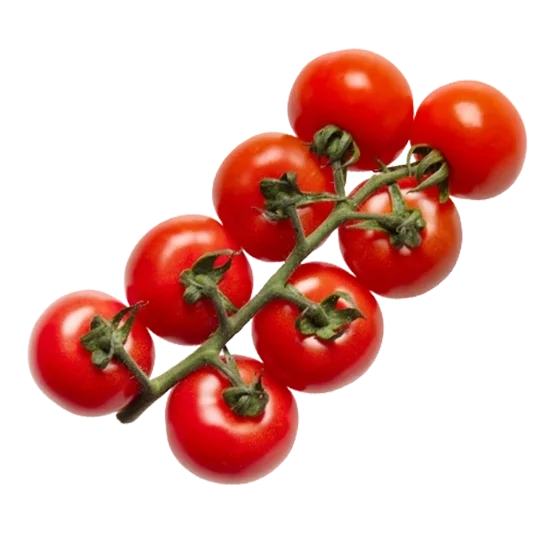
Die Referenzkultur des Gewächshauses. Der Handelstyp, den Sie verkaufen, bestimmt Pflanzenlast, Ernterhythmus und das Haus.

Das Gewächshaus hinter tomaten
Tomaten, unter Glas.
Hochdraht-Hydroponik auf Hängerinnen.
Kulturstütze, Arbeitshöhe, Licht und Klima folgen Ihrem Tomatentyp und Produktionskalender.
Die Referenzkultur des Gewächshauses.
Hochdraht-Hydroponik auf Hängerinnen.
Fruchttyp, Qualitätsklasse und Erntekennzahlen auf Ihren Abnehmer abstimmen.
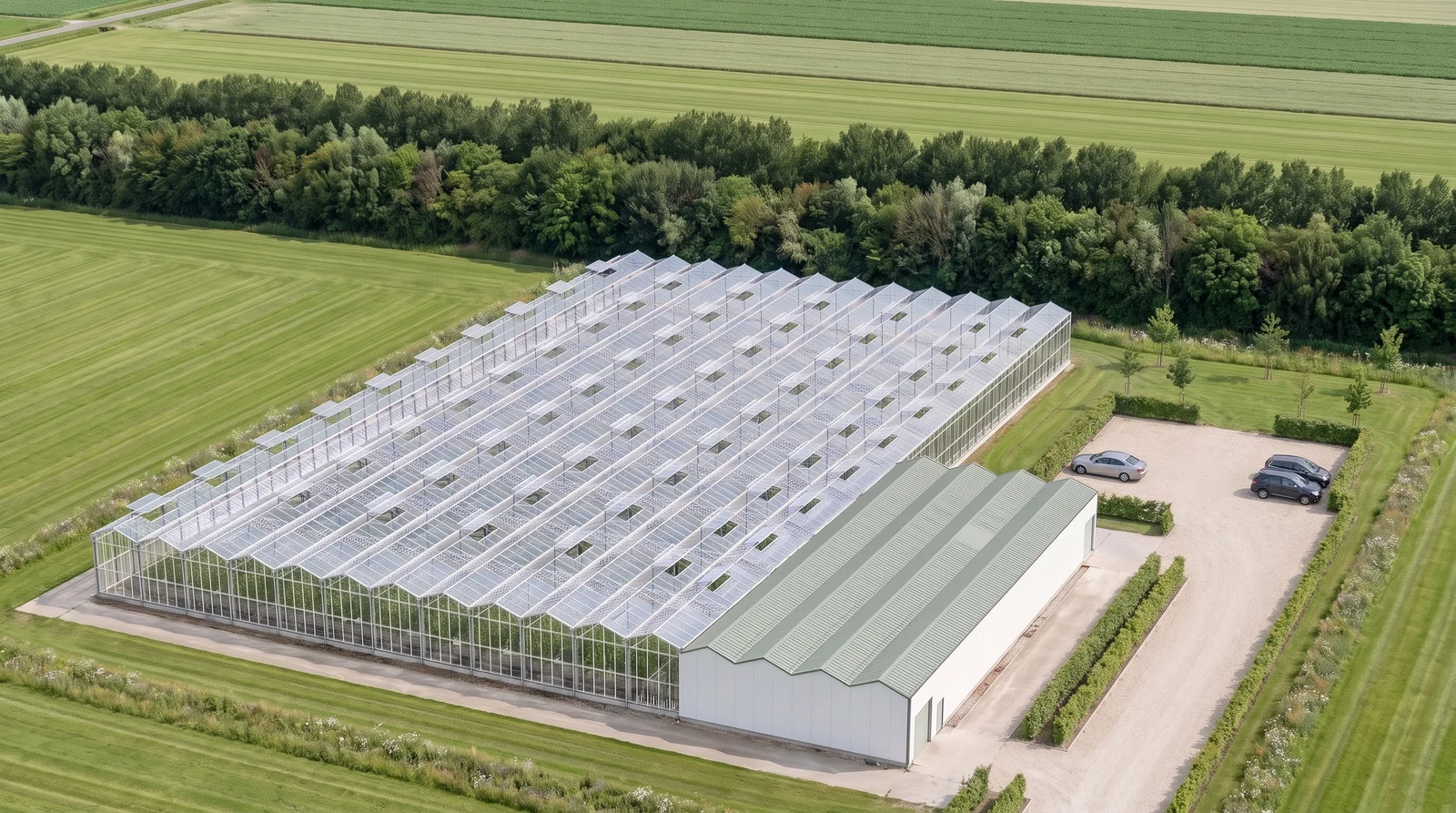
Expert Hydroponic Greenhouse Series
Eine definierte Konstruktion für die kommerzielle Hydroponik. Die Kultur bestimmt Kultursystem, Klimastrategie und Ernteanordnung.
½ acre1 acre2 acresEntdecken Expert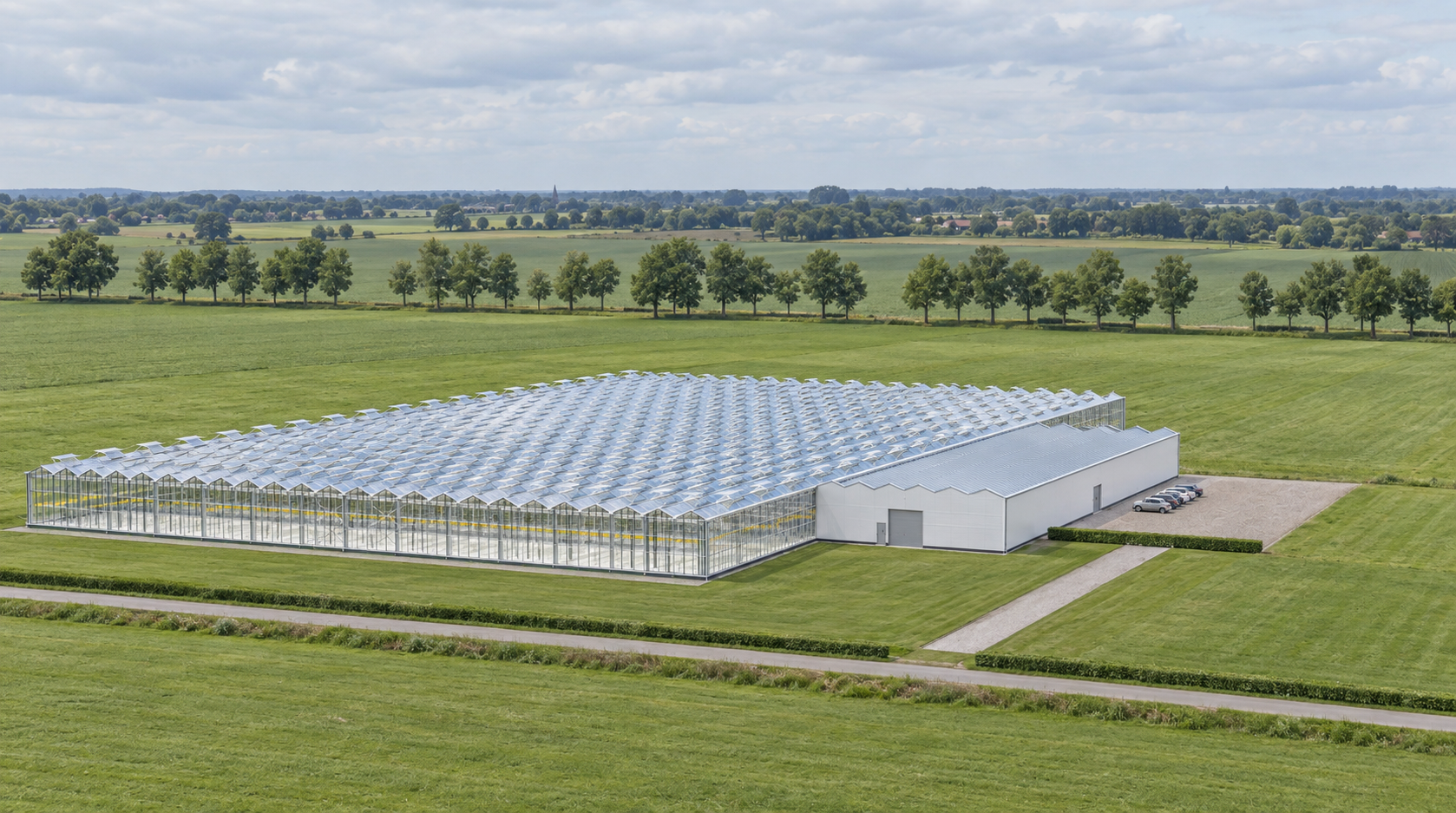
Plus Hydroponic Greenhouse Series
Unsere größte Standardserie. Die größere Kulturfläche auf Kulturbedarf, Arbeitskräfte, Versorgung und den Markt abstimmen, den Sie beliefern wollen.
2 acres4 acres8 acresEntdecken Plus4,032 m²43,400 sq ft Kulturfläche sind der übliche Ausgangspunkt für einen Produktionsplan mit tomaten (GrowPro Expert 1 acre). Alle neun Modelle vergleichen
Bringen Sie Ihre nächste Ernte
unter Glas.
Ihre Kultur, Ihr Standort und die Menge, die Sie verkaufen wollen. Finden wir das passende Gewächshaus und die passenden Systeme.
Ein individuelles Gewächshaus gesucht?GrowPro Expert
Wir können auch für eine andere Kultur oder ein gemischtes Anbauprogramm planen.
Über Ihr Projekt sprechen Weiter zum Kontaktformular. Unverbindlich.Lesenswertes, das Sie interessieren könnte

Grow Like a Pro: Starting Smart, Growing Strong
How Grow Like a Pro combines smart farming, CEA technology and local partnerships for eco-friendly, profitable, pesticide-free greenhouse pr
Artikel lesen
Maryland Cannabis Greenhouse: Year One
One year on: how the Maryland cannabis greenhouse, paired with an adjacent indoor facility, cut the energy bill and lifted both yields and q
Artikel lesen
The Case for a College Greenhouse
Why a college greenhouse belongs in the curriculum: teaching science, craftsmanship, business logic and sustainability, and preparing studen
Artikel lesen
The Case for a High School Greenhouse
Why every high school greenhouse matters: how it makes STEM tangible, builds responsibility and teamwork, and helps students discover their
Artikel lesen
Greenhouses in Education: The Case for Schools
Greenhouses in education reconnect students to reality — the full case for why every school, high school, college and trade program should h
Artikel lesen
The Origins of Greenhouse Horticulture: My Backyard
A tour through greenhouse horticulture history: from 19th-century Westland fruit walls to the “City of Glass” and today’s international high
Artikel lesen