
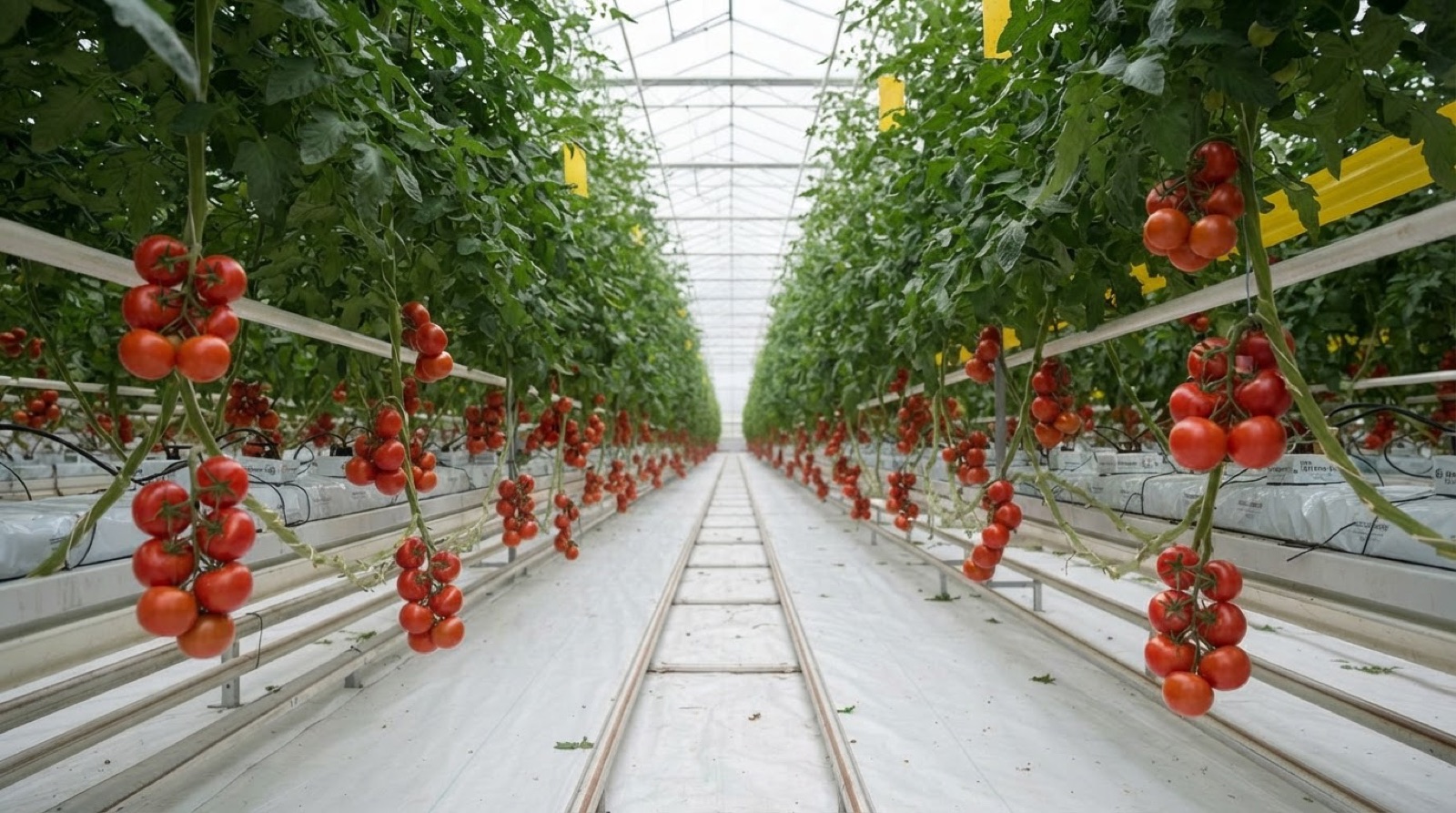
Tomato
TOV / Truss Tomatoes.
The Dutch export standard, sold on the vine.
Cut once, for the whole cluster
A truss is cut in a single action, and every fruit on it leaves the plant at the same moment. The grower picks one point in time for a cluster whose fruit ripened in sequence. The closer that cut sits to full colour, the more of the vitamin C, the potassium and the pigment is already in the fruit rather than still being made.
Distance moves the cut earlier. A cluster that has to survive a long haul is taken while the last fruit on it is still green, so the first fruit is past its moment on arrival and the last one never finished. The vine holds the cluster together for the journey. It does not hold the fruit at the ripeness it was cut at.
A greenhouse near its market cuts the truss when the cluster is right and delivers it the same week. The whole thing then arrives as it left: the grade the crop is sold on and the condition the fruit is eaten in are the same condition.
Nutrition facts
Tomato, red, ripe, raw — year round average
Per 100 g
- Energy
- 18 kcal
- Fat
- 0.2 g
- Carbohydrate
- 3.89 g
- Sugars
- 2.63 g
- Fiber
- 1.2 g
- Protein
- 0.88 g
- Sodium
- 5 mg
- Potassium
- 237 mg
- Vitamin C
- 13.7 mg
Truss tomato is harvested as a whole cluster with the vine attached, and that is the product: the fruit is graded on evenness across the truss, not on individual fruit. A cluster carrying one pale or undersized fruit is downgraded whole, so uniformity is worth more here than peak size. It is the format Dutch growers built the export trade on, and it remains the reference crop for high-wire production.
What the crop needs
The crop is long-cycle, grown on substrate and carried on a high wire, planted once and picked for most of the year. Because the plant sets and ripens continuously, the climate has to hold a steady relationship between light and temperature rather than chase a target; a swing shows up several trusses later as uneven ripening. Root-zone control through drip and drain recirculation carries the fruit load, and screening and carbon dioxide dosing are part of the standard envelope rather than additions to it.
What the greenhouse has to do
The house is built for a season that never pauses. The structure carries a crop wire and a fully hung plant for most of the year, and gutter height sets the air volume the climate system has to keep stable underneath it. Light transmission is the first specification: light that reaches the crop in the dark months is production that does not have to be bought back with heat or lamps.
Uniformity is the second. A cluster is graded whole, so a cold corner, a dry section or a shaded bay shows up later as a downgraded truss rather than as a local problem. Even transmission, even air movement and even water delivery across the whole floor decide the grade, which is why the structure, the screening and the irrigation are specified as one package rather than bought as three.
DutchGreenhouses® specifies the structure, climate, screening and irrigation together around the truss tomato crop, its cultivar and the local climate, so the whole cluster reaches grade. Get in touch to plan a tomato greenhouse for your market.
Truss tomato, asked and answered
What makes truss tomato different from loose tomato to grow?
The cluster is graded as one unit, so evenness across the truss decides the grade. That puts more weight on steady climate and consistent fruit set than on reaching maximum individual fruit size.
What decides the size of a truss tomato greenhouse?
The market window and the harvest rhythm. A crop picked for most of the year is sized for continuous throughput, so growing area, internal transport and packing capacity are dimensioned together rather than around a single peak week.
Does truss tomato need supplemental lighting?
It depends on the latitude and the market window being supplied. Lighting extends the productive season in low-light months, and it brings its own heating load and electrical service, so it belongs in the greenhouse design rather than in a later upgrade.
Other tomato
varieties.
The greenhouse benchmark crop. The class you sell decides the plant load, the harvest rhythm and the house.

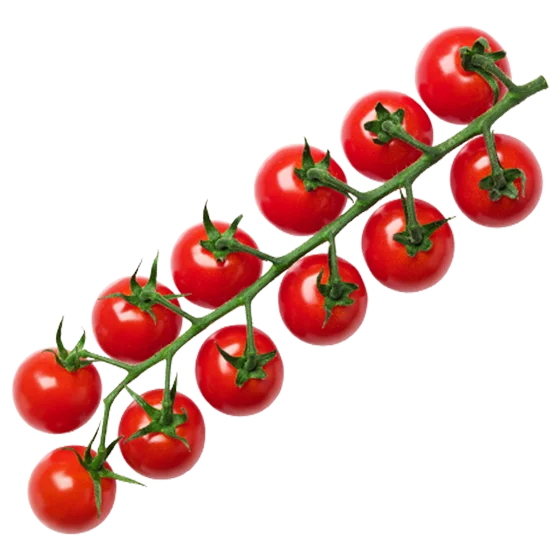
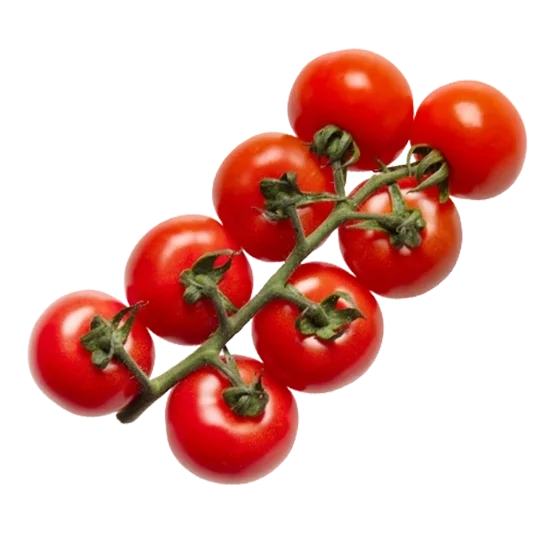
The greenhouse behind tomatoes
Tomatoes, under glass.
High-wire hydroponics on hanging gutters.
Crop support, working height, light and climate follow your tomato type and production calendar.
The greenhouse benchmark crop.
High-wire hydroponics on hanging gutters.
Match fruit type, quality grade and harvest metrics to your buyer.
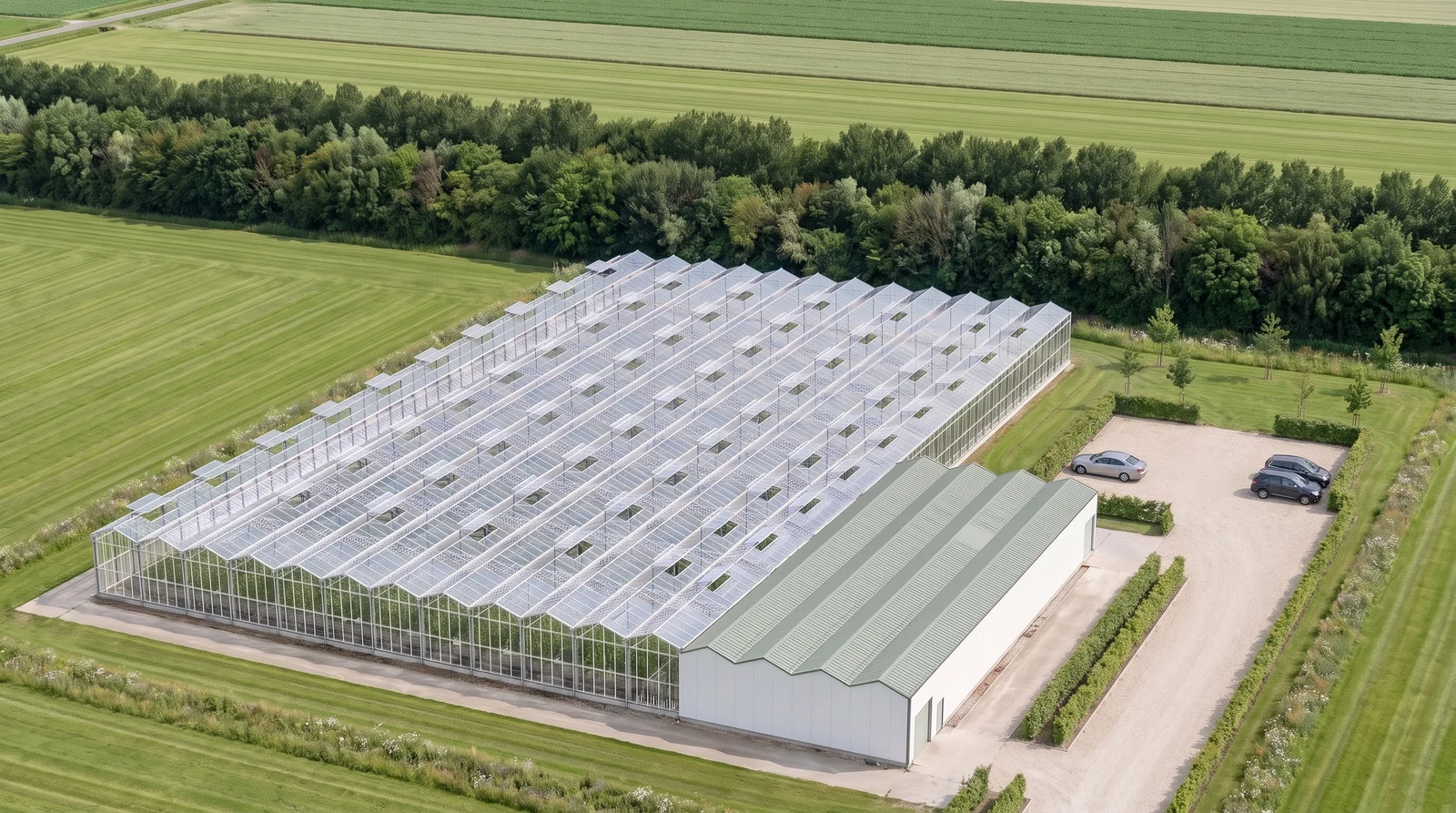
Expert Hydroponic Greenhouse Series
A defined structure for commercial hydroponics. The crop determines the growing system, climate strategy and harvest layout.
½ acre1 acre2 acresExplore Expert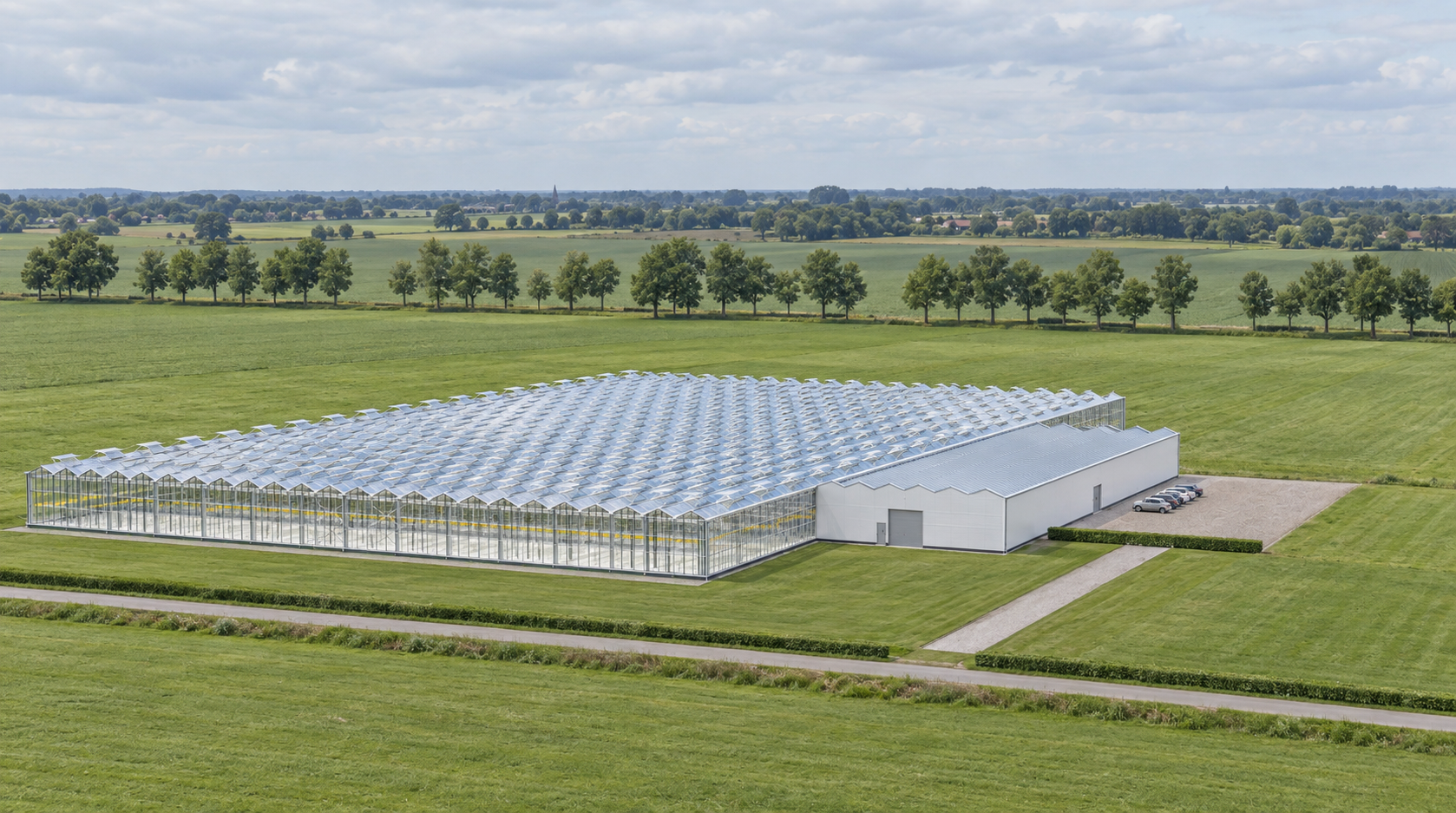
Plus Hydroponic Greenhouse Series
Our largest standard range. Match the larger growing area to crop demand, labour, utilities and the market you intend to supply.
2 acres4 acres8 acresExplore Plus4,032 m²43,400 sq ft of growing space is where a tomatoes plan usually starts (GrowPro Expert 1 acre). Compare all nine models
Put your next harvest
under glass.
Your crop, your site and the volume you want to sell. Let's find the greenhouse and systems to match.
Need a custom greenhouse?GrowPro Expert
We can also plan for another crop or a mixed growing programme.
Talk about your project Continue to our contact form. No commitment.Reads you might find interesting

Grow Like a Pro: Starting Smart, Growing Strong
How Grow Like a Pro combines smart farming, CEA technology and local partnerships for eco-friendly, profitable, pesticide-free greenhouse pr
Read article
Maryland Cannabis Greenhouse: Year One
One year on: how the Maryland cannabis greenhouse, paired with an adjacent indoor facility, cut the energy bill and lifted both yields and q
Read article
The Case for a College Greenhouse
Why a college greenhouse belongs in the curriculum: teaching science, craftsmanship, business logic and sustainability, and preparing studen
Read article
The Case for a High School Greenhouse
Why every high school greenhouse matters: how it makes STEM tangible, builds responsibility and teamwork, and helps students discover their
Read article
Greenhouses in Education: The Case for Schools
Greenhouses in education reconnect students to reality — the full case for why every school, high school, college and trade program should h
Read article
The Origins of Greenhouse Horticulture: My Backyard
A tour through greenhouse horticulture history: from 19th-century Westland fruit walls to the “City of Glass” and today’s international high
Read article