
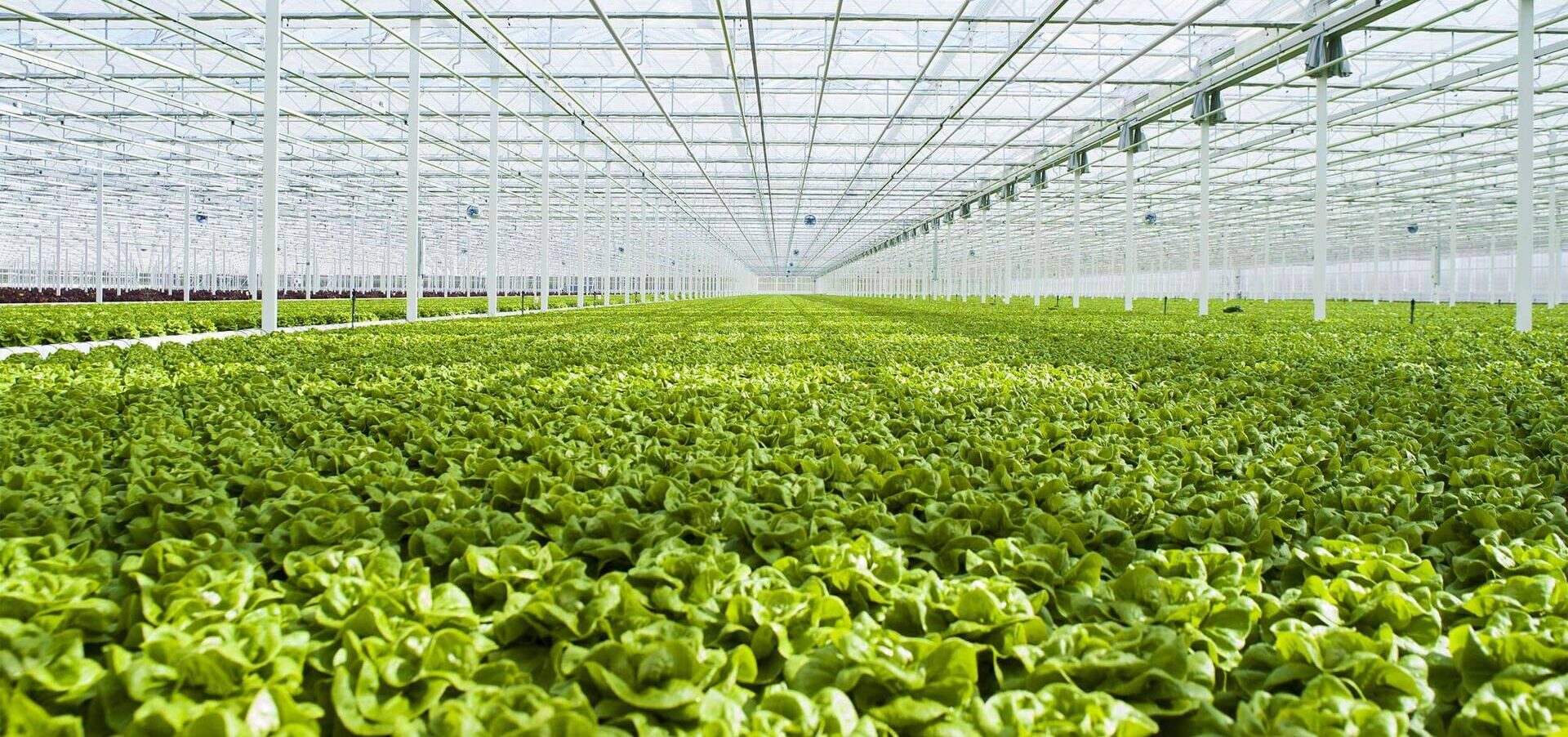
Crops · Leafy green
Lettuce.
Ein kurzer Zyklus, das ganze Jahr wiederholt, bei dem der Kopf die verkaufte Einheit ist.
First, what leaves the greenhouse?
The head.
The roots. The specification.
A buyer’s specification defines the harvest. Head form, root presentation and target weight guide the choice of cultivar, final spacing and harvest stage.
Whole heads
The shape, leaf texture and packed appearance define the product. Baby leaf and cut-leaf production follow a different harvest plan.
Root ball or trimmed
Living lettuce retains its root ball—the kluit. Root-removed heads require a different harvest and packing operation. Both can be whole-head products.
Weight and space
A larger target head generally needs more growing space and/or time. Cultivar and growing conditions determine the actual relationship; weight alone cannot set plant density.
The schedule depends on the growing conditions
Same area.
A different season.
A summer schedule cannot simply be carried into winter. Local daylight, temperature and humidity influence crop development and marketable quality—and the greenhouse systems needed to maintain the plan.
Light & crop timing
Seasonal light changes the growth available each day. A longer growing stage occupies space for longer and reduces the flow of heads through the same area.
Temperature & leaf quality
Temperature, humidity and air movement need to be considered together. The aim is a consistent harvest, with climate management matched to the cultivar and season.
Water & root environment
Water quality, nutrient-solution temperature and oxygen availability matter in hydroponic cultivation. The root environment is part of the growing plan.
Technology serves the cultivation plan
Different systems.
The same starting question.
How does the method deliver the intended head, at the required pace, with a workable harvest and cleaning routine?
Soil beds
A soil-based route with bed preparation, irrigation and crop handling designed around the site. Organic certification depends on the applicable standard and the full growing practice; soil cultivation alone does not establish it.
Moving gutters · MGS
Crop movement and progressive spacing can release room as plants develop and bring work to defined stations. Moving gutters may use NFT: movement and water delivery describe different parts of the same system. The full spacing schedule, including transfer steps, is needed for a capacity calculation.
Fixed NFT channels
A shallow flow of nutrient solution supplies roots in channels. Channel layout, plant spacing, water distribution, cleaning and transplant handling determine how the growing area is used.
Floats on ebb-and-flow tables
Lettuce is held in plant carriers on tables fitted with ebb-and-flow trays. Periodic flooding supplies water to the root zone, followed by drainage. This table-based approach differs from both a thin nutrient flow in NFT channels and continuously floating rafts in a deep-water pond. Direct sowing into the carriers can change the propagation and transfer workflow. Carrier spacing, occupied table area, irrigation cycles, cleaning and harvest handling form part of the cultivation plan.
Floats on an aerated cultivation floor
A related arrangement places supported plant carriers above an ebb-and-flow cultivation floor. The floor alternates water delivery with air supply beneath the crop, connecting root-zone irrigation with air movement around the plants. This is a floor-based arrangement, with its own irrigation, aeration, hygiene and handling requirements. Its crop schedule and usable area need to be established for the intended lettuce product.
Deep-water culture
Plants are supported above nutrient solution, commonly on rafts. Raft handling, oxygenation, spacing changes and cleaning need to be considered alongside the harvest specification.
Tage, nicht Wochen
Salat besteht überwiegend aus Wasser, und was er darüber hinaus trägt, wird genau so gegessen, wie es die Pflanze verlassen hat. Vitamin C, Kalium und Folat sitzen im Blatt, und ein Salat wird nie gekocht, also wird nichts herausgekocht und nichts wieder zugesetzt. Das Blatt ist zugleich die Kultur und die Mahlzeit.
Wasser ist auch der Grund, warum der Kopf empfindlich ist. Ein geschnittener Salat lebt weiter und verliert weiter Feuchtigkeit, und er zehrt dabei von seinem eigenen Zustand. Eine Frucht kann unterwegs ausreifen; ein Blatt wird nur älter. Turgor, Farbe und Haltbarkeit beginnen in der Stunde des Schnitts abzunehmen.
Damit rückt die Entfernung ins Zentrum der Rechnung. Ein Haus nahe seinem Markt kann morgens schneiden und am selben Tag liefern, und der Kopf erreicht den Teller mit dem größten Teil seines Lebens noch vor sich. Es kann das auch in jedem Monat des Jahres, und das ist der Teil, den ein Freiland in einem harten Klima nicht zusagen kann.
Nährwerte
Salat, grünes Blatt, roh
Pro 100 g
- Energie
- 15 kcal
- Fett
- 0.15 g
- Kohlenhydrate
- 2.87 g
- davon Zucker
- 0.78 g
- Ballaststoffe
- 1.3 g
- Protein
- 1.36 g
- Natrium
- 28 mg
- Kalium
- 194 mg
- Vitamin C
- 9.2 mg
Welche lettuce?
Die Handelstypen.
Wiederholte Ernten. Gleichbleibende Kopfqualität und -größe. Der Handelstyp, den Sie verkaufen, bestimmt Pflanzenlast, Ernterhythmus und das Haus.
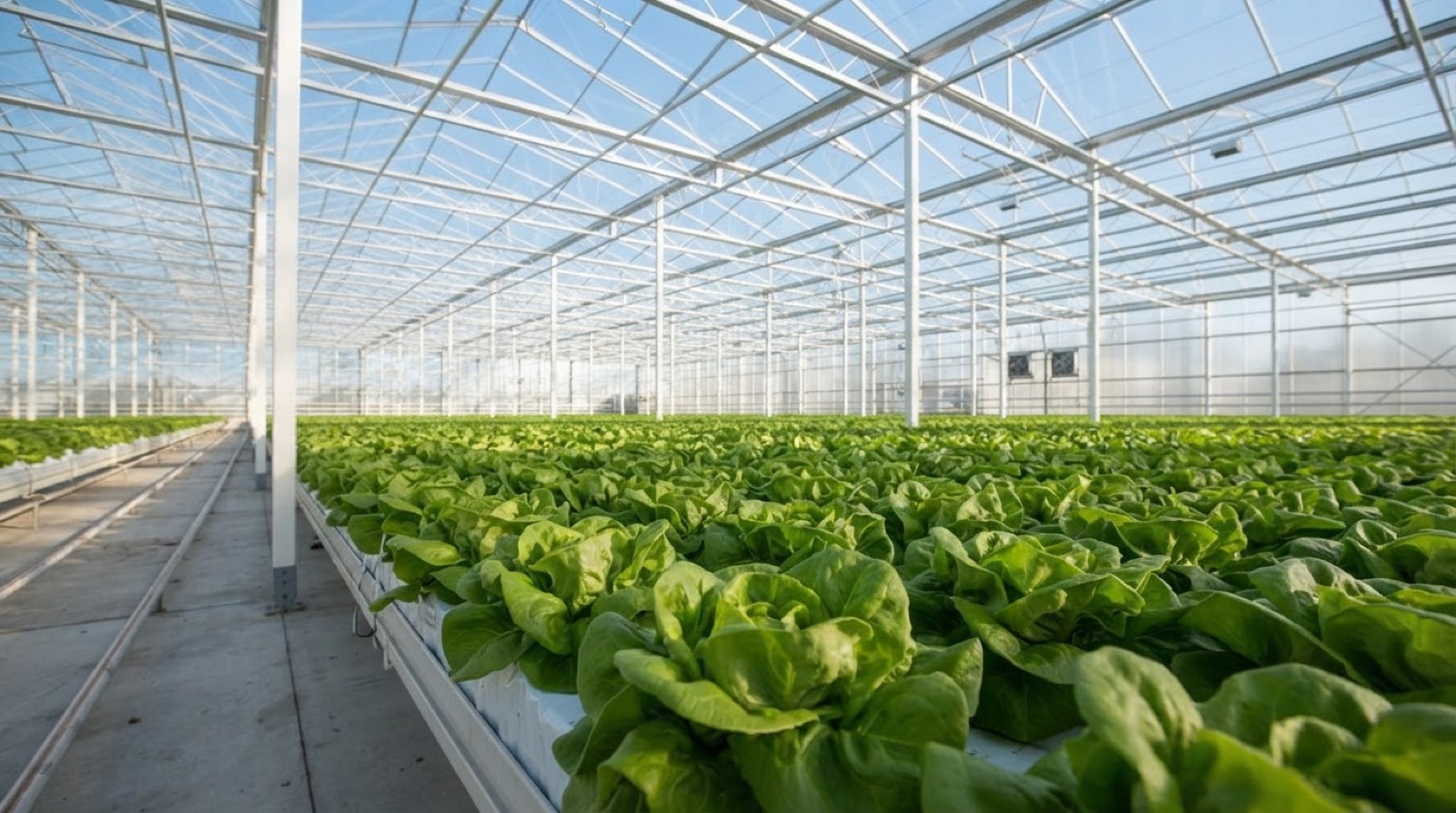
Butterhead Lettuce
Butterhead is the soft-leaved wholehead lettuce sold with its outer leaves intact, and the type most European buyers picture when they specify lettuce.
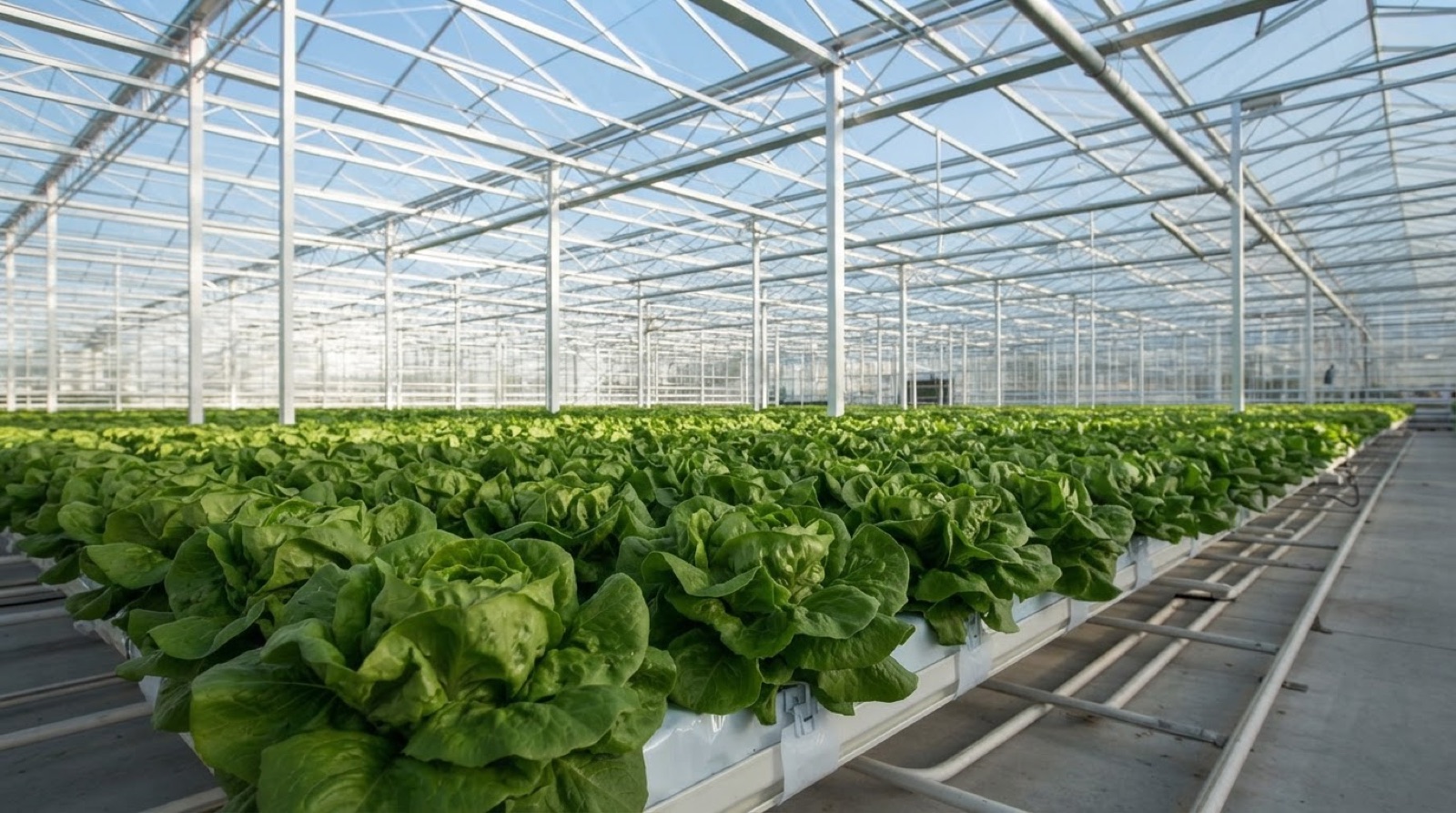
Green Crispy Lettuce
Green crispy is the dense, crunchy-leaved lettuce sold both as a wholehead and into processing, where the leaf holds its texture after cutting.
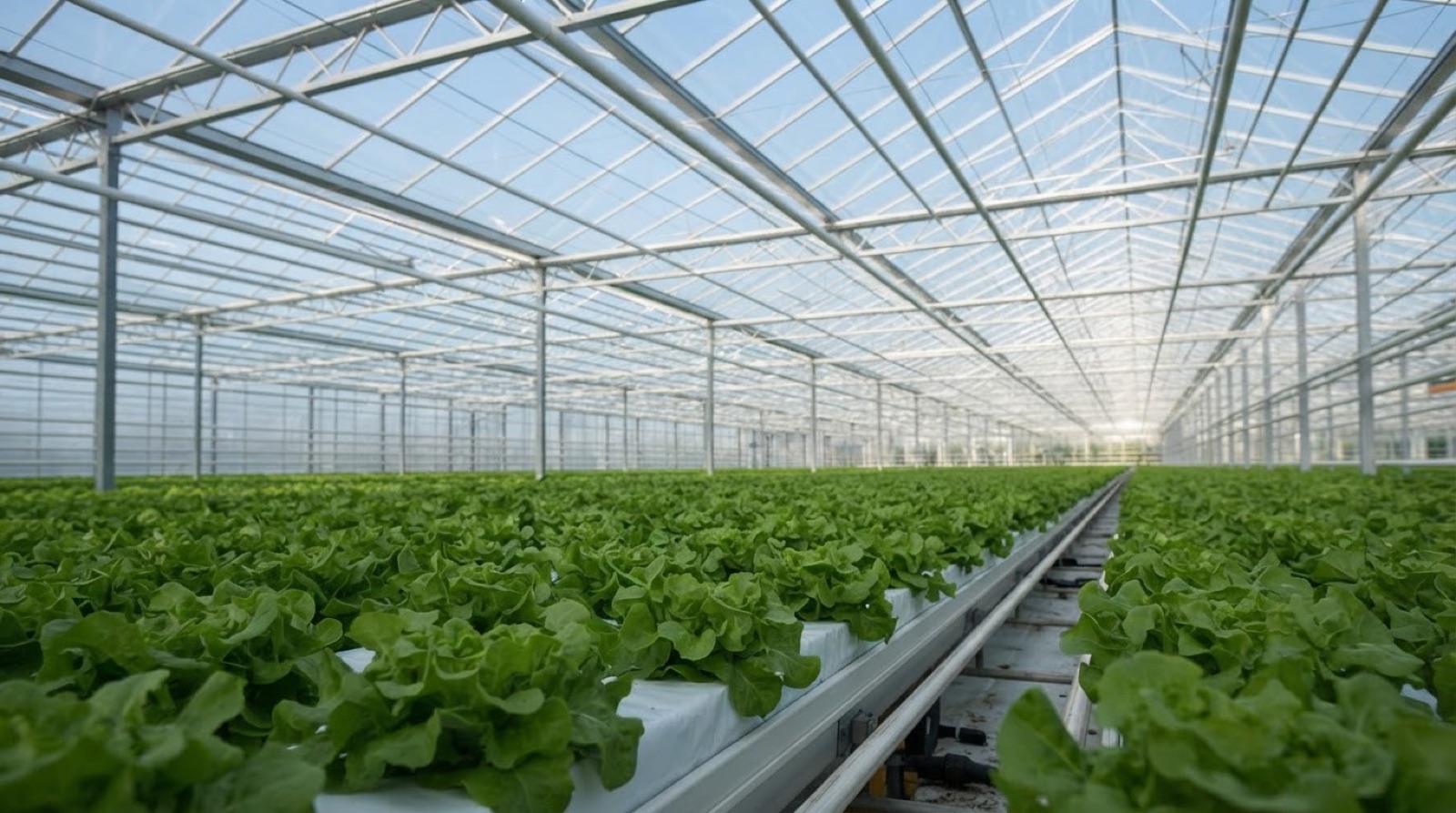
Green Oakleaf Lettuce
Green oakleaf lettuce is a lobed, soft-leaved head grown for leaf shape rather than for weight.
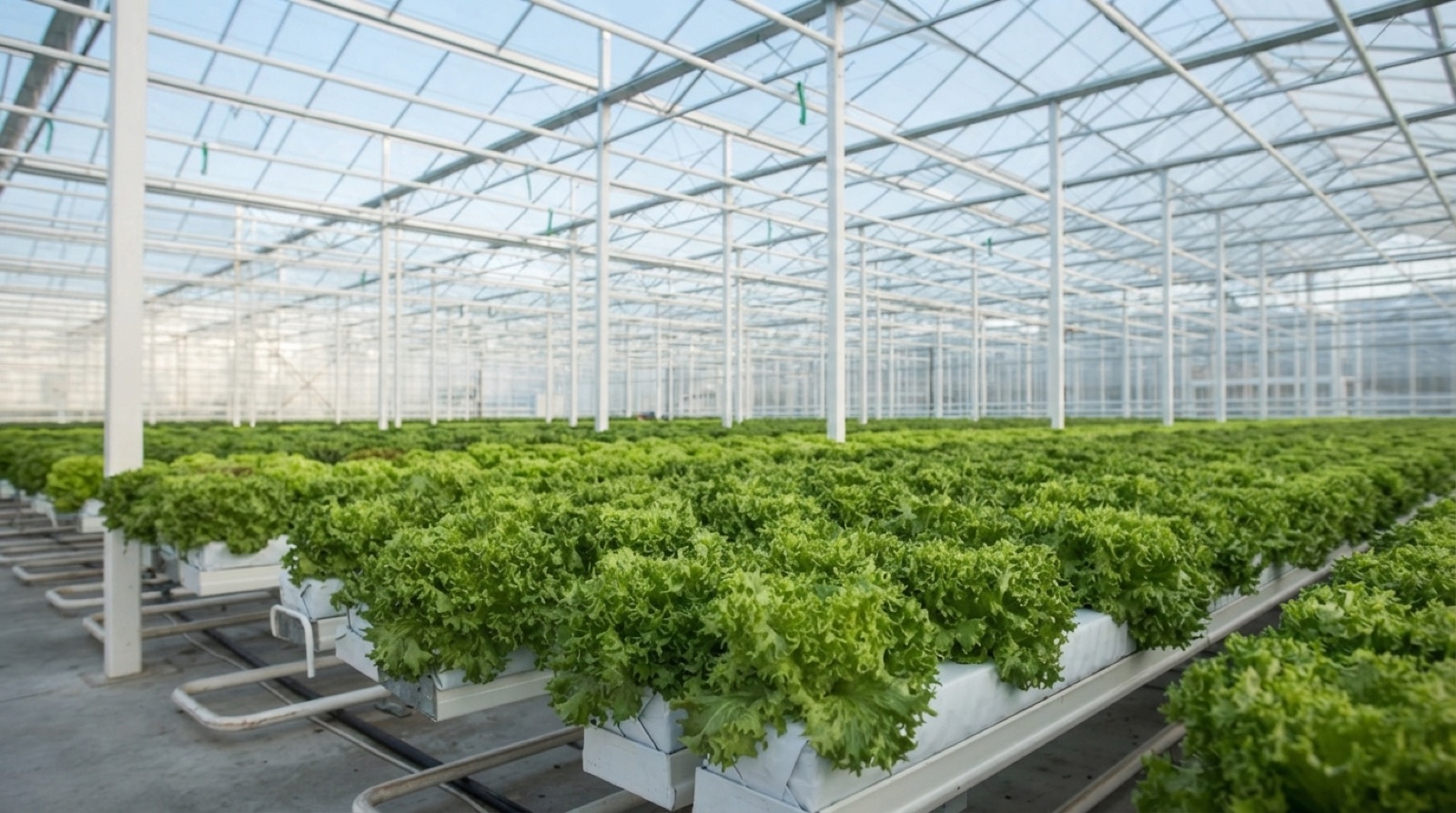
Lollo Bionda Lettuce
Lollo Bionda is the green Lolla lettuce, with a tightly curled leaf margin and bought for appearance rather than for weight.
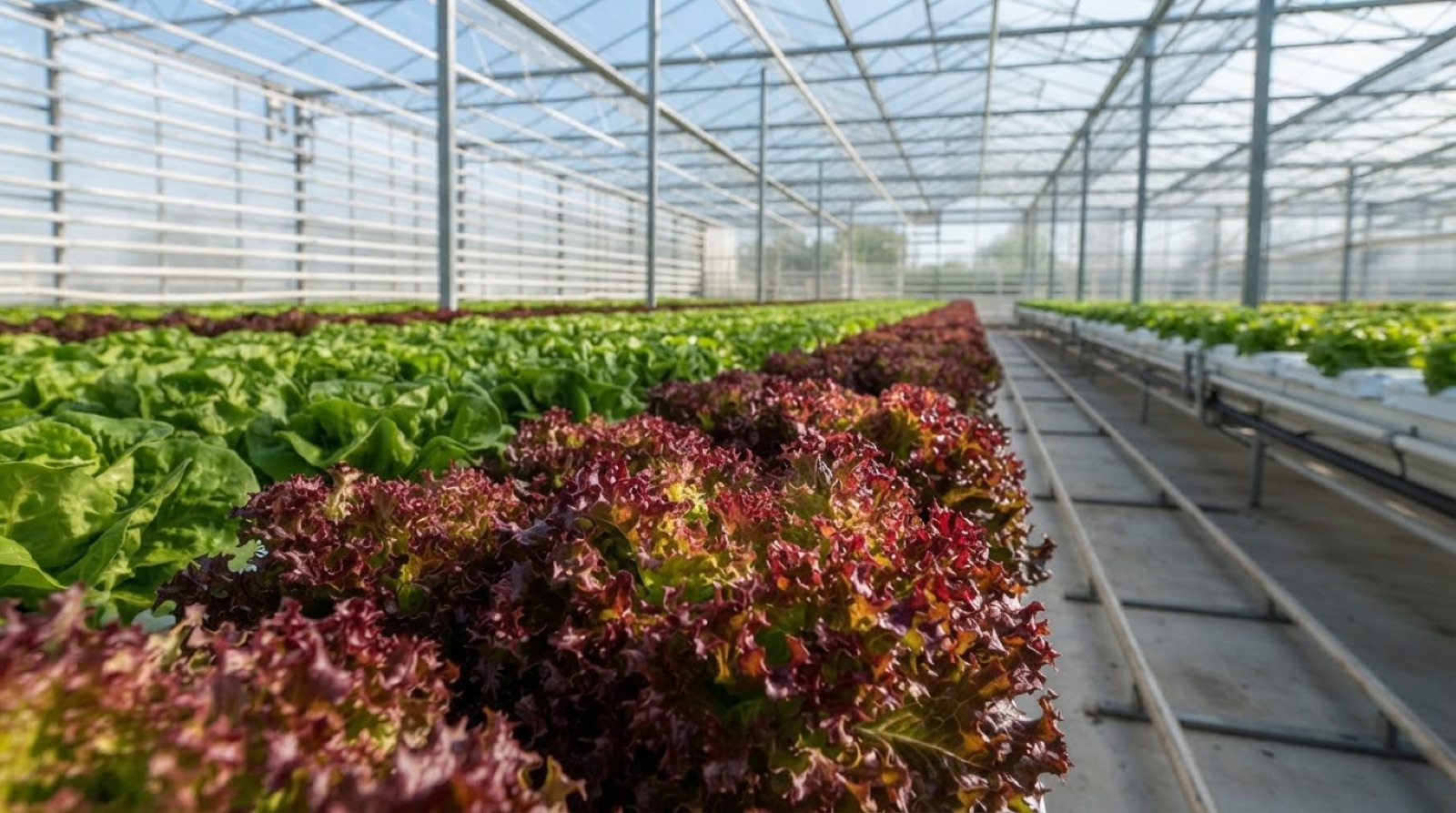
Lollo Rosso Lettuce
Lollo Rosso is the red Lolla lettuce, where the tightly curled leaf margin and the red pigmentation are both the product.
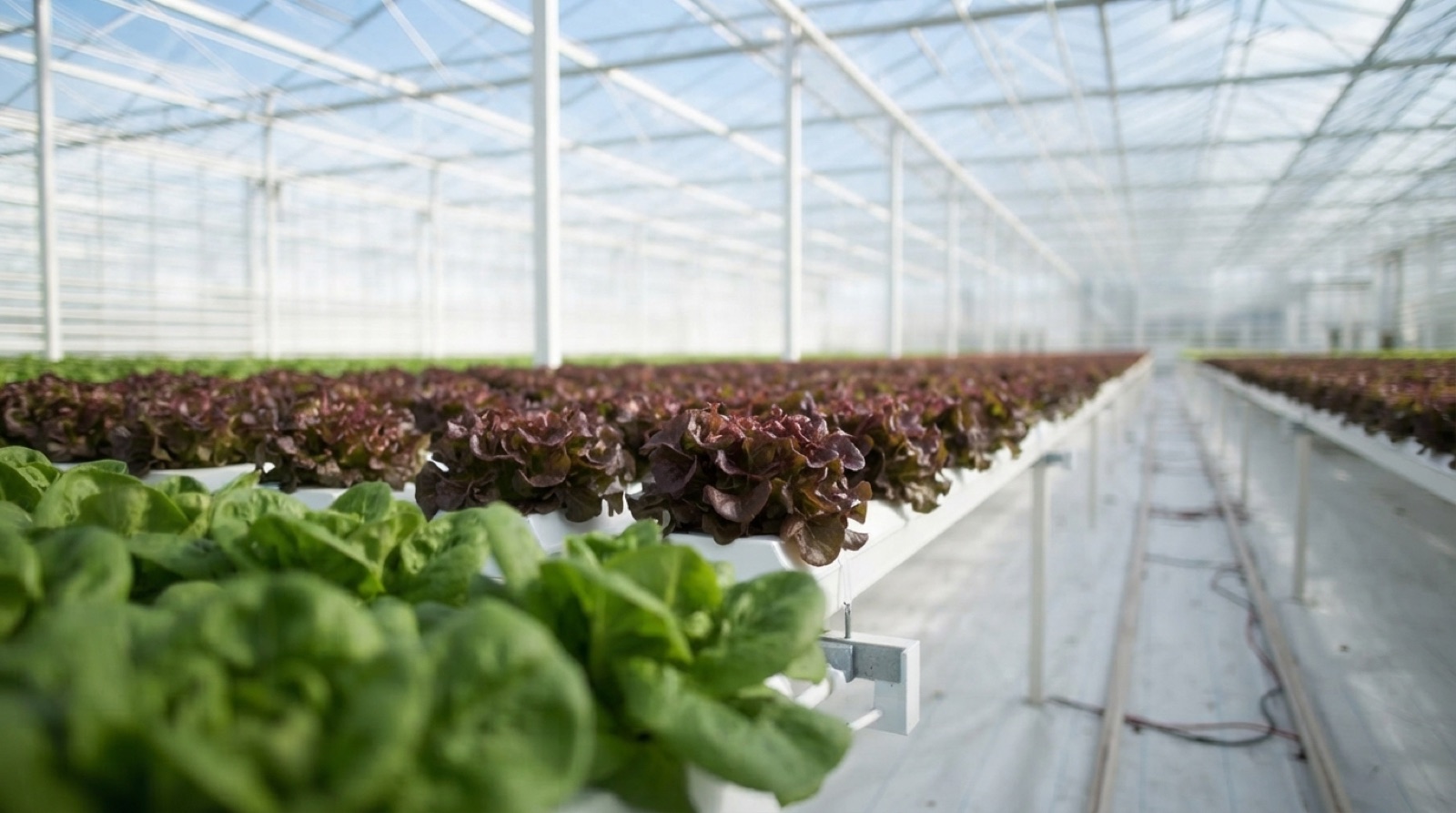
Red Crispy Lettuce
Red crispy is the red-pigmented counterpart of the green crispy head, sold wholehead and into mixed-leaf packs where colour intensity is part of the specification.
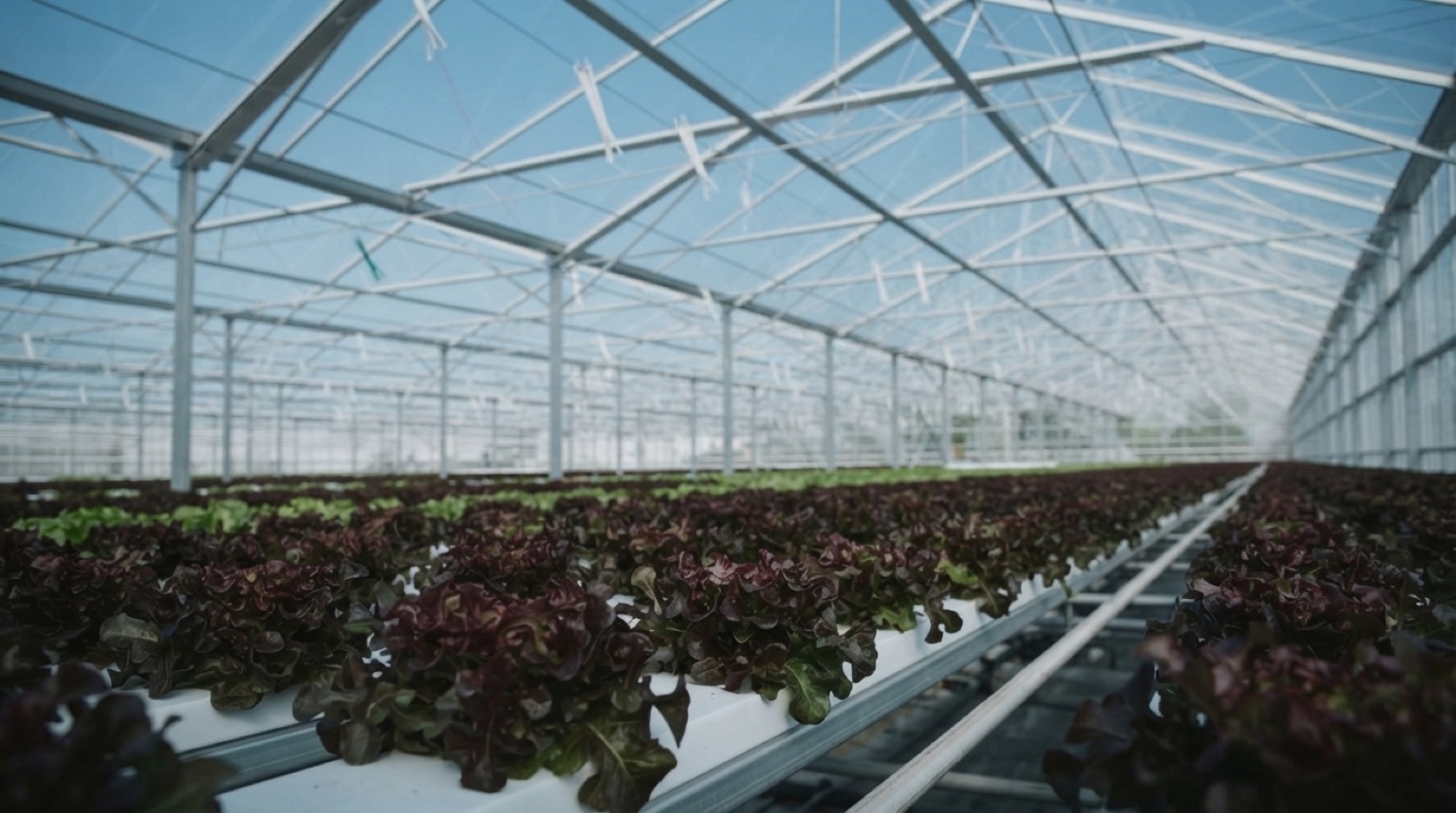
Red Oakleaf Lettuce
Red oakleaf lettuce carries the lobed leaf of the oakleaf types with red pigmentation, and most often reaches the consumer inside a multi-type pack.
Salat wird nach Kopf verkauft, nicht nach Kilogramm, und diese eine Tatsache ordnet die Ökonomie neu. Der Erlös folgt der Zahl verkaufsfähiger Köpfe, die ein Haus im Jahr hervorbringt; die Entwurfsfragen lauten deshalb Zykluslänge, Pflanzdichte und Anteil der Köpfe, die Handelsqualität erreichen. Ein Haus, das schwere Köpfe langsam erzeugt, kann weniger einbringen als eines, das leichtere Köpfe in kürzerer Folge erzeugt — das Gegenteil dessen, wonach eine Fruchtkultur beurteilt wird.
Was die Kultur braucht
Die Kultur ist kurzzyklisch und hydroponisch, und sie wird viele Male im Jahr gepflanzt und geräumt. Dieser Rhythmus macht das Systemlayout ebenso wichtig wie das Klima: die Bewegung der Pflanzen durch das Haus, die Änderung der Abstände, während die Köpfe größer werden, und die Umlaufzeit zwischen Ernte und Neupflanzung bestimmen zusammen, wie viele Zyklen im Jahr das Gebäude tatsächlich liefern kann. Die Klimahülle selbst ist eng, nicht anspruchsvoll.
Was die Sorten unterscheidet
Die Handelstypen unterscheiden sich nach Kopfform und Blattform — Kopfsalat, Batavia, Eissalat, Eichblattsalat, eingeschnittener Salat, Lolla und Romanasalat — und zunehmend nach Sorte innerhalb des jeweiligen Typs. Ein Salatprojekt wird um eine benannte Sorte herum geplant, weil Kopfmasse, Dichtetoleranz und das Risiko der Blattrandnekrose Eigenschaften der Sorte sind und nicht des Typs. Romanasalat trägt das höchste Risiko der Blattrandnekrose in der Familie, weil sein aufrechter Kopf die am schnellsten wachsenden Blattränder einschließt, dort, wo sich die Luft am wenigsten bewegt.
DutchGreenhouses® plant Konstruktion, Klima, Schirmung und Bewässerung passend zum Salattyp, zu seinem System und zum lokalen Klima, damit das Haus seine Zyklen mit der Kopfqualität abschließt, nach der der Markt sortiert. Nehmen Sie Kontakt auf, um ein Salat-Gewächshaus zu planen.
Das Gewächshaus hinter salat
Salat, unter Glas.
Tischsysteme mit Floats, Moving Gutter Systems (MGS) oder Deep Water mit NFT oder Ebbe-Flut.
Von Kopfgröße, Kulturzyklus und Erntehandling zurück zu Kultursystem, Pflanzabstand und Klima arbeiten.
Wiederholte Ernten. Gleichbleibende Kopfqualität und -größe.
Tischsysteme mit Floats, Moving Gutter Systems (MGS) oder Deep Water mit NFT oder Ebbe-Flut.
Verkaufte Köpfe je Zyklus, Klassen, Verpackung und Folgeaufträge planen.
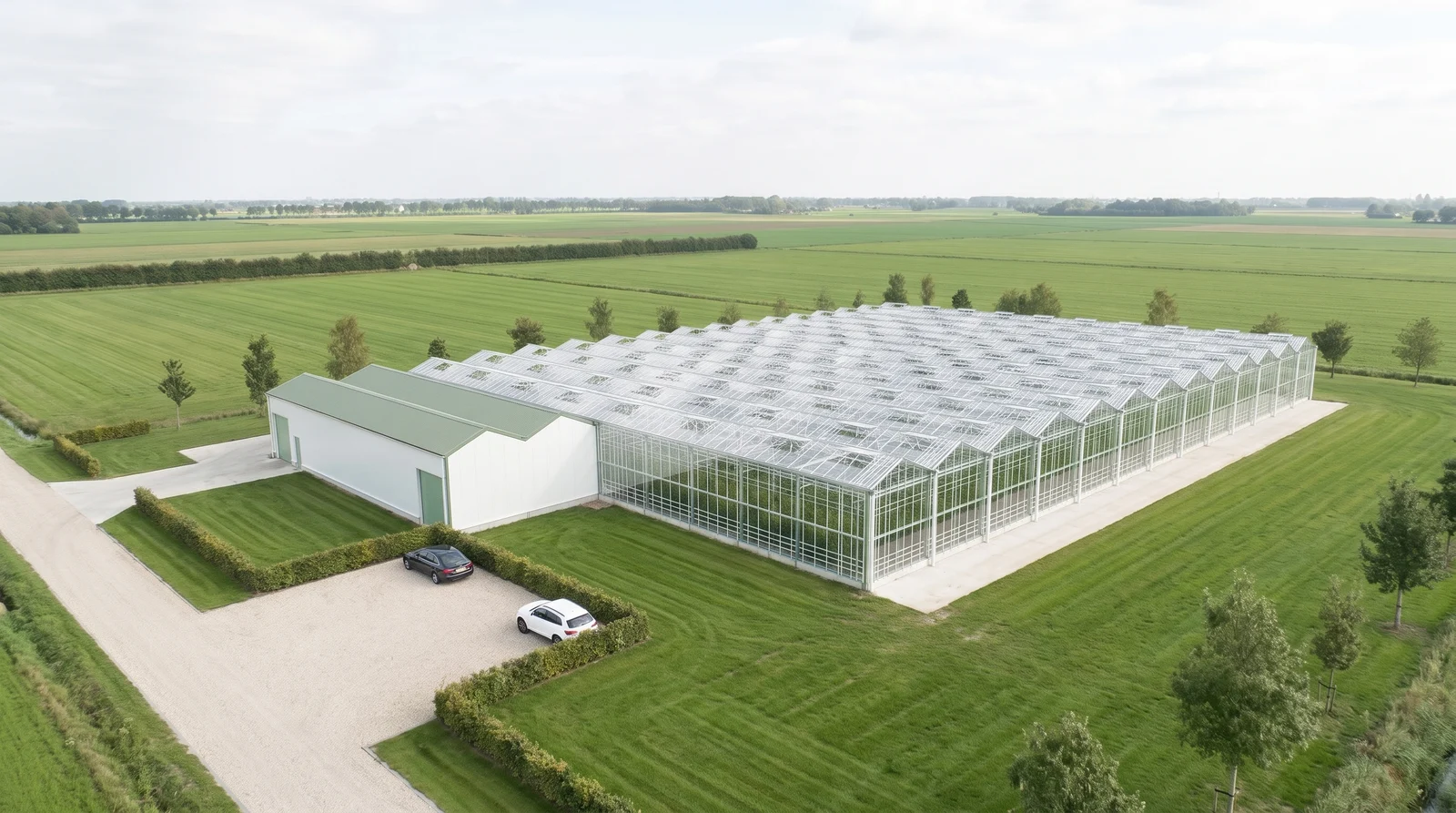
Basic Organic Greenhouse Series
Venlo-Glasgewächshäuser für Bodenkulturen. Legen Sie Kultur, Beete, Zugang und Produktionskalender fest, bevor die Systeme spezifiziert werden.
¼ acre½ acre1 acreEntdecken Basic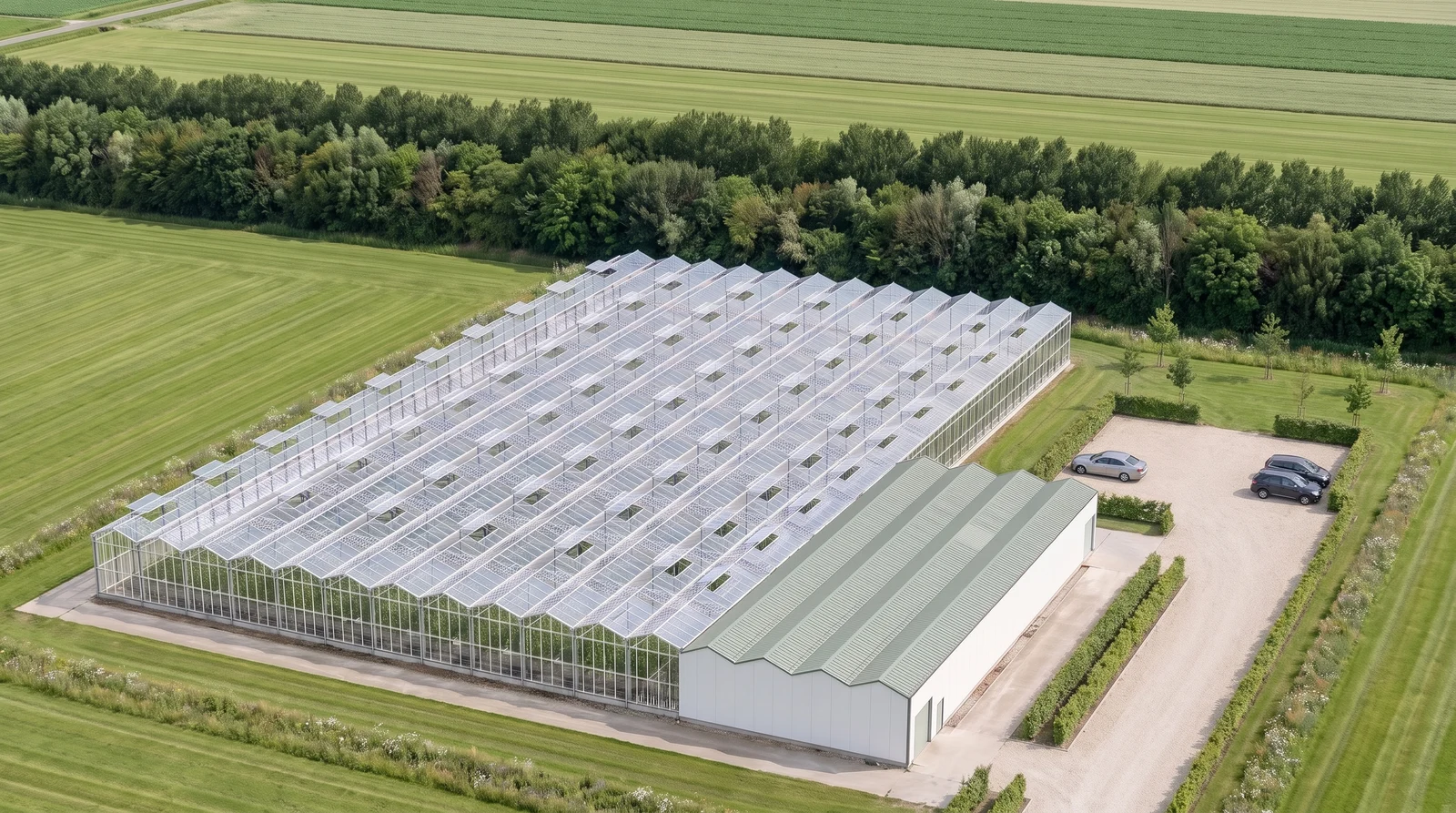
Expert Hydroponic Greenhouse Series
Eine definierte Konstruktion für die kommerzielle Hydroponik. Die Kultur bestimmt Kultursystem, Klimastrategie und Ernteanordnung.
½ acre1 acre2 acresEntdecken Expert3,840 m²41,333 sq ft Kulturfläche sind der übliche Ausgangspunkt für einen Produktionsplan mit salat (GrowPro Basic 1 acre). Alle neun Modelle vergleichen
Bringen Sie Ihre nächste Ernte
unter Glas.
Ihre Kultur, Ihr Standort und die Menge, die Sie verkaufen wollen. Finden wir das passende Gewächshaus und die passenden Systeme.
Ein individuelles Gewächshaus gesucht?GrowPro Basic
Wir können auch für eine andere Kultur oder ein gemischtes Anbauprogramm planen.
Über Ihr Projekt sprechen Weiter zum Kontaktformular. Unverbindlich.Lesenswertes, das Sie interessieren könnte

Grow Like a Pro: Starting Smart, Growing Strong
How Grow Like a Pro combines smart farming, CEA technology and local partnerships for eco-friendly, profitable, pesticide-free greenhouse pr
Artikel lesen
Maryland Cannabis Greenhouse: Year One
One year on: how the Maryland cannabis greenhouse, paired with an adjacent indoor facility, cut the energy bill and lifted both yields and q
Artikel lesen
The Case for a College Greenhouse
Why a college greenhouse belongs in the curriculum: teaching science, craftsmanship, business logic and sustainability, and preparing studen
Artikel lesen
The Case for a High School Greenhouse
Why every high school greenhouse matters: how it makes STEM tangible, builds responsibility and teamwork, and helps students discover their
Artikel lesen
Greenhouses in Education: The Case for Schools
Greenhouses in education reconnect students to reality — the full case for why every school, high school, college and trade program should h
Artikel lesen
The Origins of Greenhouse Horticulture: My Backyard
A tour through greenhouse horticulture history: from 19th-century Westland fruit walls to the “City of Glass” and today’s international high
Artikel lesen