
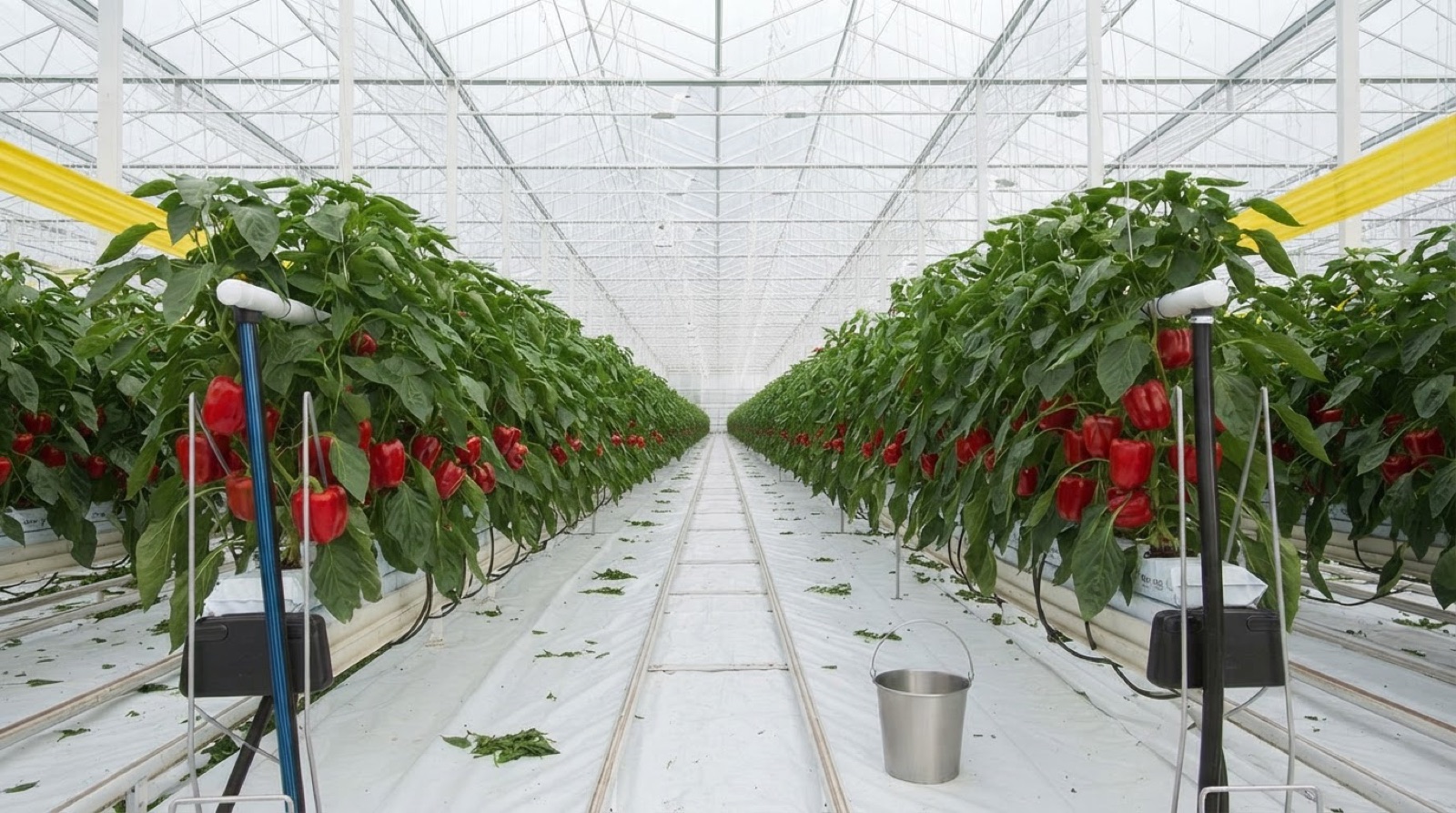
Sweet pepper
Red Bell Peppers.
La referencia neerlandesa del pimiento tipo California, llevado hasta el color maduro.
Lo que compran las semanas de coloración
El pimiento rojo tipo California es la misma planta que un cultivo recolectado en verde, llevada más lejos. El fruto alcanza su tamaño final y luego se queda donde está, y el azúcar y la vitamina C siguen acumulándose mientras toma color. Un pimiento rojo termina con bastante más vitamina C que el mismo fruto cortado en verde, y además más dulce. El color es la parte visible de un cambio que ocurrió en la planta.
Esas semanas se pagan. El fruto ocupa capacidad de planta, calor y luz que una recolección en verde habría liberado, y el sobreprecio en el mostrador es lo que los cubre. Un cultivo rojo es la decisión de gastar capacidad de invernadero en madurez y no en el siguiente fruto.
La madurez no viaja. Un pimiento recolectado a pleno color está ya al final de su desarrollo, así que cada día en un contenedor se resta de la vida útil en lugar de sumarse al cultivo. Un invernadero cerca del mercado recolecta con color y entrega en pocos días, lo que mantiene el sobreprecio unido a un producto que aún se come como el que salió de la planta.
Información nutricional
Pimiento, rojo, crudo
Por 100 g
- Energía
- 26 kcal
- Grasas
- 0.3 g
- Hidratos de carbono
- 6.03 g
- de los cuales azúcares
- 4.2 g
- Fibra
- 2.1 g
- Proteínas
- 0.99 g
- Sodio
- 4 mg
- Potasio
- 211 mg
- Vitamina C
- 127.7 mg
El pimiento rojo tipo California es el pimiento de referencia de la producción neerlandesa: un fruto cuadrado de cuatro lóbulos que se mantiene en la planta hasta que toma color por completo. La maduración en la planta es lo que paga el comprador, y es también lo que cuesta el cultivo: el fruto ocupa la planta durante semanas después de haber alcanzado su tamaño final, y consume luz y calor que una recolección en verde habría liberado.
Lo que necesita el cultivo
La planta es de ciclo largo, se cultiva en sustrato y se conduce sobre alambre alto, con un fruto más pesado y un cuajado más lento que el pepino. Responde al equilibrio entre el crecimiento vegetativo y el generativo a lo largo de semanas, de modo que la estrategia de clima se juzga a escala de campaña y no de un día. Mantener una relación estable entre la temperatura y la luz acumulada es lo que produce un cuajado continuo en lugar de golpes de producción alternados con pausas.
Lo que tiene que hacer el invernadero
Llevar el fruto hasta el color maduro es lo que se pide pagar al invernadero. El fruto permanece en la planta durante semanas después de alcanzar su tamaño final, y ocupa capacidad de planta y capacidad de invernadero mientras toma color. Ese tiempo se calienta, se cubre con pantallas y se ilumina como si fuera crecimiento, de modo que el diseño de la calefacción y la estrategia de pantallas de un cultivo rojo se fijan contra el periodo de coloración y no contra el periodo de cuajado.
El pimiento es además un cultivo sensible al cuajado. El cuajado se detiene cuando la planta va demasiado caliente o demasiado seca en el momento equivocado, y el hueco que eso crea recorre la campaña como un ritmo de recolección irregular. Un clima estable en toda la superficie, una ventilación que responde con rapidez y un riego con reserva para el pico son lo que mantiene el ritmo regular.
DutchGreenhouses® especifica la estructura, el clima, las pantallas y el riego en torno al cultivo de pimiento, su estado de recolección y el clima local, de modo que el fruto alcance el color maduro a tiempo. Póngase en contacto para planificar un invernadero de pimiento.
El pimiento rojo tipo California, preguntas y respuestas
¿Por qué el pimiento rojo cuesta más de producir que el verde?
El fruto permanece en la planta semanas más para tomar color, usa luz y calor durante ese tiempo y retrasa el siguiente cuajado. El sobreprecio paga esa ocupación.
¿El rojo es un cultivar o un estado de recolección?
Una propiedad del cultivar. El rojo, el amarillo y el naranja son clases de genotipo distintas. El verde es un estado de recolección, y un fruto recolectado en verde sigue perteneciendo a un genotipo con su propio color maduro.
¿Qué afecta más al cuajado del pimiento?
El equilibrio entre el crecimiento vegetativo y el generativo, sostenido a lo largo de semanas. Un clima que oscila produce un cultivo que da golpes de producción y se detiene en lugar de cuajar de forma continua.
Other sweet pepper
varieties.
Color, tamaño y calidad en la cosecha. El tipo que vende decide la carga de planta, el ritmo de cosecha y el invernadero.
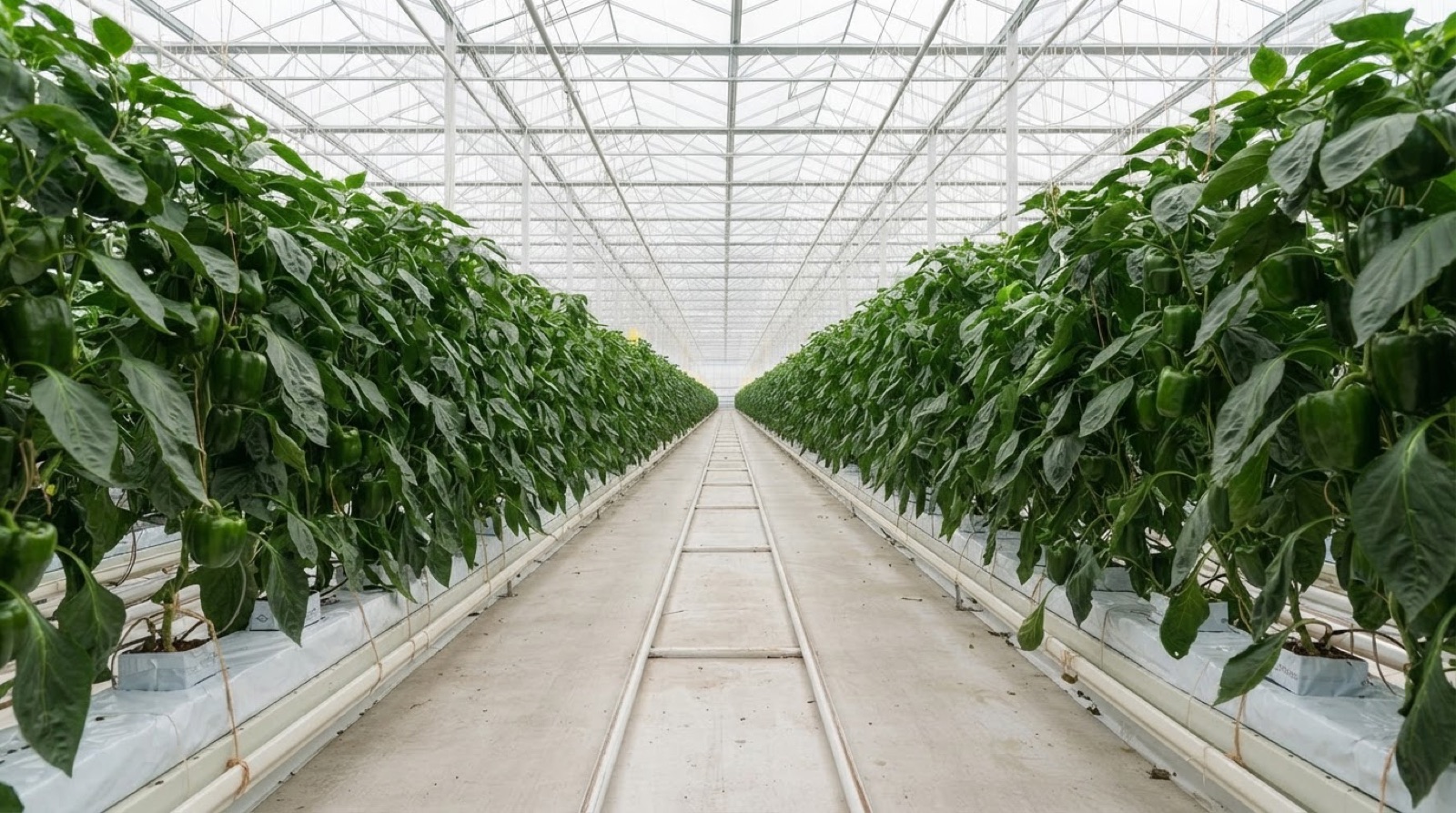
Green Bell Peppers
Green bell pepper is fruit picked before it colours, a harvest stage rather than a colour genotype.
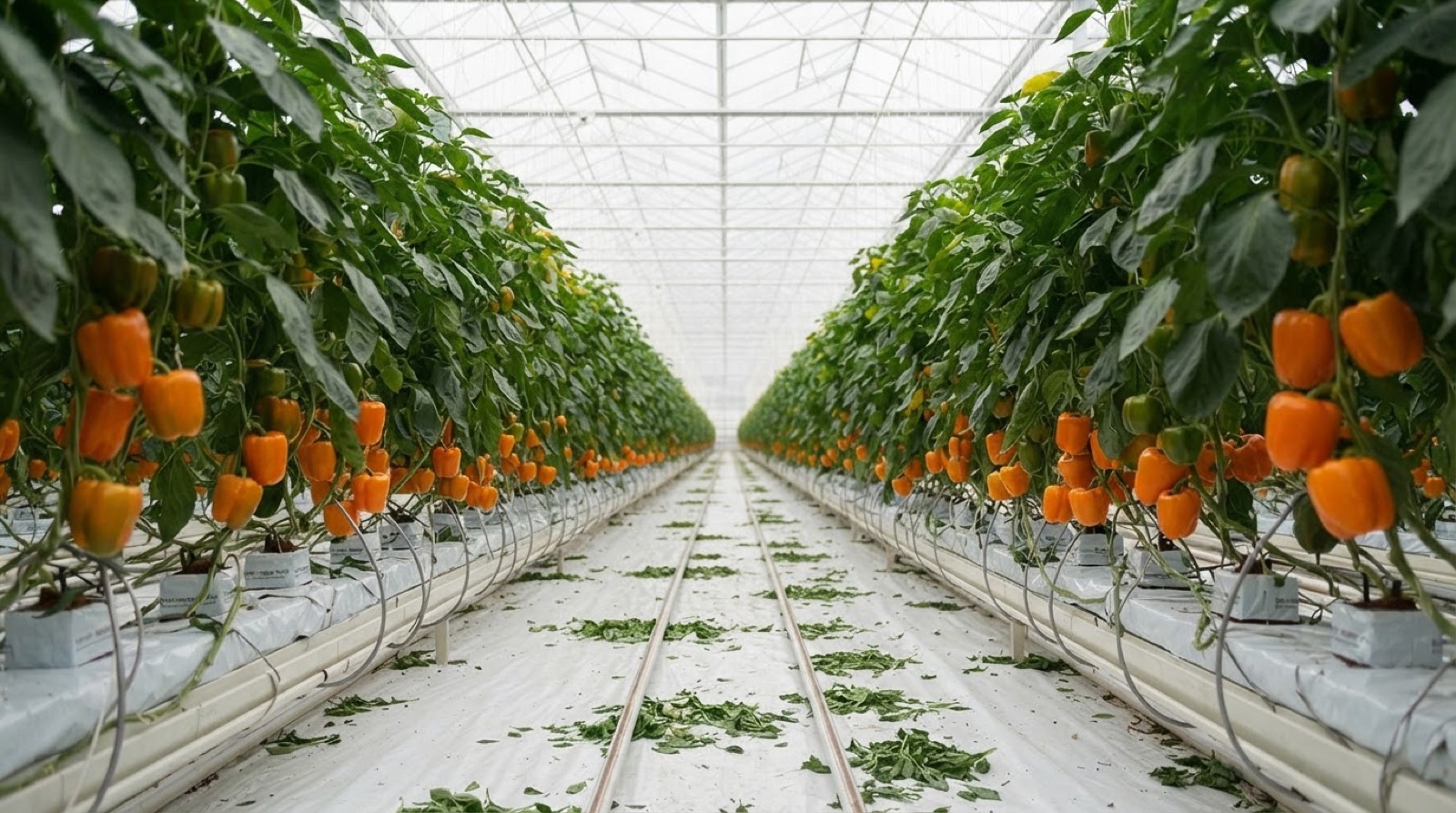
Orange Bell Peppers
Orange bell pepper is its own genotype class with its own cultivars, not a red pepper picked at a different moment.
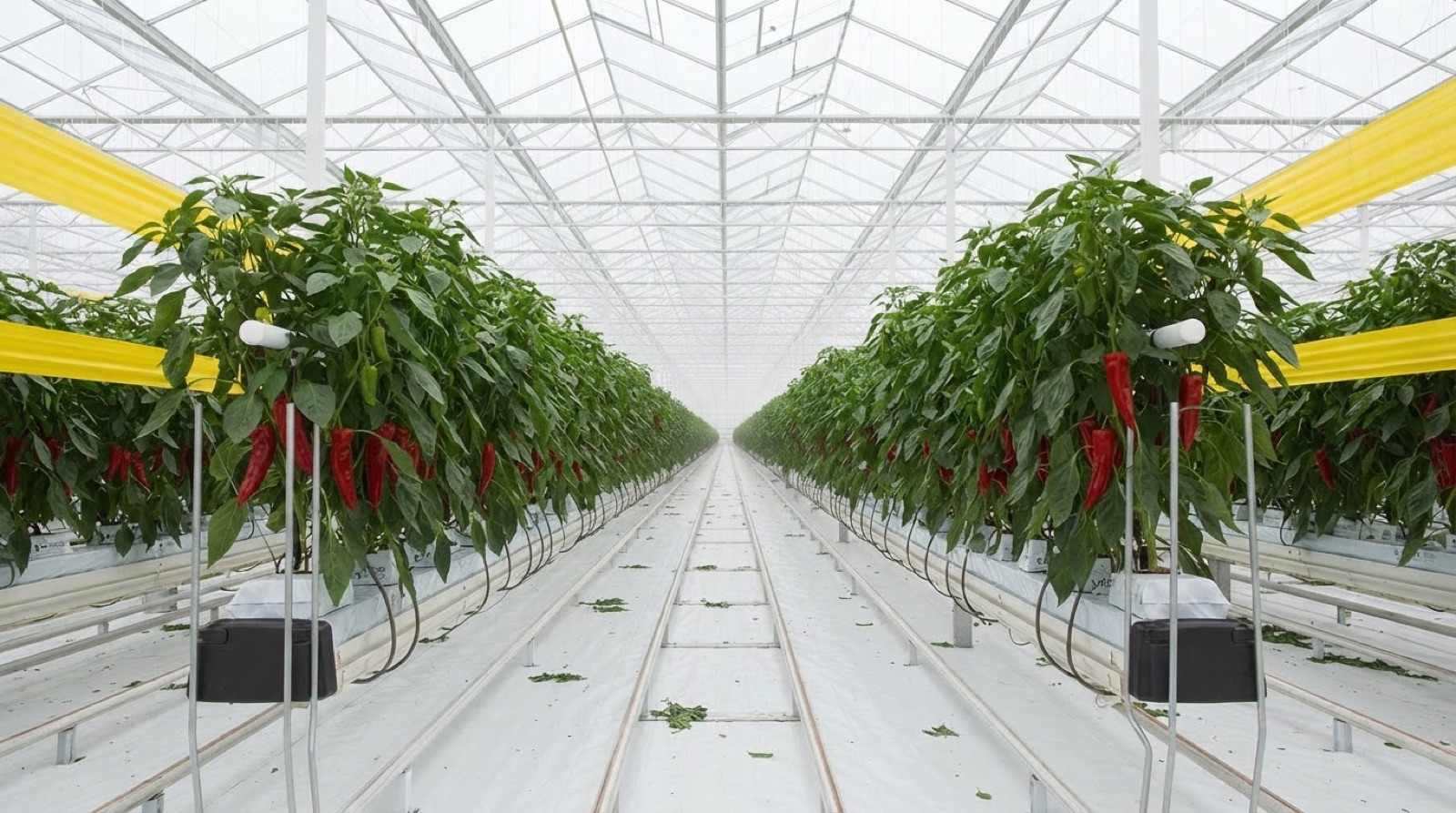
Red Pointed Peppers
Red pointed pepper is a conical, elongated sweet pepper sold for its sweetness and for roasting and grilling.
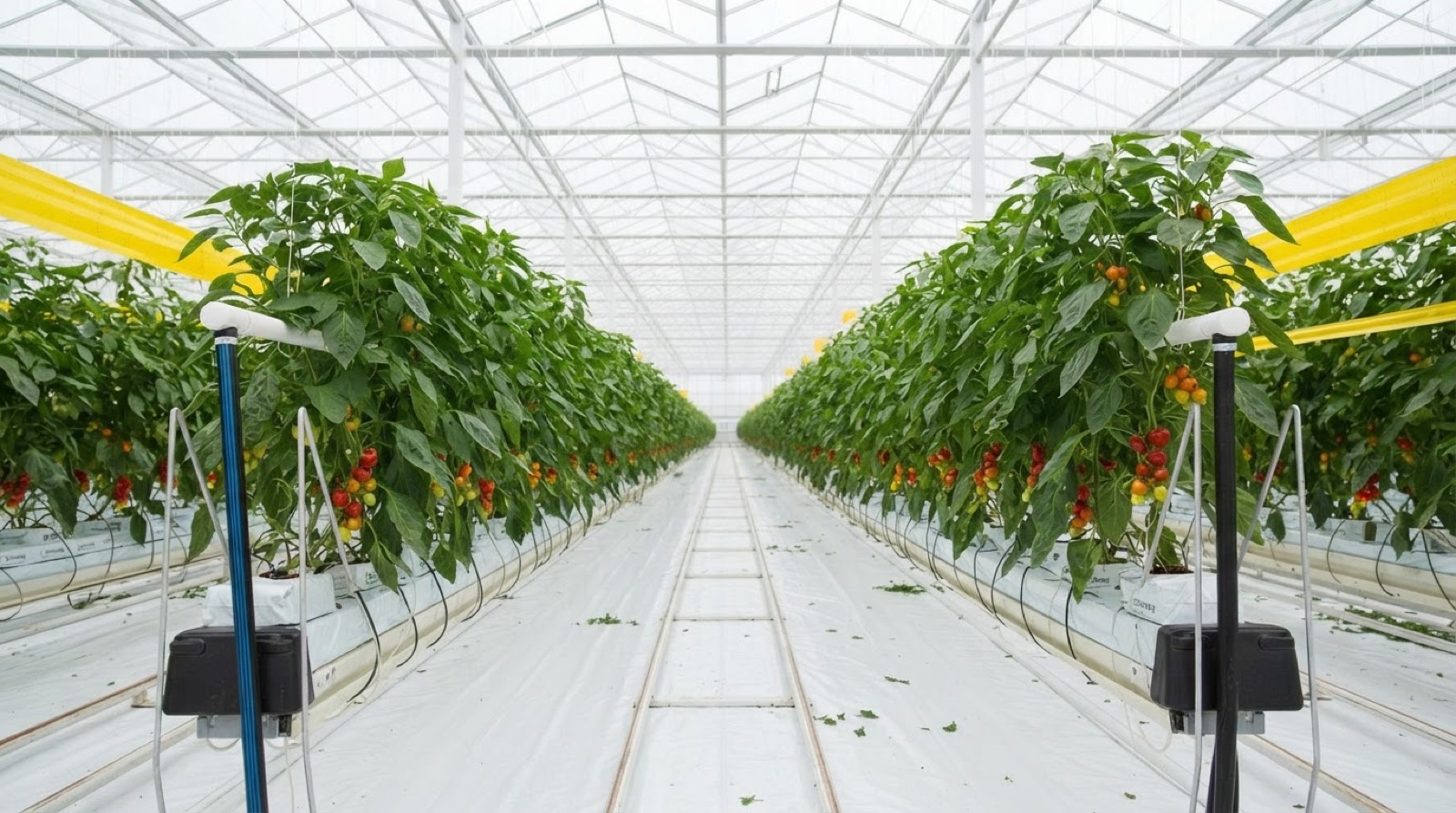
Snack Peppers
Snack pepper is a market and pack idea more than a defined botanical type: small sweet peppers sold in mixed-colour punnets to be eaten whole.
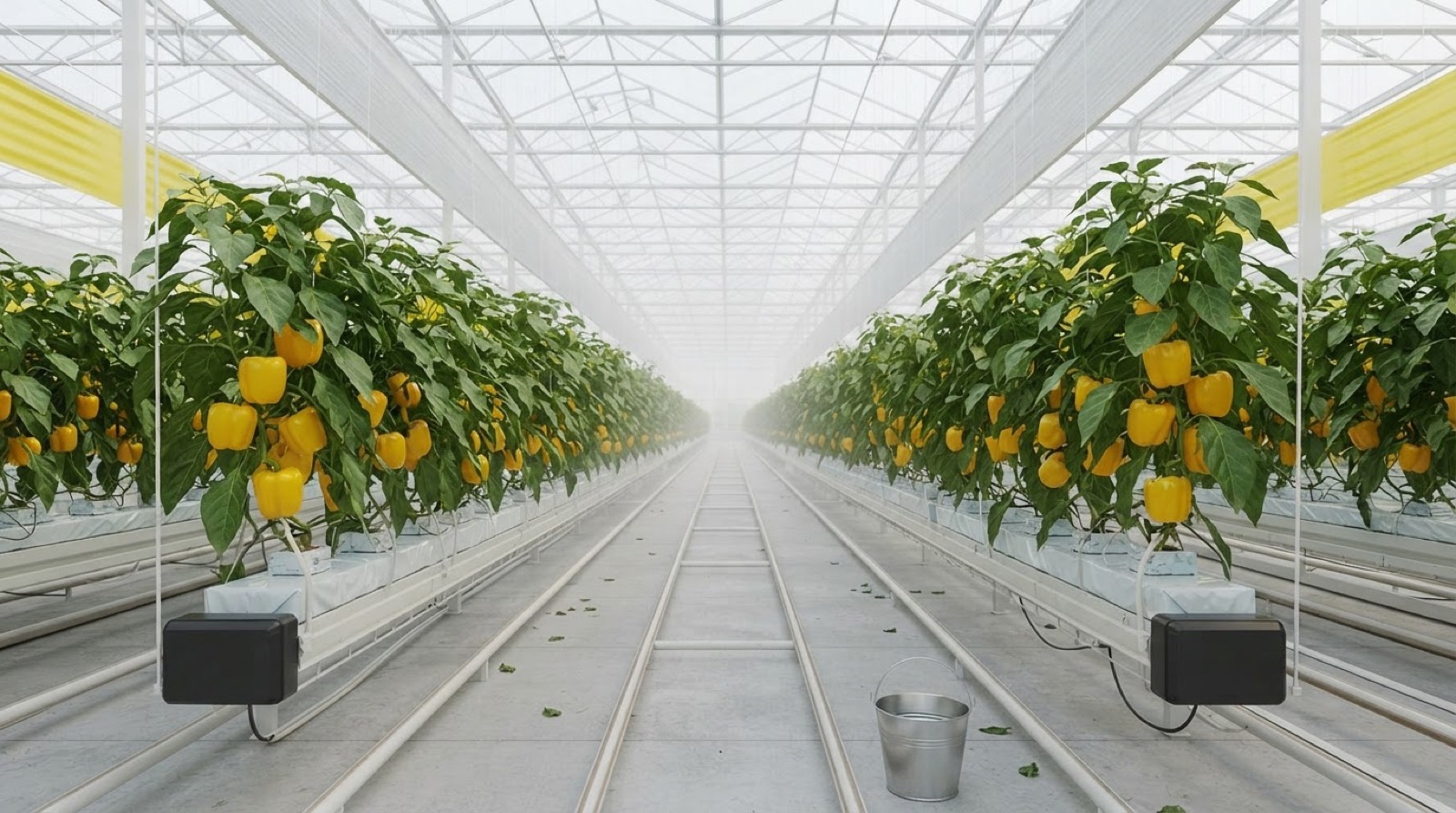
Yellow Bell Peppers
Yellow bell pepper is its own genotype class with its own cultivars, not a red pepper picked at a different moment.
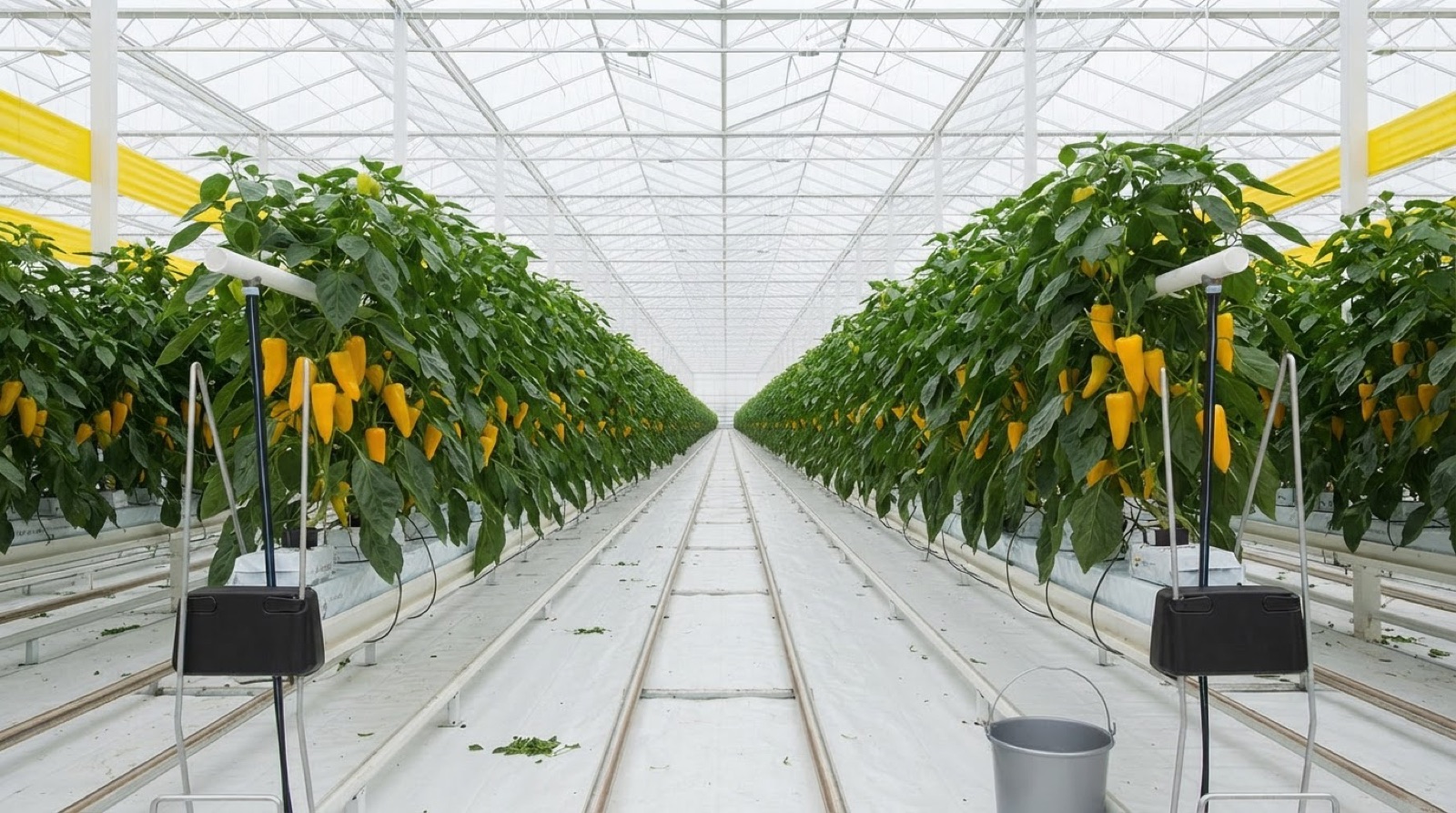
Yellow Pointed Peppers
Yellow pointed pepper is the yellow-ripening conical sweet pepper, distinct from both the yellow block pepper and the red pointed type.
El invernadero detrás de pimientos
Pimientos, bajo vidrio.
Cultivo tutorado en sustrato.
La carga de planta, la luz en el dosel y el control climático sostienen un cultivo largo con recolección repetida.
Color, tamaño y calidad en la cosecha.
Cultivo tutorado en sustrato.
Relacione los calibres de color y tamaño con su mercado y su plan de cosecha.
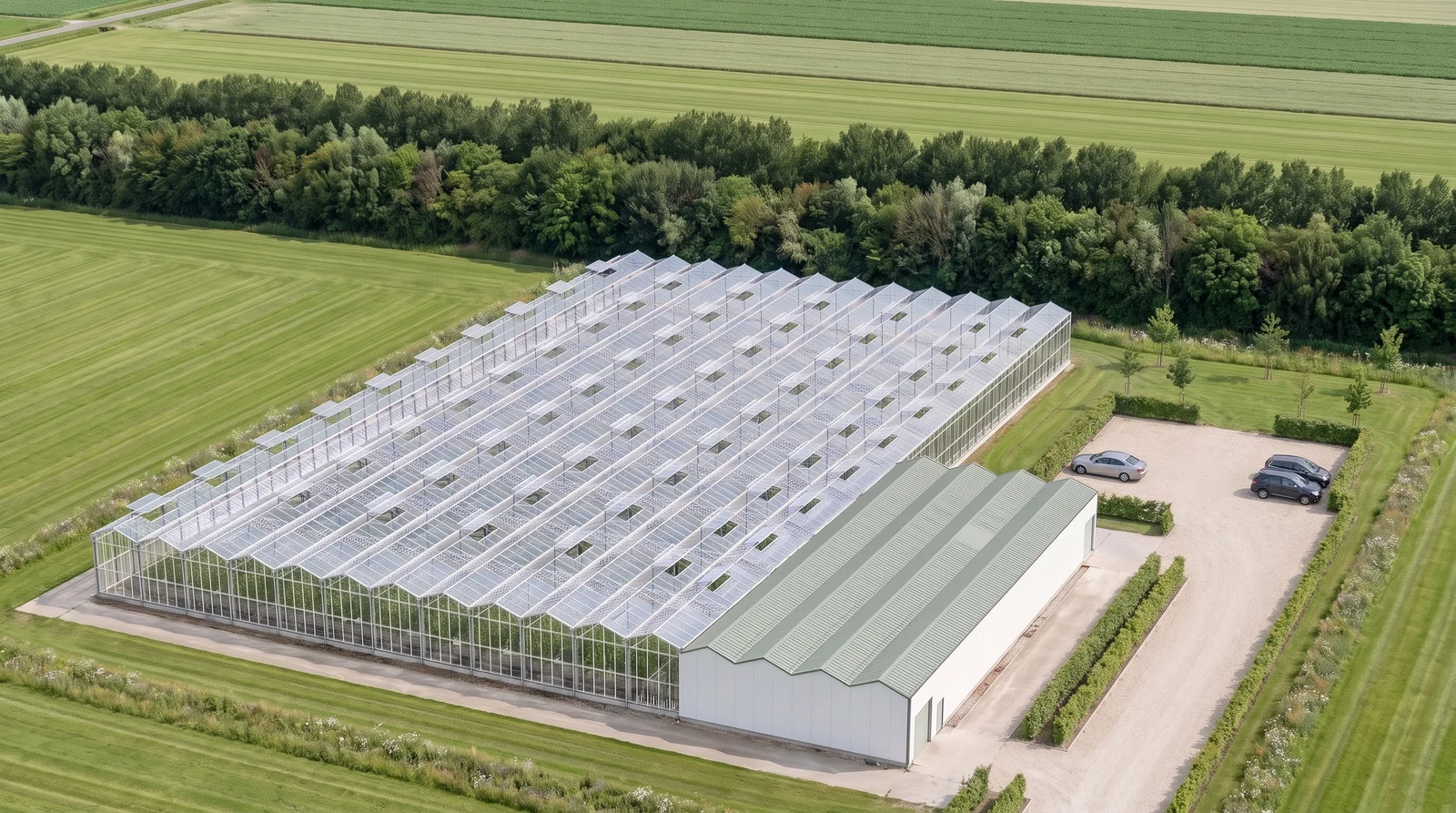
Expert Hydroponic Greenhouse Series
Una estructura definida para el cultivo hidropónico de producción. El cultivo determina el sistema de cultivo, la estrategia climática y la distribución de la cosecha.
½ acre1 acre2 acresExplorar Expert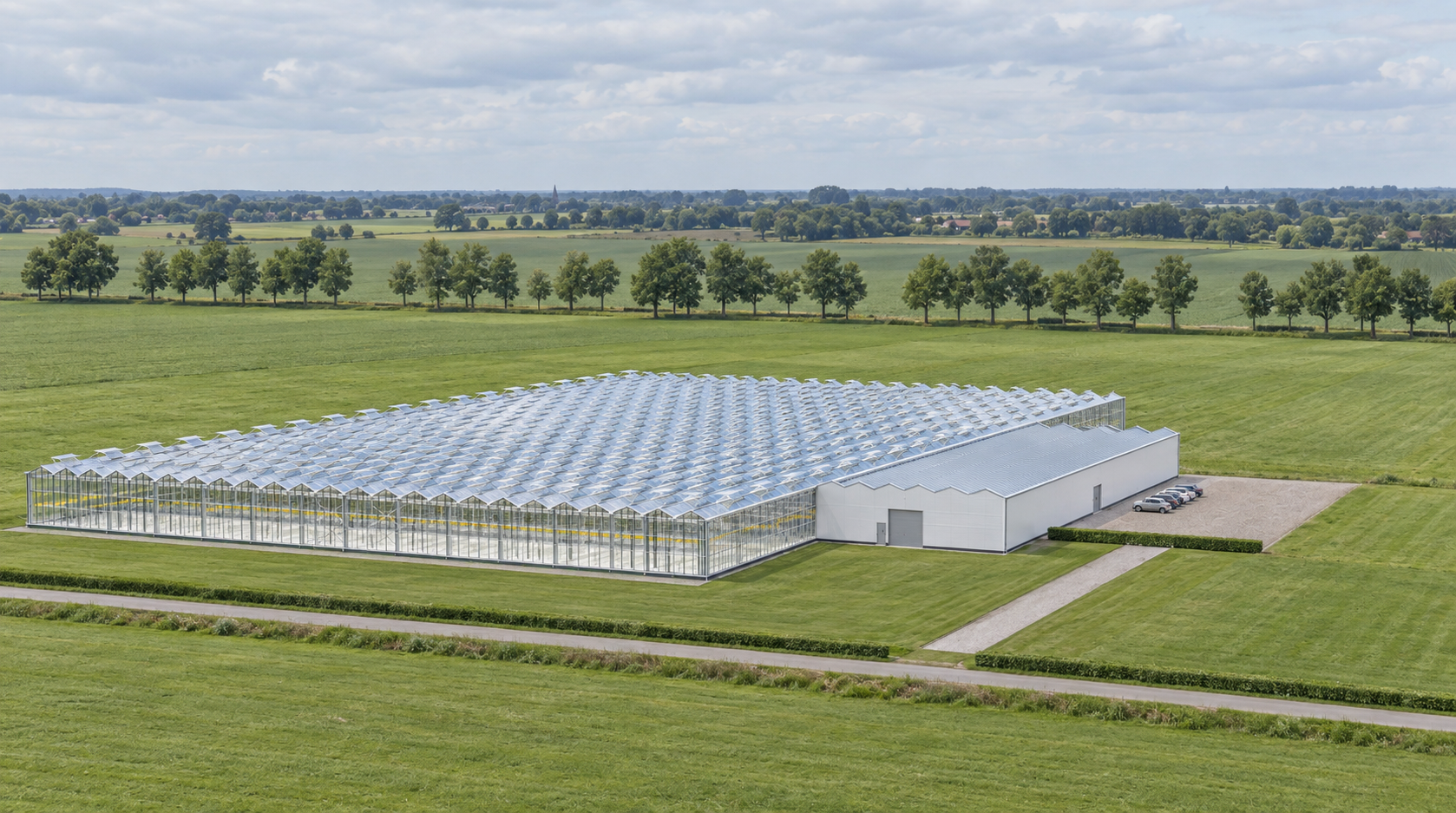
Plus Hydroponic Greenhouse Series
Nuestra gama estándar más grande. Ajuste la mayor superficie de cultivo a la demanda del cultivo, la mano de obra, los suministros y el mercado que pretende abastecer.
2 acres4 acres8 acresExplorar Plus4,032 m²43,400 sq ft de espacio de cultivo es donde suele empezar un plan de pimientos (GrowPro Expert 1 acre). Comparar los nueve modelos
Ponga su próxima cosecha
bajo vidrio.
Su cultivo, su emplazamiento y el volumen que quiere vender. Encontremos el invernadero y los sistemas que encajan.
¿Necesita un invernadero a medida?GrowPro Expert
También podemos planificar otro cultivo o un programa de cultivo mixto.
Hablemos de su proyecto Continúe a nuestro formulario de contacto. Sin compromiso.Lecturas que podrían interesarle

Grow Like a Pro: Starting Smart, Growing Strong
How Grow Like a Pro combines smart farming, CEA technology and local partnerships for eco-friendly, profitable, pesticide-free greenhouse pr
Leer artículo
Maryland Cannabis Greenhouse: Year One
One year on: how the Maryland cannabis greenhouse, paired with an adjacent indoor facility, cut the energy bill and lifted both yields and q
Leer artículo
The Case for a College Greenhouse
Why a college greenhouse belongs in the curriculum: teaching science, craftsmanship, business logic and sustainability, and preparing studen
Leer artículo
The Case for a High School Greenhouse
Why every high school greenhouse matters: how it makes STEM tangible, builds responsibility and teamwork, and helps students discover their
Leer artículo
Greenhouses in Education: The Case for Schools
Greenhouses in education reconnect students to reality — the full case for why every school, high school, college and trade program should h
Leer artículo
The Origins of Greenhouse Horticulture: My Backyard
A tour through greenhouse horticulture history: from 19th-century Westland fruit walls to the “City of Glass” and today’s international high
Leer artículo