
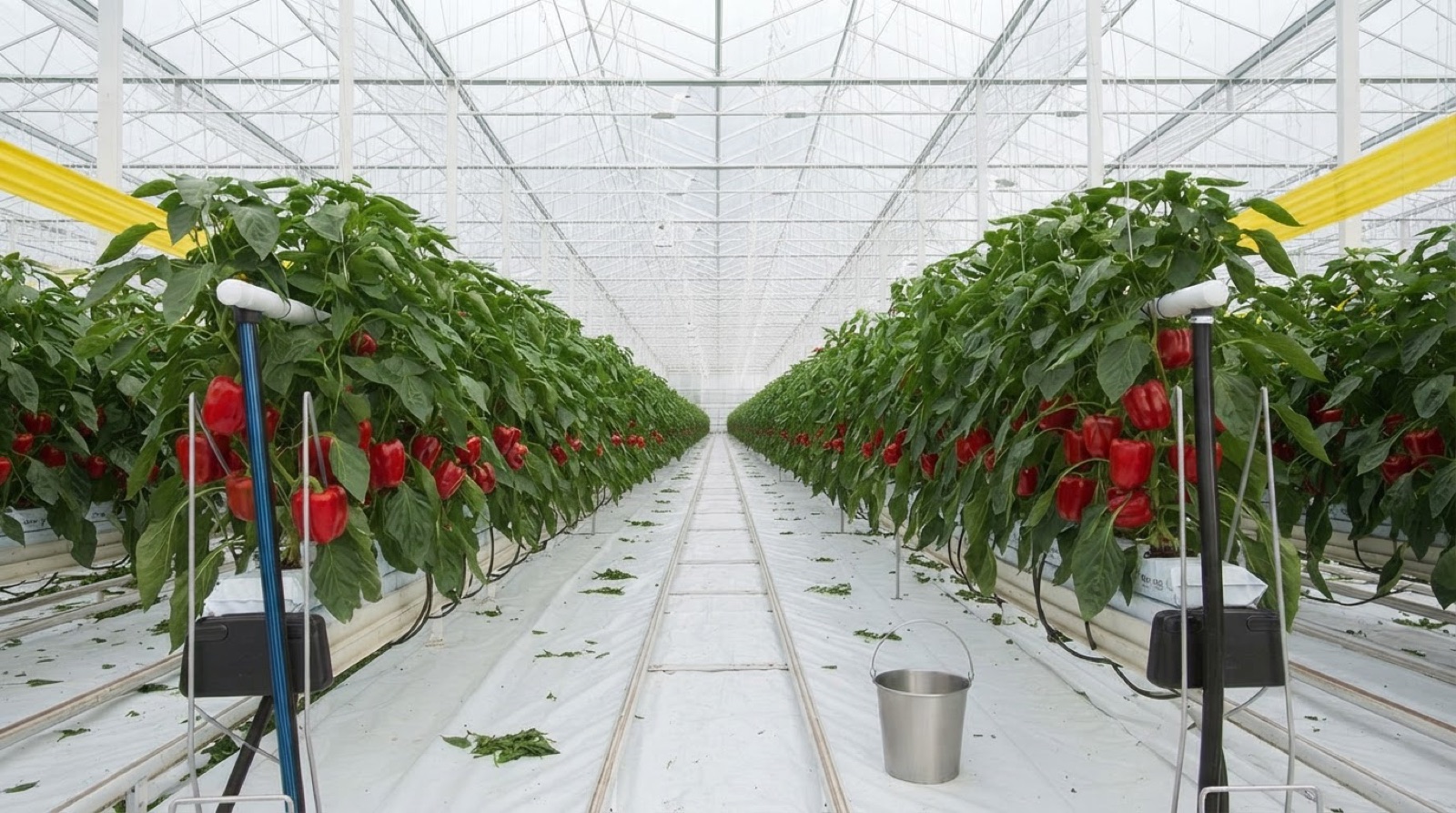
Sweet pepper
Red Bell Peppers.
Der niederländische Blockpaprika-Standard, bis zur Reifefarbe geführt.
Was die Wochen des Ausfärbens einbringen
Rote Blockpaprika ist dieselbe Pflanze wie eine grün geerntete Kultur, nur weiter geführt. Die Frucht erreicht ihre volle Größe und bleibt dann, wo sie ist, und Zucker und Vitamin C lagern sich weiter ein, während sie ausfärbt. Eine rote Paprika hat am Ende deutlich mehr Vitamin C als dieselbe Frucht grün geschnitten, und ist dabei süßer. Die Farbe ist der sichtbare Teil einer Veränderung, die an der Pflanze stattgefunden hat.
Diese Wochen werden bezahlt. Die Frucht belegt Pflanzenkapazität, Wärme und Licht, die eine grüne Ernte freigegeben hätte, und der Aufpreis an der Theke deckt sie. Eine rote Kultur ist die Entscheidung, Gewächshauskapazität für Reife auszugeben statt für die nächste Frucht.
Reife reist nicht. Eine bei voller Farbe geerntete Paprika steht bereits am Ende ihrer Entwicklung, sodass jeder Tag im Container von der Haltbarkeit abgeht, statt zur Kultur hinzuzukommen. Ein Gewächshaus nahe dem Markt erntet bei Farbe und liefert innerhalb weniger Tage, was den Aufpreis an ein Produkt bindet, das noch so schmeckt wie das, was die Pflanze verlassen hat.
Nährwerte
Paprika, rot, roh
Pro 100 g
- Energie
- 26 kcal
- Fett
- 0.3 g
- Kohlenhydrate
- 6.03 g
- davon Zucker
- 4.2 g
- Ballaststoffe
- 2.1 g
- Protein
- 0.99 g
- Natrium
- 4 mg
- Kalium
- 211 mg
- Vitamin C
- 127.7 mg
Rote Blockpaprika ist die Referenz-Blockpaprika der niederländischen Produktion: eine vierlappige, blockige Frucht, die an der Pflanze bleibt, bis sie vollständig ausfärbt. Das Ausreifen an der Pflanze ist das, wofür der Käufer zahlt, und zugleich das, was die Kultur kostet — die Frucht belegt die Pflanze noch wochenlang, nachdem sie ihre volle Größe erreicht hat, und verbraucht Licht und Wärme, die eine grüne Ernte freigegeben hätte.
Was die Kultur braucht
Die Pflanze ist eine Langzeitkultur, wächst auf Substrat und wird am Hochdraht geführt, mit schwererer Frucht und langsamerem Fruchtansatz als Gurke. Sie reagiert über Wochen auf das Gleichgewicht zwischen vegetativem und generativem Wachstum, sodass die Klimastrategie über eine Saison hinweg beurteilt wird und nicht über einen Tag. Ein stetiges Verhältnis zwischen Temperatur und aufgelaufener Lichtsumme zu halten, ist das, was einen kontinuierlichen Fruchtansatz erzeugt statt abwechselnder Schübe und Pausen.
Was das Gewächshaus leisten muss
Früchte bis zur Reifefarbe zu führen, ist das, wofür das Haus aufkommen soll. Die Frucht sitzt noch wochenlang an der Pflanze, nachdem sie ihre volle Größe erreicht hat, und belegt Pflanzenkapazität und Gewächshauskapazität, während sie ausfärbt. Diese Zeit wird geheizt, geschirmt und belichtet, als wäre sie Wachstum, und deshalb werden die Heizungsauslegung und die Schirmungsstrategie für eine rote Kultur am Ausfärbezeitraum ausgerichtet und nicht am Ansatzzeitraum.
Paprika ist zudem eine ansatzempfindliche Kultur. Der Fruchtansatz stockt, wenn die Pflanze im falschen Moment zu warm oder zu trocken läuft, und die Lücke, die dabei entsteht, wandert als ungleichmäßiger Ernterhythmus durch die Saison. Ein stetiges Klima über die gesamte Fläche, eine Lüftung, die schnell antwortet, und eine Bewässerung mit Puffer für die Spitze halten den Rhythmus regelmäßig.
DutchGreenhouses® legt Konstruktion, Klima, Schirmung und Bewässerung auf die Paprikakultur, ihr Erntestadium und das lokale Klima aus, damit die Früchte planmäßig ihre Reifefarbe erreichen. Nehmen Sie Kontakt auf, um ein Paprika-Gewächshaus zu planen.
Rote Blockpaprika, gefragt und beantwortet
Warum kostet rote Paprika in der Produktion mehr als grüne?
Die Frucht bleibt wochenlang länger an der Pflanze, um auszufärben, verbraucht in dieser Zeit Licht und Wärme und verzögert den nächsten Ansatz. Der Aufpreis bezahlt diese Belegung.
Ist Rot eine Sorte oder ein Erntestadium?
Eine Eigenschaft der Sorte. Rot, Gelb und Orange sind eigene Genotypklassen. Grün ist ein Erntestadium, und eine grün geerntete Frucht gehört weiterhin zu einem Genotyp mit eigener Reifefarbe.
Was beeinflusst den Fruchtansatz bei Paprika am stärksten?
Das Gleichgewicht zwischen vegetativem und generativem Wachstum, über Wochen gehalten. Ein schwankendes Klima bringt eine Kultur hervor, die schubweise trägt und stockt, statt kontinuierlich anzusetzen.
Other sweet pepper
varieties.
Farbe, Größe und Qualität bei der Ernte. Der Handelstyp, den Sie verkaufen, bestimmt Pflanzenlast, Ernterhythmus und das Haus.
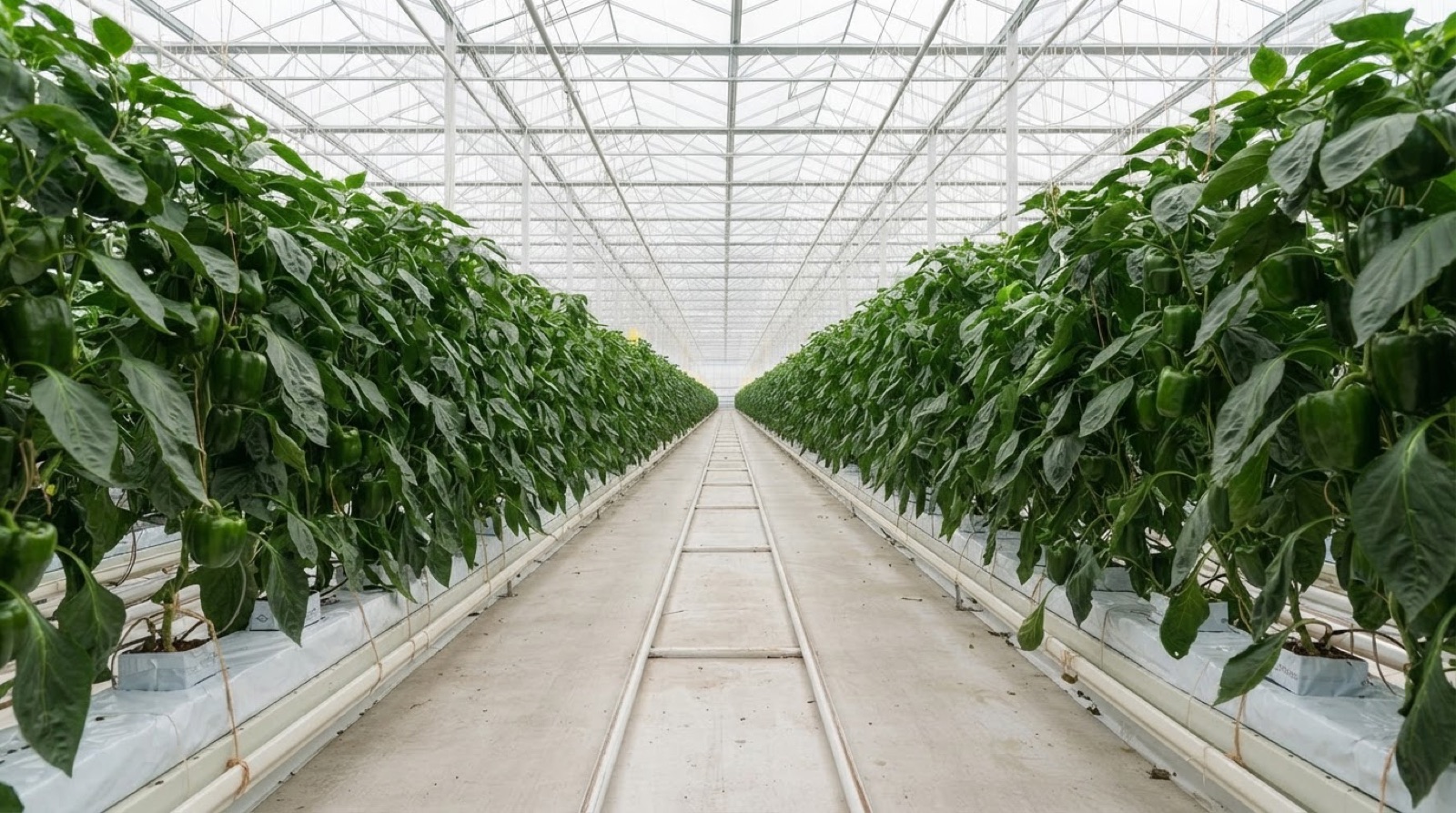
Green Bell Peppers
Green bell pepper is fruit picked before it colours, a harvest stage rather than a colour genotype.
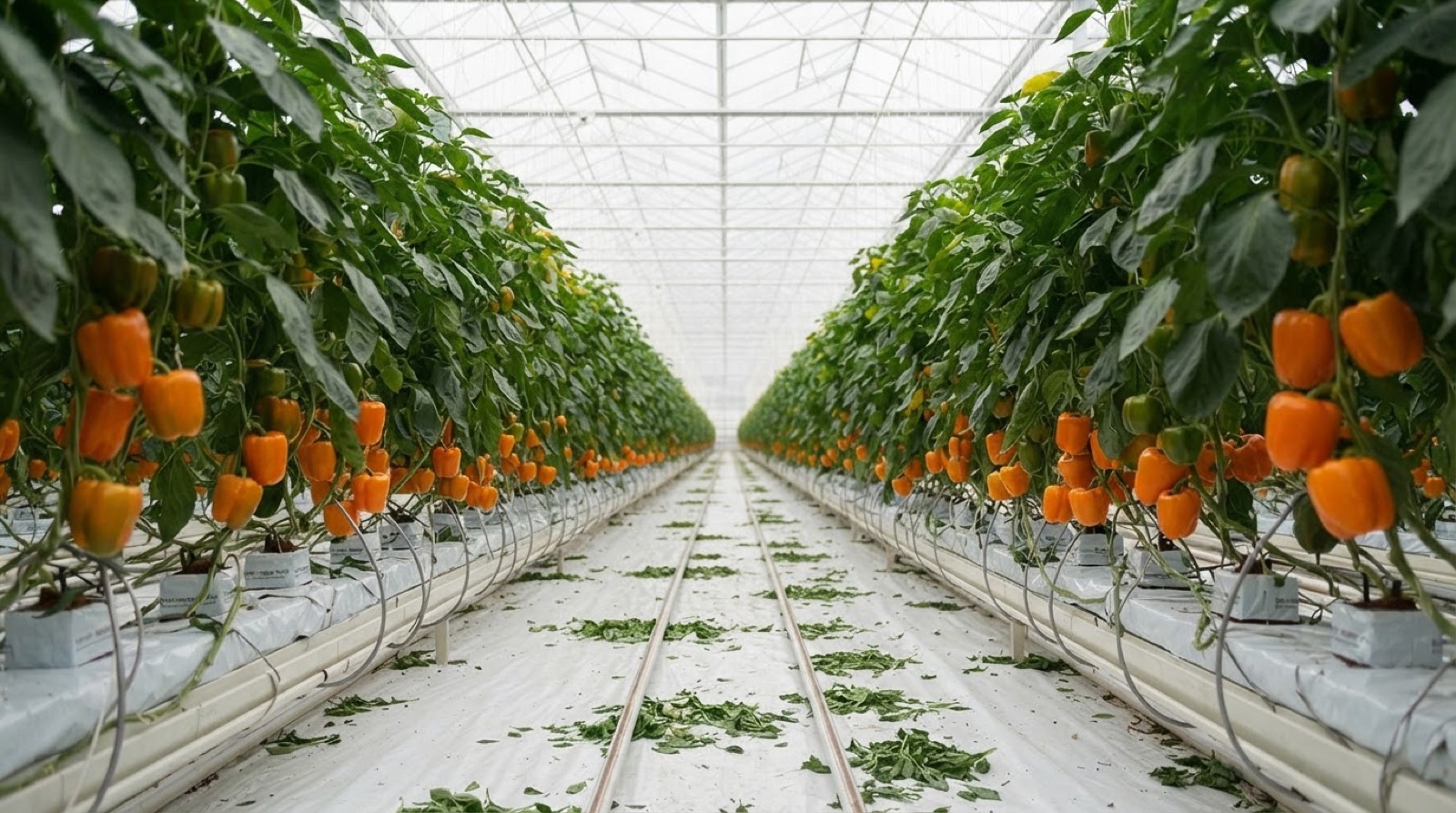
Orange Bell Peppers
Orange bell pepper is its own genotype class with its own cultivars, not a red pepper picked at a different moment.
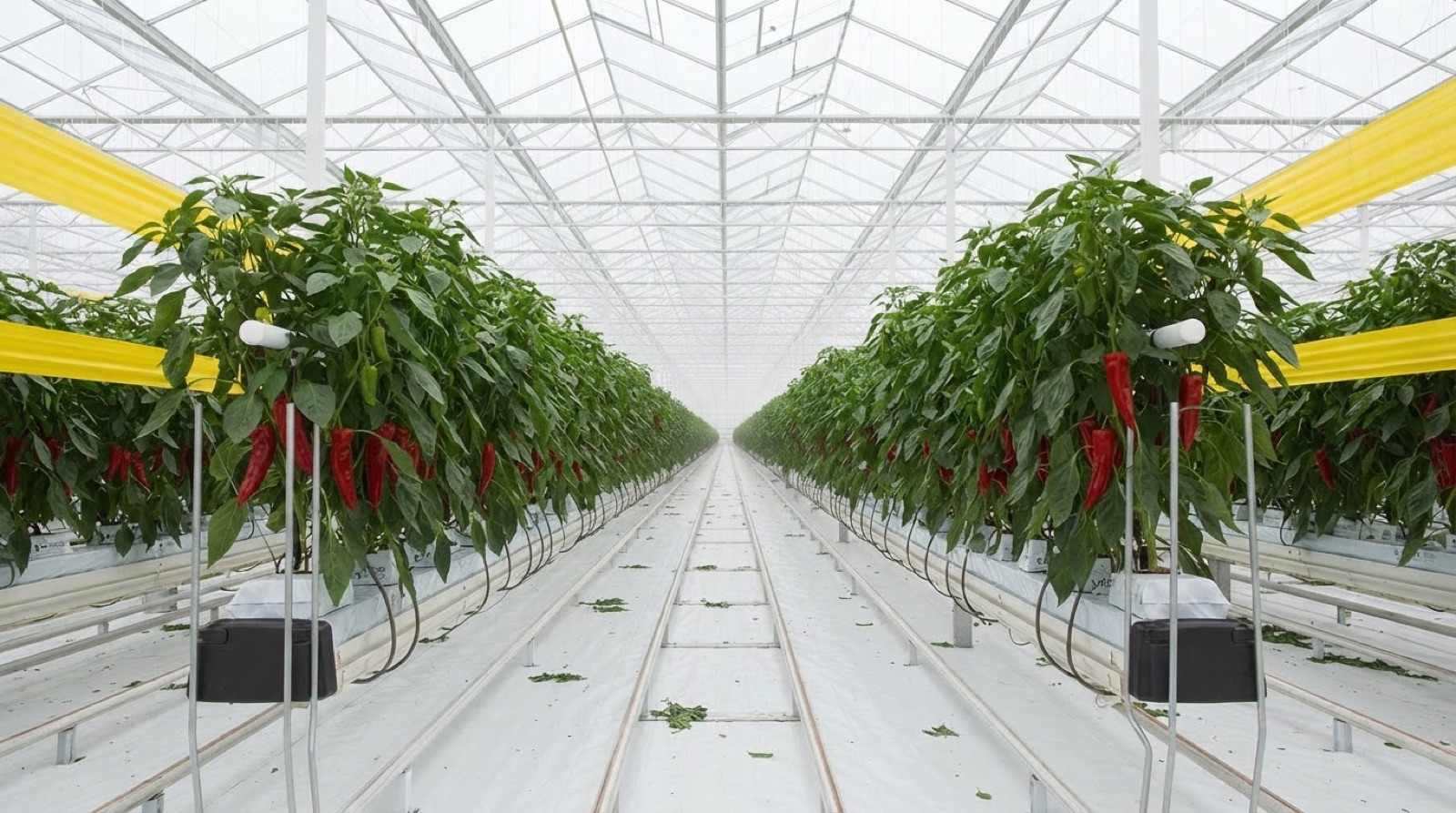
Red Pointed Peppers
Red pointed pepper is a conical, elongated sweet pepper sold for its sweetness and for roasting and grilling.
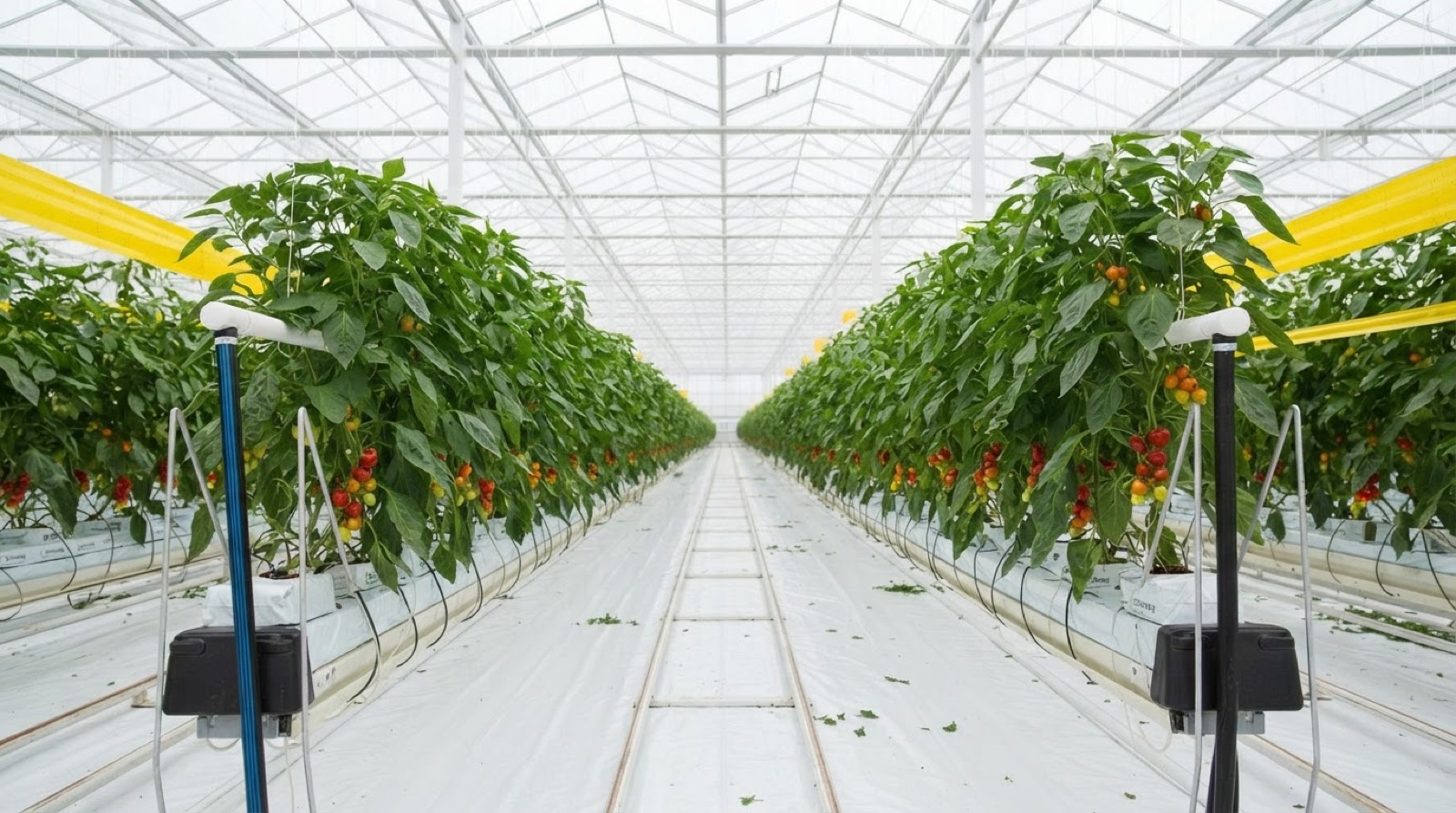
Snack Peppers
Snack pepper is a market and pack idea more than a defined botanical type: small sweet peppers sold in mixed-colour punnets to be eaten whole.
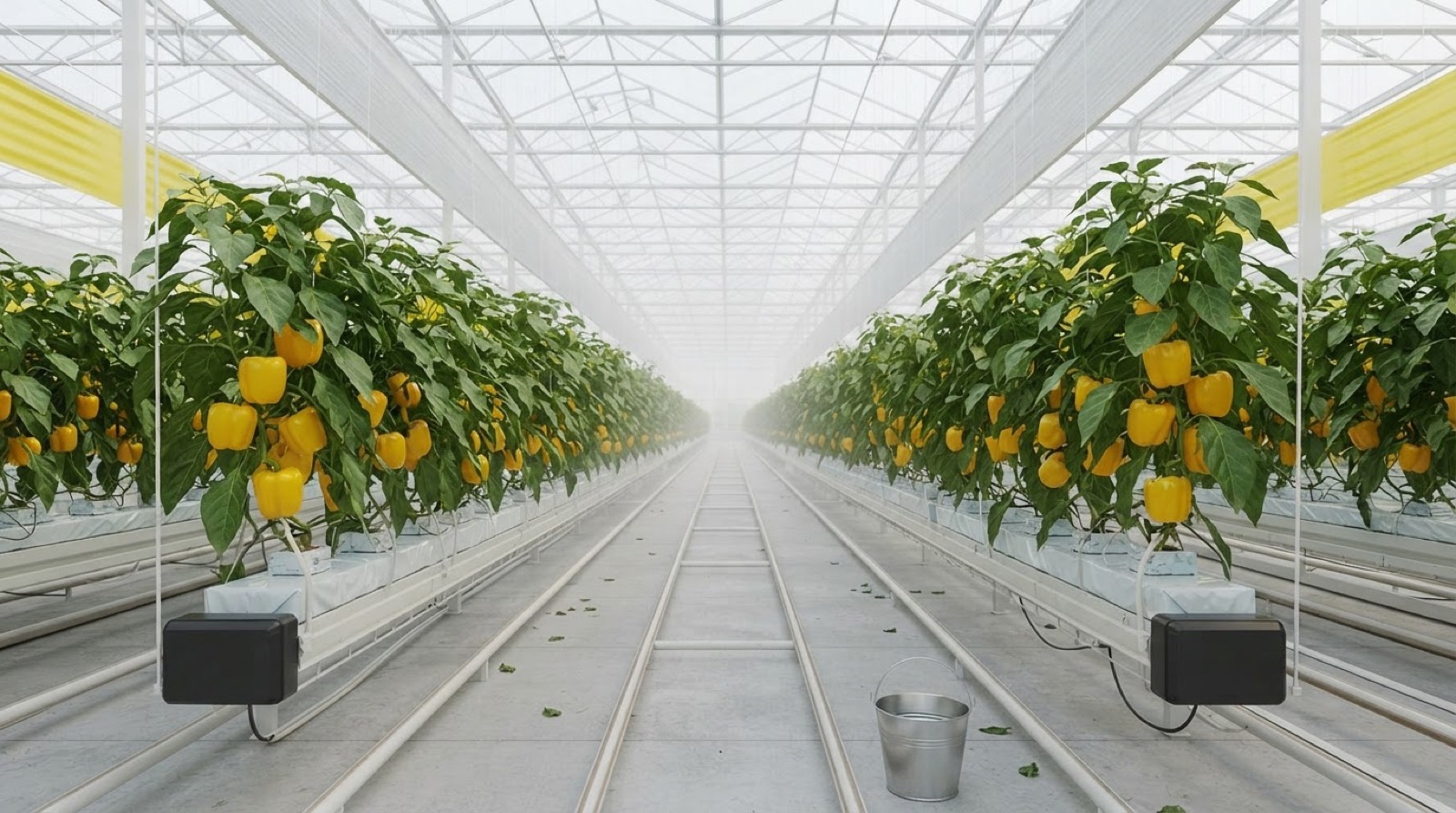
Yellow Bell Peppers
Yellow bell pepper is its own genotype class with its own cultivars, not a red pepper picked at a different moment.
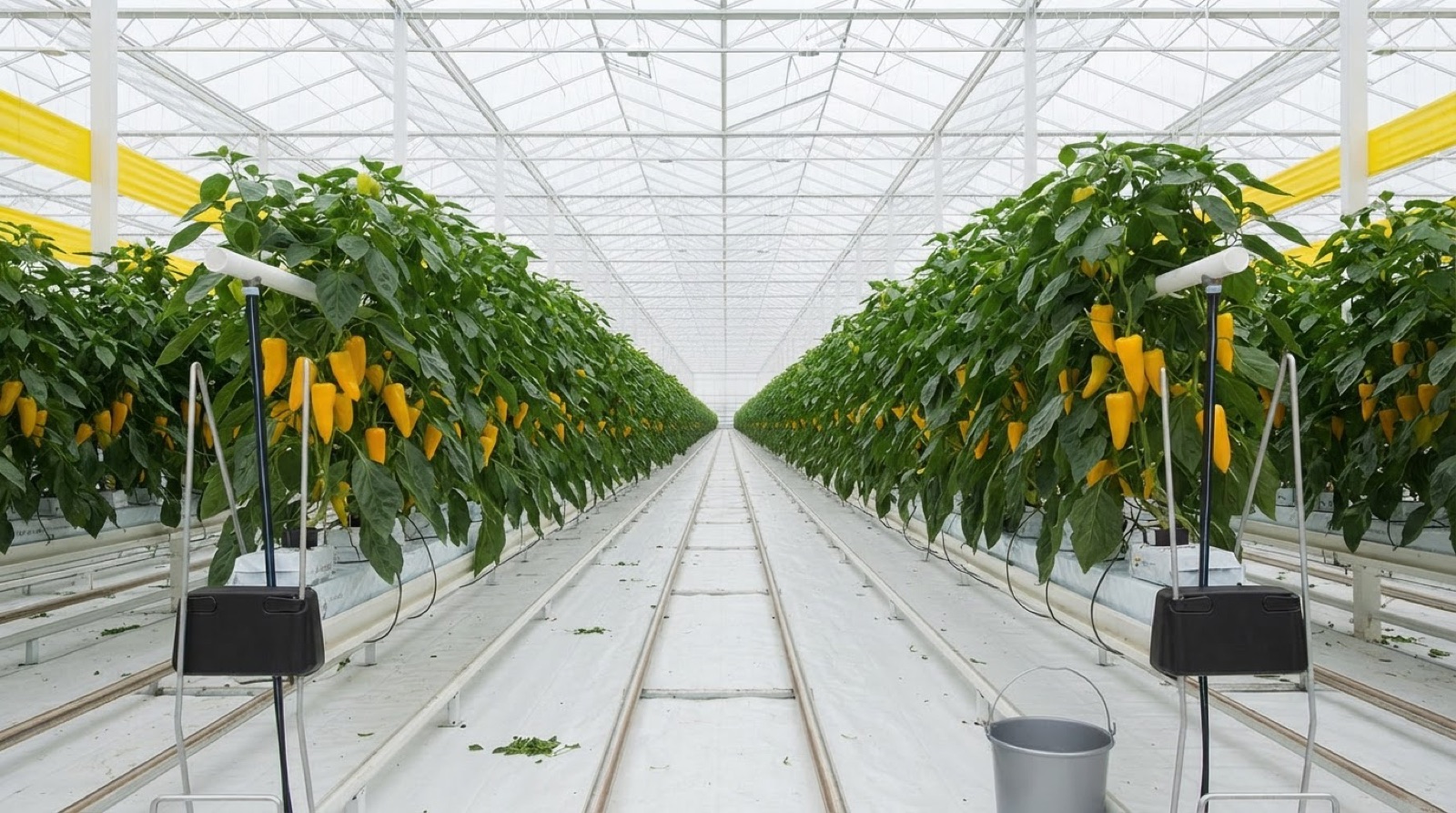
Yellow Pointed Peppers
Yellow pointed pepper is the yellow-ripening conical sweet pepper, distinct from both the yellow block pepper and the red pointed type.
Das Gewächshaus hinter paprika
Paprika, unter Glas.
Gestützte Substratkultur.
Pflanzenlast, Licht im Bestand und Klimaregelung tragen eine lange Kultur mit wiederholtem Pflücken.
Farbe, Größe und Qualität bei der Ernte.
Gestützte Substratkultur.
Farb- und Größenklassen mit Ihrem Markt und Ernteplan verbinden.
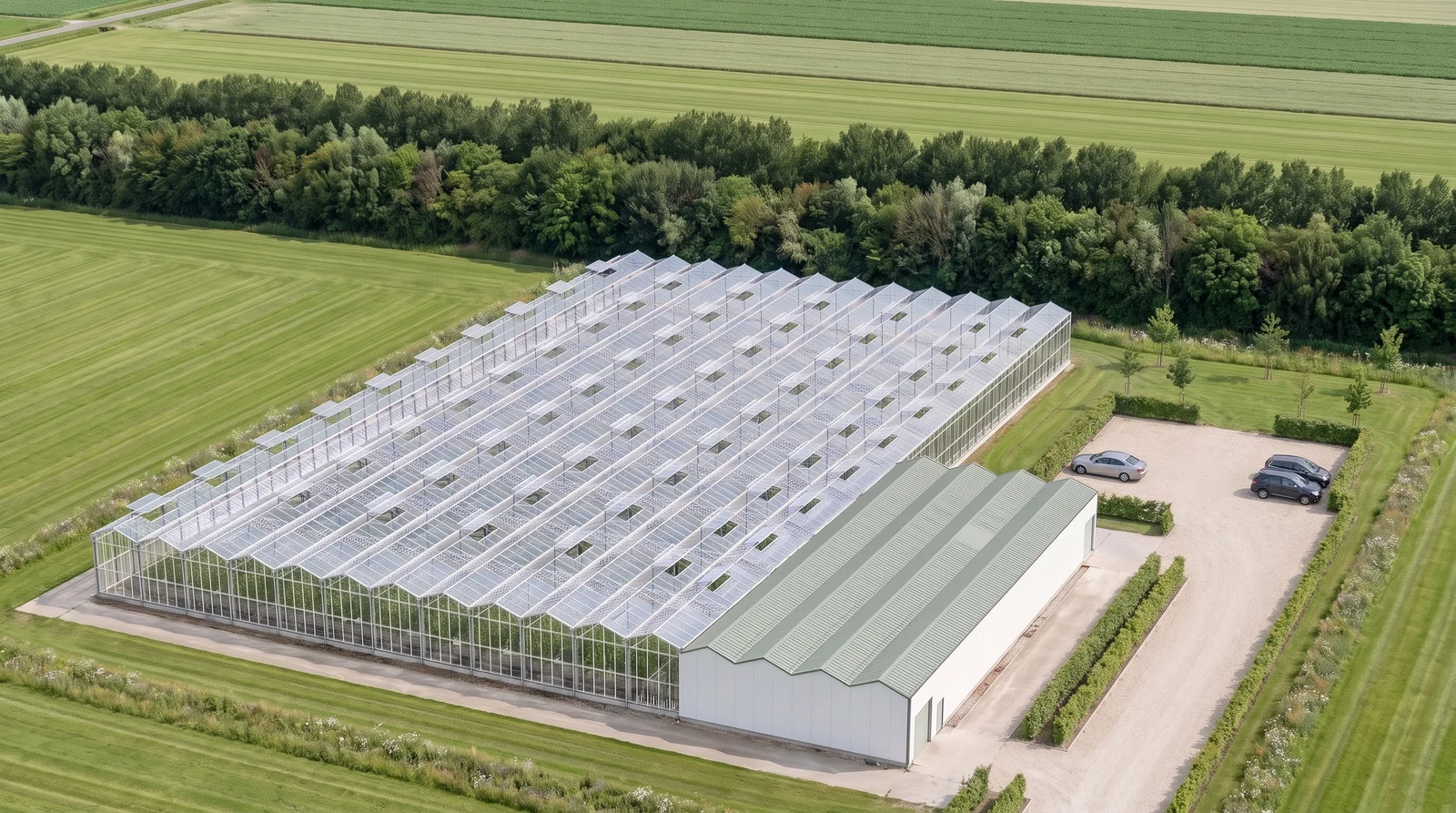
Expert Hydroponic Greenhouse Series
Eine definierte Konstruktion für die kommerzielle Hydroponik. Die Kultur bestimmt Kultursystem, Klimastrategie und Ernteanordnung.
½ acre1 acre2 acresEntdecken Expert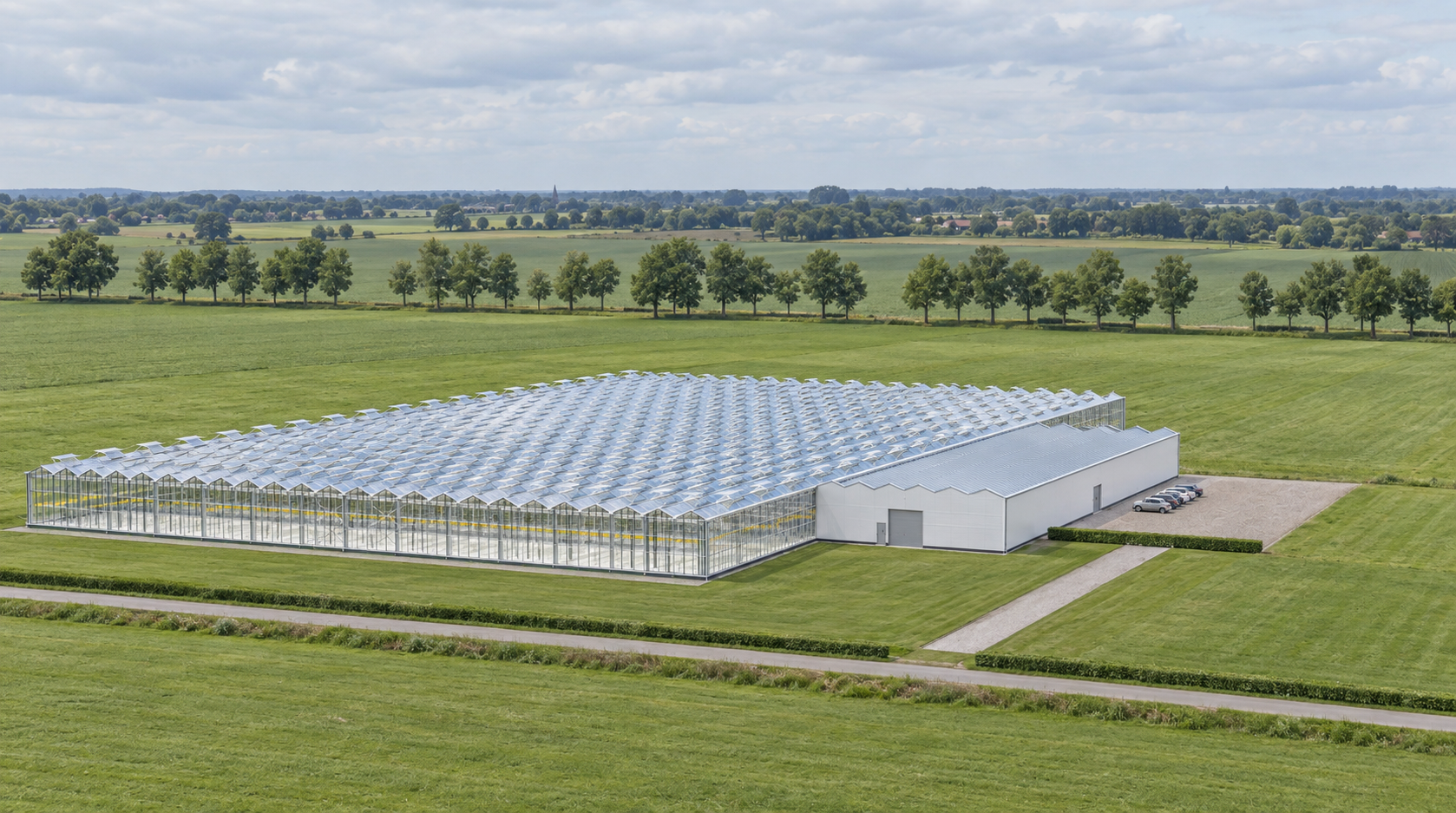
Plus Hydroponic Greenhouse Series
Unsere größte Standardserie. Die größere Kulturfläche auf Kulturbedarf, Arbeitskräfte, Versorgung und den Markt abstimmen, den Sie beliefern wollen.
2 acres4 acres8 acresEntdecken Plus4,032 m²43,400 sq ft Kulturfläche sind der übliche Ausgangspunkt für einen Produktionsplan mit paprika (GrowPro Expert 1 acre). Alle neun Modelle vergleichen
Bringen Sie Ihre nächste Ernte
unter Glas.
Ihre Kultur, Ihr Standort und die Menge, die Sie verkaufen wollen. Finden wir das passende Gewächshaus und die passenden Systeme.
Ein individuelles Gewächshaus gesucht?GrowPro Expert
Wir können auch für eine andere Kultur oder ein gemischtes Anbauprogramm planen.
Über Ihr Projekt sprechen Weiter zum Kontaktformular. Unverbindlich.Lesenswertes, das Sie interessieren könnte

Grow Like a Pro: Starting Smart, Growing Strong
How Grow Like a Pro combines smart farming, CEA technology and local partnerships for eco-friendly, profitable, pesticide-free greenhouse pr
Artikel lesen
Maryland Cannabis Greenhouse: Year One
One year on: how the Maryland cannabis greenhouse, paired with an adjacent indoor facility, cut the energy bill and lifted both yields and q
Artikel lesen
The Case for a College Greenhouse
Why a college greenhouse belongs in the curriculum: teaching science, craftsmanship, business logic and sustainability, and preparing studen
Artikel lesen
The Case for a High School Greenhouse
Why every high school greenhouse matters: how it makes STEM tangible, builds responsibility and teamwork, and helps students discover their
Artikel lesen
Greenhouses in Education: The Case for Schools
Greenhouses in education reconnect students to reality — the full case for why every school, high school, college and trade program should h
Artikel lesen
The Origins of Greenhouse Horticulture: My Backyard
A tour through greenhouse horticulture history: from 19th-century Westland fruit walls to the “City of Glass” and today’s international high
Artikel lesen