
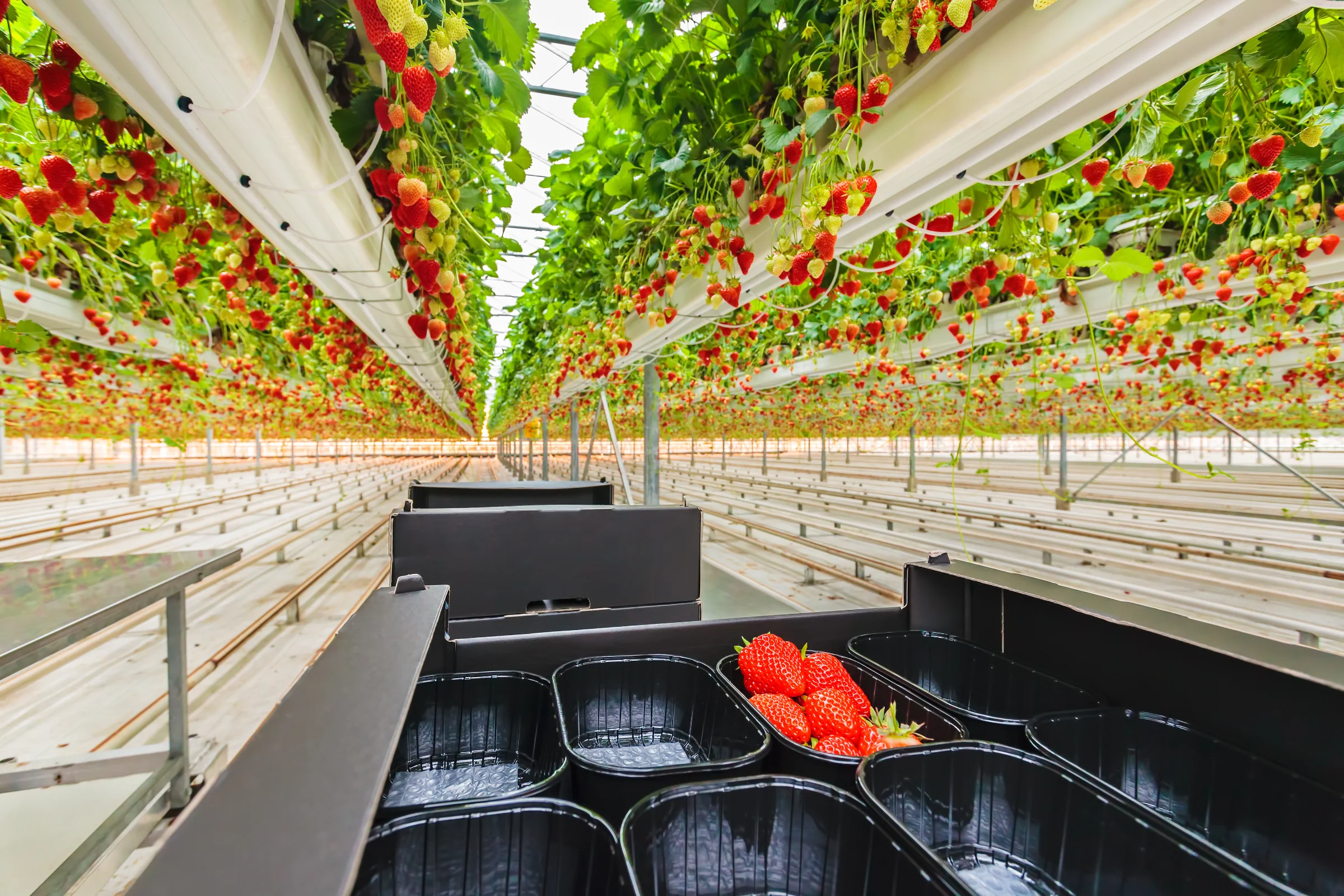
Strawberry
Everbearing Strawberries.
Frucht über ein langes Fenster statt in einem einzigen Schub.
Reife Frucht, Woche für Woche
Eine remontierende Kultur wird durchgehend gepflückt statt in einem Schub, und das verändert, was ein regionaler Erzeuger zusagen kann. Reife Erdbeere hat eine kurze Haltbarkeit und lässt sich nicht lagern, um eine Lücke zu decken. Die Belieferung muss in dem Tempo ankommen, in dem gegessen wird, sonst wird das Regal von weiter her gefüllt.
Eine Pflanze, die weiter blüht, löst das. Sie bringt Frucht in stetigem Rhythmus über ein langes Fenster an den Markt, sodass derselbe kurze Weg in jeder Woche gilt und nicht nur in der Spitze. Vitamin C, Zucker und Aroma sind in Frucht am höchsten, die an der Pflanze gereift ist, und eine durchgehende Kultur macht das reife Pflücken zum Normalfall statt zum Glücksfall.
Der Wert liegt im Fenster. Frucht, die unter Glas nahe ihrem Markt wächst, deckt die Randzeiten der Saison ab, in denen die Alternative im Regal weit gereist ist und entsprechend gepflückt wurde. Durchgängigkeit ist nicht nur ein kaufmännisches Argument. Sie ist das, was die Frucht in der Qualität im Angebot hält, zu der die Kultur fähig ist.
Nährwerte
Erdbeeren, roh
Pro 100 g
- Energie
- 32 kcal
- Fett
- 0.3 g
- Kohlenhydrate
- 7.68 g
- davon Zucker
- 4.89 g
- Ballaststoffe
- 2 g
- Protein
- 0.67 g
- Natrium
- 1 mg
- Kalium
- 153 mg
- Vitamin C
- 58.8 mg
Die remontierende Erdbeere blüht und fruchtet wiederholt statt in einem kurzen Schub, und genau das lässt eine Gewächshauskultur einen Markt durchgehend beliefern statt nur über wenige Wochen. Sie ist die Grundlage der niederländischen Frischkultur unter Glas, und das verlängerte Pflückfenster ist der wirtschaftliche Grund, sie überhaupt geschützt anzubauen.
Was die Kultur braucht
Die Kultur wächst auf Hängerinnen mit Substrat in Arbeitshöhe, mit Tropfbewässerung und Rezirkulation des Drainwassers. Die Wurzelzone ist klein im Verhältnis zur Fruchtlast, sodass Wasser- und Salzführung den größten Teil der Qualitätssicherung übernehmen, und die Kultur reagiert empfindlich auf Unterbrechungen während der Fruchtfüllung. Das Pflücken auf Höhe hält den Arbeitsaufwand über eine lange Saison durchhaltbar.
Was das Gewächshaus leisten muss
Die Erdbeere unter Glas wächst auf Hängerinnen, und diese Wahl zieht sich durch das gesamte Bauwerk. Gepflückt wird auf Hüfthöhe statt am Boden, was den Arbeitsplan stärker verändert als jede andere Entscheidung an dieser Kultur; die Rinnen müssen an der Konstruktion aufgehängt werden, sodass der Lastpfad von Anfang an eingeplant und nicht in ein fertiges Haus nachgetragen wird.
Bezahlt wird das Haus für ein langes Pflückfenster. Die Qualität muss vom ersten Schub bis zum letzten halten, und das legt das Gewicht auf Klimastabilität statt auf Spitzenleistung – Schirmung und Heizung, die die Pflanze durch die Randzeiten der Saison produktiv halten, Lüftung, die den Bestand trocken hält, und eine Bewässerung mit dem Puffer, eine tragende Kultur durch heiße Wochen zu bringen.
DutchGreenhouses® spezifiziert Konstruktion, Klima, Schirmung und Bewässerung um die Erdbeerkultur, ihr Pflückfenster und das örtliche Klima herum, sodass die Qualität über die gesamte Periode hält und nicht nur im ersten Schub. Nehmen Sie Kontakt auf, um ein Erdbeer-Gewächshaus zu planen.
Remontierende Erdbeere, gefragt und beantwortet
Warum wächst die Erdbeere auf Hängerinnen?
Wegen des Pflückens auf Hüfthöhe statt am Boden und einer Wurzelzone, die sich steuern lässt. Die Rinnen hängen an der Konstruktion, deshalb gehört der Lastpfad in die Planung des Hauses und nicht in einen späteren Ausbau.
Was verlangt ein langes Pflückfenster vom Gewächshaus?
Stabilität statt Spitzenkapazität. Die Qualität muss vom ersten Schub bis zum letzten halten, deshalb werden Schirmung, Heizung und Lüftung für die Randzeiten der Saison ausgelegt und nicht für ihre besten Wochen.
Was begrenzt die Fruchtqualität spät im Pflückfenster?
Der Pflanzenzustand und die Klimaführung durch die warmen Monate. Ein Bestand, der nass bleibt, oder eine Wurzelzone, die schwankt, zeigt sich in der Frucht, die Wochen später gepflückt wird.
Other strawberry
varieties.
Frische Früchte im richtigen Marktfenster. Der Handelstyp, den Sie verkaufen, bestimmt Pflanzenlast, Ernterhythmus und das Haus.
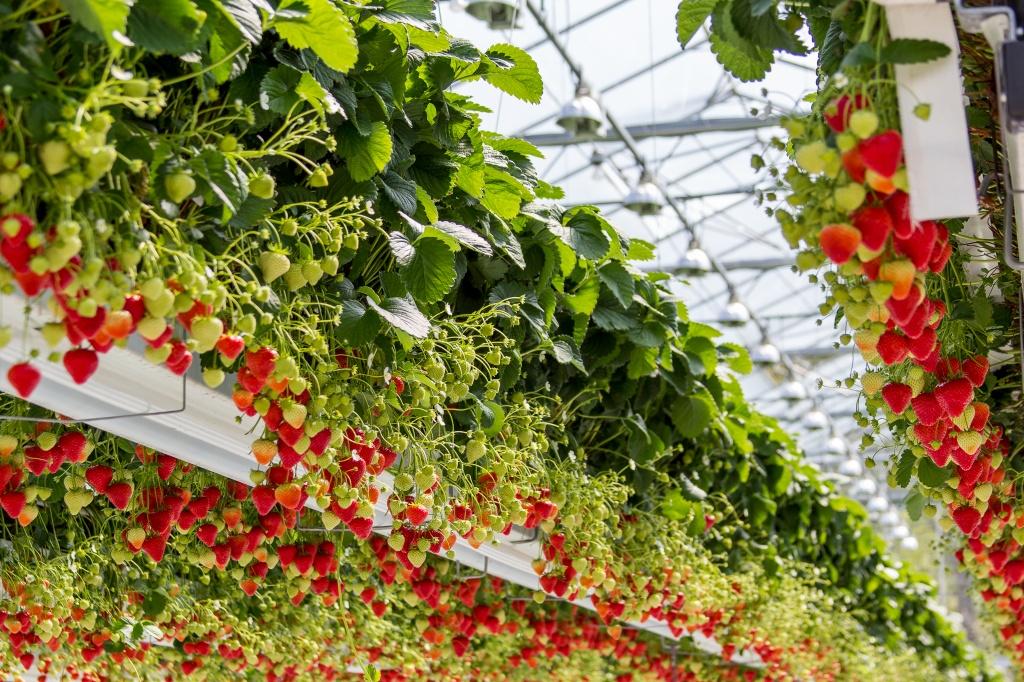
Das Gewächshaus hinter erdbeeren
Erdbeeren, unter Glas.
Hochgestellte Rinnen mit Substrat.
Rinnenanordnung, Pflanzabstand und Pflückwege folgen dem Erntefenster und Ihrem Arbeitsplan.
Frische Früchte im richtigen Marktfenster.
Hochgestellte Rinnen mit Substrat.
Vermarktbare Klasse, Ernteaufwand, Verpackung und Lieferzeit berücksichtigen.
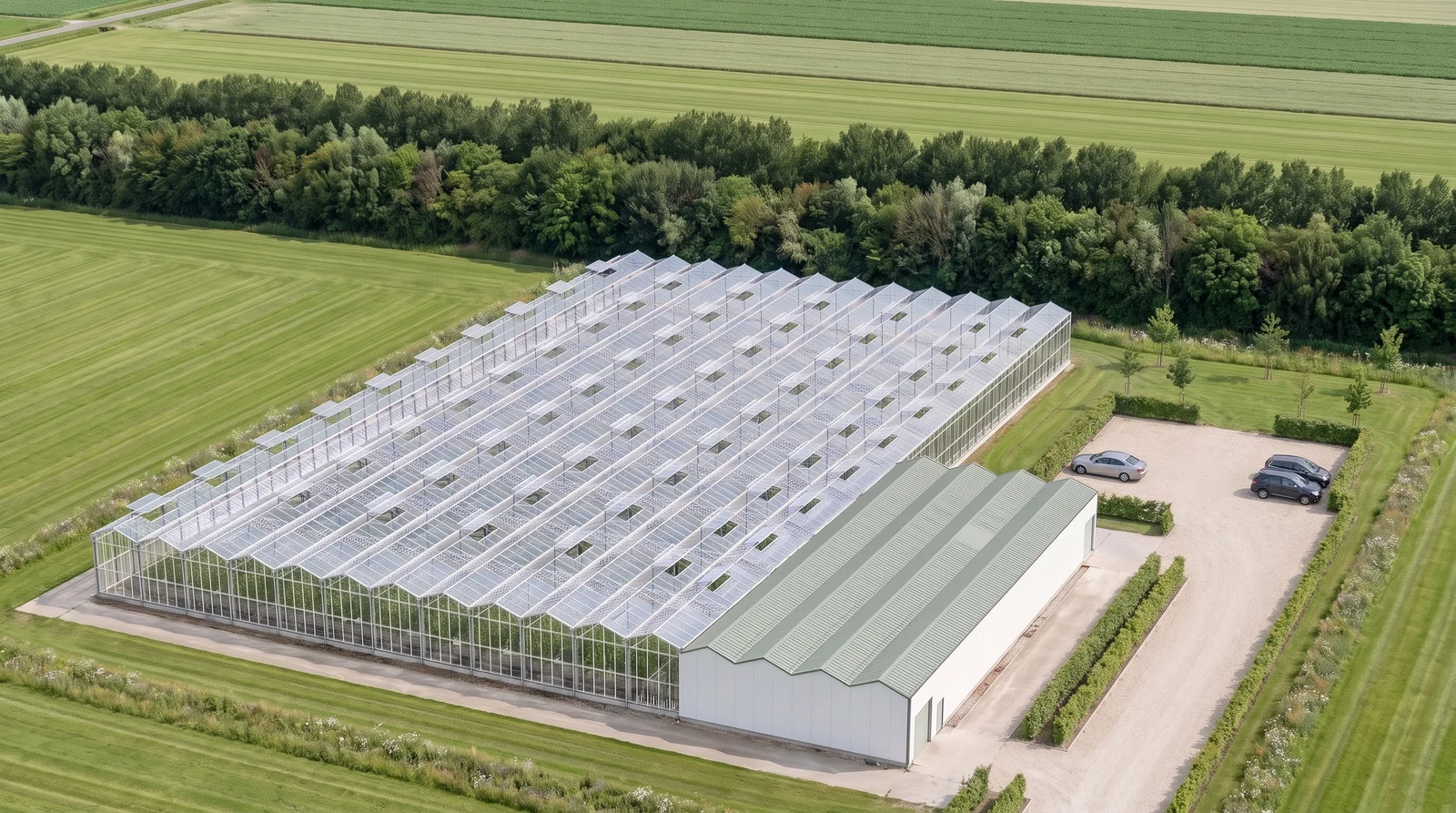
Expert Hydroponic Greenhouse Series
Eine definierte Konstruktion für die kommerzielle Hydroponik. Die Kultur bestimmt Kultursystem, Klimastrategie und Ernteanordnung.
½ acre1 acre2 acresEntdecken Expert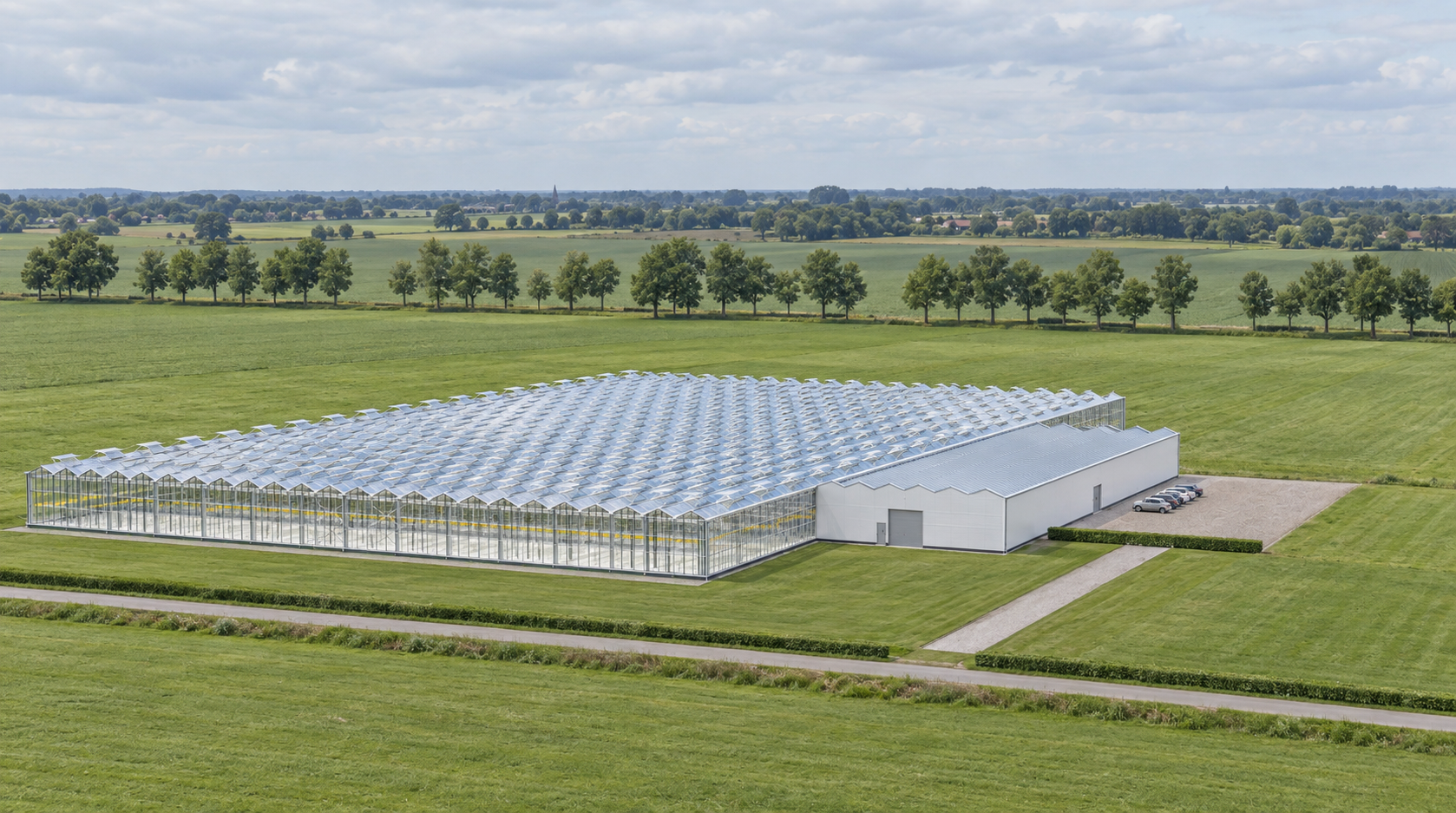
Plus Hydroponic Greenhouse Series
Unsere größte Standardserie. Die größere Kulturfläche auf Kulturbedarf, Arbeitskräfte, Versorgung und den Markt abstimmen, den Sie beliefern wollen.
2 acres4 acres8 acresEntdecken Plus4,032 m²43,400 sq ft Kulturfläche sind der übliche Ausgangspunkt für einen Produktionsplan mit erdbeeren (GrowPro Expert 1 acre). Alle neun Modelle vergleichen
Bringen Sie Ihre nächste Ernte
unter Glas.
Ihre Kultur, Ihr Standort und die Menge, die Sie verkaufen wollen. Finden wir das passende Gewächshaus und die passenden Systeme.
Ein individuelles Gewächshaus gesucht?GrowPro Expert
Wir können auch für eine andere Kultur oder ein gemischtes Anbauprogramm planen.
Über Ihr Projekt sprechen Weiter zum Kontaktformular. Unverbindlich.Lesenswertes, das Sie interessieren könnte

Grow Like a Pro: Starting Smart, Growing Strong
How Grow Like a Pro combines smart farming, CEA technology and local partnerships for eco-friendly, profitable, pesticide-free greenhouse pr
Artikel lesen
Maryland Cannabis Greenhouse: Year One
One year on: how the Maryland cannabis greenhouse, paired with an adjacent indoor facility, cut the energy bill and lifted both yields and q
Artikel lesen
The Case for a College Greenhouse
Why a college greenhouse belongs in the curriculum: teaching science, craftsmanship, business logic and sustainability, and preparing studen
Artikel lesen
The Case for a High School Greenhouse
Why every high school greenhouse matters: how it makes STEM tangible, builds responsibility and teamwork, and helps students discover their
Artikel lesen
Greenhouses in Education: The Case for Schools
Greenhouses in education reconnect students to reality — the full case for why every school, high school, college and trade program should h
Artikel lesen
The Origins of Greenhouse Horticulture: My Backyard
A tour through greenhouse horticulture history: from 19th-century Westland fruit walls to the “City of Glass” and today’s international high
Artikel lesen