
Sweet pepper
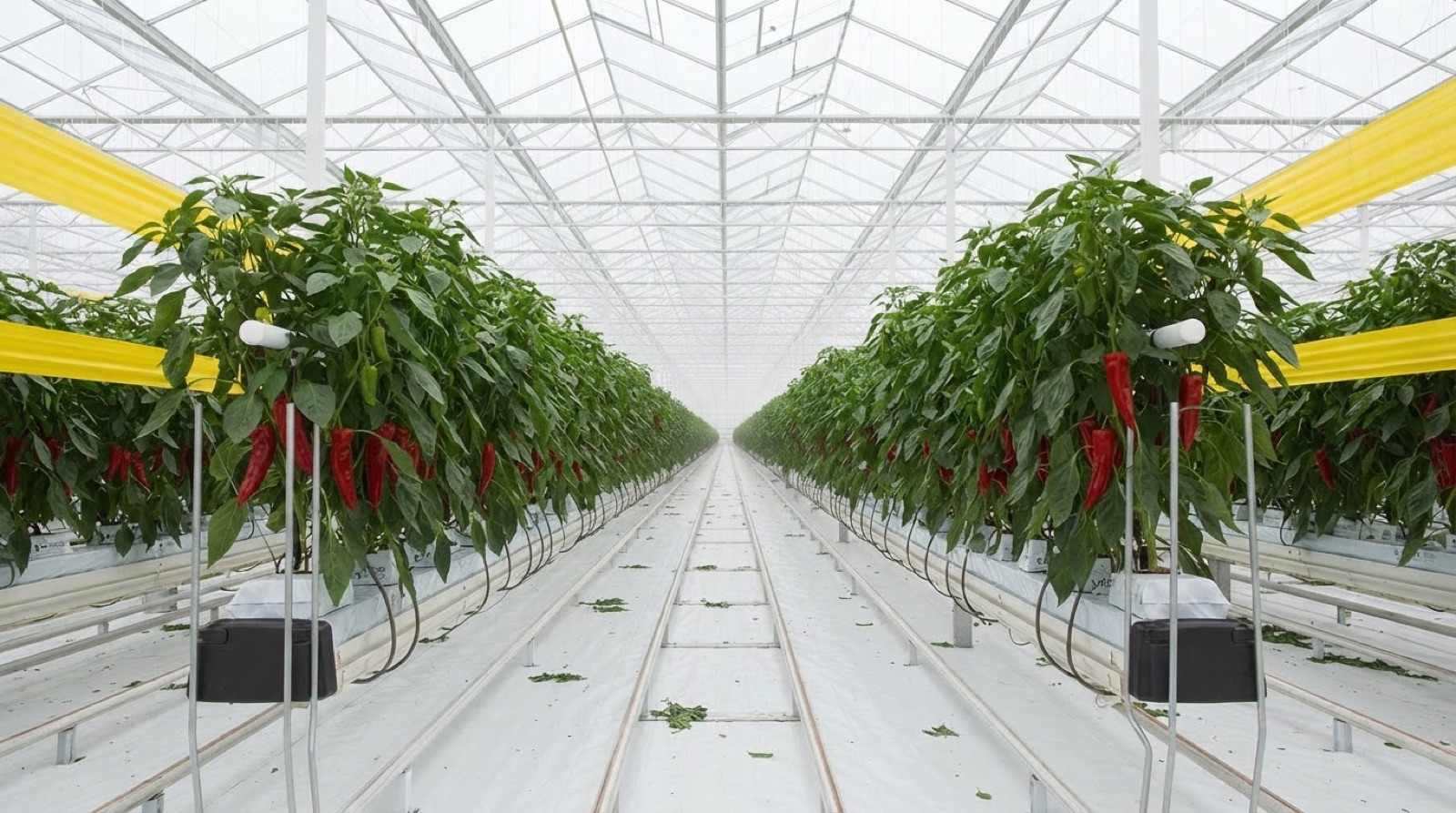
Red Pointed Peppers.
A conical sweet pepper with its own spacing and support.
Sweetness is the product
Pointed pepper is bought for sweetness. It is carried to full red, and the sugars that make it worth roasting are laid down in the same weeks that build its vitamin C. A pointed pepper cut early is a thin-walled, sharp-tasting fruit, and no amount of cooking puts back what the plant did not have time to add.
Roasting and grilling then concentrate what is there. Water leaves and the sugar stays, so the gap between a fully ripened fruit and one taken short is wider on the plate than it looks in the hand. The cook meets the harvest decision directly.
Ripe fruit keeps nothing in reserve for a journey. A pointed pepper is at its best on the day it is cut, and every day after that is subtraction. A greenhouse near the market picks to the order and delivers inside the week, which is how the sweetness the crop was grown for reaches the pan intact.
Nutrition facts
Sweet pepper, red, raw
Per 100 g
- Energy
- 26 kcal
- Fat
- 0.3 g
- Carbohydrate
- 6.03 g
- Sugars
- 4.2 g
- Fiber
- 2.1 g
- Protein
- 0.99 g
- Sodium
- 4 mg
- Potassium
- 211 mg
- Vitamin C
- 127.7 mg
Pointed pepper is a conical, elongated sweet pepper sold for its sweetness and for roasting and grilling. It is a distinct product from the blocky bell, with a different fruit shape, a lighter individual fruit and its own retail position. Growers add it to reach a segment the block pepper does not serve.
What the crop needs
The plant is grown on substrate and carried on a high wire, on either a long or a seasonal cycle depending on the market being supplied. Its stem architecture and fruit mass differ from the block pepper, so plant spacing, stem count and the load the crop wire carries are set for this product rather than inherited from the bell crop.
What the greenhouse has to do
A conical fruit on a different stem architecture asks for a different plan inside the same envelope. Plant spacing and the support system follow the fruit the plant actually carries rather than a block-pepper layout, and getting that wrong costs either growing space or fruit quality for the whole cycle.
Cycle choice is the other design input. Pointed pepper is grown long-cycle and seasonal, and the market window decides which. A seasonal crop wants a house that can be emptied, cleaned and replanted without disturbing its neighbours; a long-cycle crop wants heating and screening specified for the whole year. That decision belongs in the brief, because it moves the compartment layout.
DutchGreenhouses® specifies the structure, climate, screening and irrigation around the pointed pepper crop, its cycle and the local climate, so the plant is spaced and supported for the fruit it actually carries. Get in touch to plan a pepper greenhouse.
Red pointed pepper, asked and answered
Does pointed pepper use a block-pepper layout?
No. Fruit mass and stem architecture differ, so plant spacing and the support system are set for the conical crop. A block-pepper layout costs either growing space or fruit quality across the whole cycle.
Long cycle or seasonal?
Both are grown. The choice follows the market window being supplied and changes the planting plan, the labour profile and the compartment layout.
What is the commercial argument for pointed pepper?
It serves a sweetness and cooking-use segment the blocky bell does not, at a different price position.
Other sweet pepper
varieties.
Colour, size and quality at harvest. The class you sell decides the plant load, the harvest rhythm and the house.
Green Bell Peppers
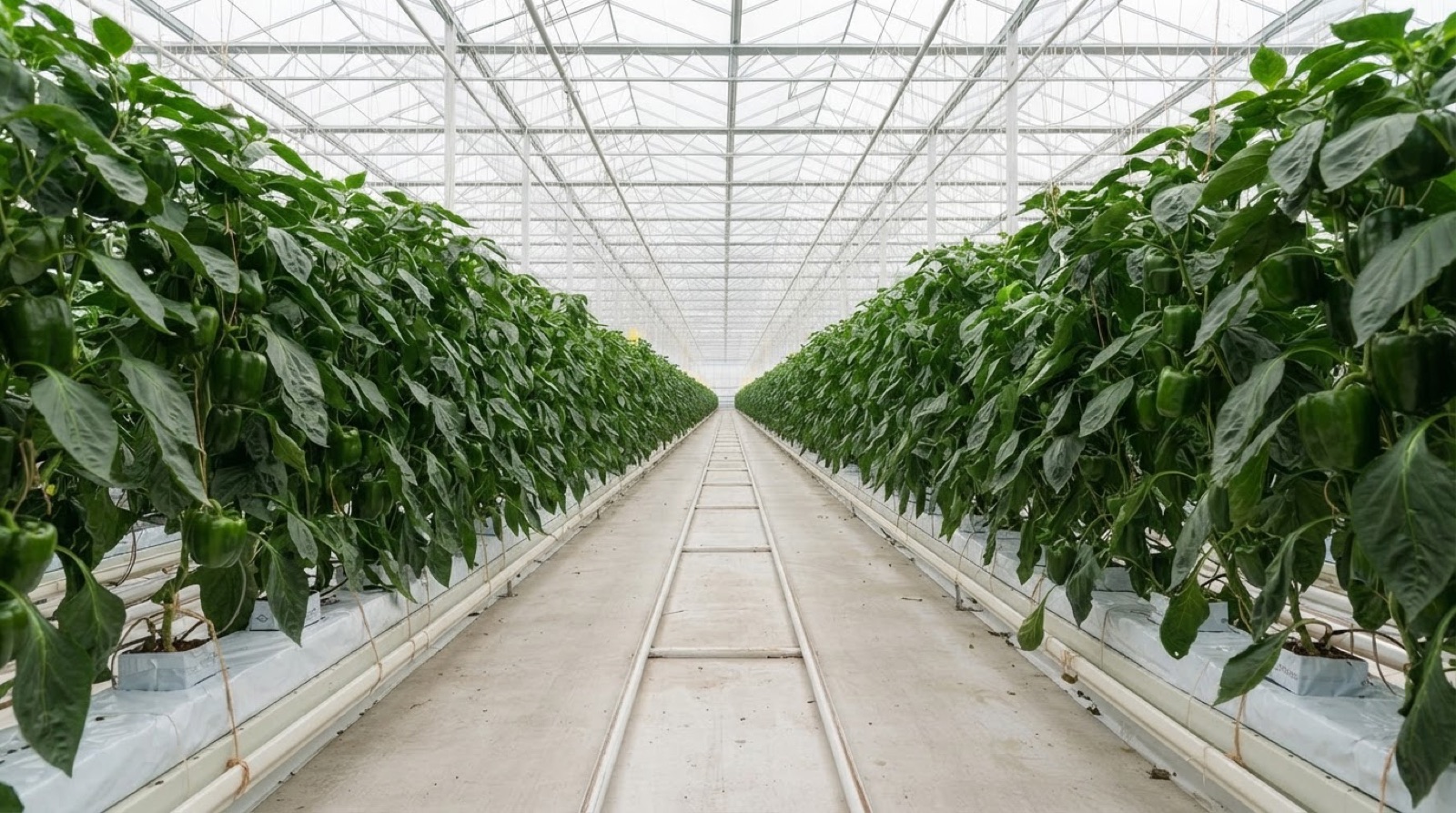
Green bell pepper is fruit picked before it colours, a harvest stage rather than a colour genotype.
Orange Bell Peppers
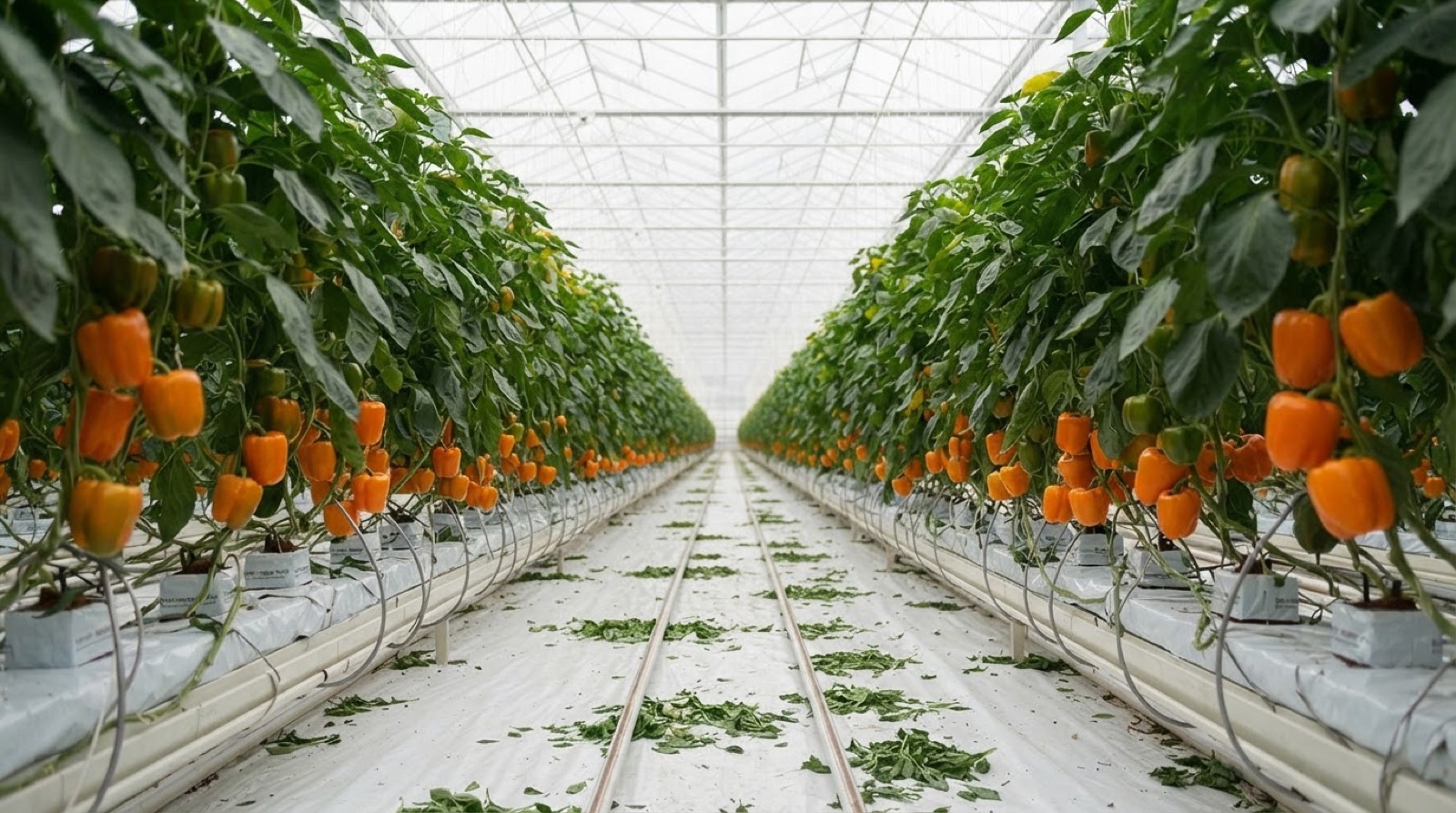
Orange bell pepper is its own genotype class with its own cultivars, not a red pepper picked at a different moment.
Red Bell Peppers
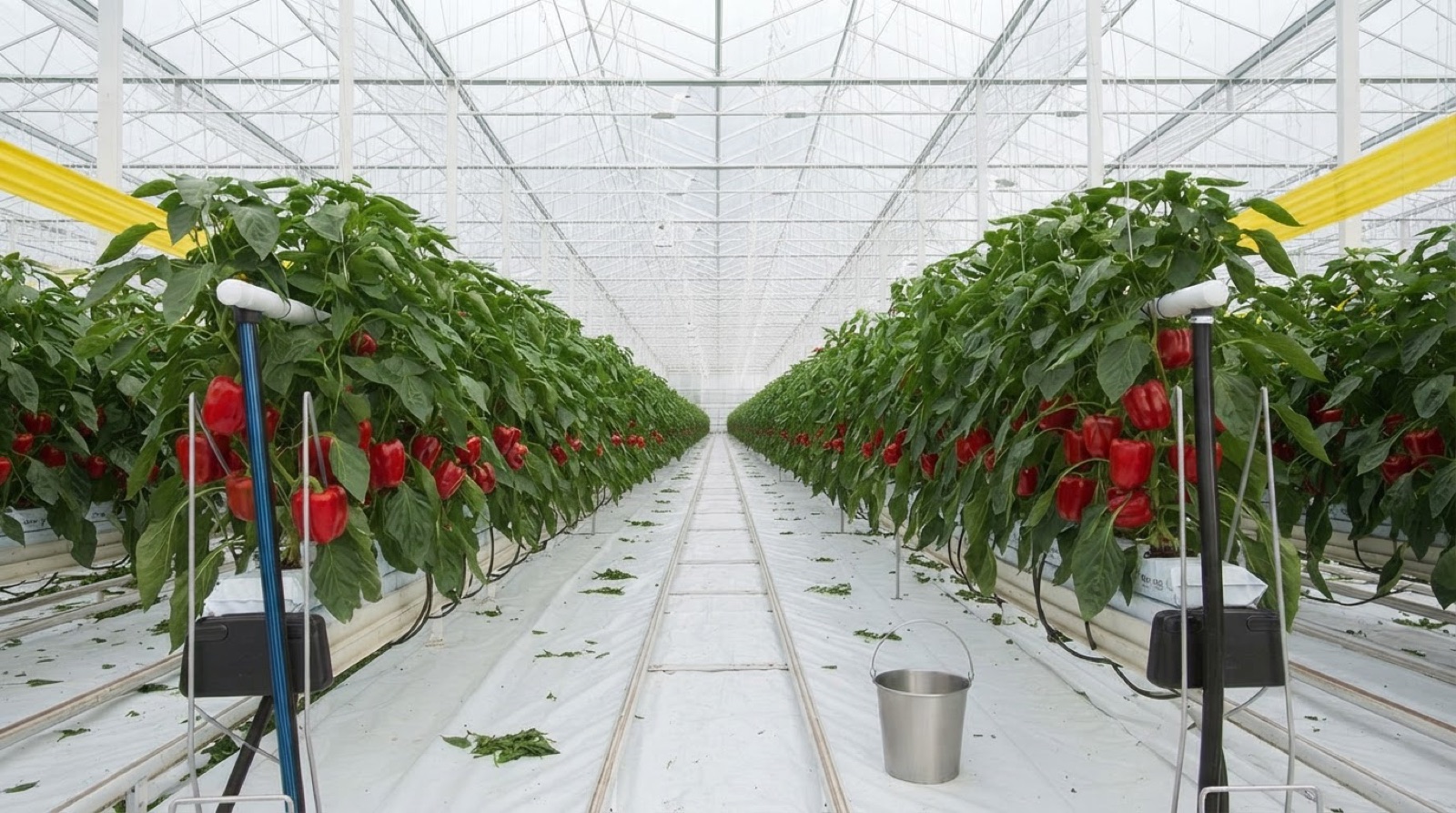
Red bell pepper is the reference block pepper of Dutch production, carried on the plant until it colours fully.
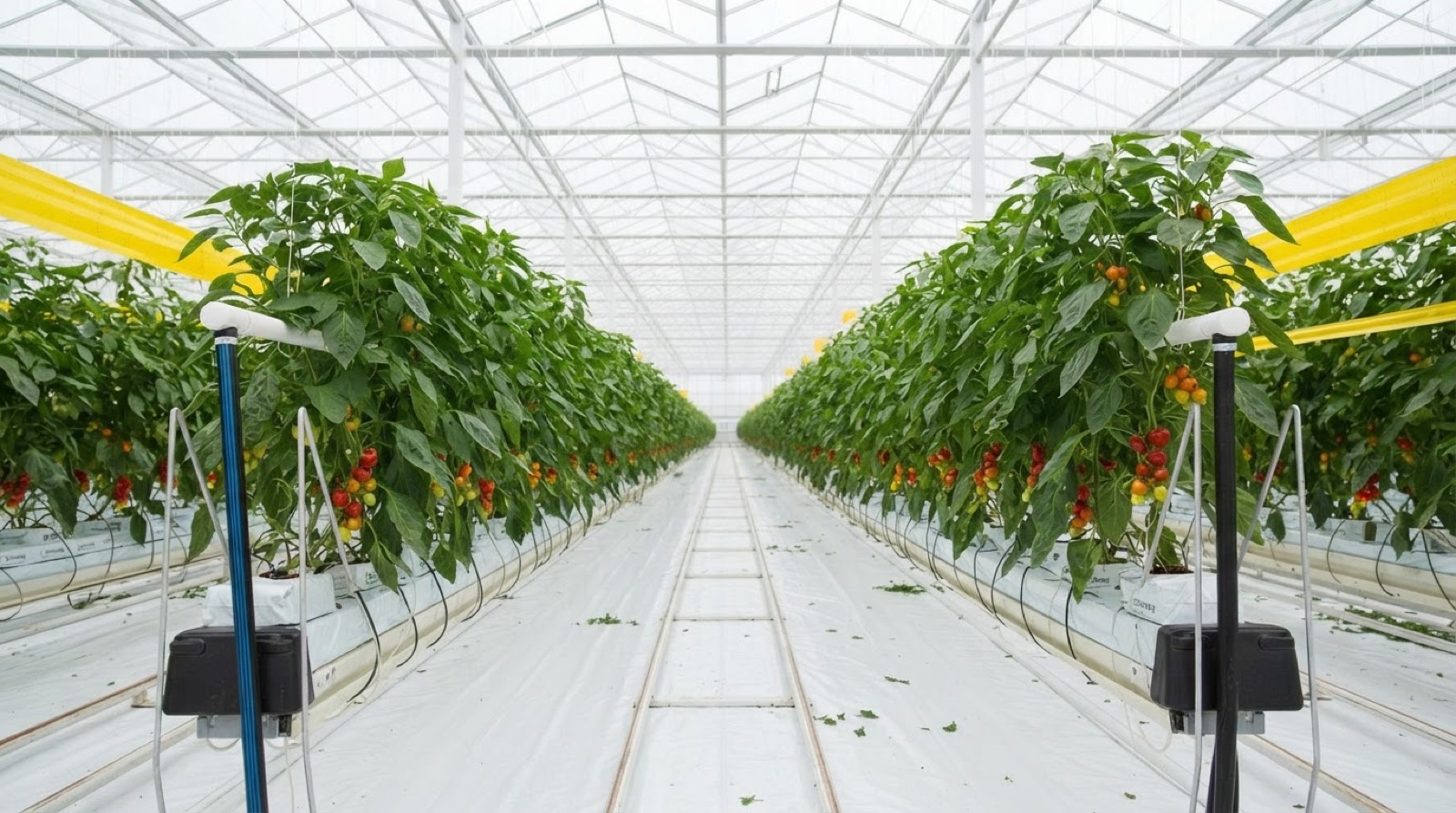
Snack Peppers
Snack pepper is a market and pack idea more than a defined botanical type: small sweet peppers sold in mixed-colour punnets to be eaten whole.
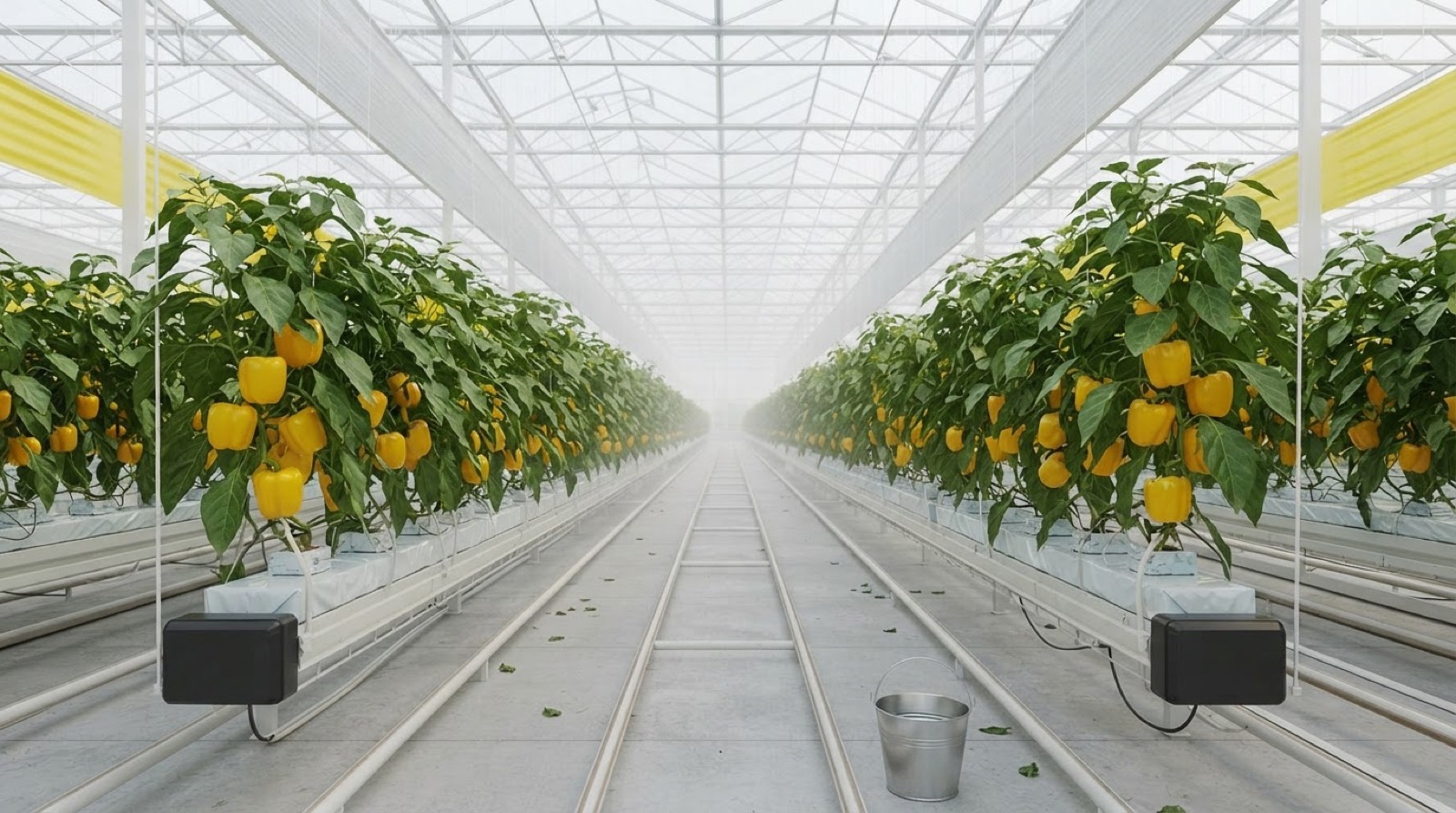
Yellow Bell Peppers
Yellow bell pepper is its own genotype class with its own cultivars, not a red pepper picked at a different moment.
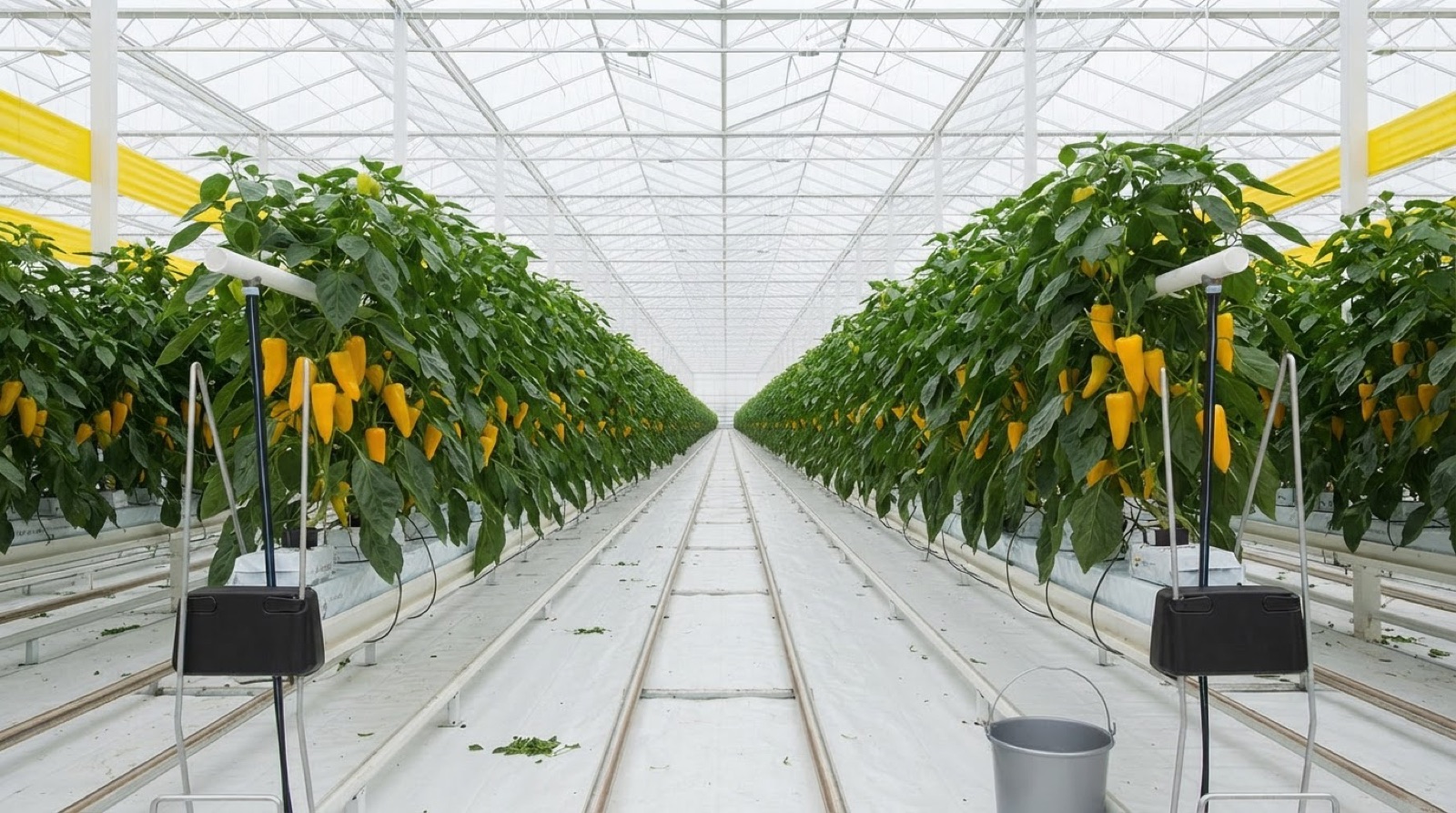
Yellow Pointed Peppers
Yellow pointed pepper is the yellow-ripening conical sweet pepper, distinct from both the yellow block pepper and the red pointed type.
The greenhouse behind sweet peppers
Sweet peppers, under glass.
Supported substrate growing.
Crop loading, canopy light and climate control support a long crop with repeated picking.
Colour, size and quality at harvest.
Supported substrate growing.
Connect colour and size grades to your market and harvest plan.
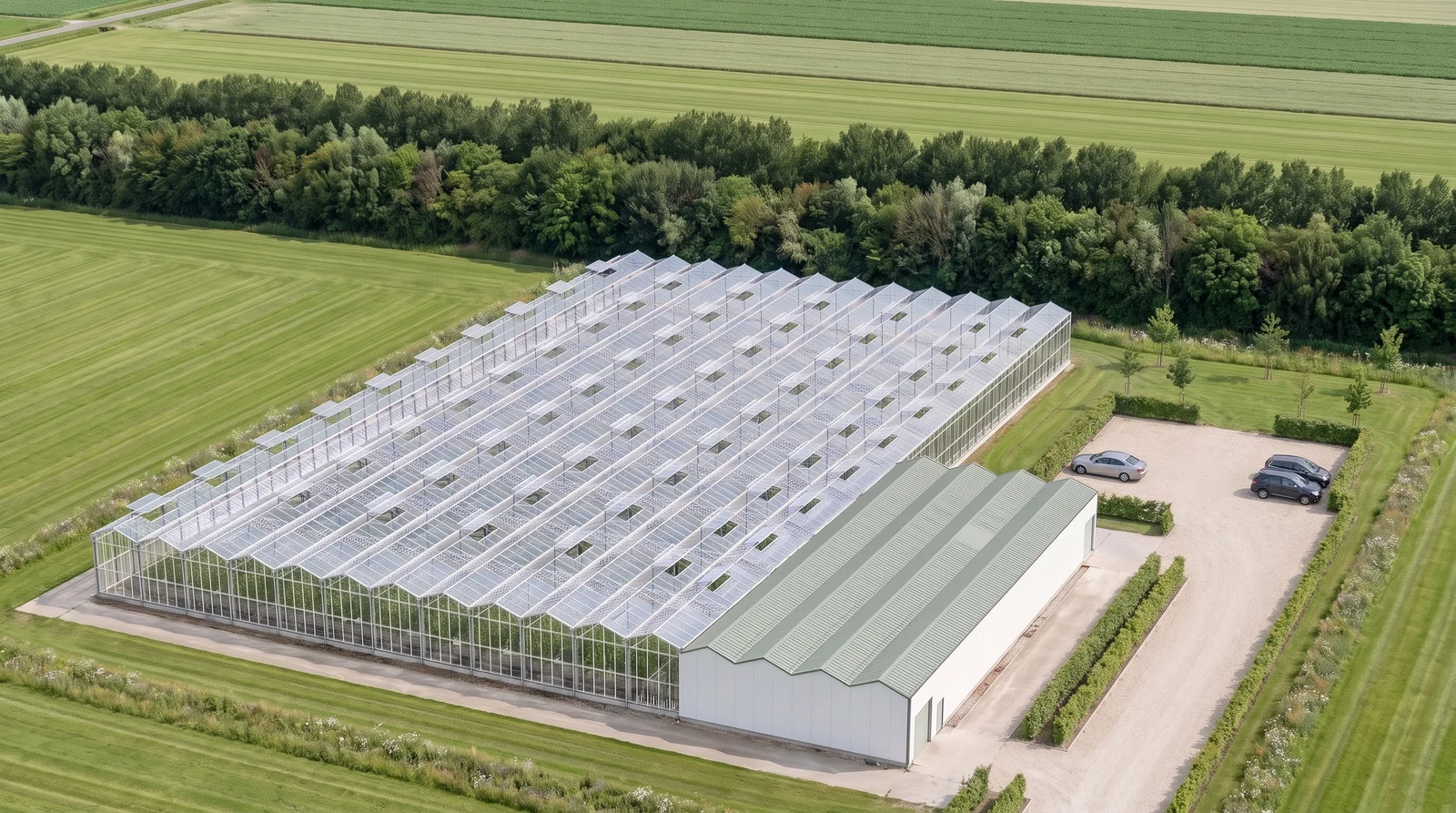
Expert Hydroponic Greenhouse Series
A defined structure for commercial hydroponics. The crop determines the growing system, climate strategy and harvest layout.
½ acre1 acre2 acresExplore Expert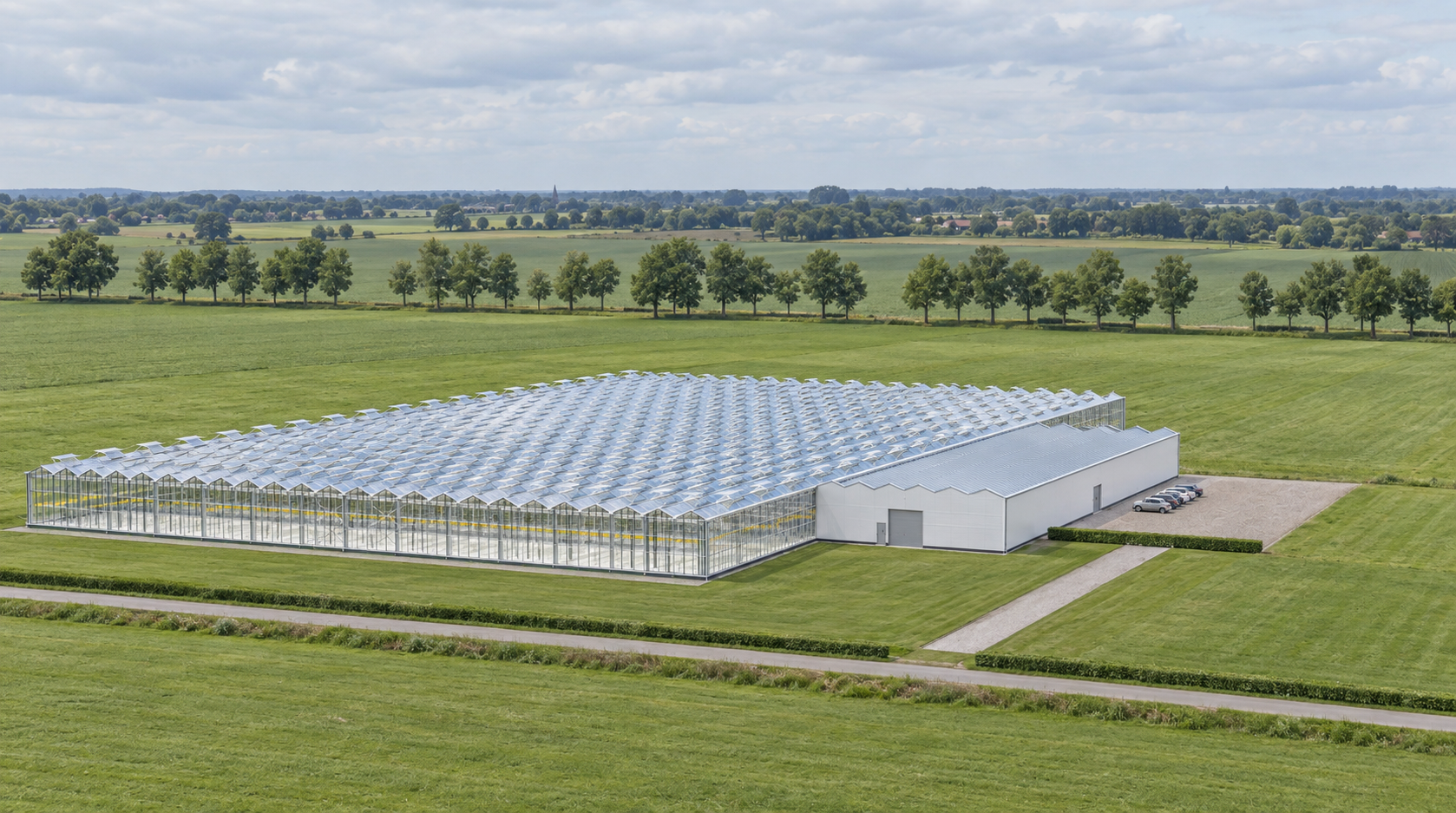
Plus Hydroponic Greenhouse Series
Our largest standard range. Match the larger growing area to crop demand, labour, utilities and the market you intend to supply.
2 acres4 acres8 acresExplore Plus4,032 m²43,400 sq ft of growing space is where a sweet peppers plan usually starts (GrowPro Expert 1 acre). Compare all nine models
Put your next harvest
under glass.
Your crop, your site and the volume you want to sell. Let's find the greenhouse and systems to match.
Need a custom greenhouse?GrowPro Expert
We can also plan for another crop or a mixed growing programme.
Talk about your project Continue to our contact form. No commitment.Reads you might find interesting

Grow Like a Pro: Starting Smart, Growing Strong
How Grow Like a Pro combines smart farming, CEA technology and local partnerships for eco-friendly, profitable, pesticide-free greenhouse pr
Read article
Maryland Cannabis Greenhouse: Year One
One year on: how the Maryland cannabis greenhouse, paired with an adjacent indoor facility, cut the energy bill and lifted both yields and q
Read article
The Case for a College Greenhouse
Why a college greenhouse belongs in the curriculum: teaching science, craftsmanship, business logic and sustainability, and preparing studen
Read article
The Case for a High School Greenhouse
Why every high school greenhouse matters: how it makes STEM tangible, builds responsibility and teamwork, and helps students discover their
Read article
Greenhouses in Education: The Case for Schools
Greenhouses in education reconnect students to reality — the full case for why every school, high school, college and trade program should h
Read article
The Origins of Greenhouse Horticulture: My Backyard
A tour through greenhouse horticulture history: from 19th-century Westland fruit walls to the “City of Glass” and today’s international high
Read article