
Crops · Fruiting vegetable
Eggplant.
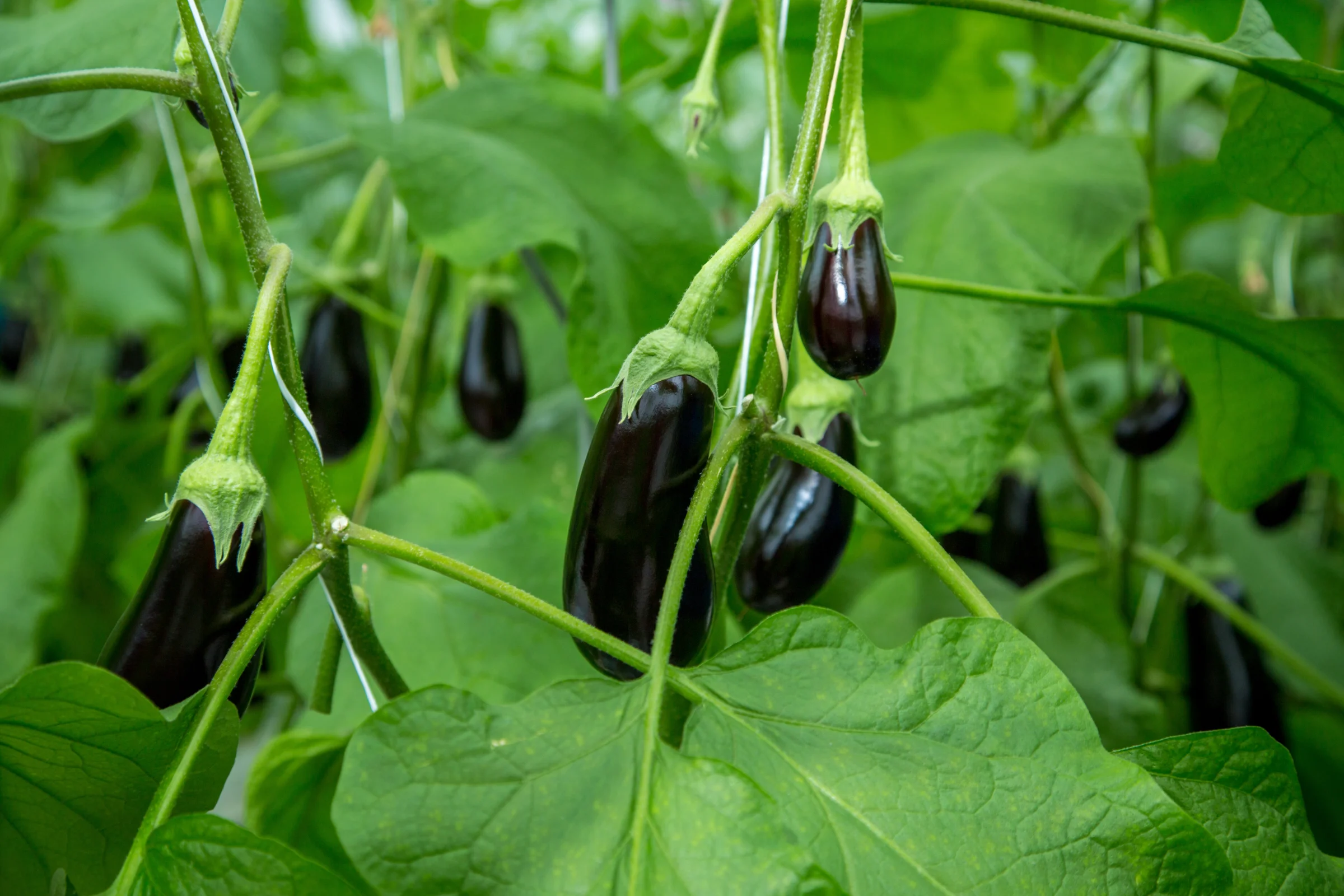
A long crop with a heavy fruit and a demanding root zone.
A cooking vegetable, judged on condition
Eggplant is not eaten for its vitamin content, and the plate says so. It is mostly water, light in energy, and useful mainly for fibre. It arrives in a kitchen as an ingredient rather than as a health claim, and it is cooked before it is eaten.
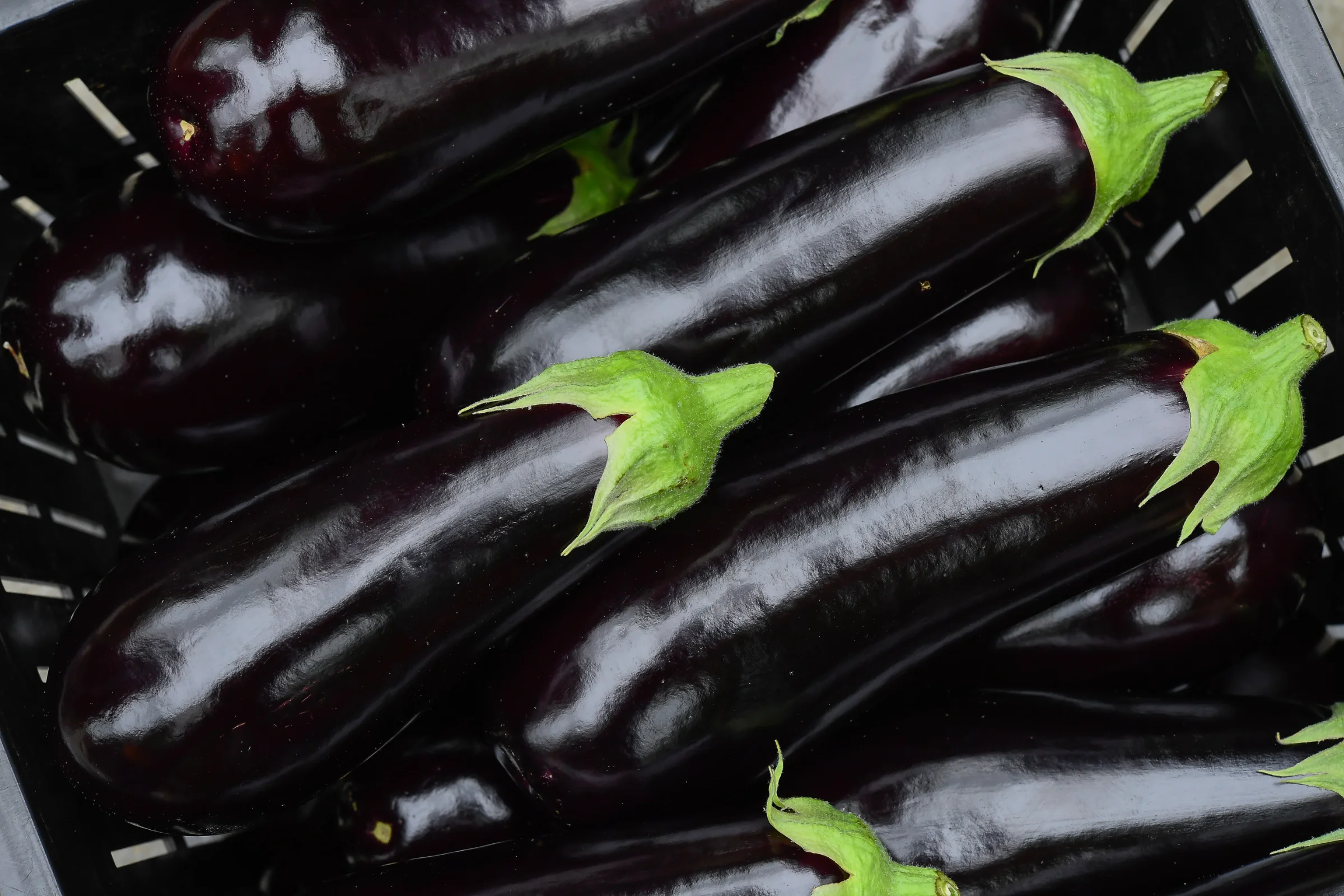
What it is bought for is behaviour under heat: dense flesh that takes up oil and seasoning, and skin that holds the shape of the piece. Those are qualities of condition rather than composition. A fruit that has spent a long time in transit goes spongy, dulls at the surface and marks wherever it touched something, and the same recipe then gives a different result.
So the case for local eggplant is a supply case, not a nutritional one. A greenhouse near its market delivers within days of cutting, in the same condition week after week, and through months a field cannot cover. For a crop bought by kitchens working to a consistent dish, that reliability is worth more than anything the label could claim.
Nutrition facts
Eggplant, raw
Per 100 g
- Energy
- 25 kcal
- Fat
- 0.18 g
- Carbohydrate
- 5.88 g
- Sugars
- 3.53 g
- Fiber
- 3 g
- Protein
- 0.98 g
- Sodium
- 2 mg
- Potassium
- 229 mg
- Vitamin C
- 2.2 mg
Which eggplant?
The commercial classes.
Uniform fruit. A sustained picking season. The class you sell decides the plant load, the harvest rhythm and the house.
Eggplant is a smaller part of the Dutch glasshouse area than tomato or pepper, and that is exactly why it interests growers looking for a crop with less crowded competition. It is a long-cycle fruiting vegetable with a heavy individual fruit and a steady harvest rhythm, and it suits a house already equipped for high-wire production.
What the crop needs
The plant is grown on rockwool with drip irrigation and drain recirculation. Its root zone is less forgiving than tomato’s: the crop carries a heavy fruit load on a comparatively coarse root system, so water availability and drain management do more of the work of holding quality. Grafting onto a vigorous rootstock is standard practice for the same reason.
The Dutch system
The Dutch crop is a high-wire eggplant on rockwool gutters with recirculating drip, and the building follows from that: a structure that carries a heavy fruit load for a long cycle, and irrigation with the capacity to hold the root zone steady underneath it. Skin quality decides the grade, so row layout and the harvest route are drawn for a fruit that marks against anything it touches.
DutchGreenhouses® designs the structure, climate, screening and irrigation around the eggplant crop, its rootstock and the local climate, so a heavy fruit load is carried without losing grade. Get in touch to plan an eggplant greenhouse.
The greenhouse behind eggplants
Eggplants, under glass.
Supported substrate or soil growing.
Allow for crop load, canopy space and root-zone demand across a long production cycle.
Uniform fruit. A sustained picking season.
Supported substrate or soil growing.
Connect fruit size, grade and picking frequency with sales demand.
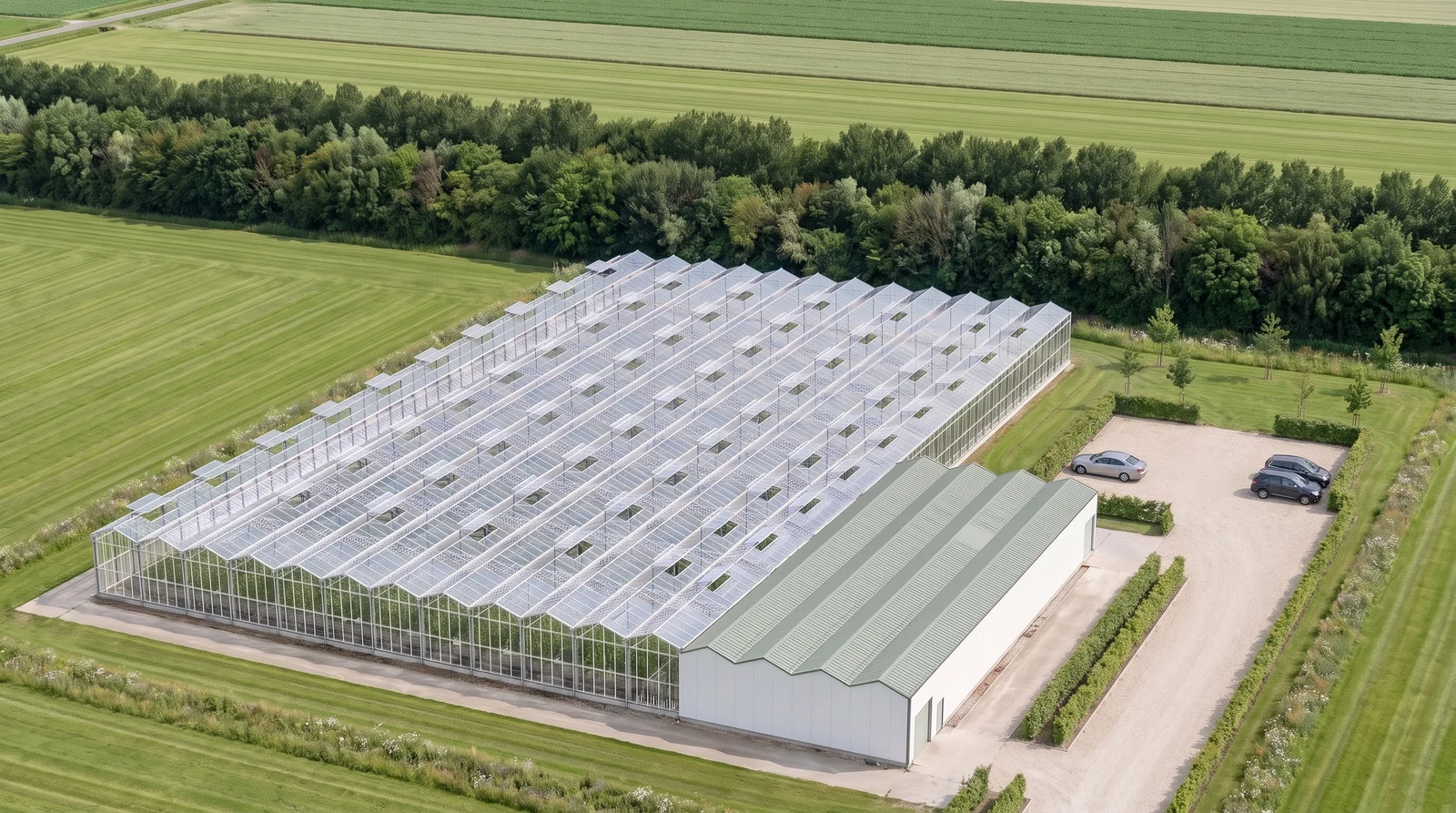
Expert Hydroponic Greenhouse Series
A defined structure for commercial hydroponics. The crop determines the growing system, climate strategy and harvest layout.
½ acre1 acre2 acresExplore Expert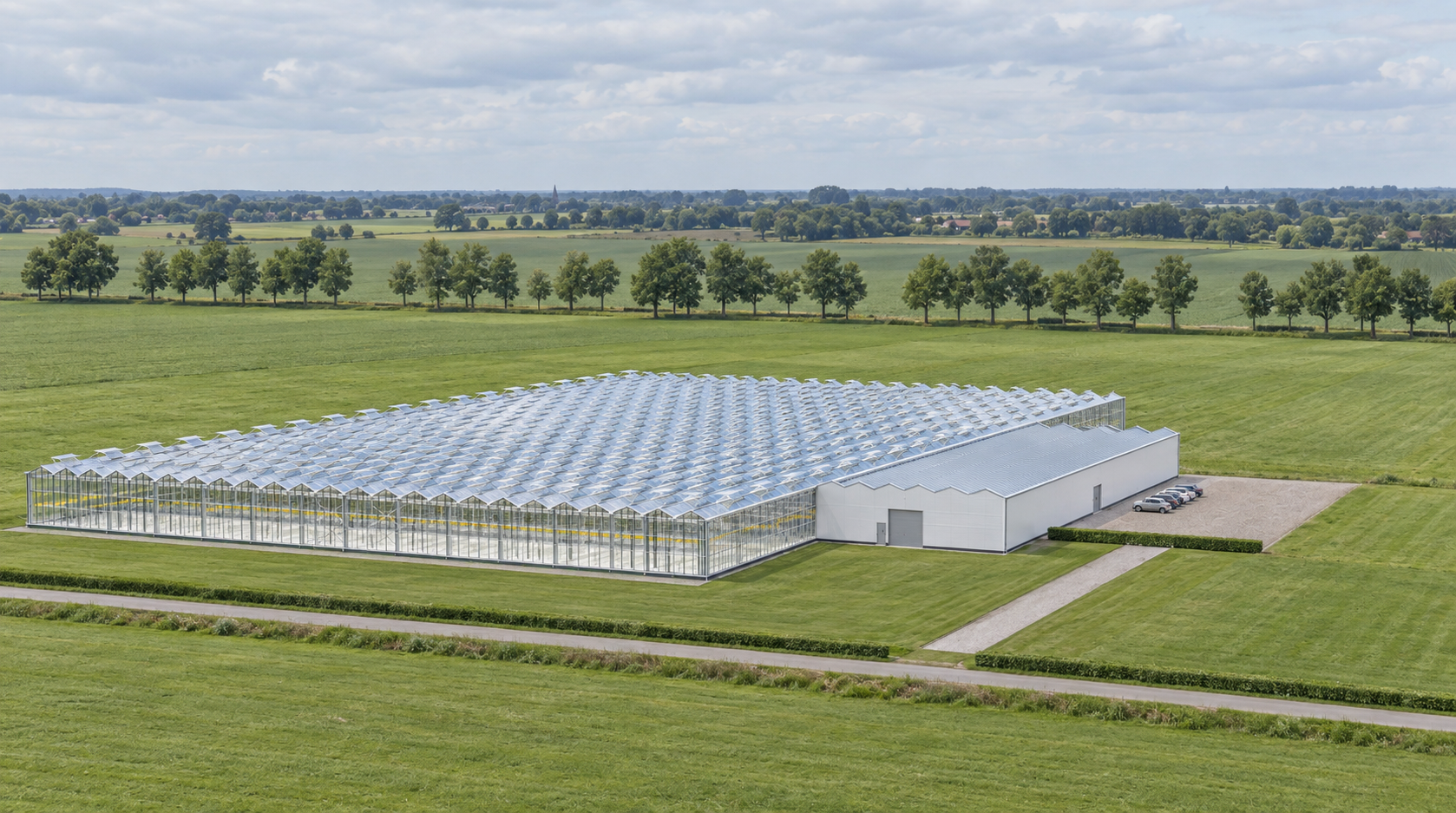
Plus Hydroponic Greenhouse Series
Our largest standard range. Match the larger growing area to crop demand, labour, utilities and the market you intend to supply.
2 acres4 acres8 acresExplore Plus4,032 m²43,400 sq ft of growing space is where a eggplants plan usually starts (GrowPro Expert 1 acre). Compare all nine models
Put your next harvest
under glass.
Your crop, your site and the volume you want to sell. Let's find the greenhouse and systems to match.
Need a custom greenhouse?GrowPro Expert
We can also plan for another crop or a mixed growing programme.
Talk about your project Continue to our contact form. No commitment.Reads you might find interesting

Grow Like a Pro: Starting Smart, Growing Strong
How Grow Like a Pro combines smart farming, CEA technology and local partnerships for eco-friendly, profitable, pesticide-free greenhouse pr
Read article
Maryland Cannabis Greenhouse: Year One
One year on: how the Maryland cannabis greenhouse, paired with an adjacent indoor facility, cut the energy bill and lifted both yields and q
Read article
The Case for a College Greenhouse
Why a college greenhouse belongs in the curriculum: teaching science, craftsmanship, business logic and sustainability, and preparing studen
Read article
The Case for a High School Greenhouse
Why every high school greenhouse matters: how it makes STEM tangible, builds responsibility and teamwork, and helps students discover their
Read article
Greenhouses in Education: The Case for Schools
Greenhouses in education reconnect students to reality — the full case for why every school, high school, college and trade program should h
Read article
The Origins of Greenhouse Horticulture: My Backyard
A tour through greenhouse horticulture history: from 19th-century Westland fruit walls to the “City of Glass” and today’s international high
Read article