
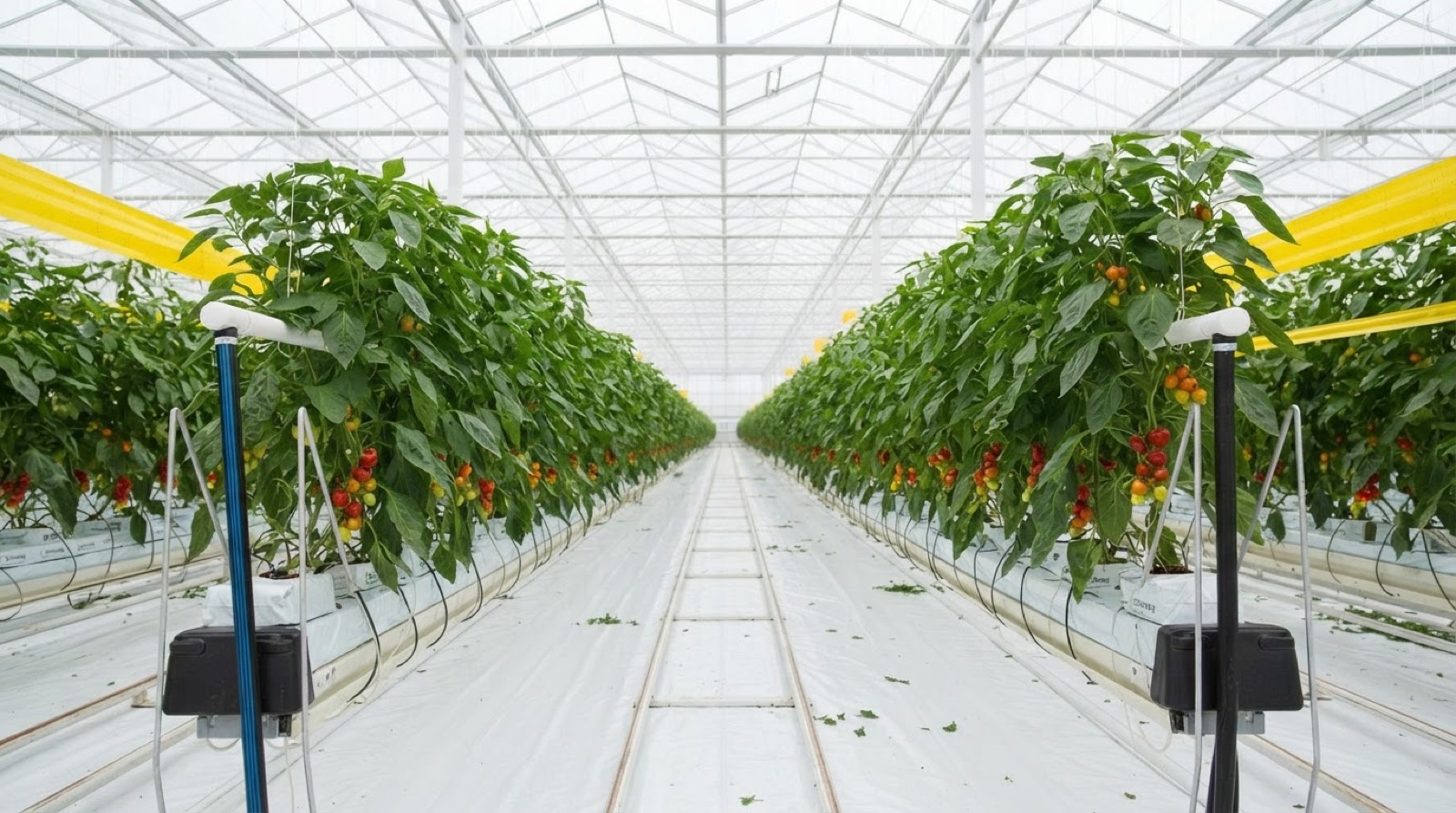
Sweet pepper
Snack Peppers.
A pack concept before it is a crop.
Eaten raw, so nothing is lost in the pan
Snack pepper is eaten whole and uncooked, which is the uncommon case where the fruit reaches the eater much as it left the plant. Vitamin C is heat-sensitive and water-soluble, so a good part of a cooked pepper’s share stays behind in the pan or the water. A raw snack pepper delivers what the plant put in it.
That puts the whole weight on condition. The product is bought on crunch and sweetness, judged through the film of a punnet, and a soft fruit fails at a glance rather than at the first bite. There is no cooking step to hide behind.
Small fruit also loses condition faster than large. More surface for the weight means moisture leaves quickly, so a punnet that spent a week in a chain arrives wrinkled while one picked in the same country arrives firm. Snacking formats are a short-chain product, and the shorter the chain, the more of the crop reaches the shelf saleable.
Nutrition facts
Sweet pepper, red, raw
Per 100 g
- Energy
- 26 kcal
- Fat
- 0.3 g
- Carbohydrate
- 6.03 g
- Sugars
- 4.2 g
- Fiber
- 2.1 g
- Protein
- 0.99 g
- Sodium
- 4 mg
- Potassium
- 211 mg
- Vitamin C
- 127.7 mg
Snack pepper is a market and pack idea more than a defined botanical type: small sweet peppers sold in mixed-colour punnets to be eaten whole. The concept overlaps pointed pepper genetics in some ranges and sits closer to a miniature block in others, and the product a buyer means by the word varies between retailers.
What the crop needs
Because the product is not settled, neither is the system or the cycle. Fruit size, shape, whether the fruit is seedless, the colour mix in the pack and the maturity at harvest all change the plant, the spacing and the picking labour. Each of those comes from the pack the retailer has agreed, not from the name on it.
What the greenhouse has to do
A snack pepper project is specified backwards from the punnet. Fruit shape and size, the colour mix, whether the fruit is seedless and the harvest maturity all come from the pack the retailer has agreed, and each of them moves the crop underneath it. Settle the pack and the growing plan follows; leave it open and the house is being sized for a product nobody has defined.
Once it is settled, the building work is pepper work. A long-cycle plant on a high wire, a climate held steady through the setting weeks, irrigation sized for the peak. What the format adds is handling: small fruit in mixed-colour punnets means high fruit counts, frequent picking and a pack area sized for sorting by colour rather than by weight.
DutchGreenhouses® specifies the structure, climate, screening and irrigation around the snack pepper crop, its pack format and the local climate, so the punnet the retailer agreed is the punnet the house fills. Get in touch to discuss a snack pepper project.
Snack pepper, asked and answered
What has to be settled before a snack pepper house can be sized?
The pack. Exact fruit shape and size, seedless status, the colour mix in the punnet, the pack format and the harvest maturity — each one changes the crop grown to fill it.
Is it the same as pointed pepper?
Sometimes it overlaps pointed genetics, sometimes it is closer to a miniature block. That is precisely why the pack specification comes before the greenhouse design.
What does the punnet format change in the house?
The handling. High fruit counts mean frequent picking, and a pack area sized for sorting by colour rather than by weight.
Other sweet pepper
varieties.
Colour, size and quality at harvest. The class you sell decides the plant load, the harvest rhythm and the house.
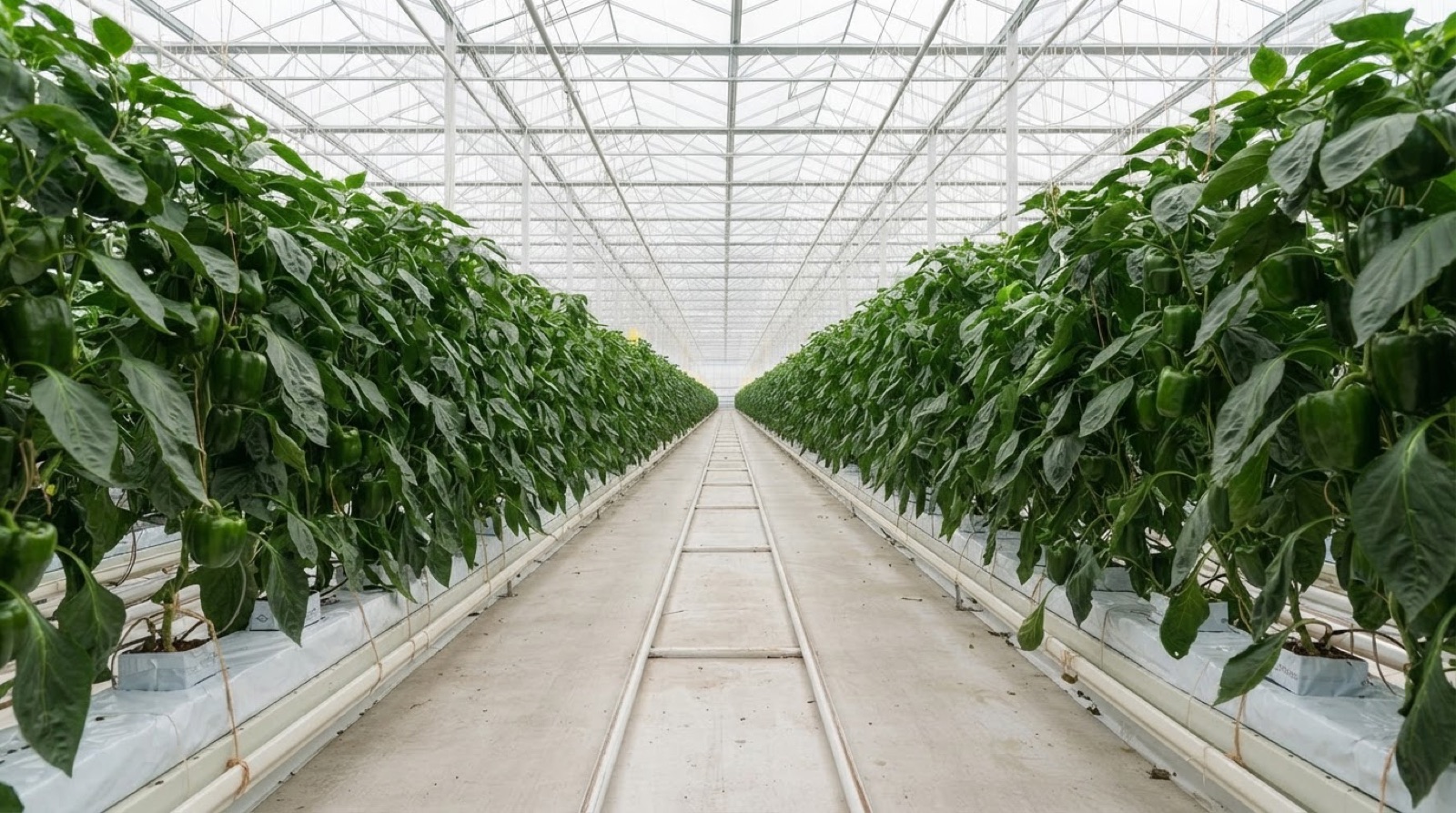
Green Bell Peppers
Green bell pepper is fruit picked before it colours, a harvest stage rather than a colour genotype.
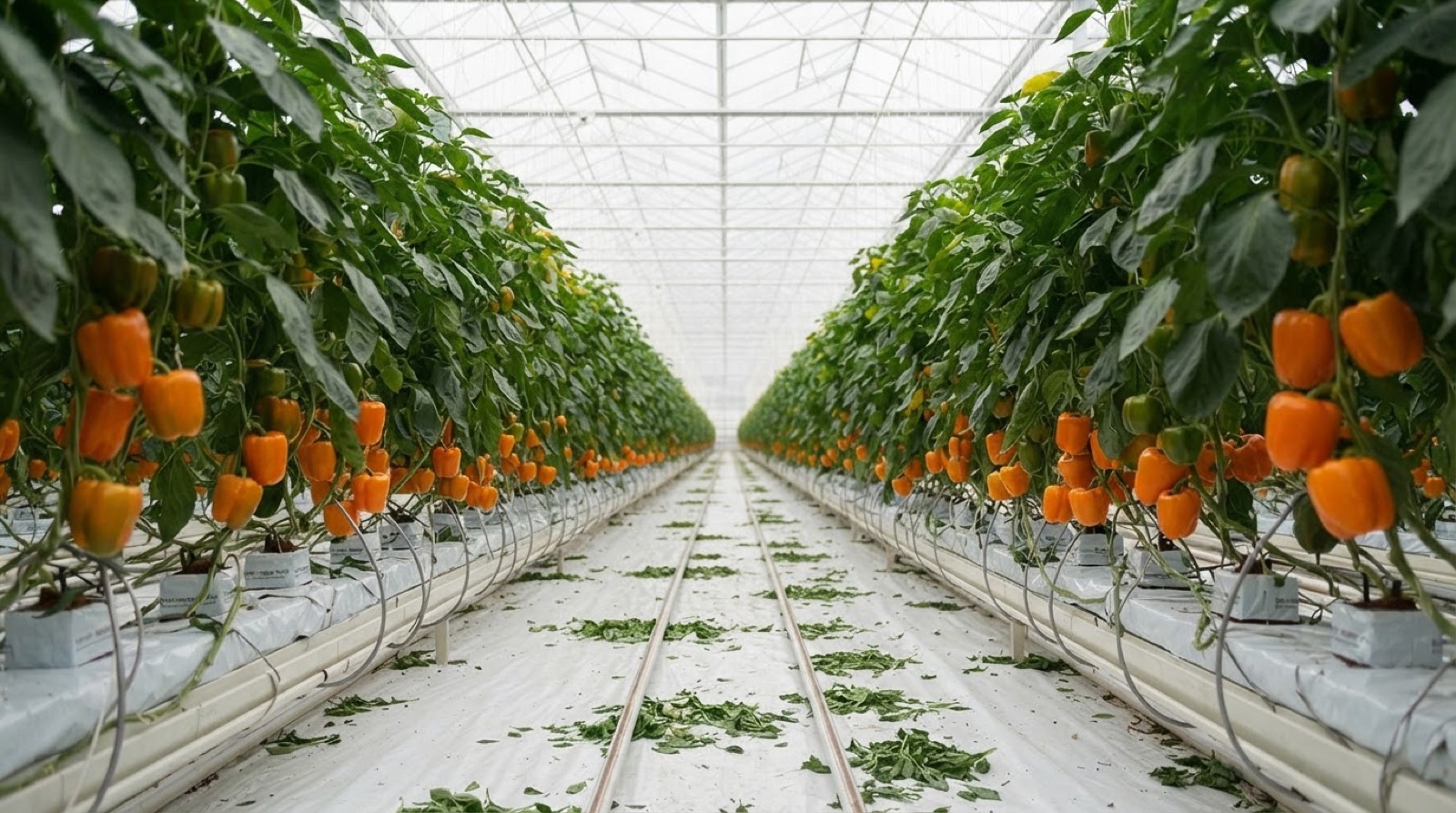
Orange Bell Peppers
Orange bell pepper is its own genotype class with its own cultivars, not a red pepper picked at a different moment.
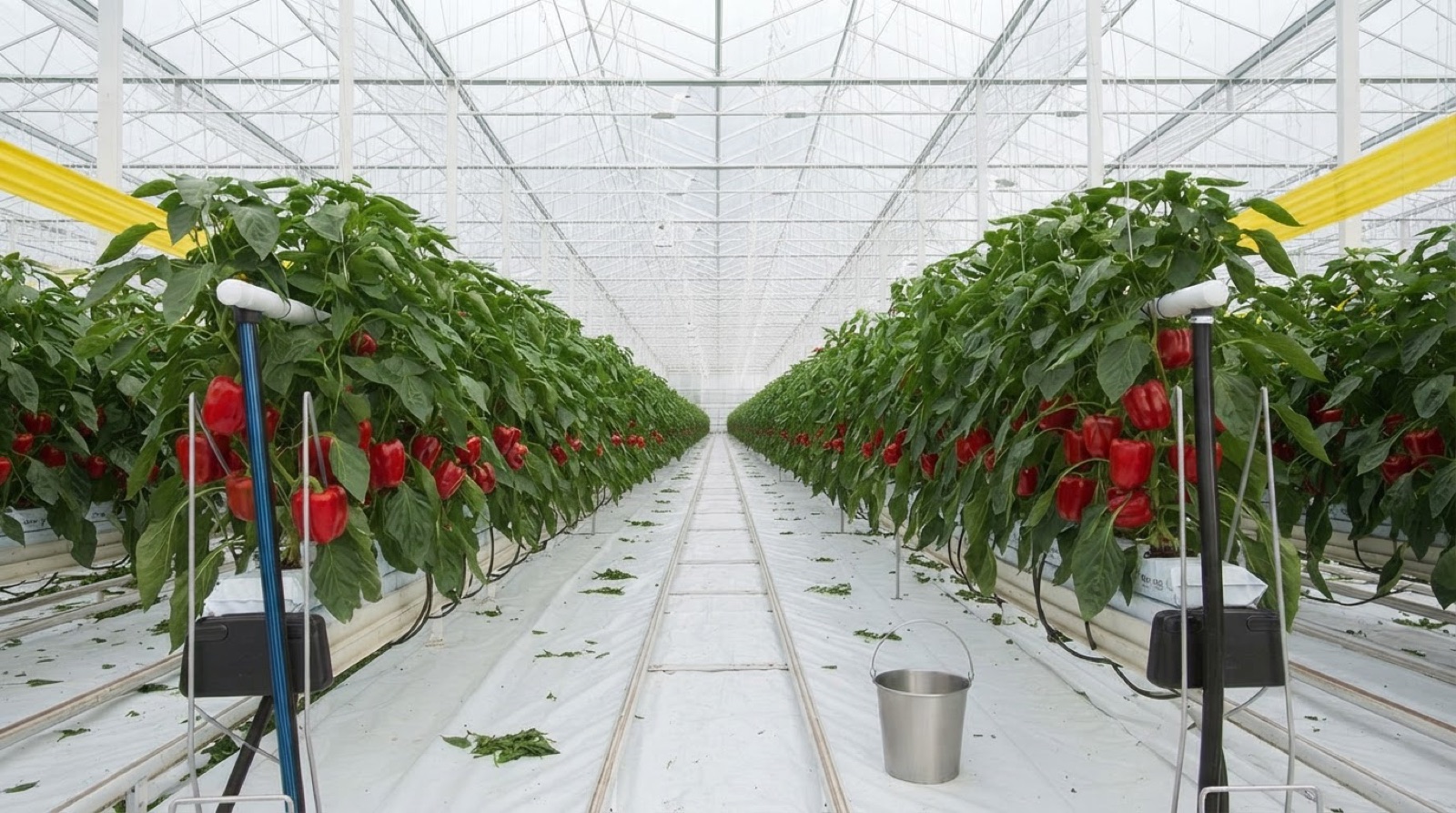
Red Bell Peppers
Red bell pepper is the reference block pepper of Dutch production, carried on the plant until it colours fully.
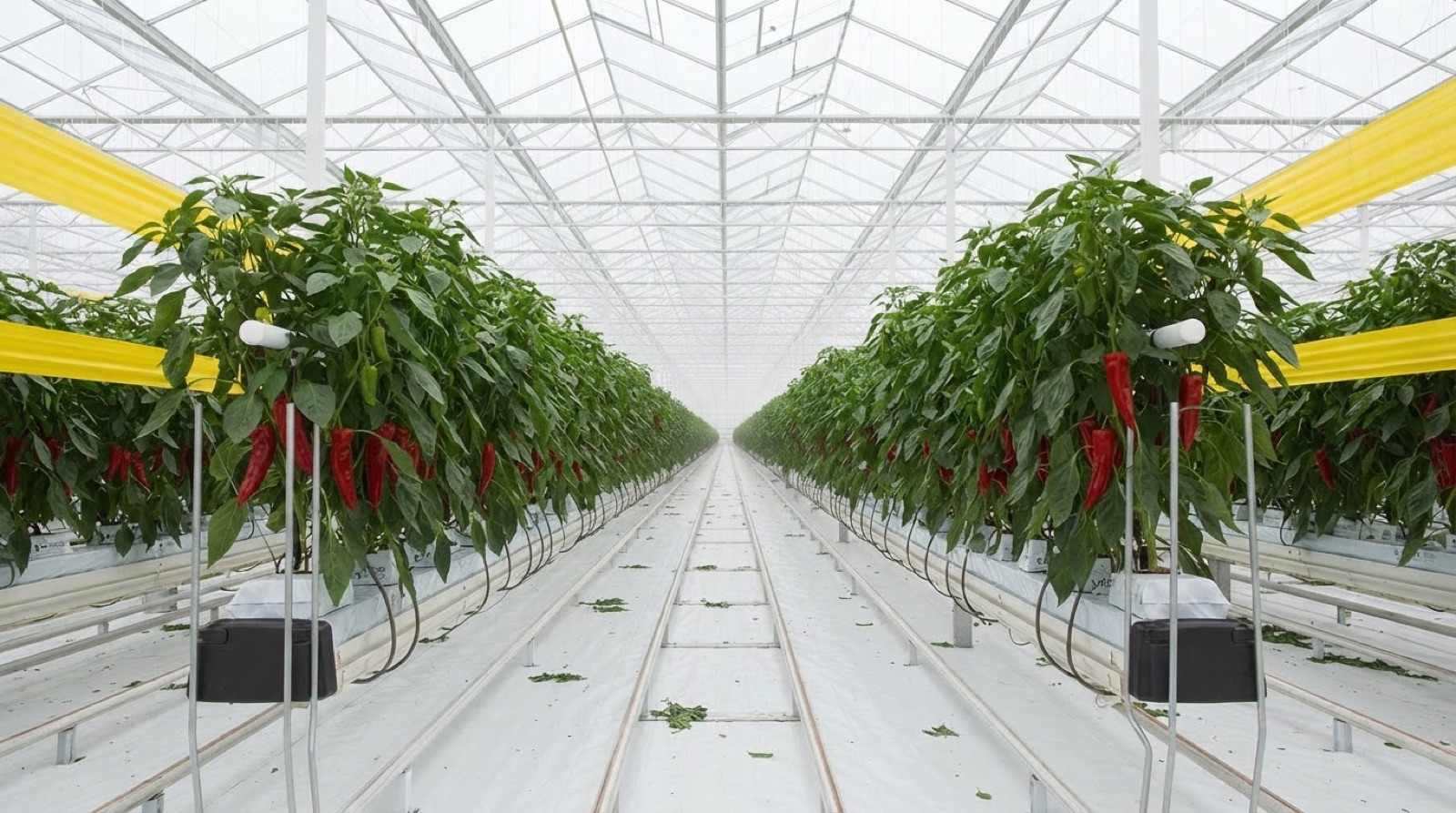
Red Pointed Peppers
Red pointed pepper is a conical, elongated sweet pepper sold for its sweetness and for roasting and grilling.
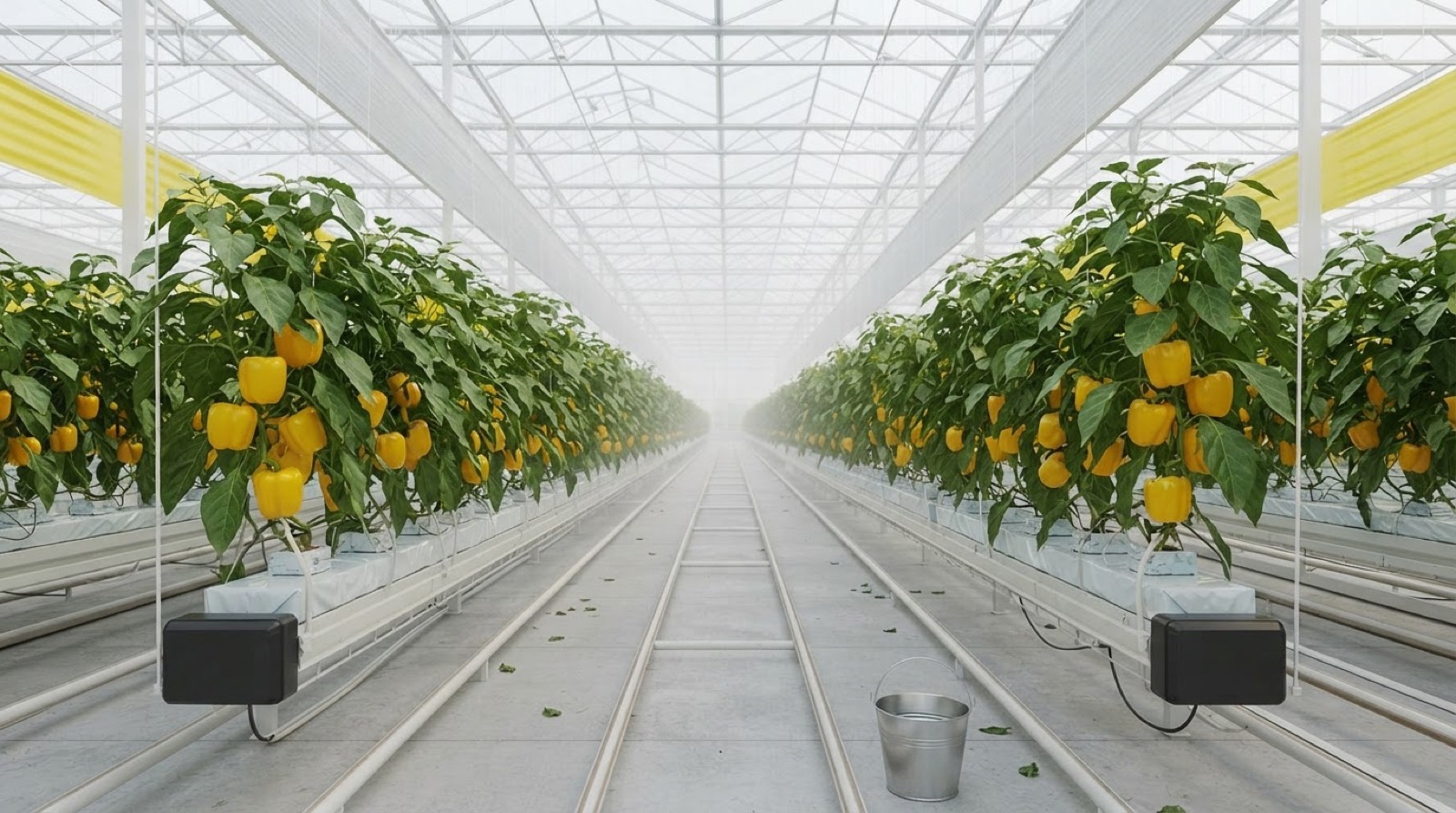
Yellow Bell Peppers
Yellow bell pepper is its own genotype class with its own cultivars, not a red pepper picked at a different moment.
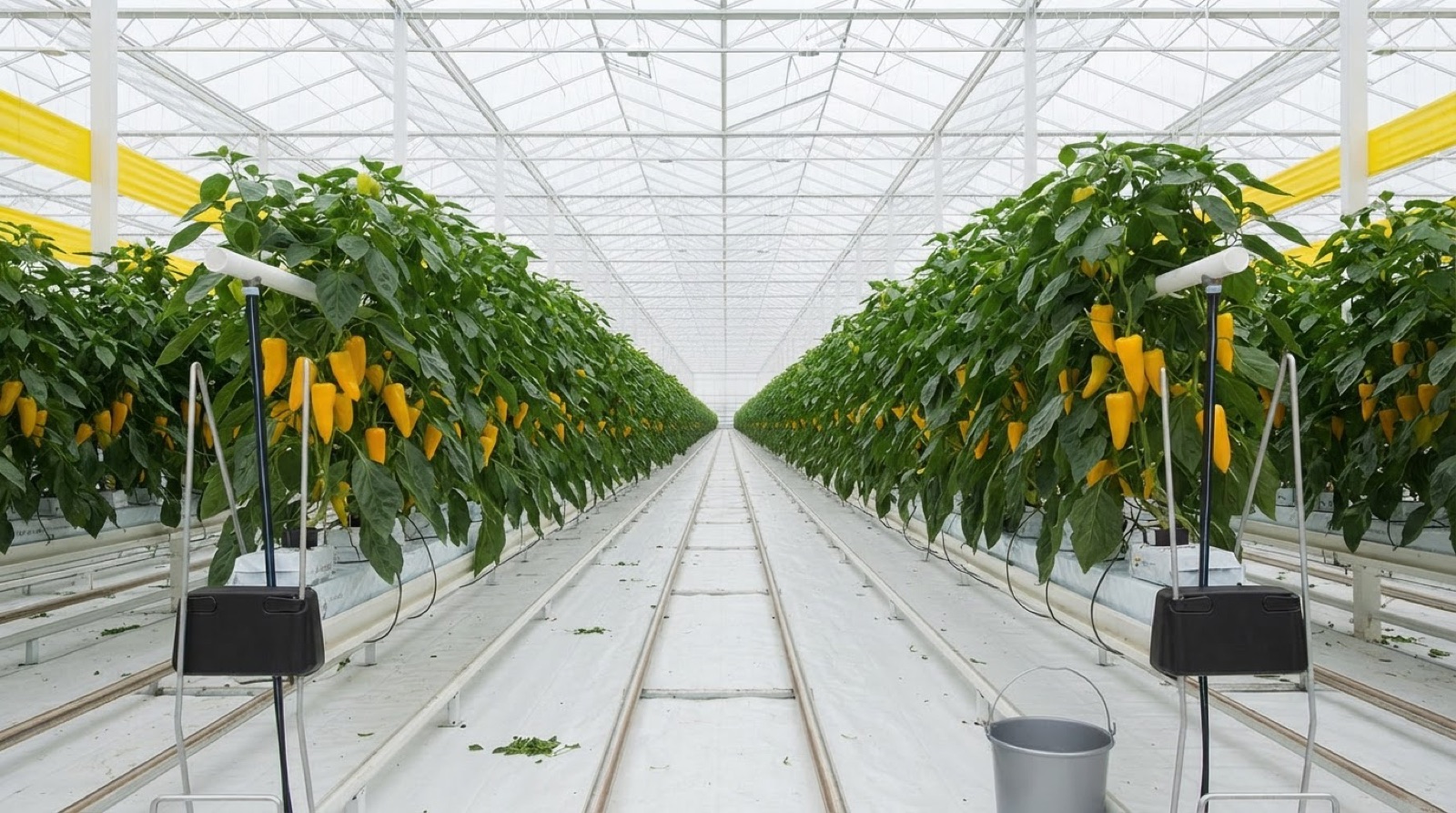
Yellow Pointed Peppers
Yellow pointed pepper is the yellow-ripening conical sweet pepper, distinct from both the yellow block pepper and the red pointed type.
The greenhouse behind sweet peppers
Sweet peppers, under glass.
Supported substrate growing.
Crop loading, canopy light and climate control support a long crop with repeated picking.
Colour, size and quality at harvest.
Supported substrate growing.
Connect colour and size grades to your market and harvest plan.
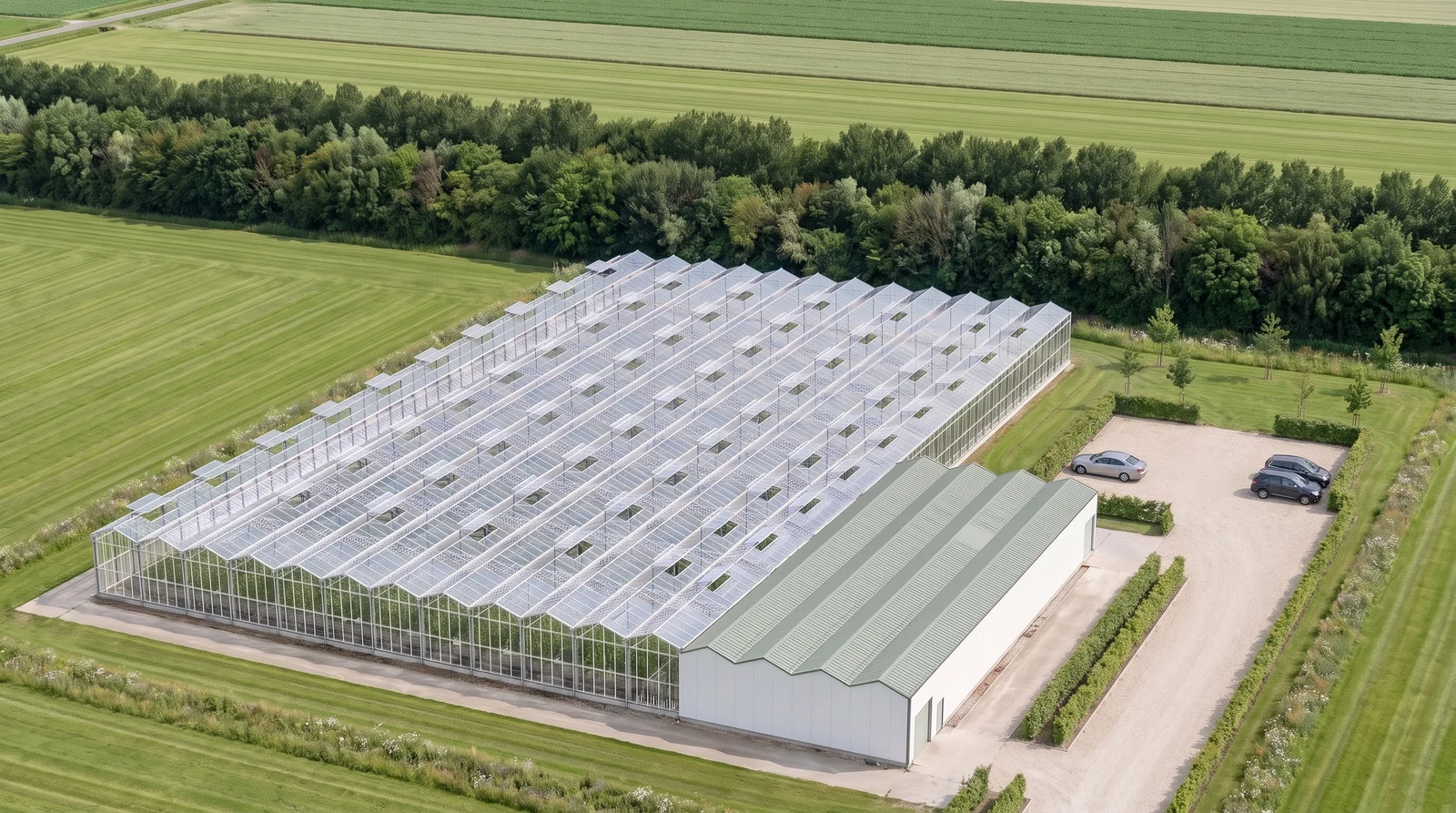
Expert Hydroponic Greenhouse Series
A defined structure for commercial hydroponics. The crop determines the growing system, climate strategy and harvest layout.
½ acre1 acre2 acresExplore Expert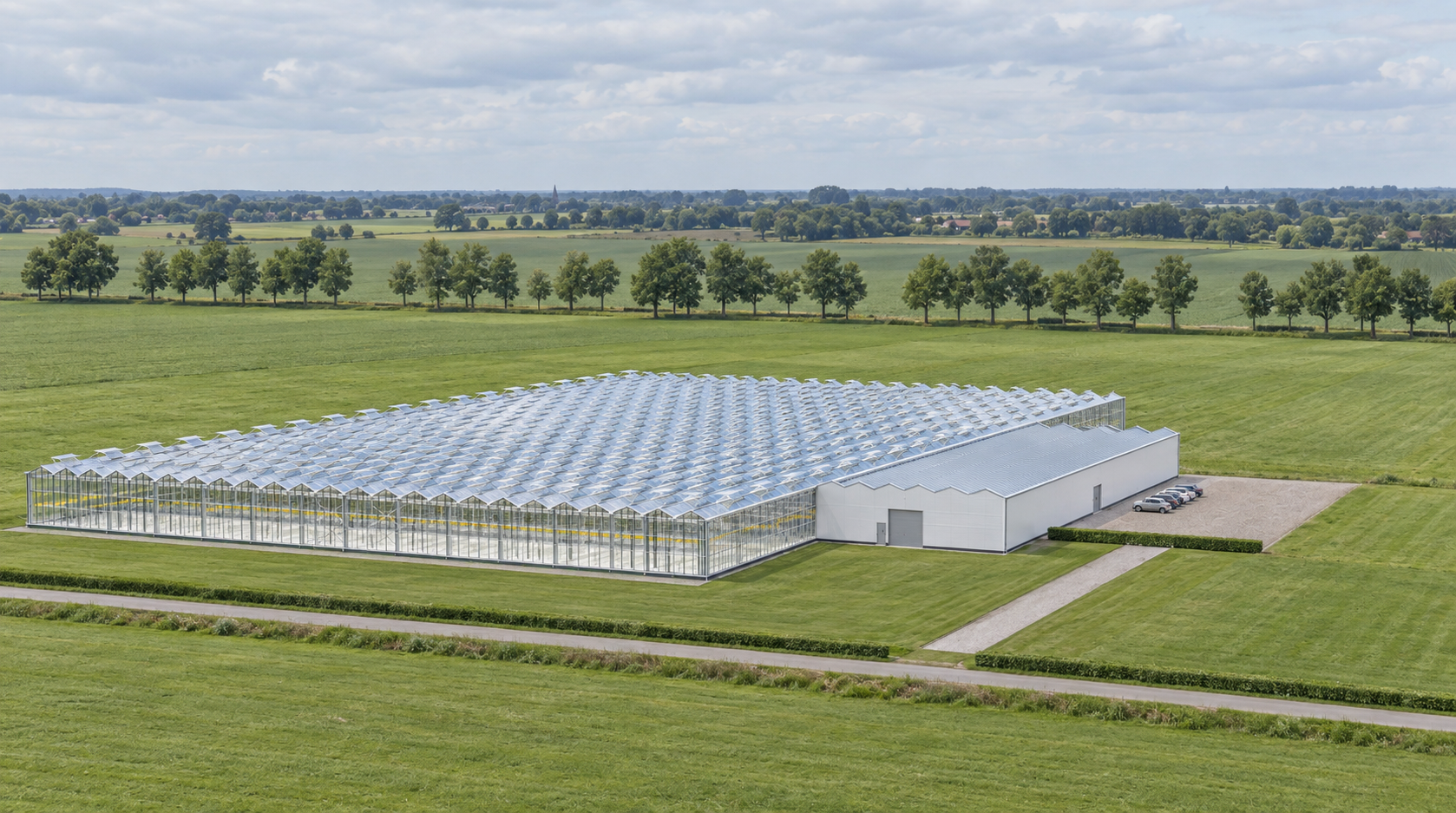
Plus Hydroponic Greenhouse Series
Our largest standard range. Match the larger growing area to crop demand, labour, utilities and the market you intend to supply.
2 acres4 acres8 acresExplore Plus4,032 m²43,400 sq ft of growing space is where a sweet peppers plan usually starts (GrowPro Expert 1 acre). Compare all nine models
Put your next harvest
under glass.
Your crop, your site and the volume you want to sell. Let's find the greenhouse and systems to match.
Need a custom greenhouse?GrowPro Expert
We can also plan for another crop or a mixed growing programme.
Talk about your project Continue to our contact form. No commitment.Reads you might find interesting

Grow Like a Pro: Starting Smart, Growing Strong
How Grow Like a Pro combines smart farming, CEA technology and local partnerships for eco-friendly, profitable, pesticide-free greenhouse pr
Read article
Maryland Cannabis Greenhouse: Year One
One year on: how the Maryland cannabis greenhouse, paired with an adjacent indoor facility, cut the energy bill and lifted both yields and q
Read article
The Case for a College Greenhouse
Why a college greenhouse belongs in the curriculum: teaching science, craftsmanship, business logic and sustainability, and preparing studen
Read article
The Case for a High School Greenhouse
Why every high school greenhouse matters: how it makes STEM tangible, builds responsibility and teamwork, and helps students discover their
Read article
Greenhouses in Education: The Case for Schools
Greenhouses in education reconnect students to reality — the full case for why every school, high school, college and trade program should h
Read article
The Origins of Greenhouse Horticulture: My Backyard
A tour through greenhouse horticulture history: from 19th-century Westland fruit walls to the “City of Glass” and today’s international high
Read article