
Water.
Almost none of it leaves. One salt decides how much.
Recovery, not restraint
A greenhouse is not careful with water. It is circular.
Every plant gets its own dripper. Between 20 and 40 percent of what goes in drains straight through the slab — on purpose, to wash salts out of the root zone.
That drain is caught, disinfected and fed back in.
Published discharge from Dutch substrate holdings runs at nought to ten percent of the water supplied. Which means 90 to 100 percent of the drain goes round again.
No field crop comes close.
The thing that stops it being 100 percent is not equipment
It is sodium.
The plant barely takes any up. Transpiration lifts out pure water and leaves the salt behind. So every lap round the loop, the concentration climbs.
Eventually you have to dump and refill. Not because the water is dirty — the disinfection handles that — but because it is too salty to feed a crop.
And no treatment in ordinary use takes sodium out. This is chemistry, not a gap in the technology.
Which is why the water a site can actually draw shapes the whole design. Rainwater is nearly sodium-free. Well water in the wrong region is not.
Build the basin bigger than the law says
Dutch law asks for 500 cubic metres of storage per hectare.
That is a floor, and a low one. Modelling shows a basin that size still forces you onto mains water and into discharge in a dry year. Wageningen recommends well above it.
A bigger basin is dull capital that buys years of not having to dump. It is one of the few places in a greenhouse where the unglamorous option is simply the right one.
Say the honest version
Recirculation fixes the water you discharge on purpose. It does nothing about leakage, about drainage from soil-grown crops, or about the wash-down at crop change — and Wageningen ranks some of those above deliberate discharge for environmental load.
Saying that out loud is a stronger position than claiming a closed loop, because the people assessing your permit already know it.
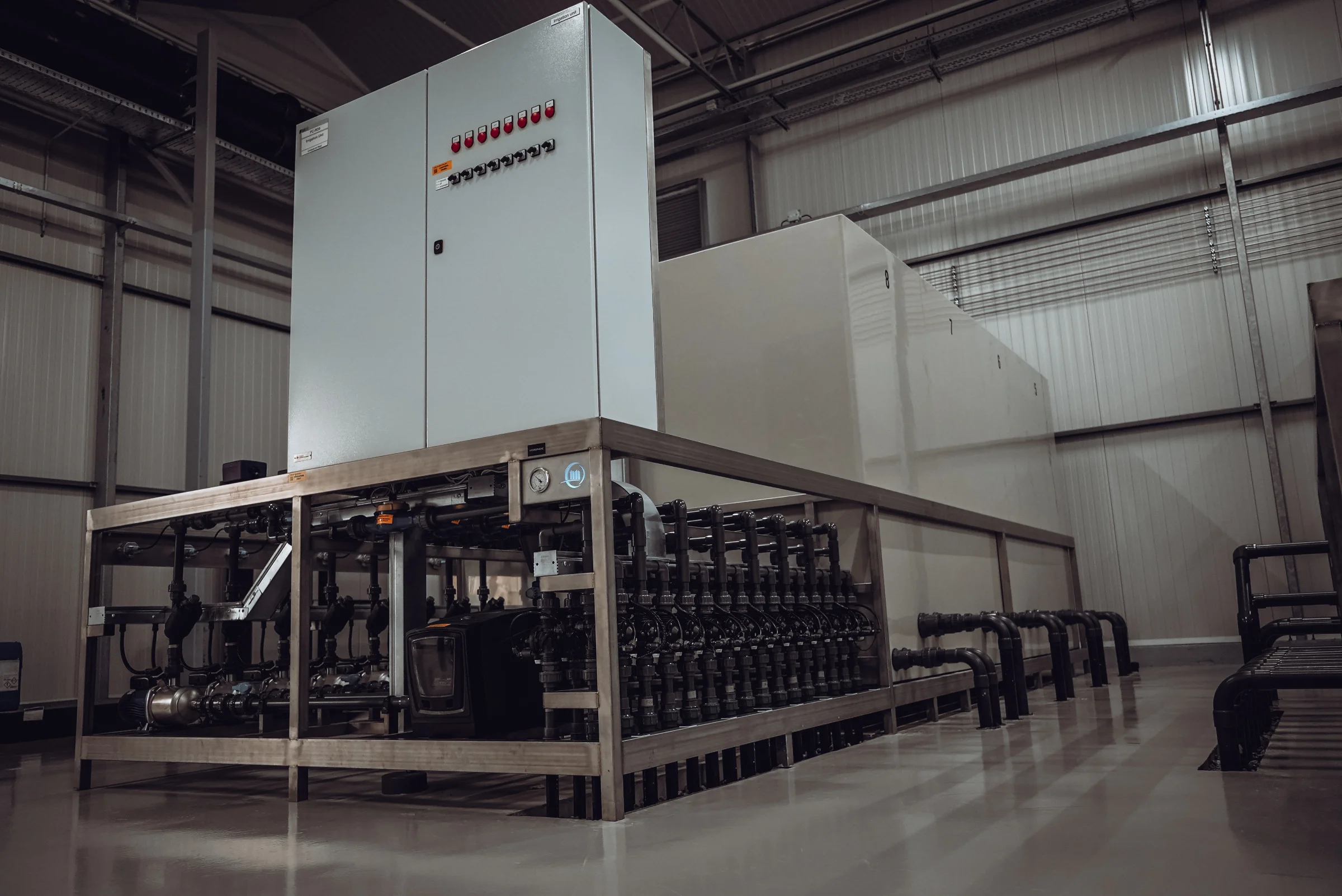
DutchGreenhouses® designs the collection, treatment and recirculation chain around your source water and your rainfall, not around a legal minimum. Get in touch with a location and a water analysis.
Reads you might find interesting

Grow Like a Pro: Starting Smart, Growing Strong
How Grow Like a Pro combines smart farming, CEA technology and local partnerships for eco-friendly, profitable, pesticide-free greenhouse pr
Read article
The Case for a College Greenhouse
Why a college greenhouse belongs in the curriculum: teaching science, craftsmanship, business logic and sustainability, and preparing studen
Read article
The Case for a High School Greenhouse
Why every high school greenhouse matters: how it makes STEM tangible, builds responsibility and teamwork, and helps students discover their
Read article
Greenhouses in Education: The Case for Schools
Greenhouses in education reconnect students to reality — the full case for why every school, high school, college and trade program should h
Read article
The Origins of Greenhouse Horticulture: My Backyard
A tour through greenhouse horticulture history: from 19th-century Westland fruit walls to the “City of Glass” and today’s international high
Read article
DutchGreenhouses Rebranded: A New Corporate Identity
Announcing our new corporate identity — a visual style reflecting our dedication to advanced, high-quality greenhouse projects and The Futur
Read article