
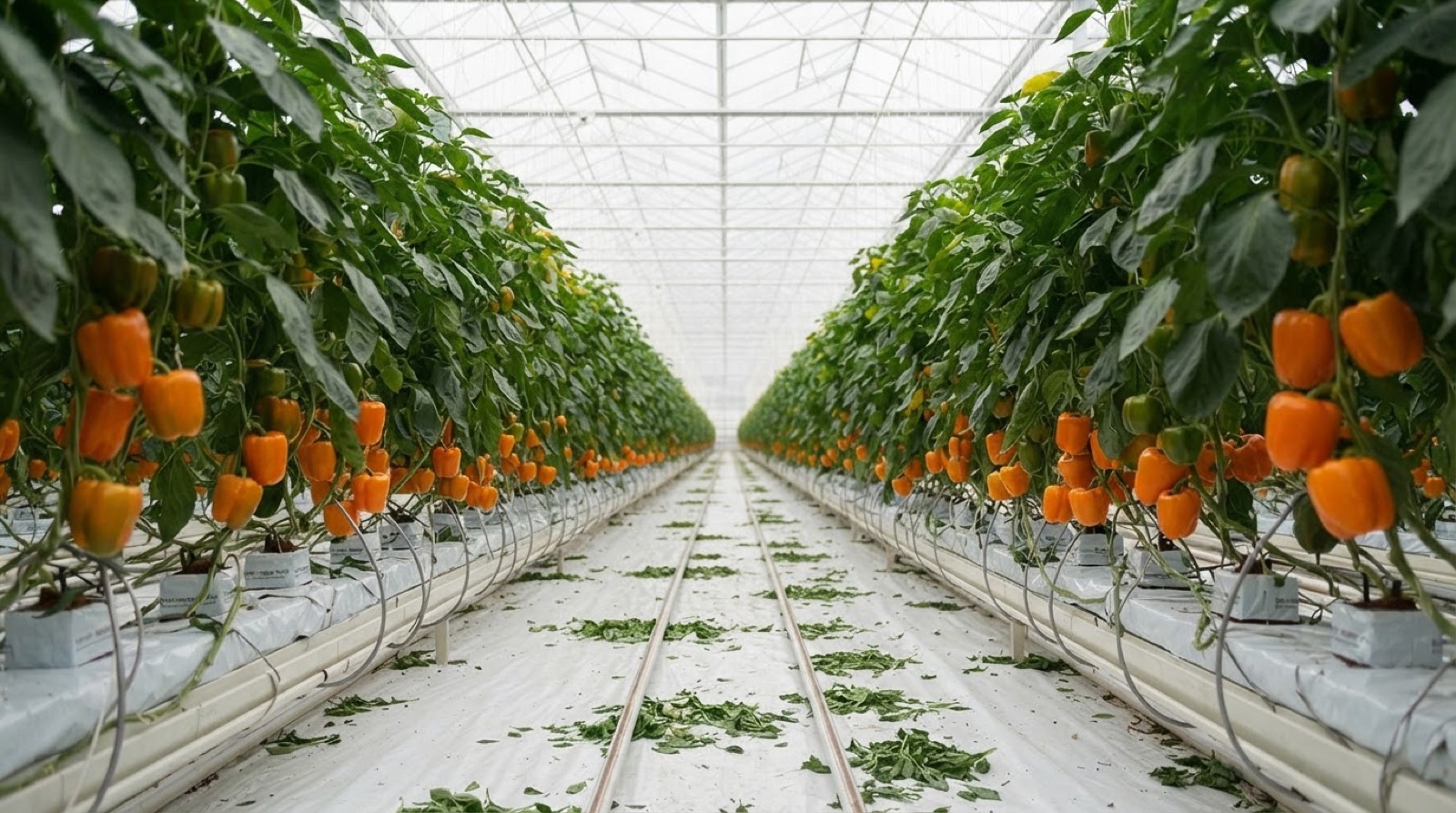
Sweet pepper
Orange Bell Peppers.
A separate genotype class, not a shade of red.
Ripe is the whole point
Orange bell pepper is carried to full ripeness, which is where the eating value of a sweet pepper sits. Vitamin C, sugar and the carotenoid pigments are laid down in the weeks after the fruit has stopped growing. A pepper that never finishes colouring never finishes building them either.
Orange is bought with the eye. It sells in mixed packs, where colour is the pitch and the shopper assumes every fruit in the punnet is in the same condition. Making that true is a scheduling problem rather than a climate one: each colour ripens on its own clock, and a pack is only as good as the oldest fruit in it.
Distance is what breaks the assumption. Fruit picked ripe has no development left to spend, so a long chain shows up as softness and wrinkle rather than as a colour fault. A house near its market cuts each colour as the pack is filled, and the punnet reaches the shelf as one age of fruit instead of several.
Nutrition facts
Sweet pepper, red, raw
Per 100 g
- Energy
- 26 kcal
- Fat
- 0.3 g
- Carbohydrate
- 6.03 g
- Sugars
- 4.2 g
- Fiber
- 2.1 g
- Protein
- 0.99 g
- Sodium
- 4 mg
- Potassium
- 211 mg
- Vitamin C
- 127.7 mg
Orange bell pepper is its own genotype class with its own cultivars, not a red pepper picked at a different moment. The fruit form is the same blocky four-lobed shape that defines the block-pepper category, and the orange colour is genetic. Buyers treat the colours as distinct products, and mixed-colour packs are assembled from separate crops rather than sorted out of one.
What the crop needs
The plant is long-cycle on substrate and high wire, sharing the block-pepper climate and structural reference. As with every ripe-coloured pepper, the fruit occupies the plant until it colours, so the season is planned around ripening time rather than around reaching full size. Steady climate over weeks is what keeps the set continuous.
What the greenhouse has to do
Colour class changes the schedule the house has to hold, not the envelope it provides. Each class ripens on its own timetable, and a house running mixed colours is running several schedules under one climate. Compartment layout and the pack plan carry that, because a climate cannot be tuned in two directions at once.
The rest is block-pepper building. The structure supports a long-cycle plant on a high wire, the heating and screening design is set against the colouring period rather than the setting period, and irrigation is sized for the peak. Colour uniformity inside the pack is what the buyer inspects, so evenness across the whole floor decides how much of the crop reaches the top grade.
DutchGreenhouses® specifies the structure, climate, screening and irrigation around the pepper crop, its colour class and the local climate, so ripening holds to the schedule the pack expects. Get in touch to plan a pepper greenhouse.
Orange bell pepper, asked and answered
Does orange need a different house from red?
No. The structure and the climate envelope are shared across the block-pepper colours. What differs is the ripening schedule, and that shows up in compartment planning and the pack plan rather than in the specification of the building.
Why grow a mix of colours?
Mixed packs are a retail format, and they are assembled from separate crops. Each colour is planned, grown and picked as its own crop.
Does orange ripen at the same rate as red?
Ripening time is a cultivar property and differs by class. It is one of the inputs that sets the harvest plan, which is why colours are planned as separate crops rather than as one crop picked at different stages.
Other sweet pepper
varieties.
Colour, size and quality at harvest. The class you sell decides the plant load, the harvest rhythm and the house.
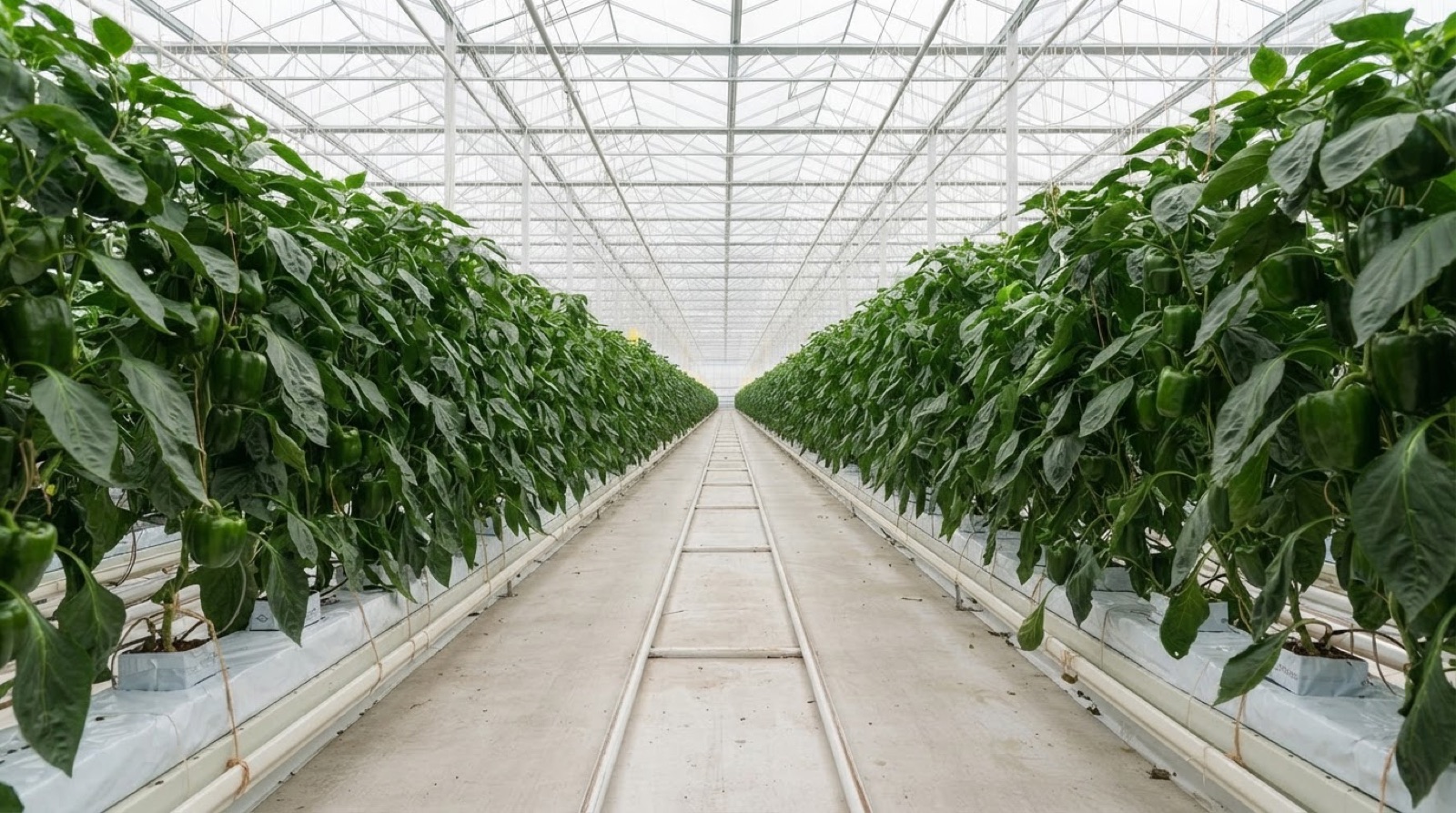
Green Bell Peppers
Green bell pepper is fruit picked before it colours, a harvest stage rather than a colour genotype.
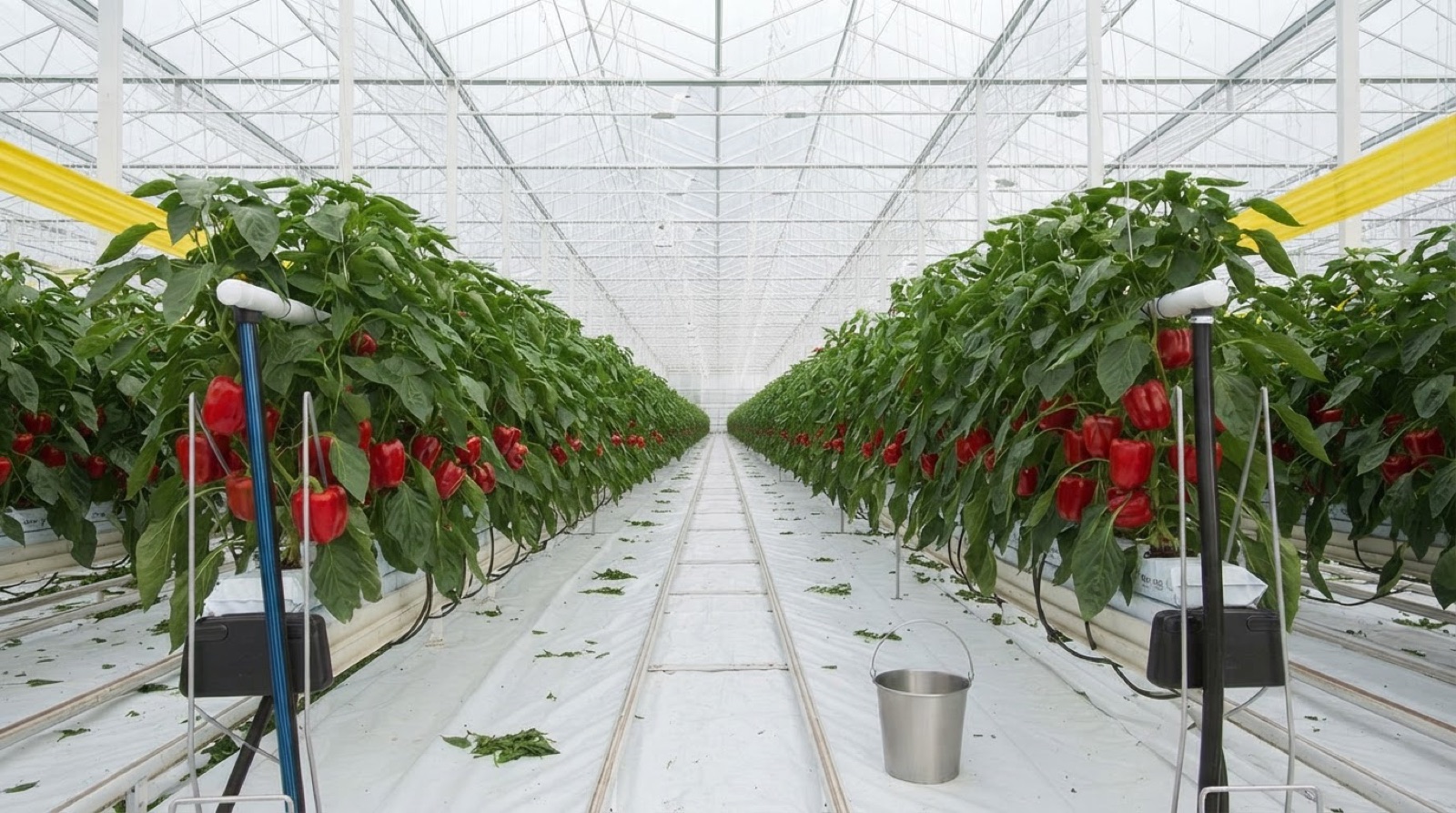
Red Bell Peppers
Red bell pepper is the reference block pepper of Dutch production, carried on the plant until it colours fully.
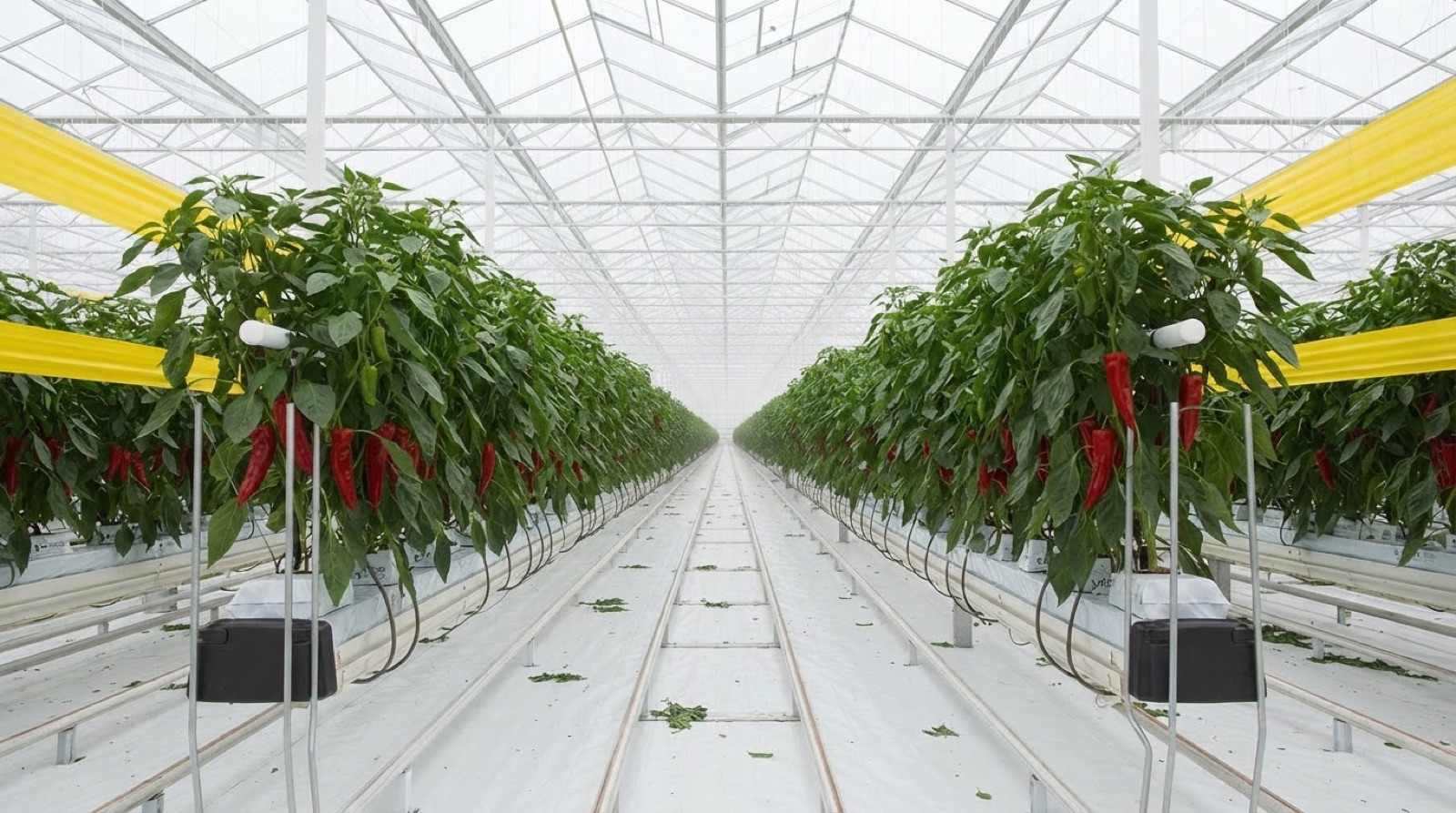
Red Pointed Peppers
Red pointed pepper is a conical, elongated sweet pepper sold for its sweetness and for roasting and grilling.
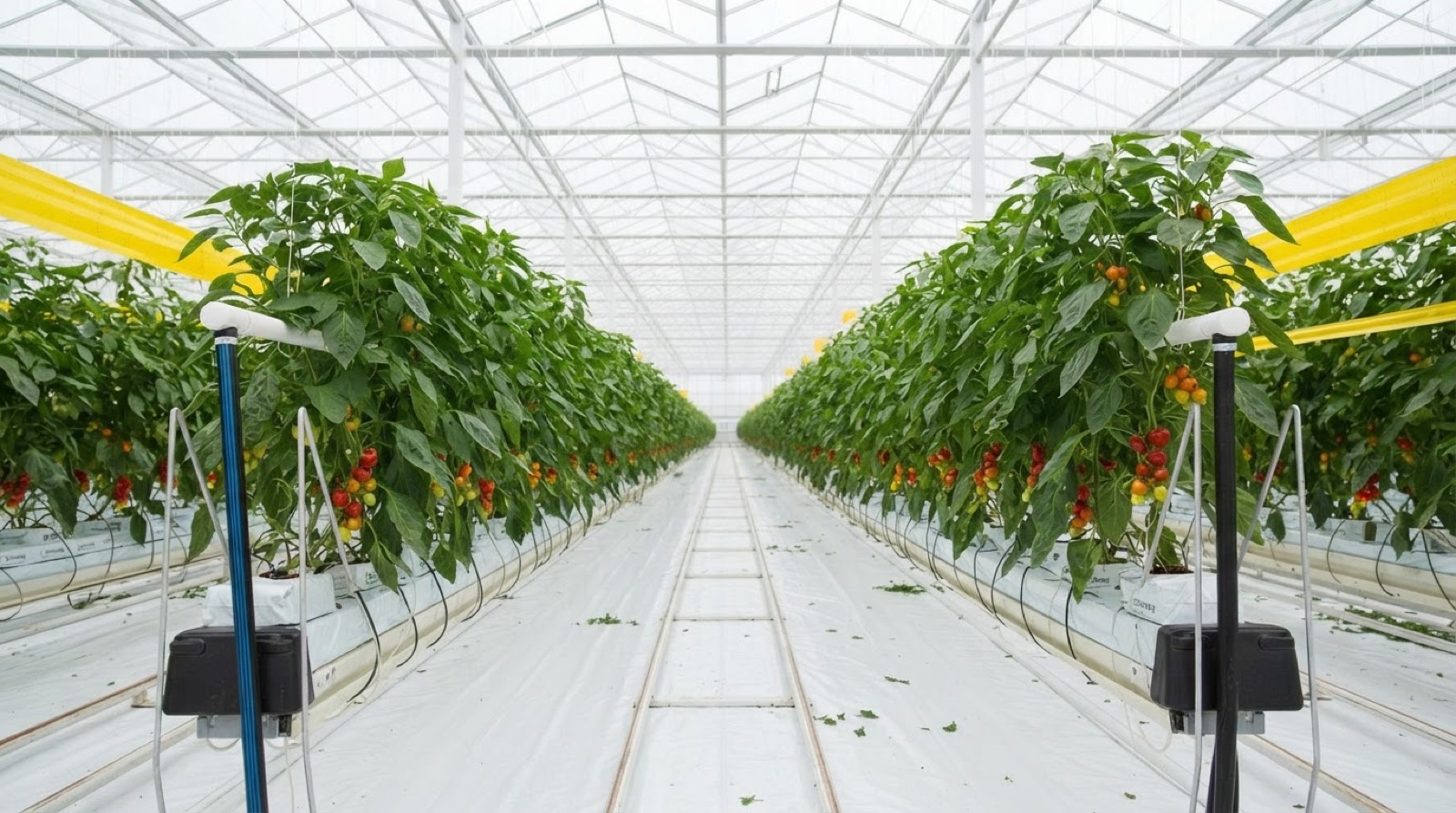
Snack Peppers
Snack pepper is a market and pack idea more than a defined botanical type: small sweet peppers sold in mixed-colour punnets to be eaten whole.
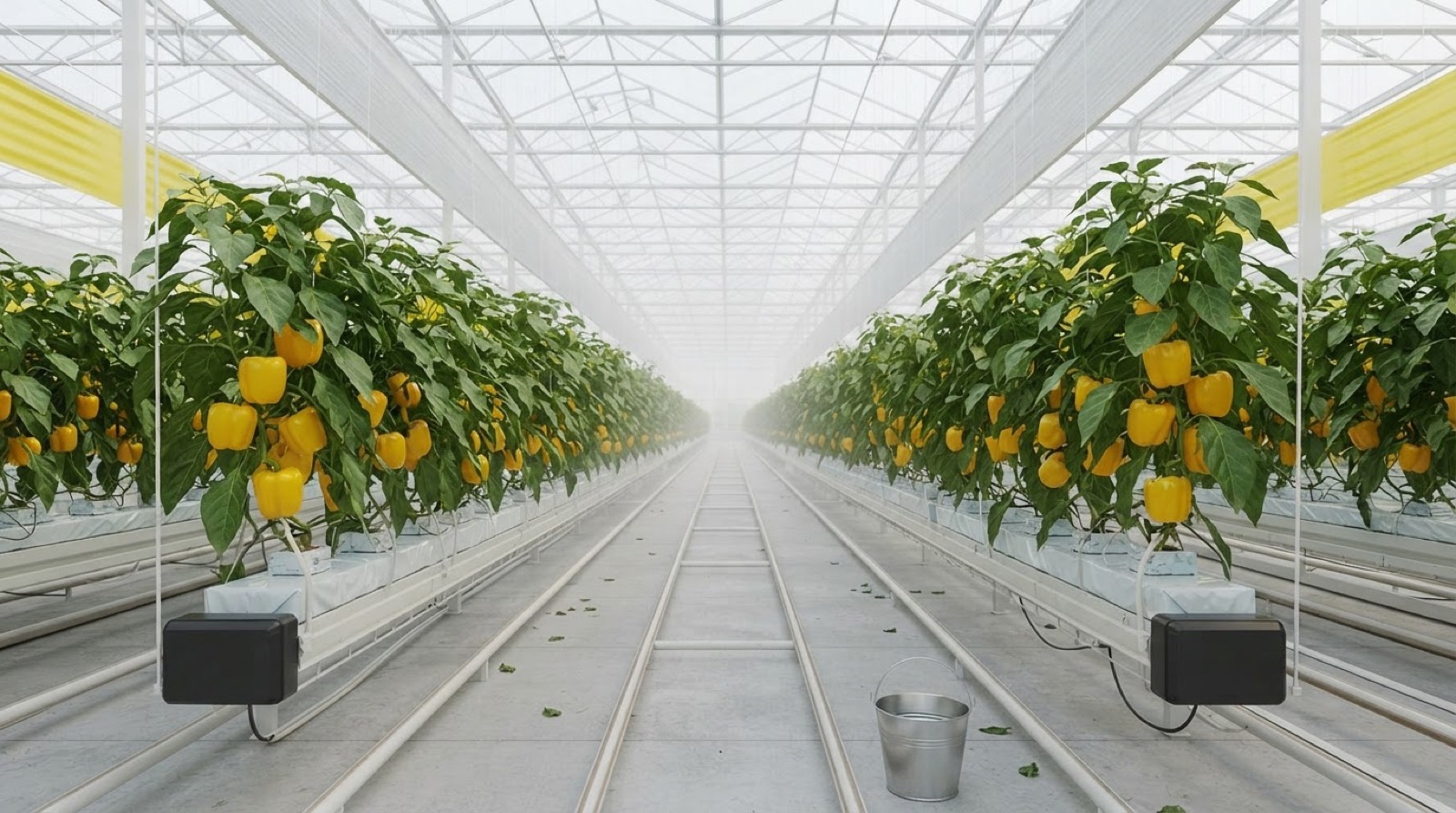
Yellow Bell Peppers
Yellow bell pepper is its own genotype class with its own cultivars, not a red pepper picked at a different moment.
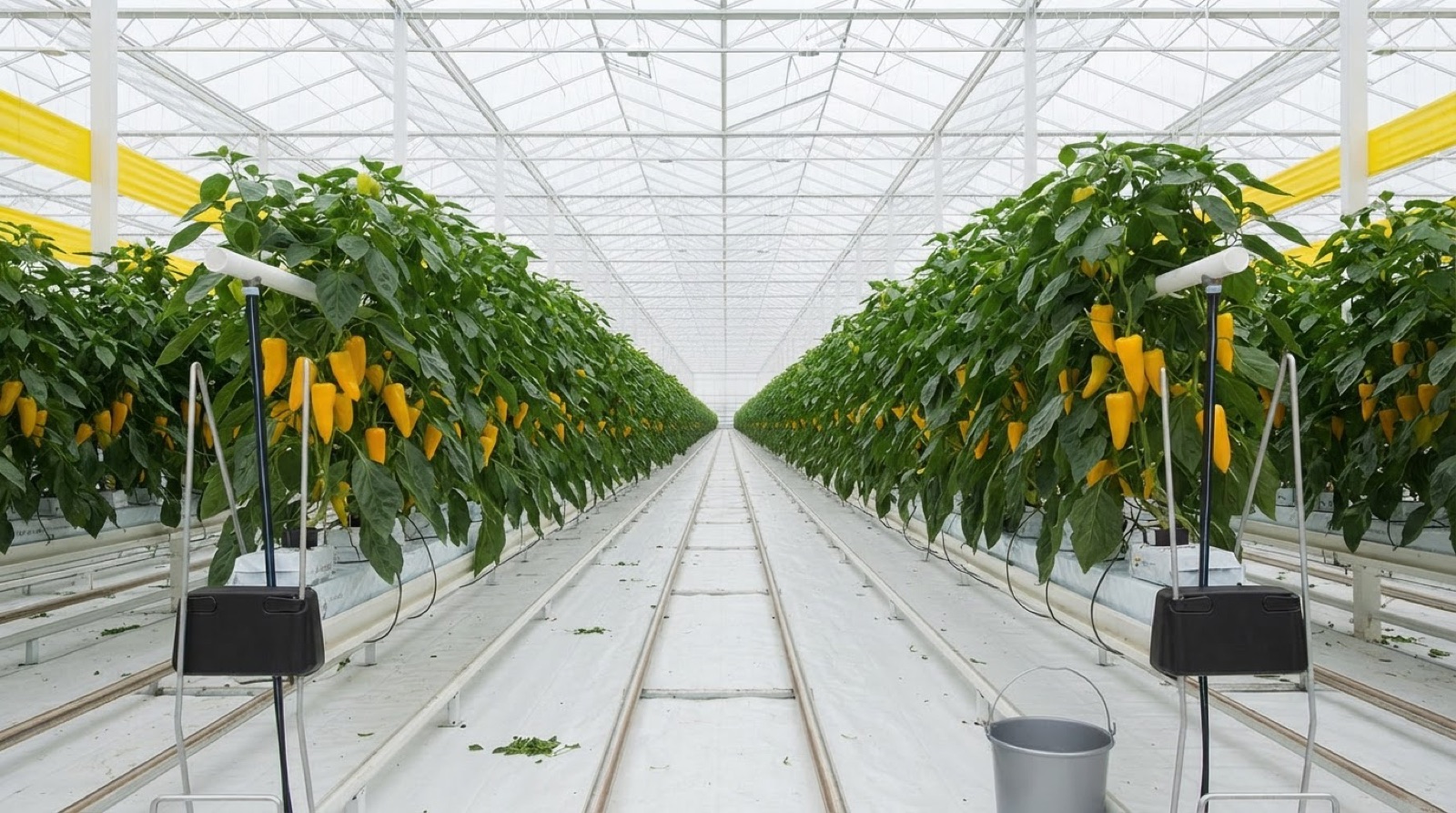
Yellow Pointed Peppers
Yellow pointed pepper is the yellow-ripening conical sweet pepper, distinct from both the yellow block pepper and the red pointed type.
The greenhouse behind sweet peppers
Sweet peppers, under glass.
Supported substrate growing.
Crop loading, canopy light and climate control support a long crop with repeated picking.
Colour, size and quality at harvest.
Supported substrate growing.
Connect colour and size grades to your market and harvest plan.
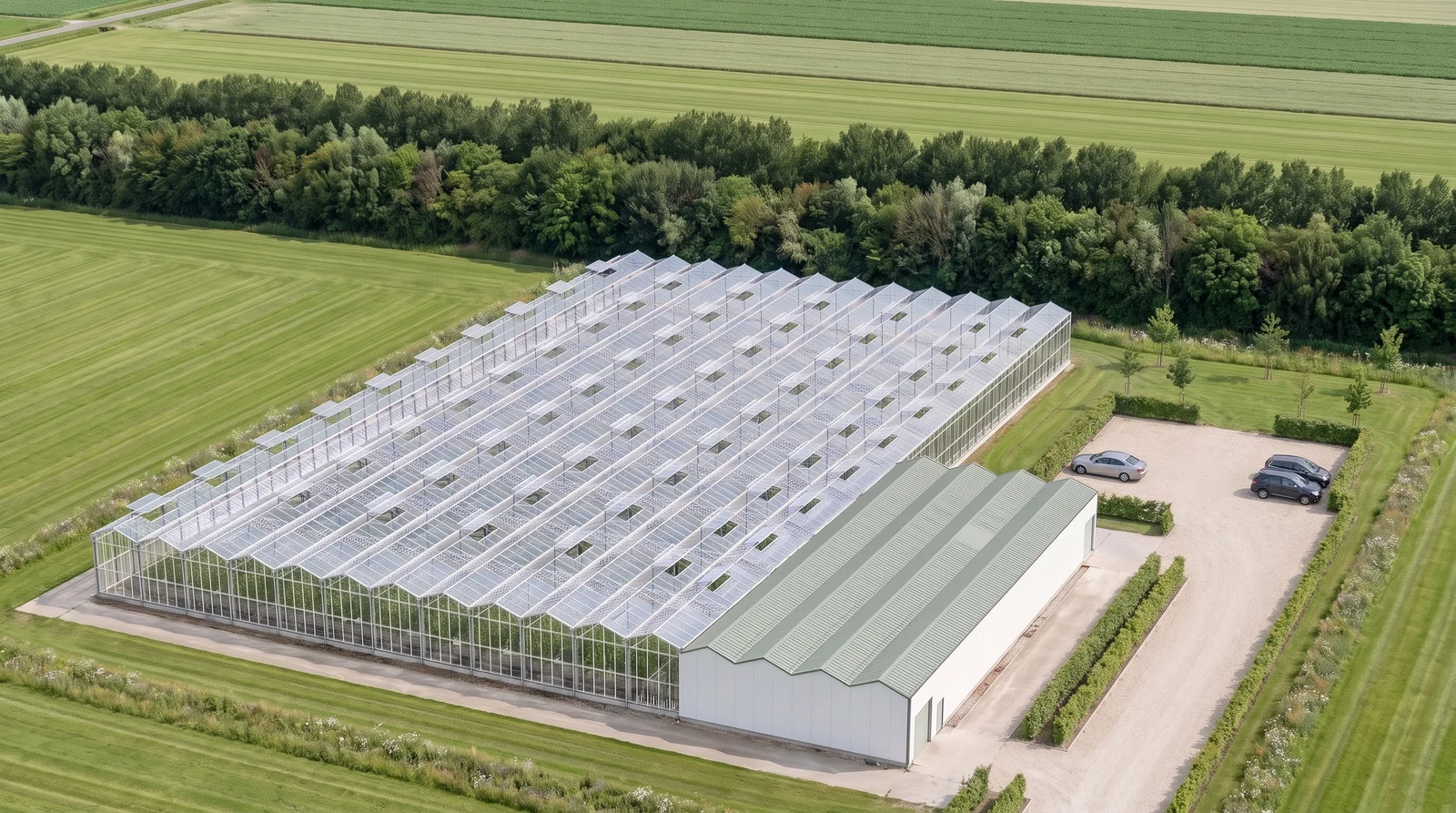
Expert Hydroponic Greenhouse Series
A defined structure for commercial hydroponics. The crop determines the growing system, climate strategy and harvest layout.
½ acre1 acre2 acresExplore Expert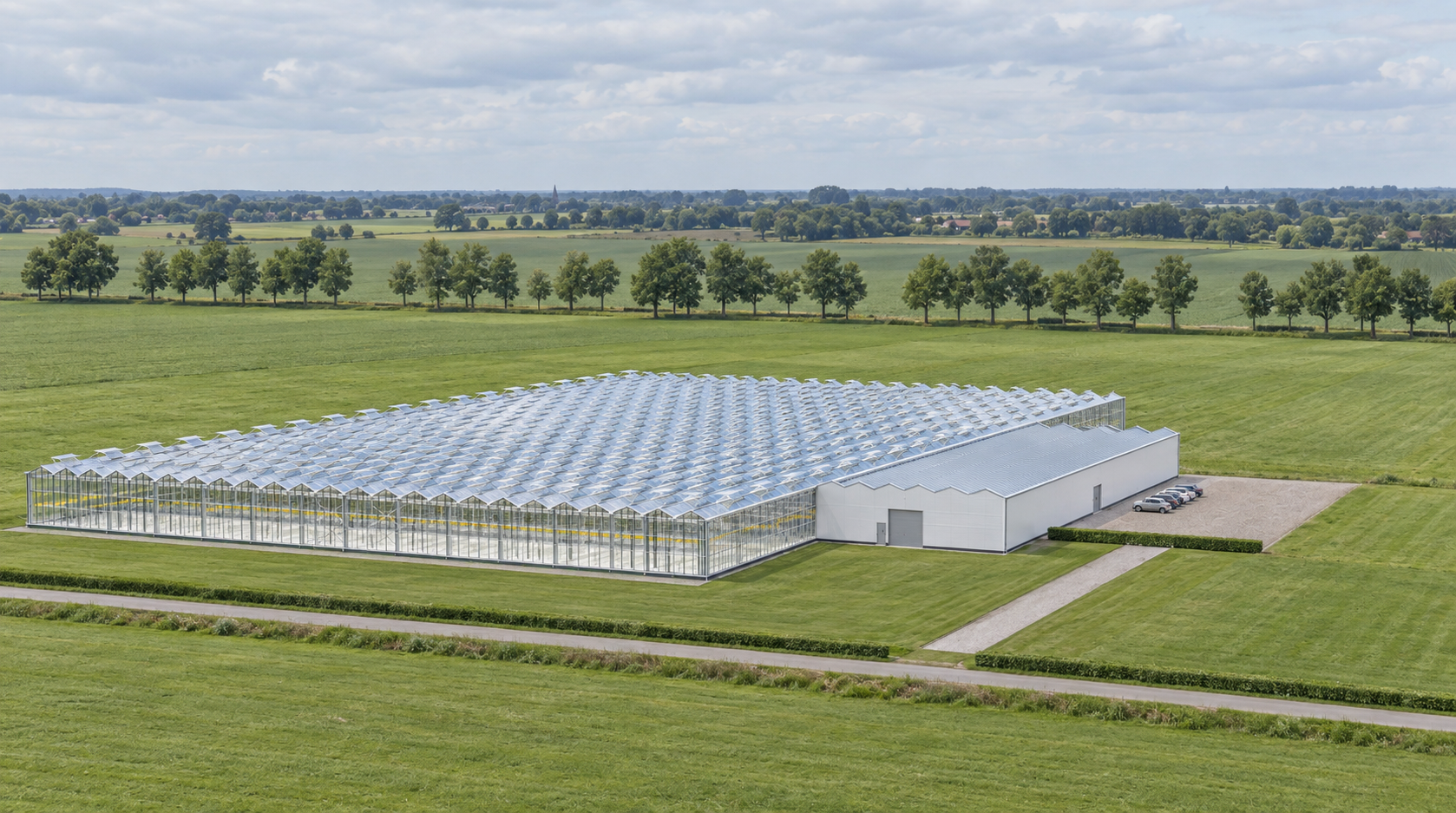
Plus Hydroponic Greenhouse Series
Our largest standard range. Match the larger growing area to crop demand, labour, utilities and the market you intend to supply.
2 acres4 acres8 acresExplore Plus4,032 m²43,400 sq ft of growing space is where a sweet peppers plan usually starts (GrowPro Expert 1 acre). Compare all nine models
Put your next harvest
under glass.
Your crop, your site and the volume you want to sell. Let's find the greenhouse and systems to match.
Need a custom greenhouse?GrowPro Expert
We can also plan for another crop or a mixed growing programme.
Talk about your project Continue to our contact form. No commitment.Reads you might find interesting

Grow Like a Pro: Starting Smart, Growing Strong
How Grow Like a Pro combines smart farming, CEA technology and local partnerships for eco-friendly, profitable, pesticide-free greenhouse pr
Read article
Maryland Cannabis Greenhouse: Year One
One year on: how the Maryland cannabis greenhouse, paired with an adjacent indoor facility, cut the energy bill and lifted both yields and q
Read article
The Case for a College Greenhouse
Why a college greenhouse belongs in the curriculum: teaching science, craftsmanship, business logic and sustainability, and preparing studen
Read article
The Case for a High School Greenhouse
Why every high school greenhouse matters: how it makes STEM tangible, builds responsibility and teamwork, and helps students discover their
Read article
Greenhouses in Education: The Case for Schools
Greenhouses in education reconnect students to reality — the full case for why every school, high school, college and trade program should h
Read article
The Origins of Greenhouse Horticulture: My Backyard
A tour through greenhouse horticulture history: from 19th-century Westland fruit walls to the “City of Glass” and today’s international high
Read article