
Crops · Fruiting vegetable
Strawberry.
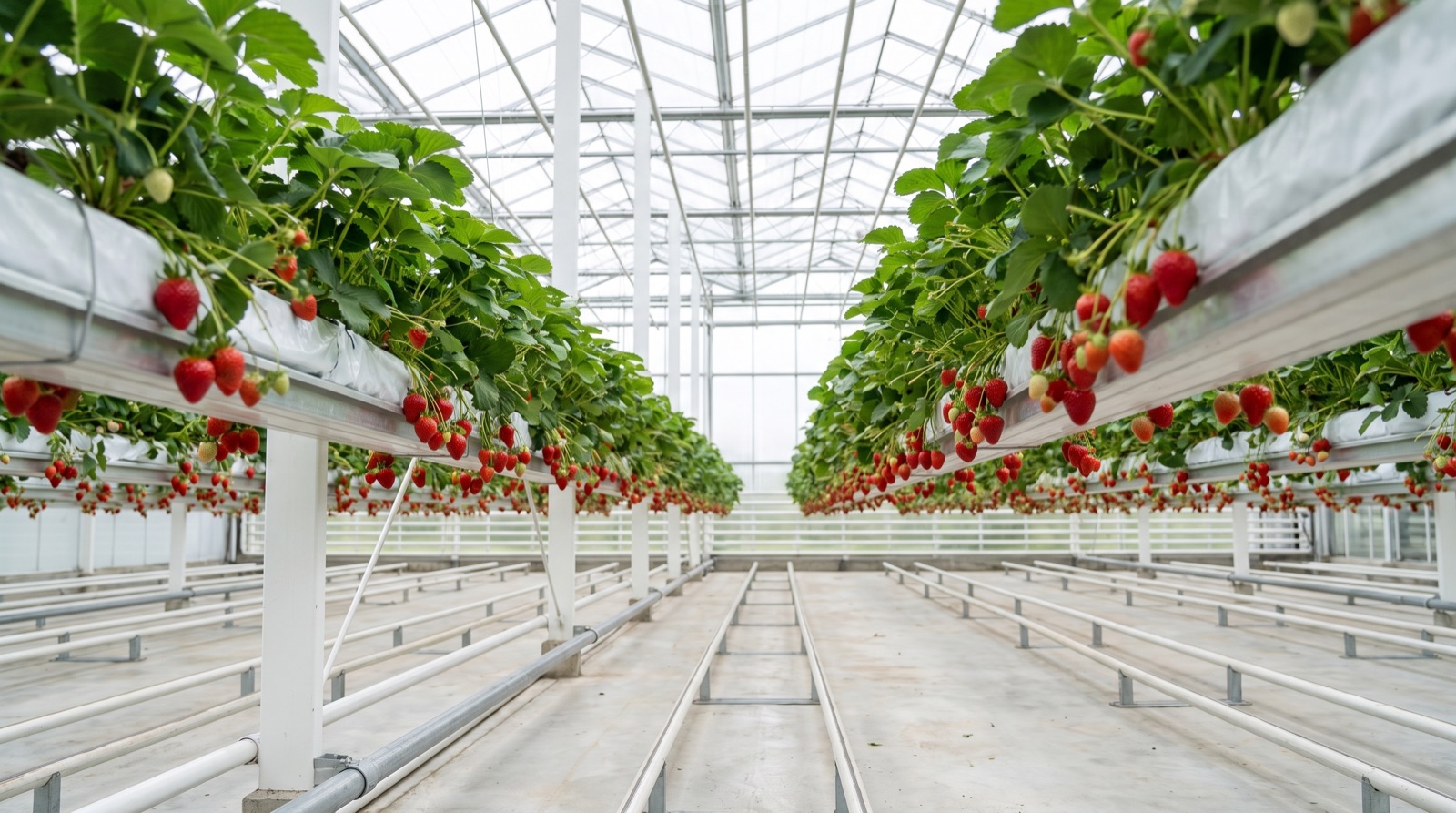
Soft fruit grown at working height, on gutters that recirculate.
Picked ripe, or not worth picking
Strawberry carries more vitamin C than most fruit in the produce aisle, and nearly all of it is laid down in the last days on the plant. So is the sugar, so is the aroma, and so is the colour that makes the fruit look worth buying. A strawberry does not improve after it is picked. It only spends what it already has.
That leaves distant fruit one option: pick early and firm. Fruit cut before it is ready survives the journey and arrives red, because the skin colours whether or not the flesh finishes. What never arrives is the flavour and the vitamin content the last days would have added. The berry is also among the most perishable things in the fresh chain, so whatever is not eaten quickly is thrown away.
A greenhouse near the market answers both problems at once. Fruit can be picked at full ripeness because the distance is short, and it can be picked in months when the open field is bare. That is why protected strawberry exists as a commercial crop, and it is the plainest case in the whole crop range for growing close to the people eating it.
Nutrition facts
Strawberries, raw
Per 100 g
- Energy
- 32 kcal
- Fat
- 0.3 g
- Carbohydrate
- 7.68 g
- Sugars
- 4.89 g
- Fiber
- 2 g
- Protein
- 0.67 g
- Sodium
- 1 mg
- Potassium
- 153 mg
- Vitamin C
- 58.8 mg
Which strawberry?
The commercial classes.
Fresh fruit in the right market window. The class you sell decides the plant load, the harvest rhythm and the house.
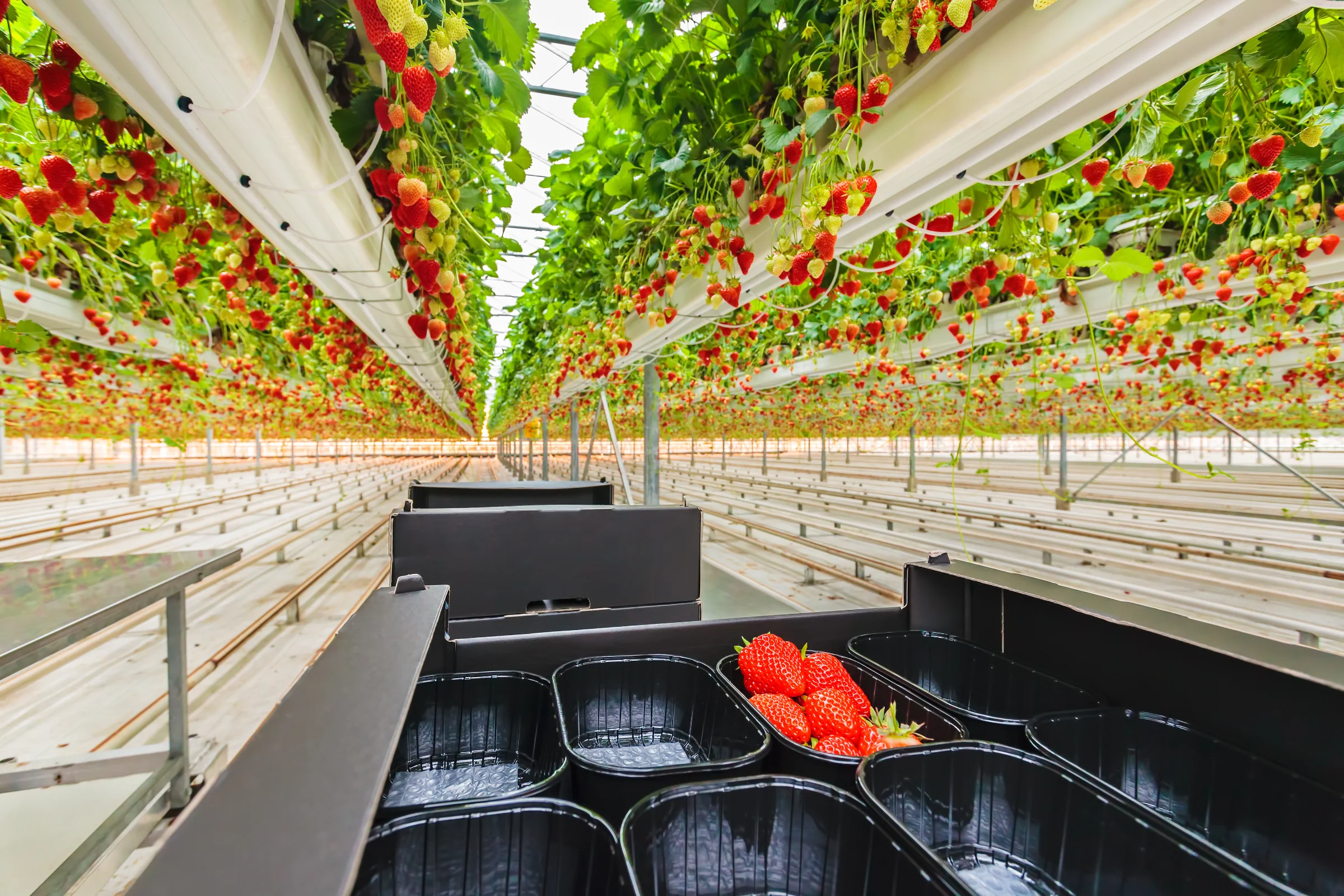
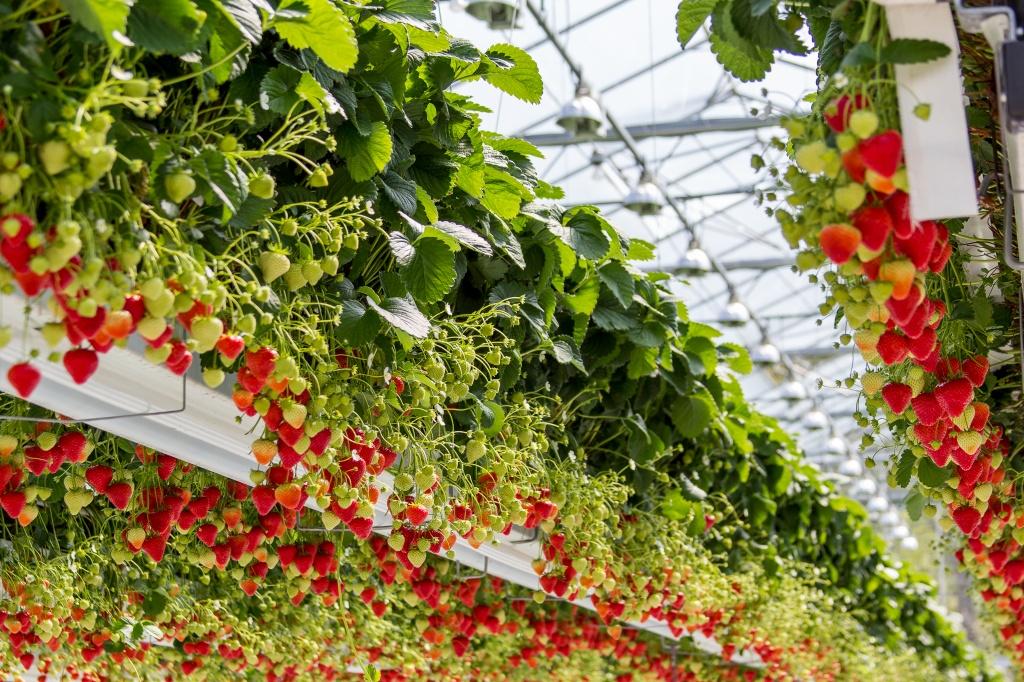
Strawberry under glass is a different proposition from strawberry in a field: the crop is grown on suspended gutters at working height, picked standing, and supplied to market in weeks the open ground cannot reach. The premium sits in that timing and in consistency of grade. It is also a labour-intensive crop, and the gutter system exists as much to make picking sustainable as to control the root zone.
What the crop needs
Growing on suspended substrate gutters puts the root zone entirely under control and lets drain water be collected and recirculated. That matters for a crop this sensitive to salt and to water availability at fruiting, and it is the reason a protected strawberry crop can hold quality across a long picking period rather than flushing and fading.
Everbearing or seasonal
The two commercial systems are separated by how the plant is triggered to flower. Everbearing types crop over an extended period and are the basis of the Dutch fresh crop under glass. Seasonal types follow a short-day rhythm and deliver a concentrated harvest into a defined window. Each is planned as its own crop, because a continuous picking rhythm and a peak week ask different things of labour, cooling and pack capacity.
DutchGreenhouses® specifies the structure, climate, screening and irrigation around the strawberry system, its picking window and the local climate, so fruit quality holds across the whole period rather than the first flush. Get in touch to plan a strawberry greenhouse.
The greenhouse behind strawberries
Strawberries, under glass.
Raised gutters with substrate.
Gutter layout, plant spacing and picking routes follow the harvest window and your labour plan.
Fresh fruit in the right market window.
Raised gutters with substrate.
Consider marketable grade, picking labour, packing and delivery time.
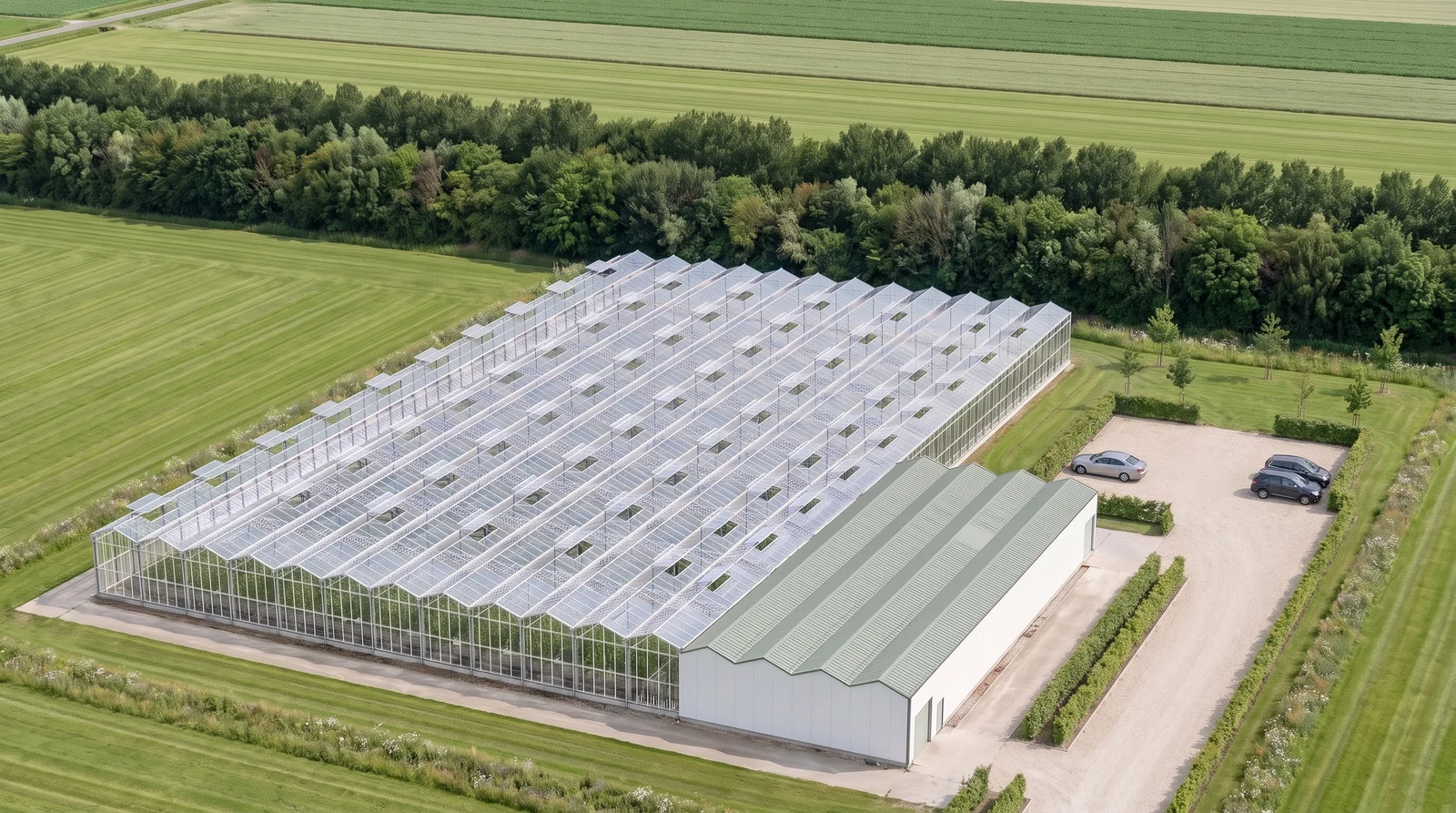
Expert Hydroponic Greenhouse Series
A defined structure for commercial hydroponics. The crop determines the growing system, climate strategy and harvest layout.
½ acre1 acre2 acresExplore Expert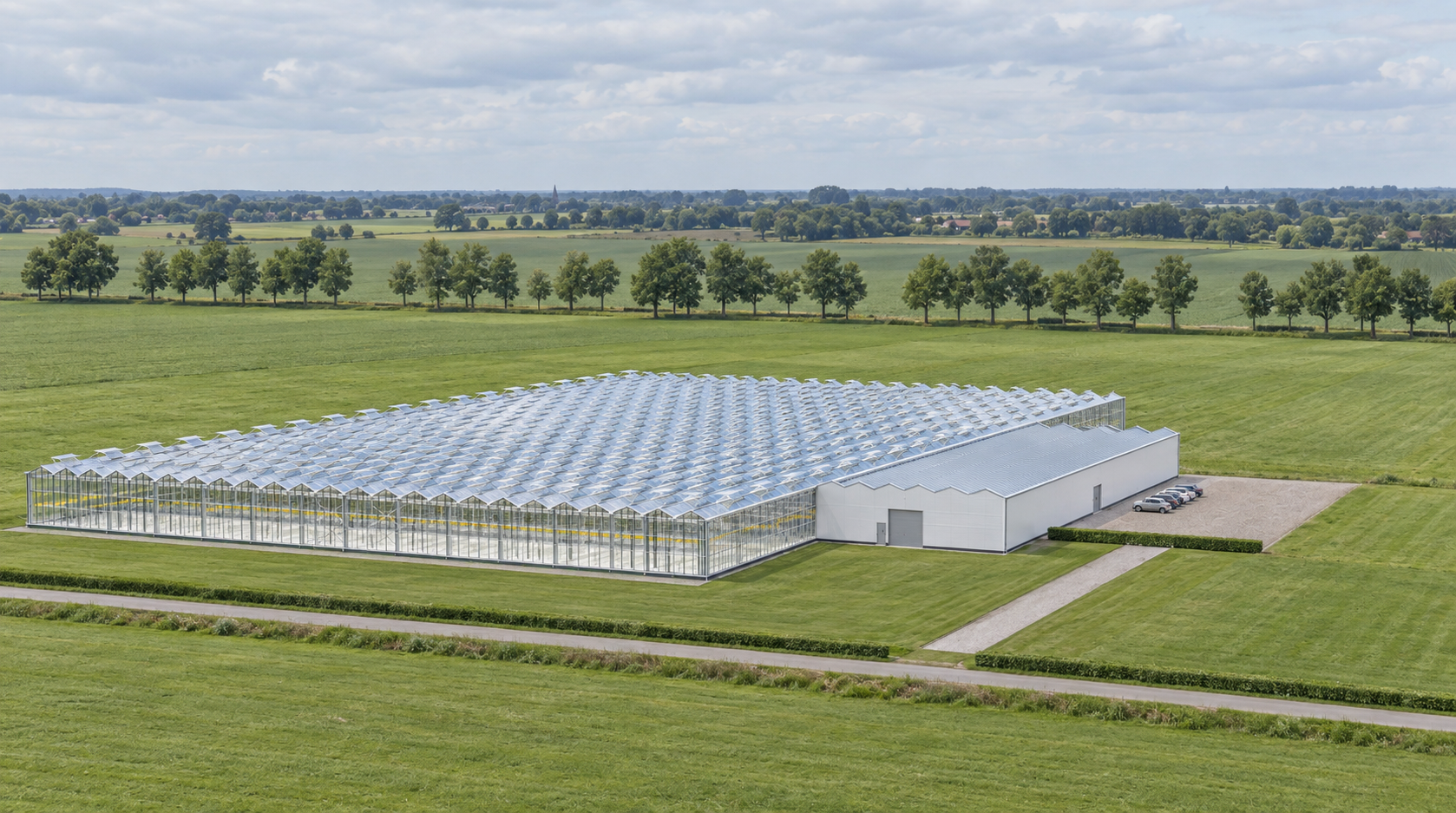
Plus Hydroponic Greenhouse Series
Our largest standard range. Match the larger growing area to crop demand, labour, utilities and the market you intend to supply.
2 acres4 acres8 acresExplore Plus4,032 m²43,400 sq ft of growing space is where a strawberries plan usually starts (GrowPro Expert 1 acre). Compare all nine models
Put your next harvest
under glass.
Your crop, your site and the volume you want to sell. Let's find the greenhouse and systems to match.
Need a custom greenhouse?GrowPro Expert
We can also plan for another crop or a mixed growing programme.
Talk about your project Continue to our contact form. No commitment.Reads you might find interesting

Grow Like a Pro: Starting Smart, Growing Strong
How Grow Like a Pro combines smart farming, CEA technology and local partnerships for eco-friendly, profitable, pesticide-free greenhouse pr
Read article
Maryland Cannabis Greenhouse: Year One
One year on: how the Maryland cannabis greenhouse, paired with an adjacent indoor facility, cut the energy bill and lifted both yields and q
Read article
The Case for a College Greenhouse
Why a college greenhouse belongs in the curriculum: teaching science, craftsmanship, business logic and sustainability, and preparing studen
Read article
The Case for a High School Greenhouse
Why every high school greenhouse matters: how it makes STEM tangible, builds responsibility and teamwork, and helps students discover their
Read article
Greenhouses in Education: The Case for Schools
Greenhouses in education reconnect students to reality — the full case for why every school, high school, college and trade program should h
Read article
The Origins of Greenhouse Horticulture: My Backyard
A tour through greenhouse horticulture history: from 19th-century Westland fruit walls to the “City of Glass” and today’s international high
Read article