
Crops · Crop
Hot pepper.
Related to sweet pepper, and a different crop to build for.
A crop eaten by the pinch
Hot pepper is a concentrated fruit. By weight it carries more sugar, more potassium and more vitamin C than a sweet pepper, because it is a smaller, denser fruit with less water diluting it. It is also eaten by the pinch rather than by the portion, so what reaches the eater is flavour and heat rather than bulk.
Heat is the quality being sold, and heat is grown. Capsaicin accumulates in response to the conditions the plant is held in, which makes a crop sold on a heat specification a crop whose climate is being asked to hit a target no sorting line can correct afterwards.
Fresh chilli is a regional product for the same reason a ripe tomato is. The aromatics that separate one culinary type from another are volatile and go first, so fruit that spent a fortnight in a chain arrives hot but flat. Markets that cook with particular chillies are served by houses close enough to send fruit fresh, with drying and processing kept as a choice rather than a consequence of distance.
Nutrition facts
Hot chilli pepper, red, raw
Per 100 g
- Energy
- 40 kcal
- Fat
- 0.44 g
- Carbohydrate
- 8.81 g
- Sugars
- 5.3 g
- Fiber
- 1.5 g
- Protein
- 1.87 g
- Sodium
- 9 mg
- Potassium
- 322 mg
- Vitamin C
- 143.7 mg
Hot pepper shares a genus with sweet pepper and almost nothing else that matters to a greenhouse design. Fruit size, plant habit, cycle length and the quality metric are all different, and the quality metric in particular — pungency — has no counterpart in a sweet pepper crop at all. Demand is driven by specific culinary markets rather than by the volume retail channels sweet pepper serves.
One name, many plants
Because pungent types span many different peppers and a very wide range of plant forms, there is no single hot pepper crop to design around. A compact ornamental-scale plant and a tall indeterminate type place entirely different demands on structure, spacing and labour, and the choice belongs to the market being supplied.
Its own crop, not a variant
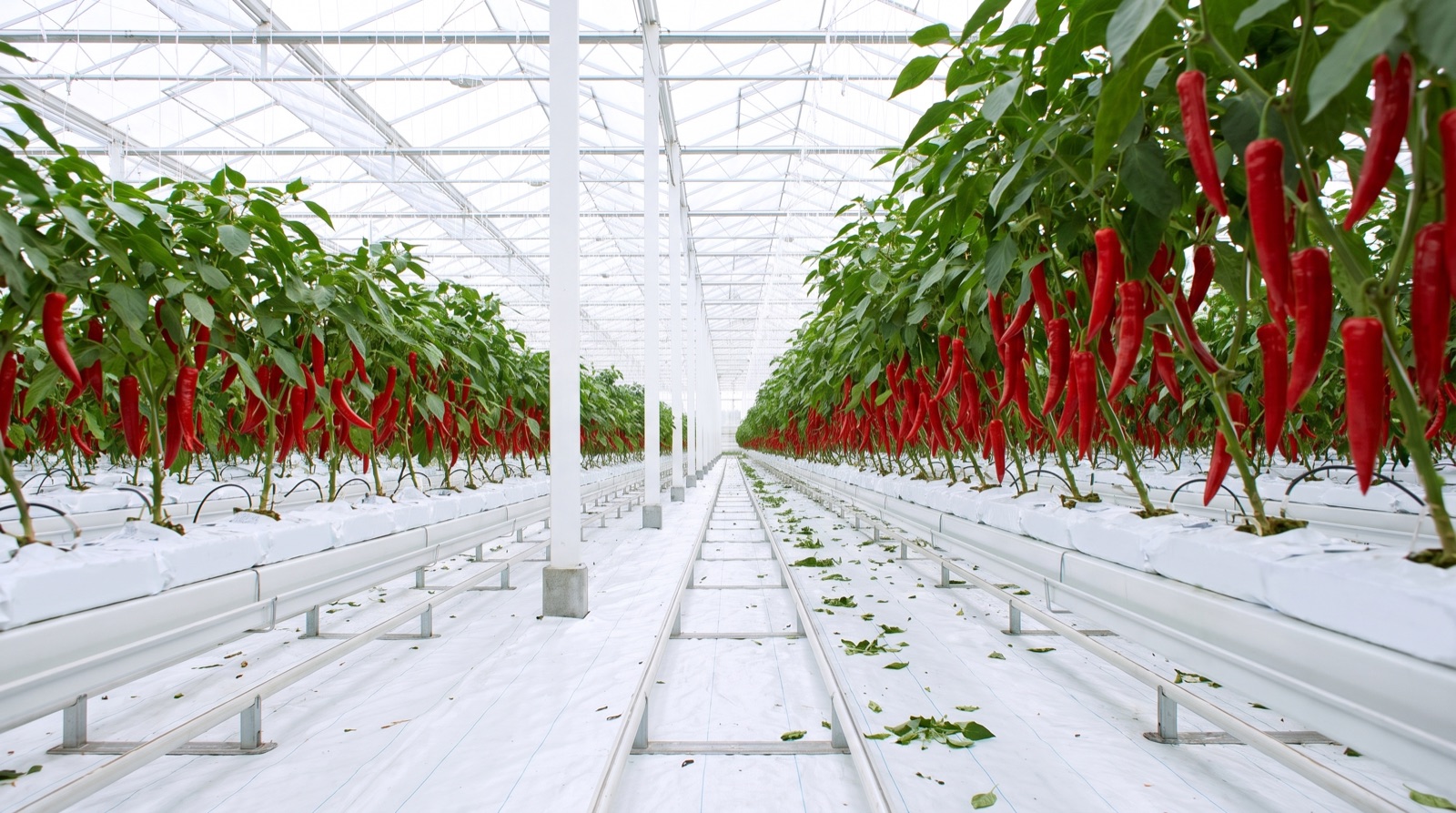
Hot pepper is its own family rather than a variant of sweet pepper, and the house is drawn for the specific crop. Plant form decides structure, spacing and support; the heat specification decides how tightly the climate has to be held; and the sale form — fresh, dried or processed — decides the harvest and the pack area.
DutchGreenhouses® designs the structure, climate, screening and irrigation around the pepper actually being grown, its cultivar and the local climate, rather than assuming a sweet pepper envelope will transfer. Get in touch to discuss a hot pepper project.
Reads you might find interesting

Grow Like a Pro: Starting Smart, Growing Strong
How Grow Like a Pro combines smart farming, CEA technology and local partnerships for eco-friendly, profitable, pesticide-free greenhouse pr
Read article
Maryland Cannabis Greenhouse: Year One
One year on: how the Maryland cannabis greenhouse, paired with an adjacent indoor facility, cut the energy bill and lifted both yields and q
Read article
The Case for a College Greenhouse
Why a college greenhouse belongs in the curriculum: teaching science, craftsmanship, business logic and sustainability, and preparing studen
Read article
The Case for a High School Greenhouse
Why every high school greenhouse matters: how it makes STEM tangible, builds responsibility and teamwork, and helps students discover their
Read article
Greenhouses in Education: The Case for Schools
Greenhouses in education reconnect students to reality — the full case for why every school, high school, college and trade program should h
Read article
The Origins of Greenhouse Horticulture: My Backyard
A tour through greenhouse horticulture history: from 19th-century Westland fruit walls to the “City of Glass” and today’s international high
Read article