
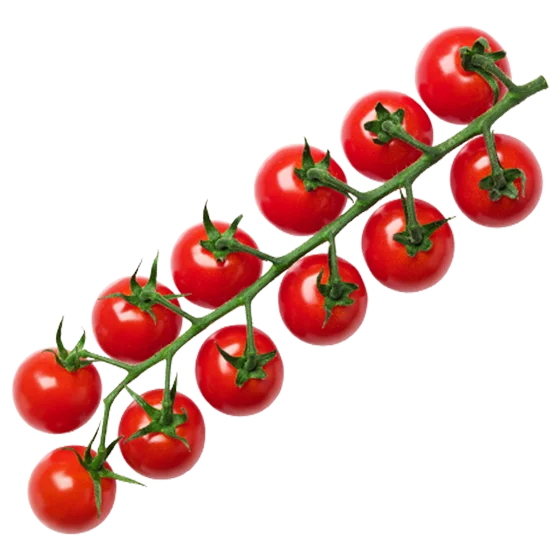
Tomato
Cherry Tomatoes.
Small fruit, high count, and labour as the deciding cost.
Eaten raw, priced on flavour
Cherry tomato is eaten raw and whole, usually out of the hand rather than out of a pan. Nothing is peeled off and nothing is cooked away, so what the fruit carries when it is cut from the plant is what reaches the person eating it.
Flavour is where that shows first. Sugar and acid are built in the fruit while it is still attached, and they stop being built the moment it is picked. Fruit harvested early enough to survive a journey colours on the way and still tastes of the day it left. The class is priced on flavour, which makes the harvest date part of the price.
A short chain also keeps more of the crop saleable. Cherry is sold by the punnet, and one soft fruit takes the pack with it, so days spent in transit are days the pack can be lost. Picking at colour and delivering the same week protects the eating quality and the pack together.
Nutrition facts
Tomato, red, ripe, raw — year round average
Per 100 g
- Energy
- 18 kcal
- Fat
- 0.2 g
- Carbohydrate
- 3.89 g
- Sugars
- 2.63 g
- Fiber
- 1.2 g
- Protein
- 0.88 g
- Sodium
- 5 mg
- Potassium
- 237 mg
- Vitamin C
- 13.7 mg
Cherry tomato is a separate market class from truss, sold both on the vine and loose, and priced on flavour and appearance rather than on weight alone. The fruit is small, so a house produces a very large number of them for a given tonnage, and picking and packing become the dominant variable cost. That is the crop’s central commercial tension: the premium is real, and so is the labour required to capture it.
What the crop needs
The plant is long-cycle on substrate and high wire, like truss tomato, but it carries a much larger number of smaller fruit. Plant load management is therefore the daily craft, and the balance between vegetative and generative growth has to be held tightly to keep sugar levels and fruit size consistent across a long season. Climate and irrigation strategy are directed at flavour and shelf life as much as at total mass.
What the greenhouse has to do
Cherry tomato asks the house for consistency and for flow. The structure and the climate envelope are shared with truss tomato; what changes is the number of fruit moving through the building every week. Path width, internal transport and the size of the packing area are part of the greenhouse design rather than something fitted around it once the crop is in.
Climate is steered at quality. Screening and heating hold the day-to-night rhythm that keeps sugars and fruit size even across a long season, and drip supply with drain recirculation keeps the root zone from swinging. Where the market window reaches into the low-light months, supplemental light and the electrical service to carry it belong in the brief from the start, because both change the heating design with them.
DutchGreenhouses® specifies the structure, climate, screening and irrigation around the cherry tomato crop, its sale form and the local climate, so flavour and count hold across the season. Get in touch to plan a tomato greenhouse for your market.
Cherry tomato, asked and answered
Is cherry tomato more profitable than truss?
It carries a higher price per kilogram and a higher labour cost per kilogram. Which wins depends on local labour rates, the degree of harvest and pack automation, and the premium the market actually pays.
What changes in the greenhouse when the crop is cherry rather than truss?
Mostly the handling. The structure and the climate envelope are shared; the difference is the number of fruit moving through the house every week, which sets path width, internal transport and the size of the packing area.
What decides cherry tomato flavour?
Cultivar sets the ceiling; climate, irrigation strategy and plant load decide how close a crop gets to it. Flavour is steered before harvest, not after.
Other tomato
varieties.
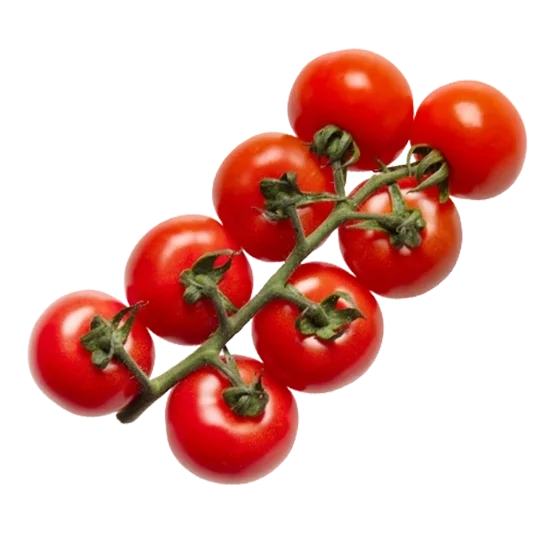
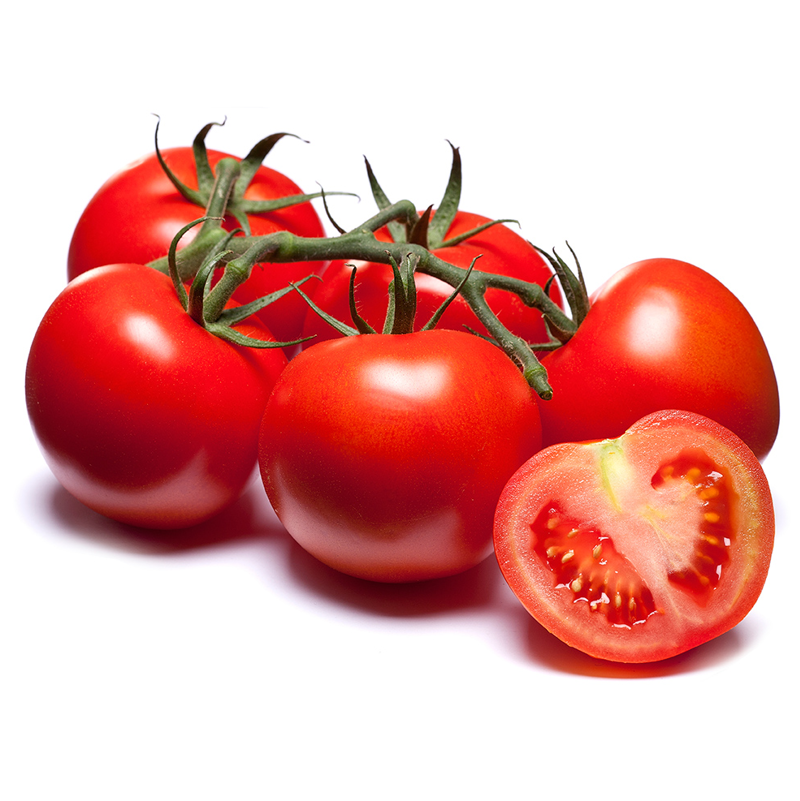
The greenhouse benchmark crop. The class you sell decides the plant load, the harvest rhythm and the house.

The greenhouse behind tomatoes
Tomatoes, under glass.
High-wire hydroponics on hanging gutters.
Crop support, working height, light and climate follow your tomato type and production calendar.
The greenhouse benchmark crop.
High-wire hydroponics on hanging gutters.
Match fruit type, quality grade and harvest metrics to your buyer.
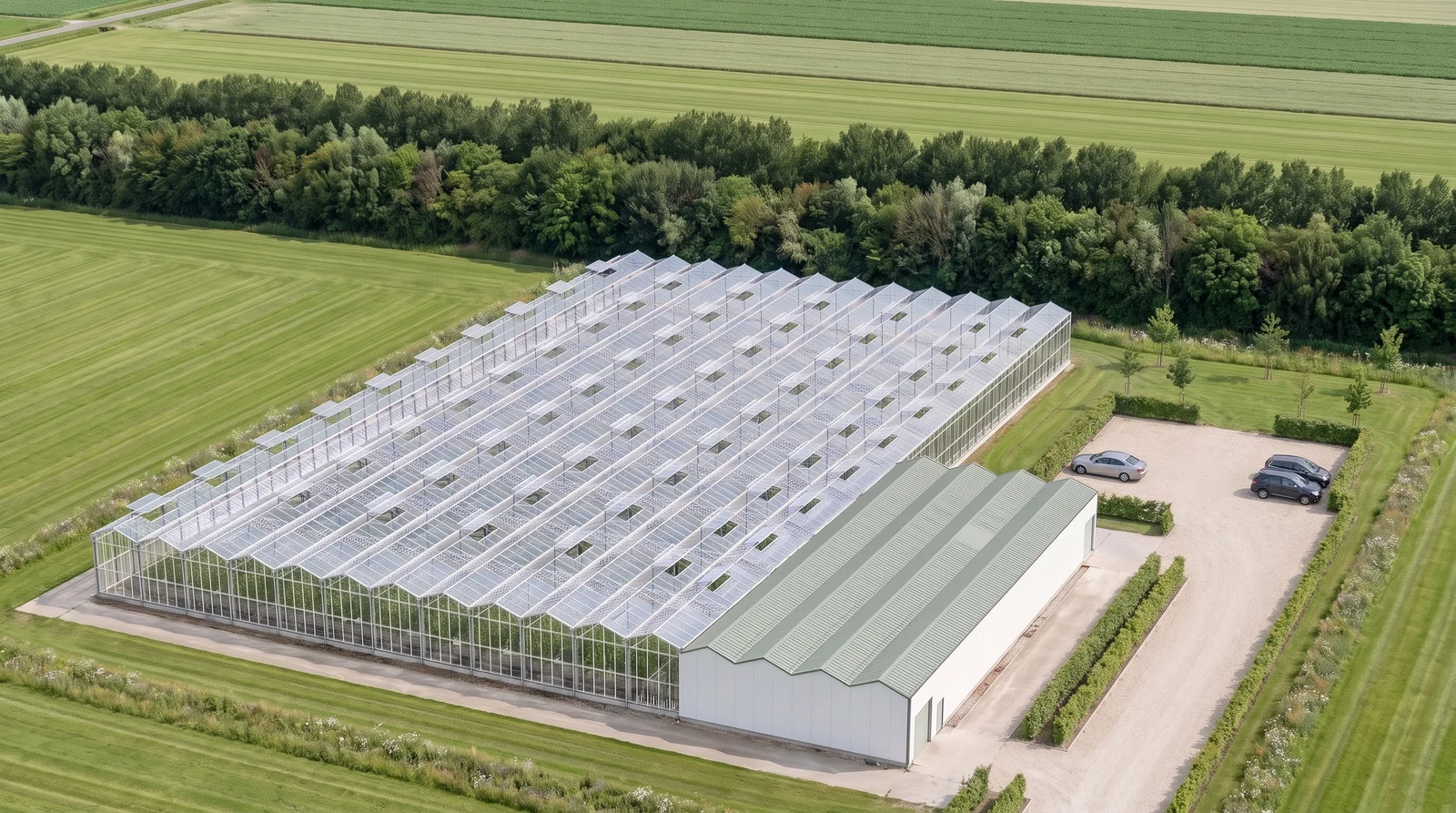
Expert Hydroponic Greenhouse Series
A defined structure for commercial hydroponics. The crop determines the growing system, climate strategy and harvest layout.
½ acre1 acre2 acresExplore Expert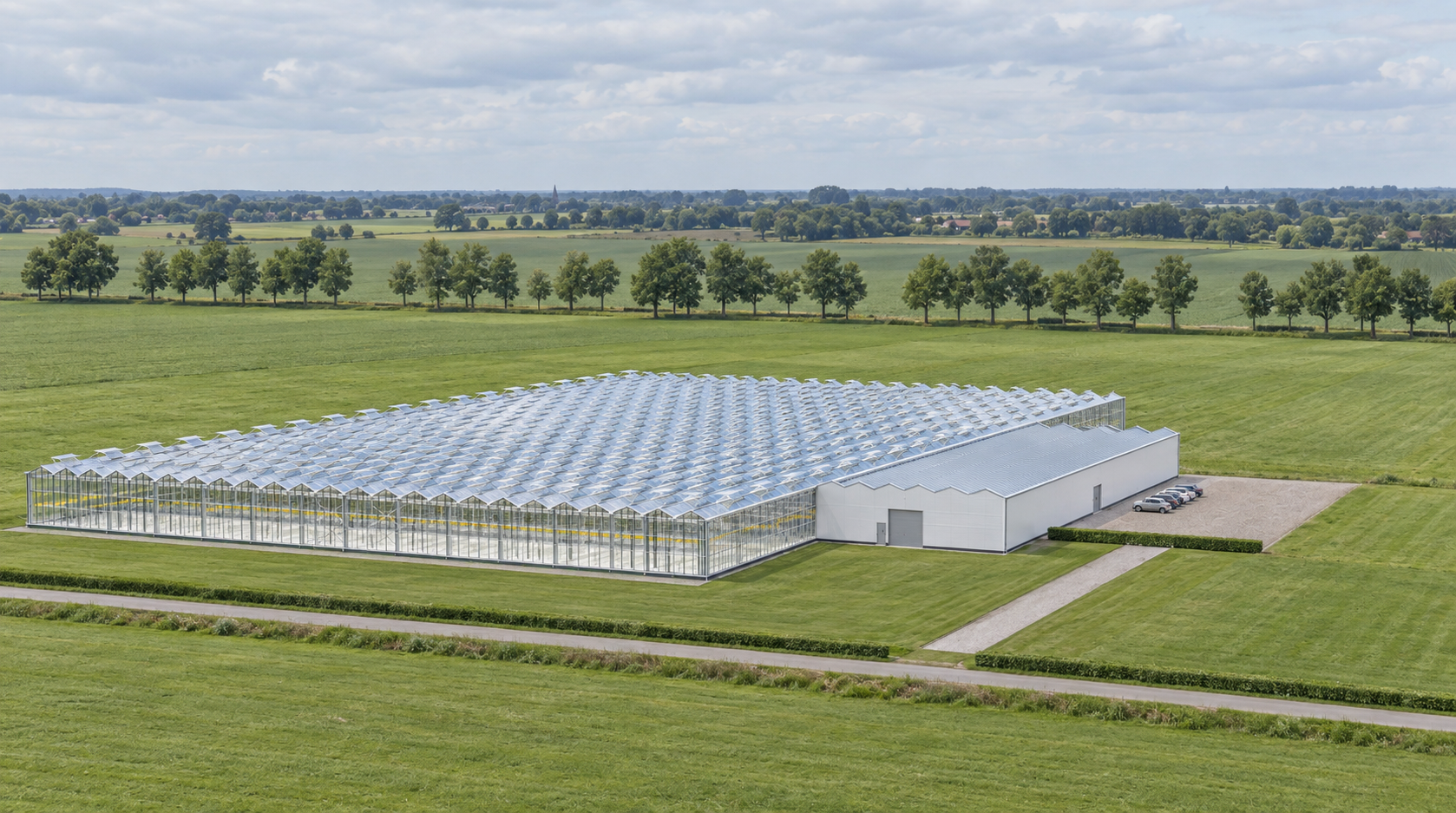
Plus Hydroponic Greenhouse Series
Our largest standard range. Match the larger growing area to crop demand, labour, utilities and the market you intend to supply.
2 acres4 acres8 acresExplore Plus4,032 m²43,400 sq ft of growing space is where a tomatoes plan usually starts (GrowPro Expert 1 acre). Compare all nine models
Put your next harvest
under glass.
Your crop, your site and the volume you want to sell. Let's find the greenhouse and systems to match.
Need a custom greenhouse?GrowPro Expert
We can also plan for another crop or a mixed growing programme.
Talk about your project Continue to our contact form. No commitment.Reads you might find interesting

Grow Like a Pro: Starting Smart, Growing Strong
How Grow Like a Pro combines smart farming, CEA technology and local partnerships for eco-friendly, profitable, pesticide-free greenhouse pr
Read article
Maryland Cannabis Greenhouse: Year One
One year on: how the Maryland cannabis greenhouse, paired with an adjacent indoor facility, cut the energy bill and lifted both yields and q
Read article
The Case for a College Greenhouse
Why a college greenhouse belongs in the curriculum: teaching science, craftsmanship, business logic and sustainability, and preparing studen
Read article
The Case for a High School Greenhouse
Why every high school greenhouse matters: how it makes STEM tangible, builds responsibility and teamwork, and helps students discover their
Read article
Greenhouses in Education: The Case for Schools
Greenhouses in education reconnect students to reality — the full case for why every school, high school, college and trade program should h
Read article
The Origins of Greenhouse Horticulture: My Backyard
A tour through greenhouse horticulture history: from 19th-century Westland fruit walls to the “City of Glass” and today’s international high
Read article