
Crops · Fruiting vegetable
Sweet pepper.
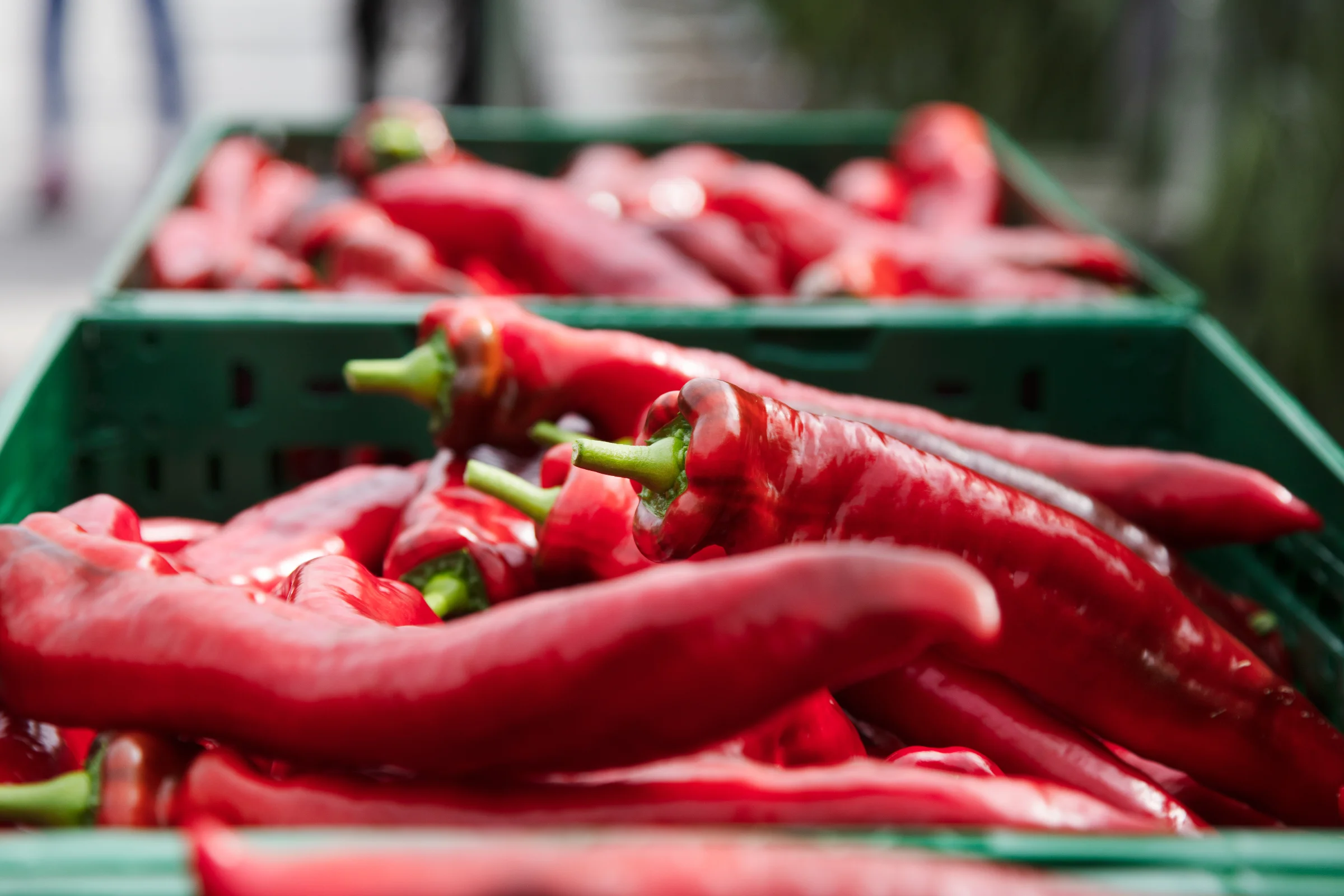
A long crop where colour is the product.
What the extra weeks put in the fruit
Sweet pepper is eaten for vitamin C before anything else, and the fruit does not start out carrying it. The pepper reaches full size first and then keeps working. Through the weeks it takes to turn from green to its ripe colour, sugar and vitamin C keep accumulating, and a fruit carried to colour ends up with far more of both than the same fruit cut early. Colour on the shelf is a record of how long the plant was allowed to keep going.
Those weeks are the grower’s side of the bargain. Fruit held for colour occupies plant capacity, heat and light that a green pick would have released, which is why the ripe classes carry a premium and why harvest stage is settled before a greenhouse is designed.
Neither stage improves after cutting. A pepper is picked at the stage it will be eaten at, so time in a container comes off the shelf life rather than adding to the fruit. A greenhouse near its market can hold the crop on the plant until the order is placed and deliver in the same week, in winter as readily as in summer.
Nutrition facts
Sweet pepper, red, raw
Per 100 g
- Energy
- 26 kcal
- Fat
- 0.3 g
- Carbohydrate
- 6.03 g
- Sugars
- 4.2 g
- Fiber
- 2.1 g
- Protein
- 0.99 g
- Sodium
- 4 mg
- Potassium
- 211 mg
- Vitamin C
- 127.7 mg
Which sweet pepper?
The commercial classes.
Colour, size and quality at harvest. The class you sell decides the plant load, the harvest rhythm and the house.
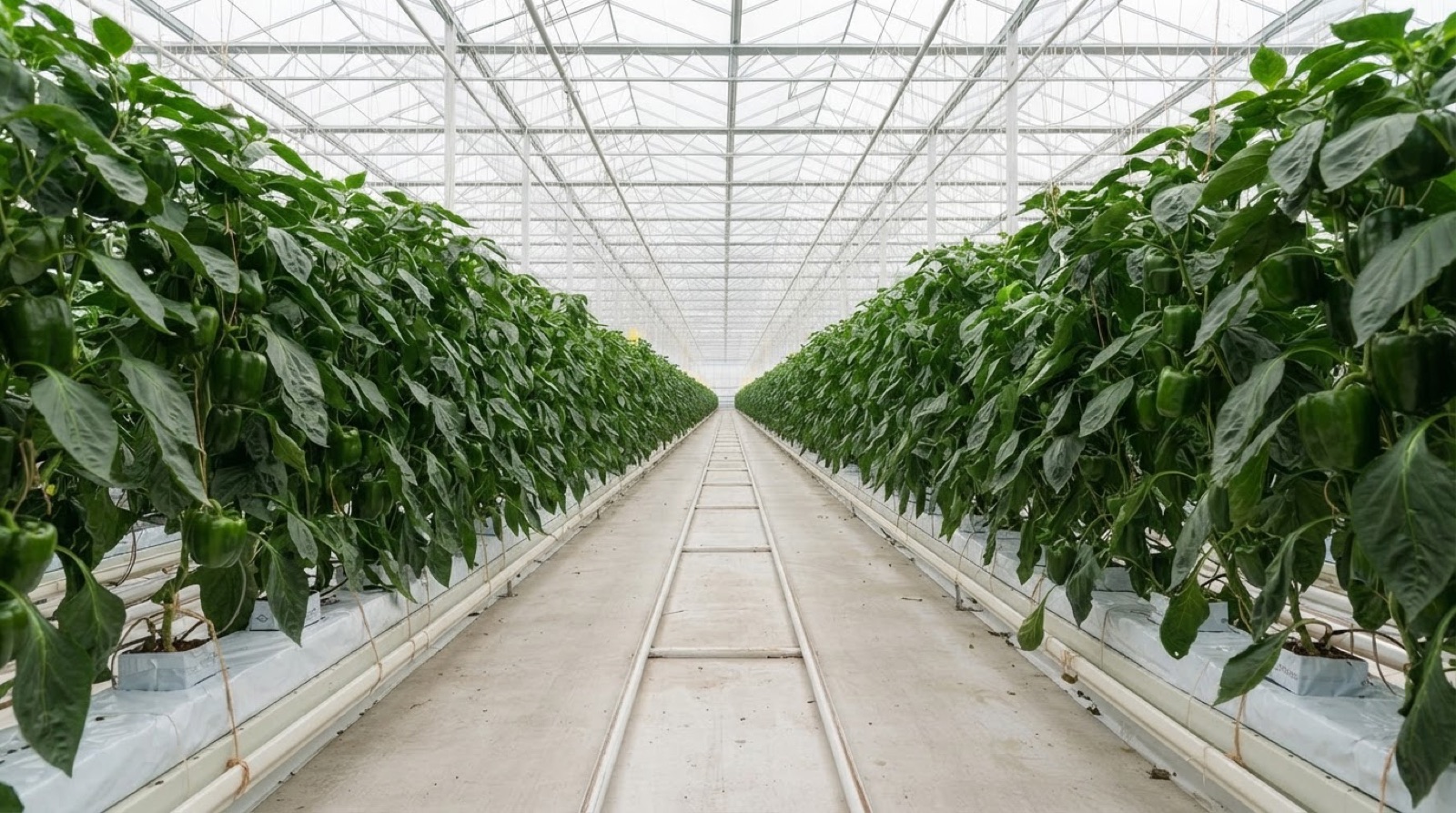
Green Bell Peppers
Green bell pepper is fruit picked before it colours, a harvest stage rather than a colour genotype.
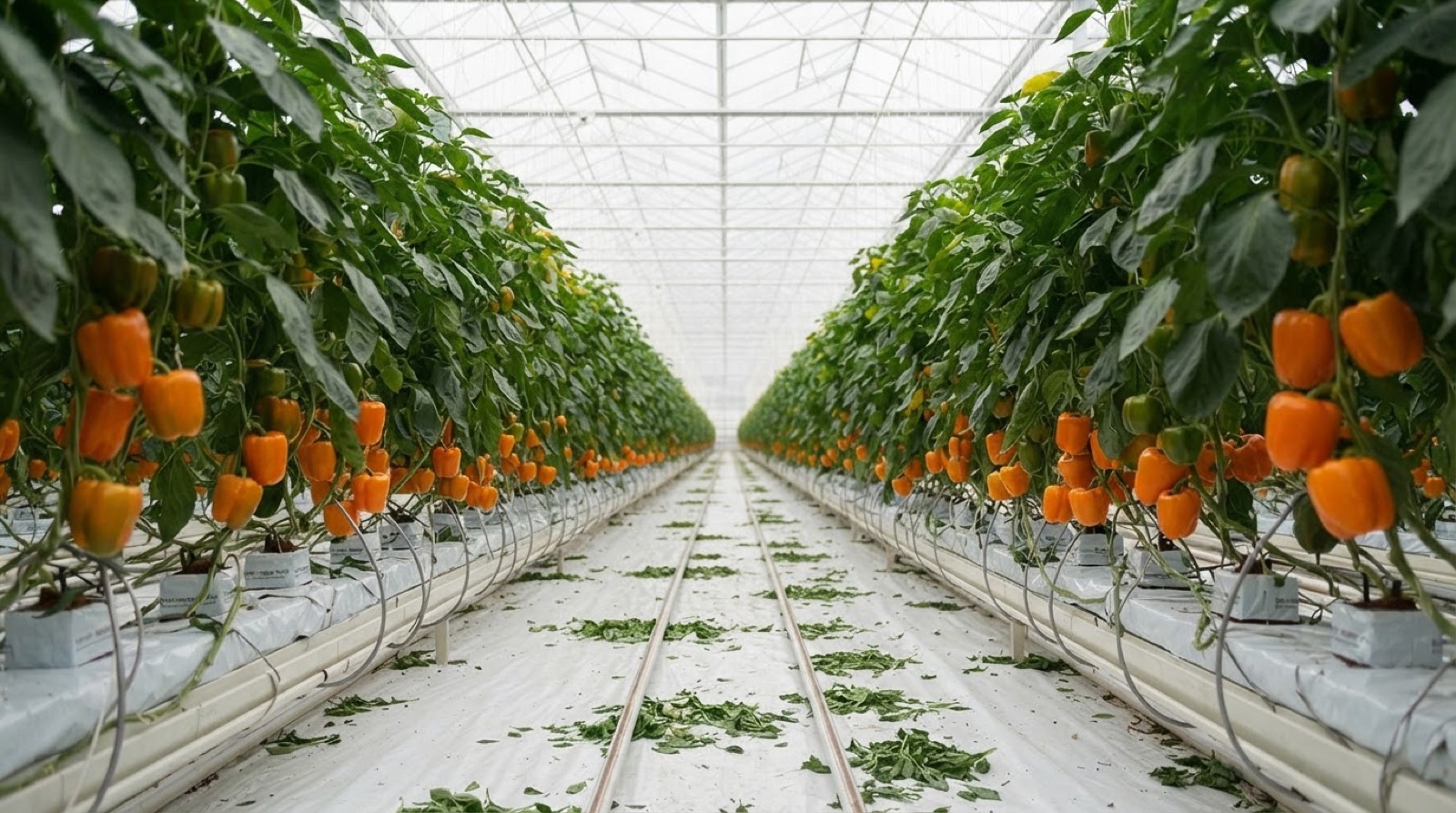
Orange Bell Peppers
Orange bell pepper is its own genotype class with its own cultivars, not a red pepper picked at a different moment.
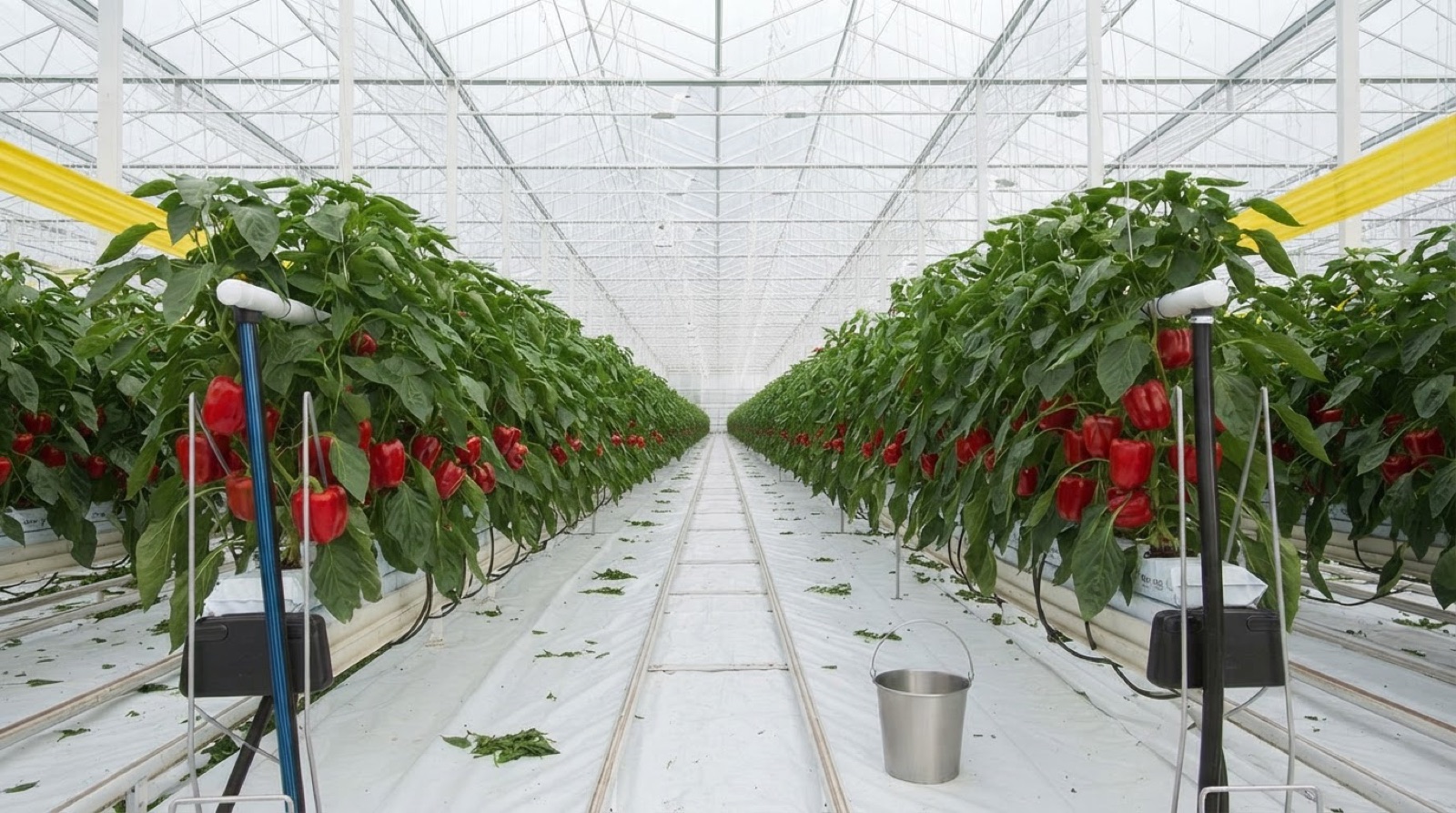
Red Bell Peppers
Red bell pepper is the reference block pepper of Dutch production, carried on the plant until it colours fully.
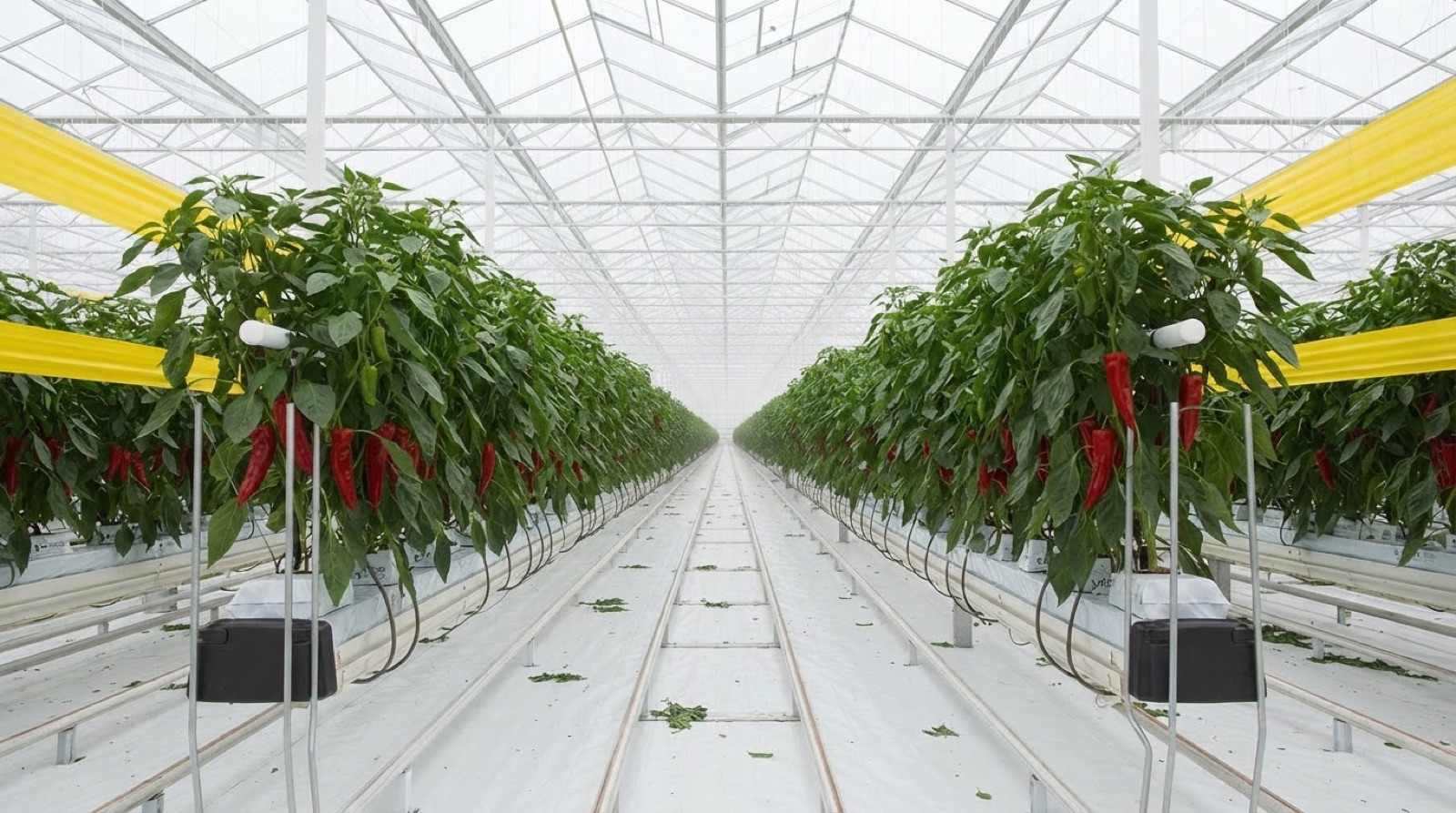
Red Pointed Peppers
Red pointed pepper is a conical, elongated sweet pepper sold for its sweetness and for roasting and grilling.
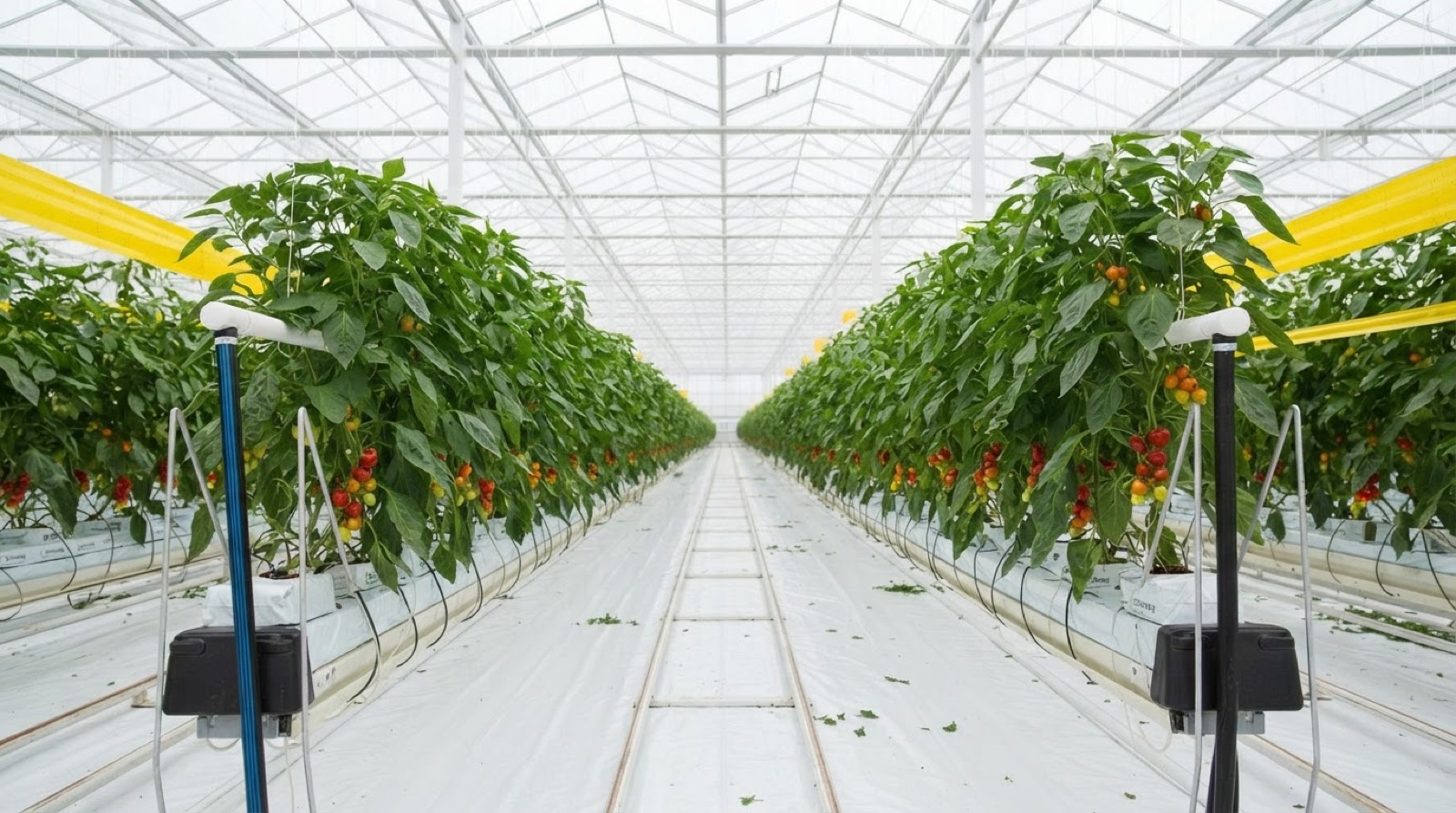
Snack Peppers
Snack pepper is a market and pack idea more than a defined botanical type: small sweet peppers sold in mixed-colour punnets to be eaten whole.
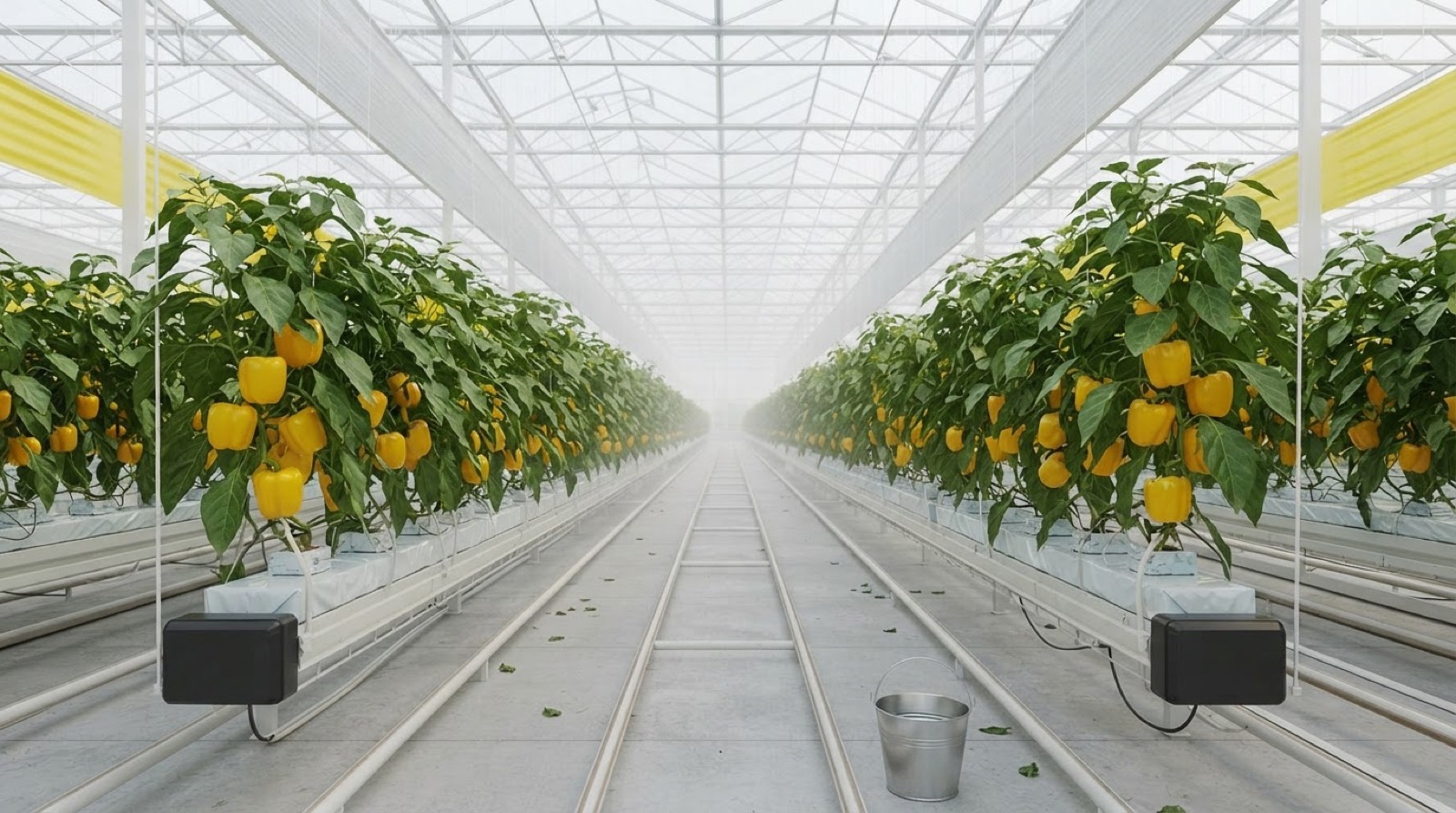
Yellow Bell Peppers
Yellow bell pepper is its own genotype class with its own cultivars, not a red pepper picked at a different moment.
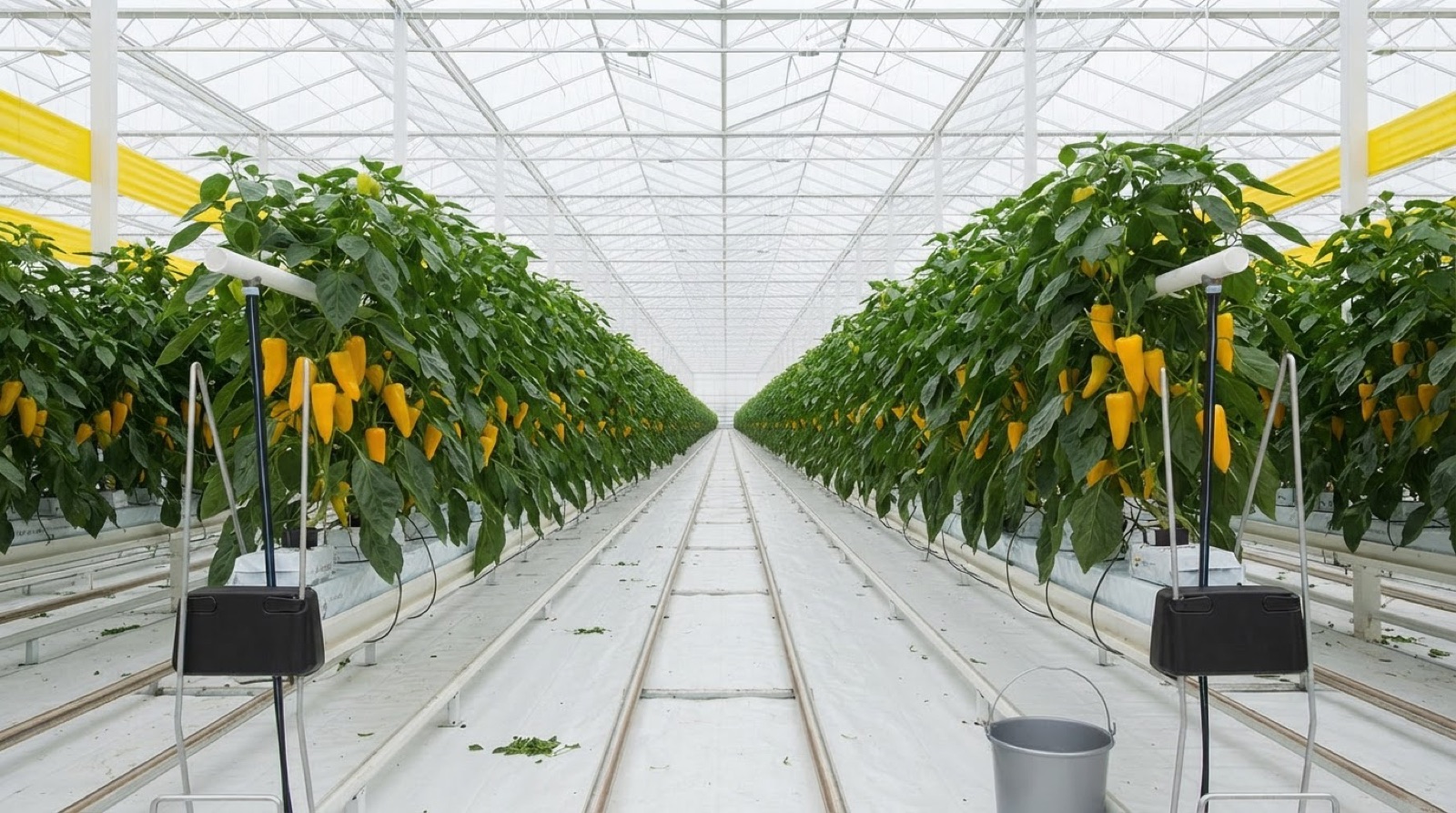
Yellow Pointed Peppers
Yellow pointed pepper is the yellow-ripening conical sweet pepper, distinct from both the yellow block pepper and the red pointed type.
Sweet pepper is a long-cycle crop planted once and carried through most of the year, and its economics turn on ripe colour. A pepper picked green and a pepper carried to red are the same plant doing different amounts of work, and the extra weeks on the plant are paid for in light, heat and fruit that could have been harvested earlier. The choice of harvest stage is therefore a commercial decision made before the house is designed, not a picking preference settled later.
What the crop needs
The plant is grown on substrate and carried on a high wire, with a slower set and a heavier fruit than cucumber. It is sensitive to the balance between vegetative and generative growth, and it responds to that balance over weeks rather than days. A climate system that holds a steady relationship between temperature and light will hold a steady set; one that swings will produce a crop that flushes and then stalls.
What separates the varieties
Ripe colour is a genetic property of the cultivar, not a harvest choice, and this is the distinction that most often goes wrong in planning. Red, yellow and orange are separate genotype classes with separate cultivars. Green is a harvest stage, and a green-harvested crop still has a genetic ripe colour that has to be recorded separately. Pointed peppers are a different product again, with their own fruit mass and plant architecture, and they are spaced and supported accordingly.
DutchGreenhouses® specifies the structure, climate, screening and irrigation around the pepper type, its harvest stage and the local climate, so the house supports the colour being sold rather than pepper in the abstract. Get in touch to plan a pepper greenhouse.
The greenhouse behind sweet peppers
Sweet peppers, under glass.
Supported substrate growing.
Crop loading, canopy light and climate control support a long crop with repeated picking.
Colour, size and quality at harvest.
Supported substrate growing.
Connect colour and size grades to your market and harvest plan.
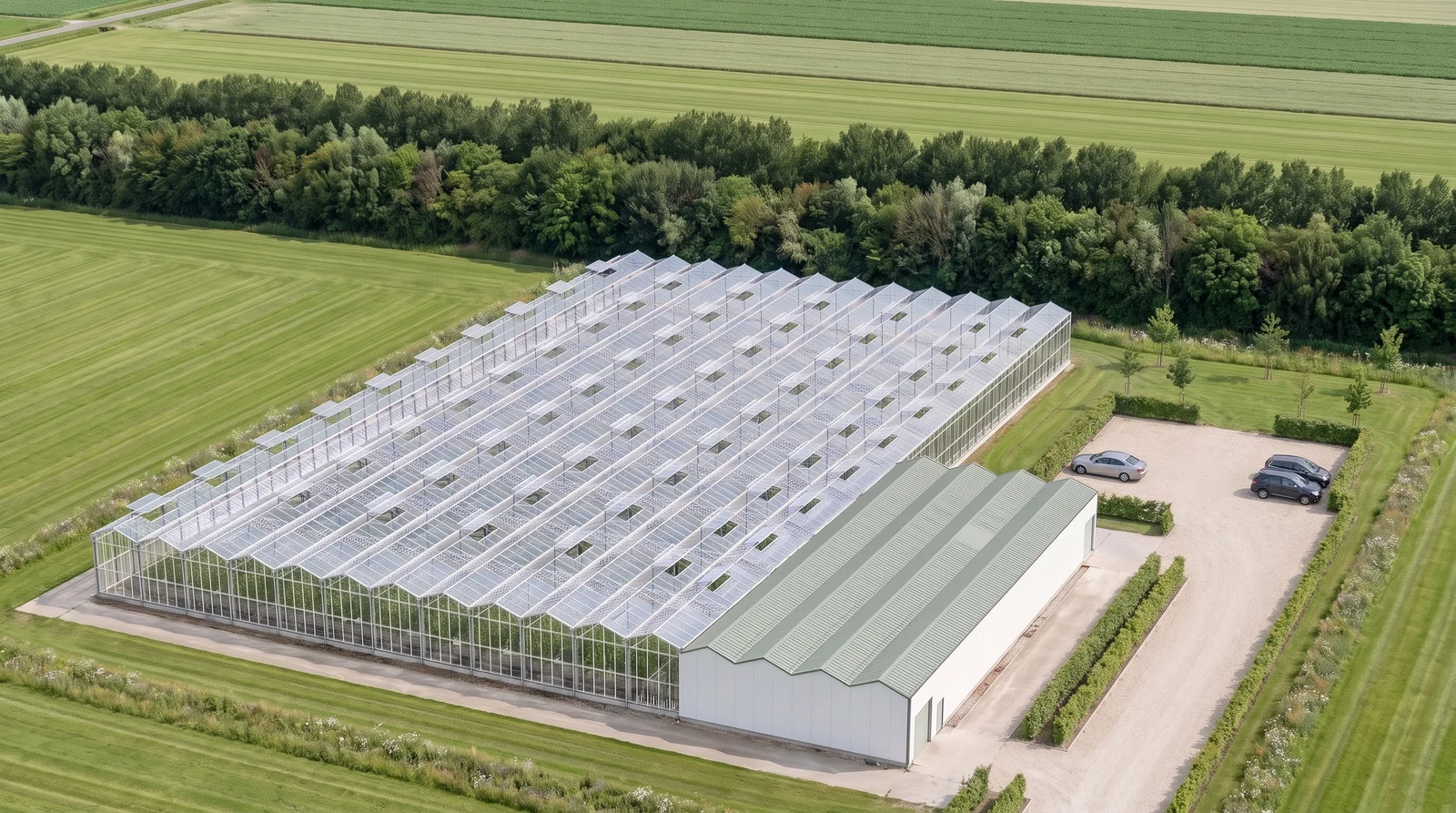
Expert Hydroponic Greenhouse Series
A defined structure for commercial hydroponics. The crop determines the growing system, climate strategy and harvest layout.
½ acre1 acre2 acresExplore Expert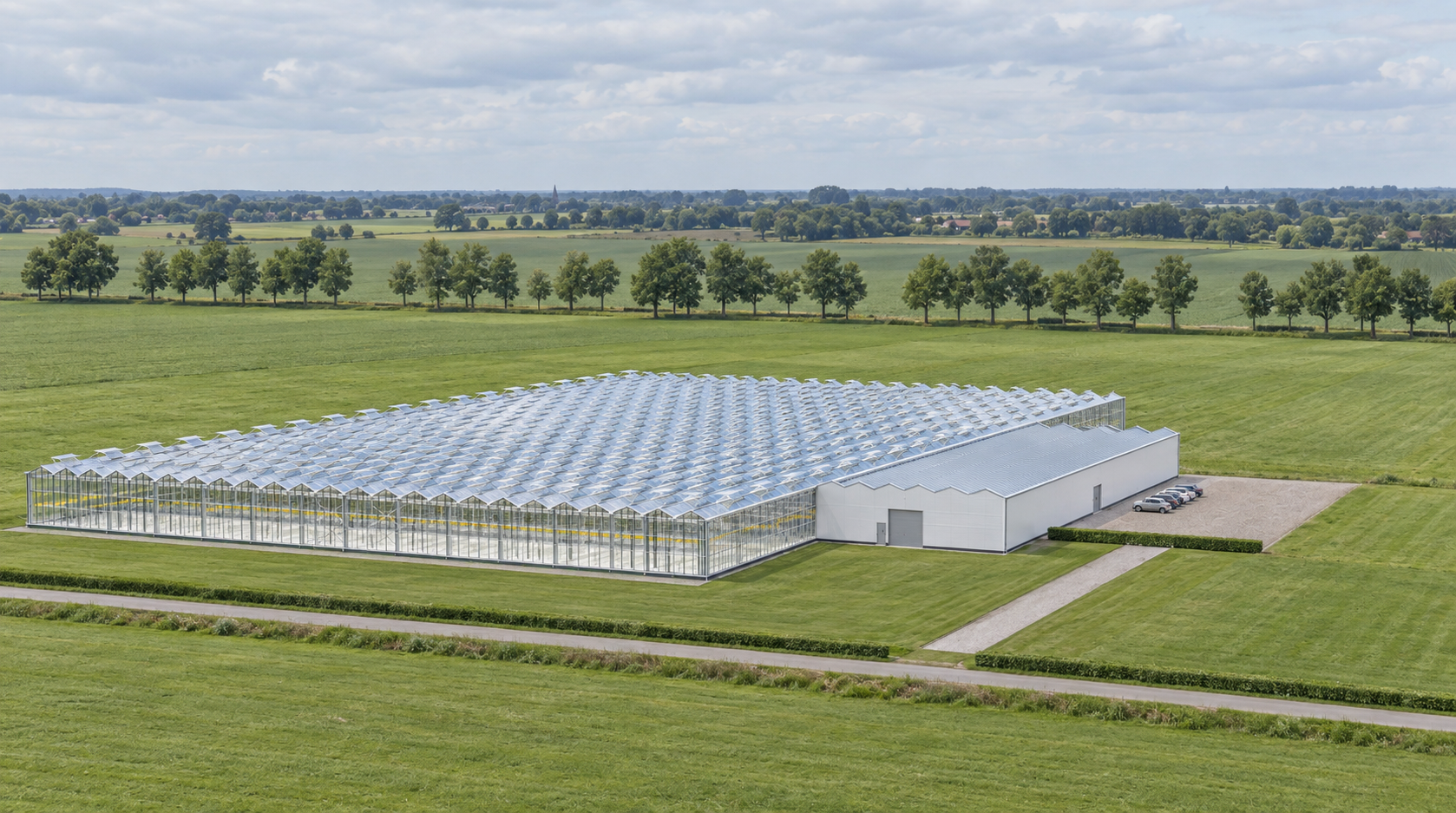
Plus Hydroponic Greenhouse Series
Our largest standard range. Match the larger growing area to crop demand, labour, utilities and the market you intend to supply.
2 acres4 acres8 acresExplore Plus4,032 m²43,400 sq ft of growing space is where a sweet peppers plan usually starts (GrowPro Expert 1 acre). Compare all nine models
Put your next harvest
under glass.
Your crop, your site and the volume you want to sell. Let's find the greenhouse and systems to match.
Need a custom greenhouse?GrowPro Expert
We can also plan for another crop or a mixed growing programme.
Talk about your project Continue to our contact form. No commitment.Reads you might find interesting

Grow Like a Pro: Starting Smart, Growing Strong
How Grow Like a Pro combines smart farming, CEA technology and local partnerships for eco-friendly, profitable, pesticide-free greenhouse pr
Read article
Maryland Cannabis Greenhouse: Year One
One year on: how the Maryland cannabis greenhouse, paired with an adjacent indoor facility, cut the energy bill and lifted both yields and q
Read article
The Case for a College Greenhouse
Why a college greenhouse belongs in the curriculum: teaching science, craftsmanship, business logic and sustainability, and preparing studen
Read article
The Case for a High School Greenhouse
Why every high school greenhouse matters: how it makes STEM tangible, builds responsibility and teamwork, and helps students discover their
Read article
Greenhouses in Education: The Case for Schools
Greenhouses in education reconnect students to reality — the full case for why every school, high school, college and trade program should h
Read article
The Origins of Greenhouse Horticulture: My Backyard
A tour through greenhouse horticulture history: from 19th-century Westland fruit walls to the “City of Glass” and today’s international high
Read article