
Strawberry
Seasonal Strawberries.
A concentrated harvest, grown for a defined market window.
A peak week that has to be eaten
A seasonal crop arrives all at once. That is the point of it, and it is also the moment when distance does the most damage. Strawberry cannot be held back to suit a schedule. Fruit that lands in a peak week either moves through the chain within days or it is lost.
Ripeness at picking is what makes the volume worth having. Sugar, aroma and vitamin C peak in the last days on the plant, and a crop timed for a defined window is sold on exactly those qualities. Picking early to buy transit time gives away the reason the window was valuable in the first place.
Proximity is what makes the peak manageable. A short chain lets a concentrated harvest be picked ripe and delivered inside its own week, and it lets a buyer order against real demand rather than ordering extra to cover the losses of a long journey. The harvest then becomes a supply event instead of a waste event.
Nutrition facts
Strawberries, raw
Per 100 g
- Energy
- 32 kcal
- Fat
- 0.3 g
- Carbohydrate
- 7.68 g
- Sugars
- 4.89 g
- Fiber
- 2 g
- Protein
- 0.67 g
- Sodium
- 1 mg
- Potassium
- 153 mg
- Vitamin C
- 58.8 mg
Seasonal strawberry, also called short-day or June-bearing, flowers in response to day length and produces a concentrated crop rather than a continuous one. It is grown for a defined market window, and where that window is valuable the concentrated harvest is the point rather than a limitation.
What the crop needs
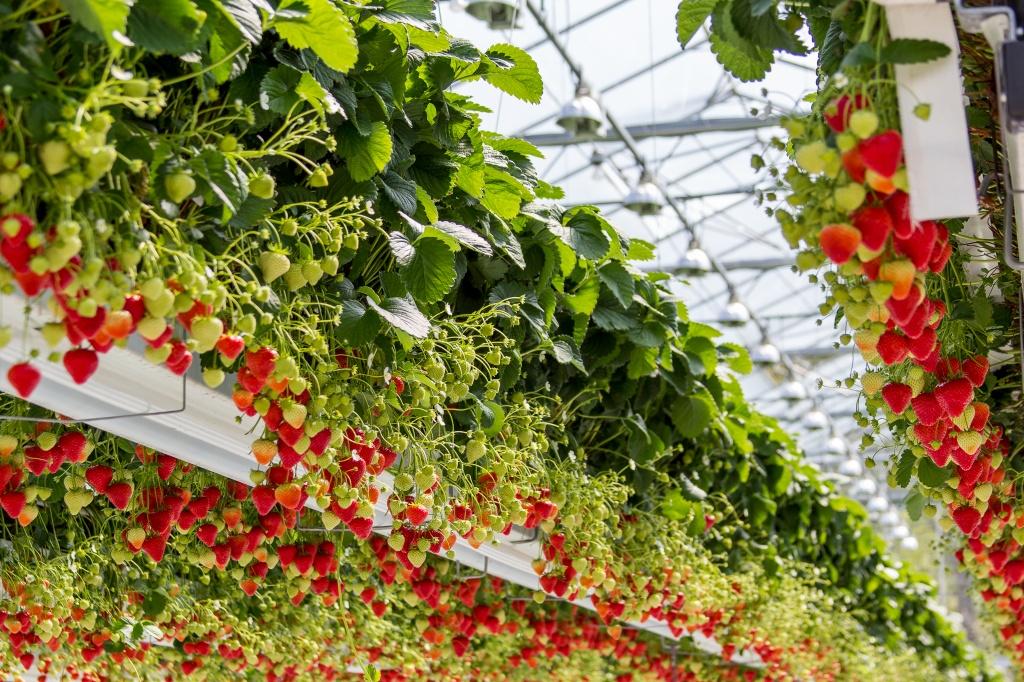
The crop is grown on suspended gutters like the everbearing type, but the plant is managed to a different rhythm. Flowering is triggered by day length, so the planning question is when the window falls and how the crop is timed into it. The labour profile is concentrated rather than spread, which changes how a house is staffed.
What the greenhouse has to do
A concentrated harvest is a scheduling problem before it is a growing one. The crop arrives in a burst, so picking labour, cooling and pack capacity all have to be sized for the peak week rather than for the average — and then stand idle. Whether that pays is decided by the value of the window being supplied, which makes it a question for the brief.
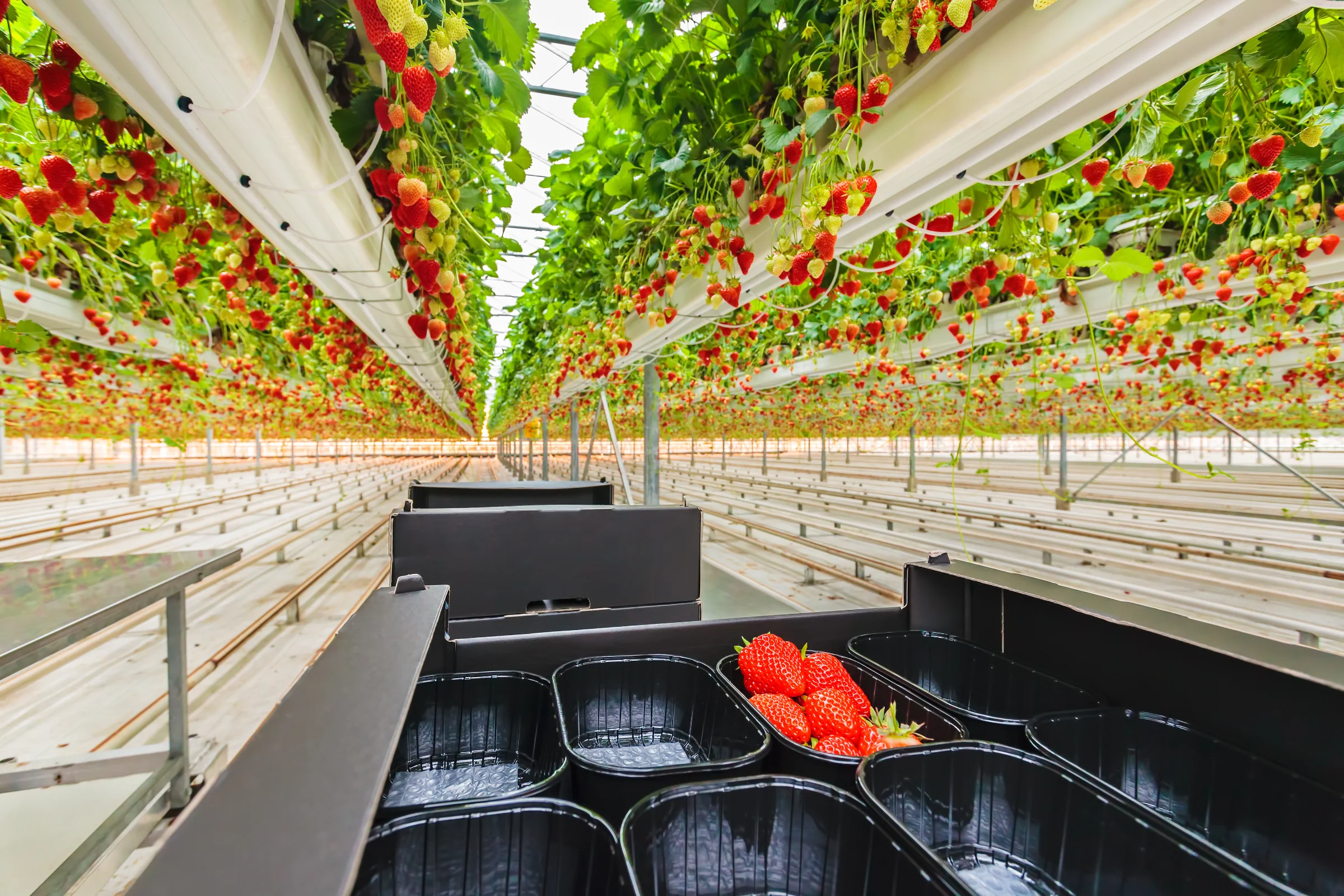
The building is strawberry building: suspended gutters hung from the structure, waist-height picking, a controlled root zone and a canopy kept dry. What a seasonal crop adds is the chance to empty and reset the compartment between crops, which opens up options a continuous crop does not have — a second crop in the gap, or a cleaning window that a year-round house never gets.
DutchGreenhouses® designs the structure, climate, screening and irrigation around the strawberry system and the market window being supplied, so the peak week is carried rather than survived. Get in touch to discuss a seasonal strawberry project.
Seasonal strawberry, asked and answered
What is the commercial argument for seasonal types?
A concentrated crop hitting a valuable window. Where the price in that window is high enough, harvesting everything at once is the point rather than a limitation.
What does a concentrated harvest ask of the house?
Peak capacity. Picking labour, cooling and pack capacity are sized for the busiest week and idle outside it, so the compartment layout has to make that affordable.
Can the compartment be used for anything else?
That is the advantage of a seasonal crop. The house empties between crops, which leaves room for a second crop in the gap or for a cleaning window a year-round house never gets.
Other strawberry
varieties.
Fresh fruit in the right market window. The class you sell decides the plant load, the harvest rhythm and the house.
The greenhouse behind strawberries
Strawberries, under glass.
Raised gutters with substrate.
Gutter layout, plant spacing and picking routes follow the harvest window and your labour plan.
Fresh fruit in the right market window.
Raised gutters with substrate.
Consider marketable grade, picking labour, packing and delivery time.
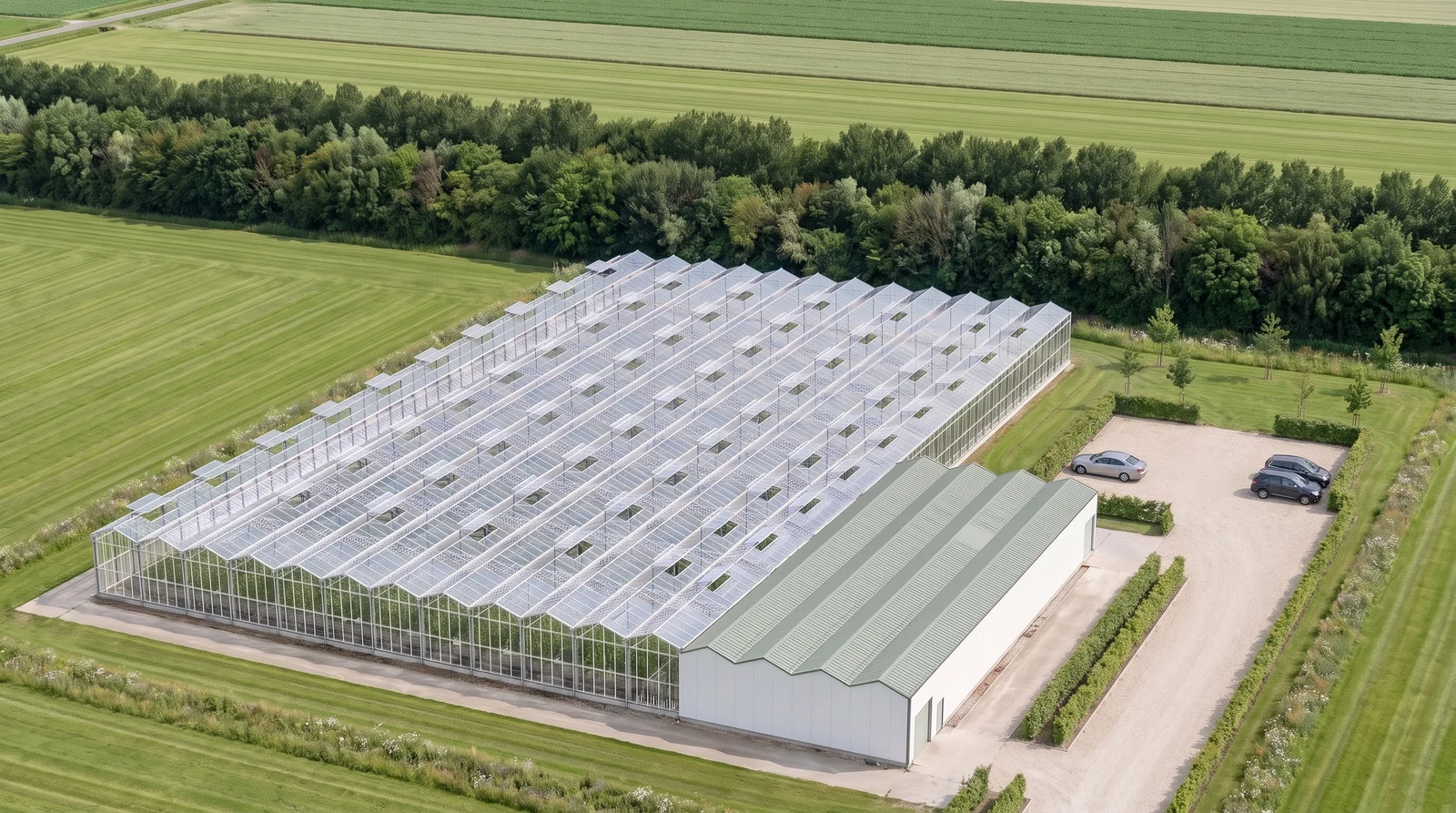
Expert Hydroponic Greenhouse Series
A defined structure for commercial hydroponics. The crop determines the growing system, climate strategy and harvest layout.
½ acre1 acre2 acresExplore Expert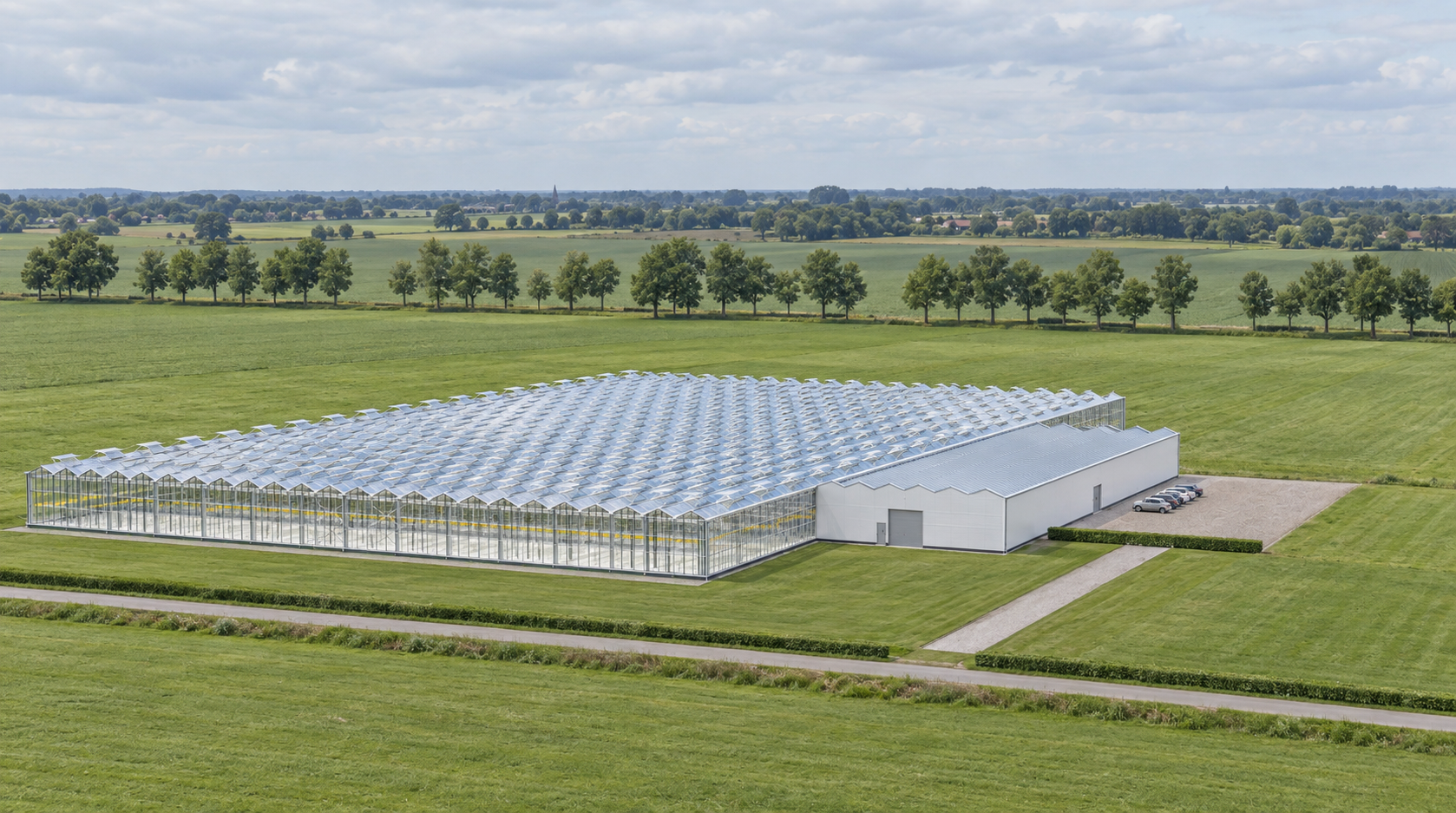
Plus Hydroponic Greenhouse Series
Our largest standard range. Match the larger growing area to crop demand, labour, utilities and the market you intend to supply.
2 acres4 acres8 acresExplore Plus4,032 m²43,400 sq ft of growing space is where a strawberries plan usually starts (GrowPro Expert 1 acre). Compare all nine models
Put your next harvest
under glass.
Your crop, your site and the volume you want to sell. Let's find the greenhouse and systems to match.
Need a custom greenhouse?GrowPro Expert
We can also plan for another crop or a mixed growing programme.
Talk about your project Continue to our contact form. No commitment.Reads you might find interesting

Grow Like a Pro: Starting Smart, Growing Strong
How Grow Like a Pro combines smart farming, CEA technology and local partnerships for eco-friendly, profitable, pesticide-free greenhouse pr
Read article
Maryland Cannabis Greenhouse: Year One
One year on: how the Maryland cannabis greenhouse, paired with an adjacent indoor facility, cut the energy bill and lifted both yields and q
Read article
The Case for a College Greenhouse
Why a college greenhouse belongs in the curriculum: teaching science, craftsmanship, business logic and sustainability, and preparing studen
Read article
The Case for a High School Greenhouse
Why every high school greenhouse matters: how it makes STEM tangible, builds responsibility and teamwork, and helps students discover their
Read article
Greenhouses in Education: The Case for Schools
Greenhouses in education reconnect students to reality — the full case for why every school, high school, college and trade program should h
Read article
The Origins of Greenhouse Horticulture: My Backyard
A tour through greenhouse horticulture history: from 19th-century Westland fruit walls to the “City of Glass” and today’s international high
Read article